

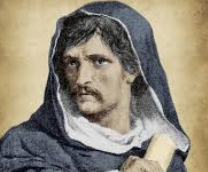
6 months 4 weeks ago
I cleave the heavens and soar to the infinite. And while I rise from my own globe to others And penetrate ever further through the eternal field, That which others saw from afar, I leave far behind me. Variant translation: While I venture out beyond this tiny globe Into reaches past the bounds of starry night I leave behind what others strain to see afar.
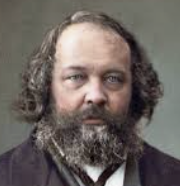
6 months 2 weeks ago
It is the peculiarity of privilege and of every privileged position to kill the intellect and heart of man. The privileged man, whether he be privileged politically or economically, is a man depraved in intellect and heart.
▼
Source
source
As quoted in "Socialism" article of Encyclopaedia Britannica, 9th edition (1887), edited by Thomas Spencer Baynes with assistance of William Robertson Smith, Vol. 22, p. 216, Charles Scribner's Sons
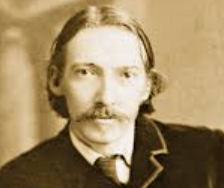
5 months 2 weeks ago
To be overwise is to ossify; and the scruple-monger ends by standing stockstill.
▼
Source
source
314
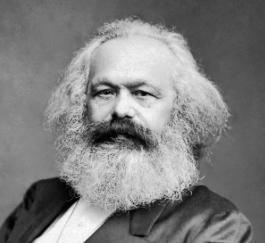
7 months 3 weeks ago
Lincoln's place in the history of the United States and of mankind will, nevertheless, be next to that of Washington!
3 months 3 weeks ago
It is said that our paper is as good as silver, because we may have silver for it at the bank where it issues. This is not true. One, two, or three persons might have it; but a general application would soon exhaust their vaults, and leave a ruinous proportion of their paper in its intrinsic worthless form.
▼
Source
source
ME 13:426
5 months 2 weeks ago
The criminal, like the artist, is a social explorer.
▼
Source
source
quoted in "Marshall McLuhan, Author, Dies; Declared 'Medium Is the Message'" by Alden Whitman, The New York Times, January 1, 1981
7 months 3 weeks ago
Abbot Terrasson tells us that if the size of a book were measured not by the number of its pages but by the time required to understand it, then we could say about many books that they would be much shorter were they not so short.
▼
Source
source
A xix
3 months 2 weeks ago
Reason can make little headway on its own and struggles to be heard; often it has to be - so to speak - armed by the fearsome epigram. French wit pricks like a needle, so that the thread goes through the hole.
▼
Source
source
Sixth Dialogue, p. 160
5 months 6 days ago
Simplicity and nonviolence are the basis of an economy of wellbeing, and such an economy must be localised.

4 months 2 weeks ago
Liberalism is... a protection of human autonomy.
▼
Source
source
11:06


8 months 1 week ago
Show me someone who is ill and yet happy, in danger and yet happy, dying and yet happy, exiled and yet happy. Show me such a person; by the gods, how greatly I long to see a Stoic!
▼
Source
source
Book II, ch. 19, 24.
5 months 3 weeks ago
And so the arbitrary union of three incommensurate, mutually disconnected concepts became the basis of a bewildering theory... [by which] one of the lowest renderings of art, art for mere pleasure - against which all of the master teachers warned - was idealized as the ultimate in art.
6 months 5 days ago
The history of other cultures is non-existent until it erupts in confrontation with the United States.
▼
Source
source
Chap 4, Sect 2
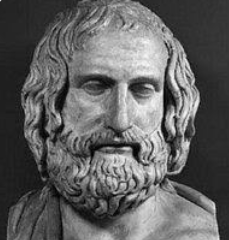
7 months 6 days ago
When it comes to consideration of how to do well in running the city, which must proceed entirely through justice and soundness of mind.
▼
Source
source
As quoted in Protagoras by Plato
5 months 2 weeks ago
At the speed of light there is no sequence; everything happens at the same instant.
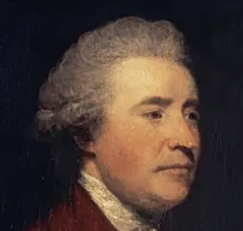
6 months 3 weeks ago
Men are qualified for civil liberty in exact proportion to their disposition to put moral chains upon their own appetites, - in proportion as their love to justice is above their rapacity, - in proportion as their soundness and sobriety of understanding is above their vanity and presumption, - in proportion as they are more disposed to listen to the counsels of the wise and good, in preference to the flattery of knaves. Society cannot exist, unless a controlling power upon will and appetite be placed somewhere; and the less of it there is within, the more there must be without. It is ordained in the eternal constitution of things, that men of intemperate minds cannot be free. Their passions forge their fetters.
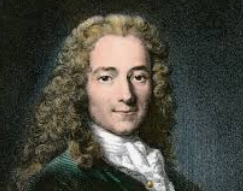
7 months 3 weeks ago
A witty saying proves nothing.
▼
Source
source
Le dîner du comte de Boulainvilliers (1767): Deuxième Entretien
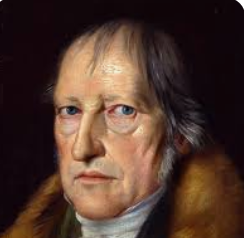
7 months 3 weeks ago
We assert then that nothing has been accomplished without interest on the part of the actors; and - if interest be called passion, inasmuch as the whole individuality, to the neglect of all other actual or possible interests and claims, is devoted to an object with every fibre of volition, concentrating all its desires and powers upon it - we may affirm absolutely that nothing great in the World has been accomplished without passion. Often abbreviated to: Nothing great in the World has been accomplished without passion. Variant translation: We may affirm absolutely that nothing great in the world has ever been accomplished without enthusiasm.

7 months 3 weeks ago
The sins of the flesh are bad, but they are the least bad of all sins. All the worst pleasures are purely spiritual: the pleasure of putting other people in the wrong, of bossing and patronising and spoiling sport, and back-biting; the pleasures of power, of hatred. For there are two things inside me, competing with the human self which I must try to become. They are the Animal self, and the Diabolical self. The Diabolical self is the worse of the two. That is why a cold, self-righteous prig who goes regularly to church may be far nearer to hell than a prostitute. But, of course, it is better to be neither.
▼
Source
source
Book III, Chapter 5, "Sexual Morality"
6 months 2 weeks ago
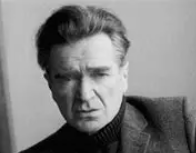
Haven't people learned yet that the time of superficial intellectual games is over, that agony is infinitely more important than syllogism, that a cry of despair is more revealing than the most subtle thought, and that tears always have deeper roots than smiles?
7 months 3 weeks ago
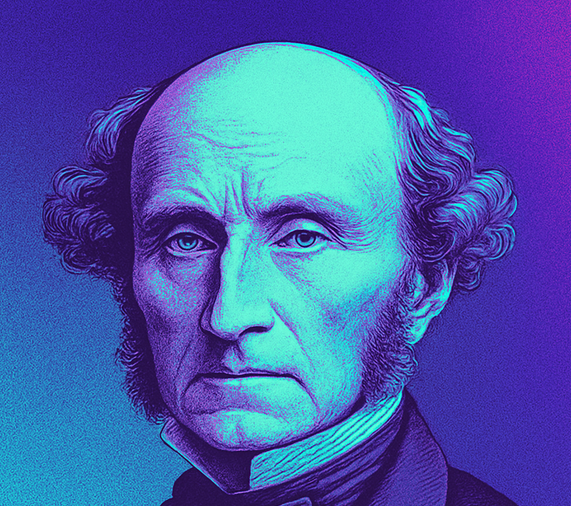
No one can be a great thinker who does not recognise, that as a thinker it is his first duty to follow his intellect to whatever conclusions it may lead...Not that it is solely, or chiefly, to form great thinkers, that freedom of thinking is required. On the contrary, it is as much and even more indispensable to enable average human beings to attain the mental stature which they are capable of.
▼
Source
source
Ch. II: Of the Liberty of Thought and Discussion
6 months 2 weeks ago
Ministers and favorites are a sort of people who have a state prisoner in their custody, the whole management of whose understanding and actions they can easily engross.
▼
Source
source
Book V, Ch. 5
5 months 2 weeks ago
Our book technology has Gutenberg at one end and the Ford assembly lines at the other. Both are obsolete.
▼
Source
source
(p. 99)
8 months 1 week ago
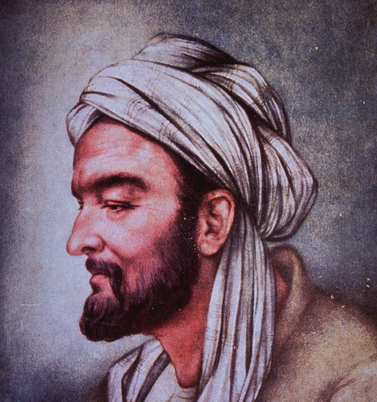
God, the supreme being, is neither circumscribed by space, nor touched by time; he cannot be found in a particular direction, and his essence cannot change. The secret conversation is thus entirely spiritual; it is a direct encounter between God and the soul, abstracted from all material constraints.
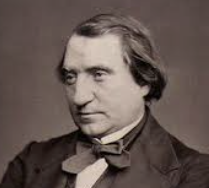
4 months 2 weeks ago
No place in the world has had a comparable role to that of the nameless mountain or valley where mankind first attained self-consciousness. Let us be proud ... of the old patriarchs who, at the foot of Imaiis, laid the foundations of what we are and of what we shall become.
▼
Source
source
Poliakov, L. (1974). The Aryan myth : a history of racist and nationalist ideas in Europe page 208
6 months 2 weeks ago
One hardly saves a world without ruling it.

4 months 1 week ago
It is our fatalest misery just now, not easily alterable, and yet urgently requiring to be altered, That no British man can attain to be a Statesman, or Chief of Workers, till he has first proved himself a Chief of Talkers: which mode of trial for a Worker, is it not precisely, of all the trials you could set him upon, the falsest and unfairest?
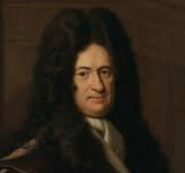
7 months 3 weeks ago
As regards the objection that possibles are independent of the decrees of God I grant it of actual decrees (although the Cartesians do not at all agree to this), but I maintain that the possible individual concepts involve certain possible free decrees; for example, if this world was only possible, the individual concept of a particular body in this world would involve certain movements as possible, it would also involve the laws of motion, which are the free decrees of God; but these, also, only as possibilities. Because, as there are an infinity of possible worlds, there are also an infinity of laws, certain ones appropriate to one; others, to another, and each possible individual of any world involves in its concept the laws of its world.
▼
Source
source
(May, 1686) as quoted in George R. Montgomery, Tr., "Correspondence between Leibniz and Arnauld," Leibniz: Discourse on metaphysics; correspondence with Arnauld, and Monadology (1916) VIII, p. 108
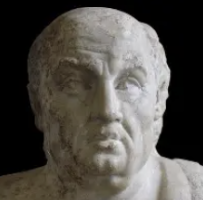
4 months 1 week ago
He who receives a benefit with gratitude, repays the first installment of it.
▼
Source
source
De Beneficiis (On Benefits): Book 2, cap. 22, line 1.
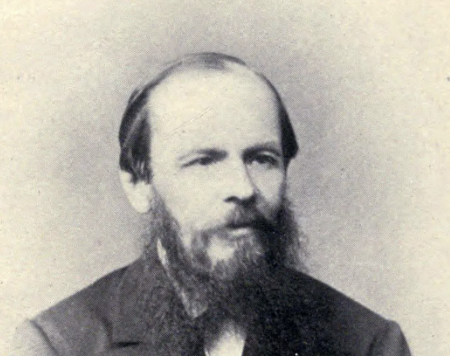
6 months 3 weeks ago
Nothing in the world is harder than speaking the truth and nothing easier than flattery. If there's the hundredth part of a false note in speaking the truth, it leads to a discord, and that leads to trouble. But if all, to the last note, is false in flattery, it is just as agreeable, and is heard not without satisfaction. It may be a coarse satisfaction, but still a satisfaction. And however coarse the flattery, at least half will be sure to seem true. That's so for all stages of development and classes of society.
3 months 3 weeks ago
Our laws, language, religion, politics, & manners are so deeply laid in English foundations, that we shall never cease to consider their history as a part of ours, and to study ours in that as it's origin.
▼
Source
source
Letter to William Duane
5 months 2 weeks ago
The pre-atomist multisensory void was an animate, pulsating, and moving vibrant interval, neither container nor contained, acoustic space penetrated by tactility.
▼
Source
source
p. 34
7 months 3 weeks ago
But when they have realized that it [society] rejects them forever, they themselves assume the ostracism of which they are victims so as not to leave the initiative to their oppressors.
▼
Source
source
p. 65-6
3 months 3 weeks ago
The inhabitants of the ceded territory shall be incorporated in the Union of the United States, and admitted as soon as possible, according to the principles of the Federal constitution, to the enjoyment of all the rights, advantages, and immunities, of citizens of the United States; and, in the mean time, they shall be maintained and protected in the free enjoyment of their liberty, property, and the religion which they profess.
▼
Source
source
Louisiana Treaty of Cession, Art. III
3 months 3 weeks ago
If, in my retirement to the humble station of a private citizen, I am accompanied with the esteem and approbation of my fellow citizens, trophies obtained by the blood-stained steel, or the tattered flags of the tented field, will never be envied. The care of human life and happiness, and not their destruction, is the first and only legitimate object of good government.
▼
Source
source
Letter To the Republican Citizens of Washington county, Maryland

4 months 1 week ago
It is truly not the merit of the school if we do not come out selfish. Each sort of corresponding pride and every wind of covetousness, eagerness for office, mechanical and servile officiousness, hypocrisy, etc., is bound as much with extensive knowledge as with elegant, classical education, and since this whole instruction exercises no influence of any sort on our ethical behavior, it thus frequently falls to the fate of being forgotten in the same measure as it is not used: one shakes off the dust of the school.
▼
Source
source
p. 22
4 months 1 week ago
Two elements must therefore be rooted out once for all-the fear of future suffering, and the recollection of past suffering; since the latter no longer concerns me, and the former concerns me not yet.
6 months 1 week ago
Necessity resides in the way we talk about things, not in the things we talk about.
▼
Source
source
Ways of Paradox and Other Essays (1976), p. 174
7 months 3 weeks ago
...the reality of society involves the socialization of certain unrealities.
▼
Source
source
p. 455
7 months 3 weeks ago
A single part of physics occupies the lives of many men, and often leaves them dying in uncertainty.
▼
Source
source
"A Madame la Marquise du Châtelet, Avant-Propos," Eléments de Philosophie de Newton, 1738
7 months 3 weeks ago
Constitutional freedom, as the right of every citizen to have to obey no other law than that to which he has given his consent or approval.
6 months 5 days ago
In contrast to festivals, events do not create community.
7 months 3 weeks ago
I do not give a damn about the dead. They died for the [Communist] Party and the Party can decide what it wants. I practice a live man's politics, for the living.
▼
Source
source
Act 5, sc. 3
7 months 3 weeks ago
Yes, Lord, you are innocence itself: how could you conceive of Nothingness, you who are plenitude? Your gaze is light and transforms all into light: how could you know the half-light in my heart?
▼
Source
source
Act 3, sc. 6


8 months 2 weeks ago
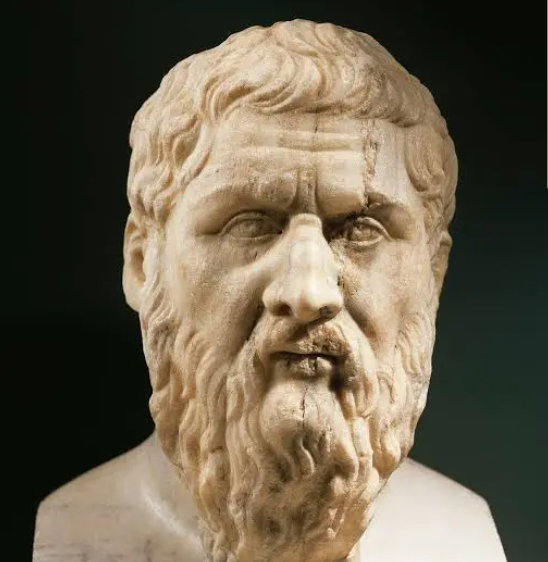
How natural it is that those who have spent a long time in the study of philosophy appear ridiculous when they enter the courts of law as speakers. Those who have knocked about in courts and the like from their youth up seem to me, when compared with those who have been brought up in philosophy and similar pursuits, to be as slaves in breeding compared with freemen. The latter always have leisure, and they talk at their leisure in peace; and they do not care at all whether their talk is long or short, if only they attain the truth. But the men of the other sort are always in a hurry and the other party in the suit does not permit them to talk about anything they please.
6 months 2 weeks ago
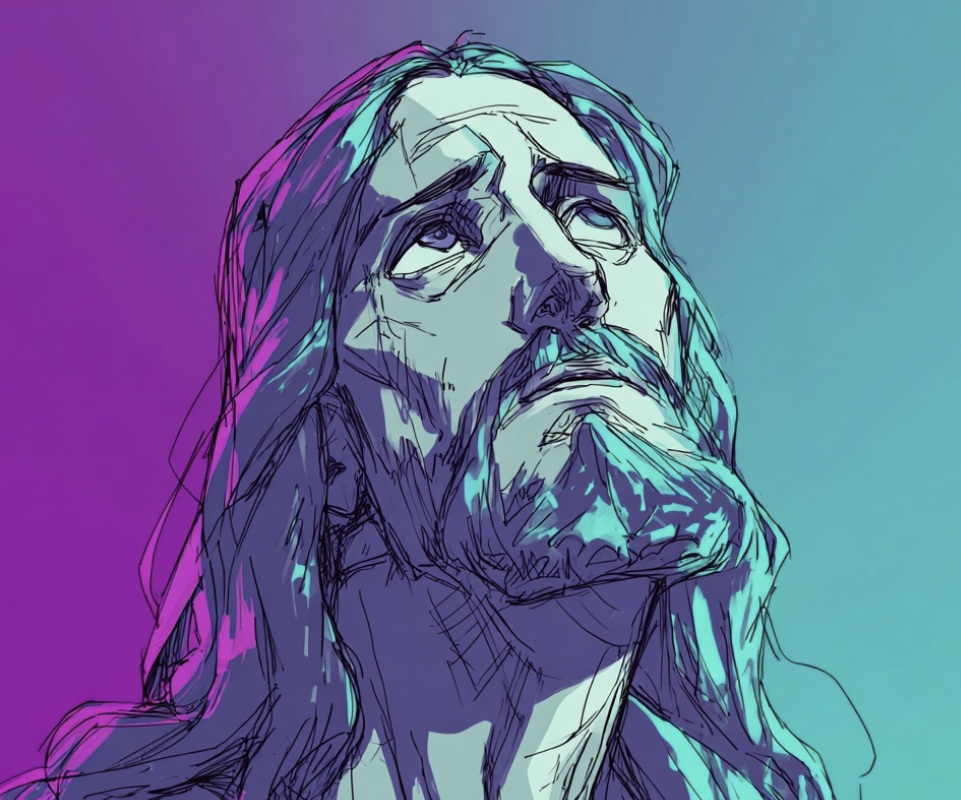
Jesus said to His disciples, "Compare me to someone and tell Me whom I am like." Simon Peter said to Him, "You are like a righteous angel." Matthew said to Him, "You are like a wise philosopher." Thomas said to Him, "Master, my mouth is wholly incapable of saying whom You are like." Jesus said, "I am not your master. Because you have drunk, you have become intoxicated by the bubbling spring which I have measured out." And He took him and withdrew and told him three things. When Thomas returned to his companions, they asked him, "What did Jesus say to you?" Thomas said to them, "If I tell you one of the things which he told me, you will pick up stones and throw them at me; a fire will come out of the stones and burn you up."
CivilSimian.com created by AxiomaticPanic, CivilSimian, Kalokagathia