

4 months ago
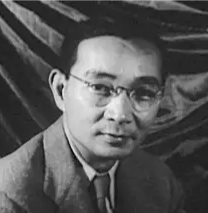
The three great American vices seem to be efficiency, punctuality, and the desire for achievement and success. They are the things that make the Americans so unhappy and so nervous.
▼
Source
source
p. 162

11 months 3 weeks ago
Precisely as an enigma, the symptom, so to speak, announces its dissolution through interpretation: the aim of psychoanalysis is to re-establish the broken network of communication by allowing the patient to verbalize the meaning of his symptom: through this verbalization the symptom is automatically dissolved. This, then is the basic point: in its very construction, the symptom implies the field of the big Other as consistent, complete, because its very function is an appeal to the Other which contains its meaning.
7 months 3 weeks ago
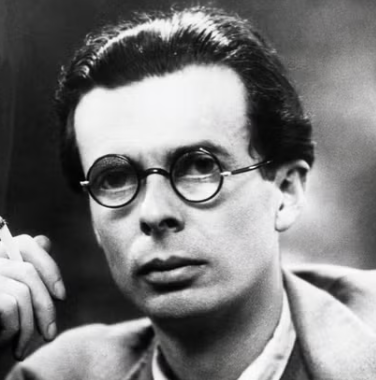
Why did it occur to anyone to believe in only one God? And conversely why did it ever occur to anyone to believe in many gods? To both these questions we must return the same answer: Because that is how the human mind happens to work. For the human mind is both diverse and simple, simultaneously many and one. We have an immediate perception of our own diversity and of that of the outside world. And at the same time we have immediate perceptions of our own oneness.
▼
Source
source
"One and Many," p. 12

7 months 2 weeks ago
The desire to philosophize from the standpoint of standpointlessness, as a purportedly genuine and superior objectivity, is either childish, or, as is usually the case, disingenuous.
▼
Source
source
The Essence of Truth, 1931-32
7 months 3 weeks ago
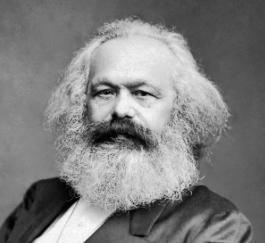
We cannot always choose the vocation to which we believe we are called. Our social relations, to some extent, have already begun to form before we are in a position to determine them.
▼
Source
source
Writings of the Young Marx on Philosophy and Society, L. Easton, trans. (1967), p. 37



3 months 2 weeks ago
Man... whatever the origin of his soul, if it is pure, noble, and lofty, it is a beautiful soul which dignifies the man endowed with it.
7 months 3 weeks ago
The end cannot justify the means for the simple and obvious reason that the means employed determine the nature of the ends produced.
▼
Source
source
Ch. 1, p. 10 [2012 reprint]
6 months 2 weeks ago
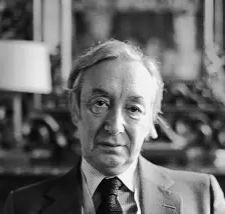
To make our position clearer, we may formulate it in another way. Let us call a proposition which records an actual or possible observation an experiential proposition. Then we may say that it is the mark of a genuine factual proposition, not that it should be equivalent to an experiential proposition, or any finite number of experiential propositions, but simply that some experiential propositions can be deduced from it in conjunction with certain other premises without being deducible from those other premises alone.
▼
Source
source
p. 20.
7 months 3 weeks ago
When I say that children should be told about sex, I do not mean that they should be told only the bare physiological facts; they should be told whatever they wish to know. There should be no attempt to represent adults as more virtuous than they are, or sex as occurring only in marriage. There is no excuse for deceiving children. And when, as must happen in conventional families, they find that their parents have lied, they lose confidence in them, and feel justified in lying to them.
▼
Source
source
Our Sexual Ethics, 1936

6 months 2 weeks ago
Ambition is a drug that makes its addicts potential madmen.
7 months 3 weeks ago
I do not, therefore, need any penetrating acuteness to see what I have to do in order that my volition be morally good. Inexperienced in the course of the world, incapable of being prepared for whatever might come to pass in it, I ask myself only: can you also will that your maxim become a universal law?
7 months 3 weeks ago
Among human beings, the subjection of women is much more complete at a certain level of civilization than it is among savages. And the subjection is always reinforced by morality.
▼
Source
source
Ch. 15: Power and moral codes
8 months 3 weeks ago
In the New Testament sense, to be a Christian is, in an upward sense, as different from being a man as, in a downward sense, to be a man is different from being a beast. A Christian in the sense of the New Testament, although he stands suffering in the midst of life's reality, has yet become completely a stranger to this life; in the words of the Scripture and also of the Collects (which still are read-O bloody satire!-by the sort of priests we now have, and in the ears of the sort of Christians that now live) he is a stranger and a pilgrim-just think, for example of the late Bishop Mynster intoning, We are strangers and pilgrims in this world! A Christian in the New Testament sense is literally a stranger and a pilgrim, he feels himself a stranger, and everyone involuntarily feels that this man is a stranger to him.

8 months 2 weeks ago
There's nothing like deduction. We've determined everything about our problem but the solution.

4 months 4 weeks ago
In Kleist's essay humans are caught between the graceful automatism of the puppet and the conscious freedom of a god. The jerky, stuttering quality of their actions comes from their feeling that they must determine the course of their lives. Other animals live without having to choose their path through life. Whatever uncertainty they may feel sniffing their way through the world is not a permanent condition; once they reach a place of safety, they are at rest. In contrast, human life is spent anxiously deciding how to live.
▼
Source
source
The Faith of Puppets: Leopardi and the Souls of Machines (p.25-6)

4 months 4 weeks ago
The heterodox current in Judaism led by Jesus seems to have had no notion of an immortal soul, created by God and then infused into the body: immortality meant being raised from the dead in the body one had in life, then living for ever in a world without decay or corruption. In the Christian religion invented by Paul and Augustine, which was strongly influenced by Plato, immortality meant something quite different - a life out of time, enjoyed by the 'soul' or 'spirit' of the departed. How this Platonic immortality could preserve anything like the persons that once lived was not made clear.
▼
Source
source
Cross-correspondences (pp. 32-3)
8 months 3 weeks ago
The third kind of life is the life of contemplation.
8 months 2 weeks ago
The foundation of all technology is fire.
6 months ago
Most of the propositions that make up the body of administrative theory today share, unfortunately, this defect of proverbs. For almost every principle one can find an equally plausible and acceptable contradictory principle.
▼
Source
source
Simon, Herbert A. "The proverbs of administration." Public Administration Review 6.1 (1946): 53-67.
7 months 3 weeks ago
I do not think it possible to get anywhere if we start from scepticism. We must start from a broad acceptance of whatever seems to be knowledge and is not rejected for some specific reason.
▼
Source
source
p. 200
6 months 6 days ago
Our minds are finite, and yet even in these circumstances of finitude we are surrounded by possibilities that are infinite, and the purpose of human life is to grasp as much as we can out of the infinitude.
▼
Source
source
Ch. 21, June 28, 1941.

7 months 3 weeks ago
Our age is retrospective. It builds the sepulchres of the fathers. It writes biographies, histories, and criticism. The foregoing generation beheld God and nature face to face; we, through their eyes. Why should not we also enjoy an original relation to the universe. Why should not we have a poetry and philosophy of insight and not of tradition, and a religion by revelation to us, and not the history of theirs?
▼
Source
source
Introduction
4 months 2 weeks ago
When young, one is confident to be able to build palaces for mankind, but when the time comes one has one's hands full just to be able to remove their trash.
▼
Source
source
Letter to Johann Kaspar Lavatar

3 months 3 weeks ago
The poem is important, but not more than the people whose survival it serves...
▼
Source
source
In A Motel Parking Lot, Thinking Of Dr. Williams
7 months 3 weeks ago
Again, defenders of utility often find themselves called upon to reply to such objections as this-that there is not time, previous to action, for calculating and weighing the effects of any line of conduct on the general happiness. This is exactly as if any one were to say that it is impossible to guide our conduct by Christianity, because there is not time, on every occasion on which anything has to be done, to read through the Old and New Testaments. The answer to the objection is, that there has been ample time, namely, the whole past duration of the human species. During all that time mankind have been learning by experience the tendencies of actions.
▼
Source
source
Ch. 2
5 months 1 day ago
A created thing is never invented and it is never true: it is always and ever itself.
▼
Source
source
Creation

6 months 3 weeks ago
Difficulty is a severe instructor, set over us by the supreme ordinance of a parental Guardian and Legislator, who knows us better than we know ourselves, as he loves us better too. Pater ipse colendi haud facilem esse viam voluit. He that wrestles with us strengthens our nerves, and sharpens our skill. Our antagonist is our helper.
▼
Source
source
Volume iii, p. 453

8 months 6 days ago
But there is nothing sweeter than to dwell in towers that rise On high, serene and fortified with teachings of the wise, From which you may peer down upon the others as they stray This way and that, seeking the path of life, losing their way: The skirmishing of wits, the scramble for renown, the fight, Each striving harder than the next, and struggling day and night, To climb atop a heap of riches and lay claim to might.
▼
Source
source
Book II, lines 7-13 (tr. Stallings)
7 months 3 weeks ago
"...faith and repentance, i. e. believing Jesus to be the Messiah, and a good life, are the indispensable conditions of the new covenant, to be performed by all those who would obtain eternal life. (The reasonableness, or rather necessity of which, that we may the better comprehend, we must a little look back to what was said in the beginning"
▼
Source
source
§ 106
7 months 3 weeks ago
It is said that God is always on the side of the big battalions.
▼
Source
source
Letter to François-Louis-Henri Leriche (6 February 1770) Note: In his Notebooks (c.1735-c.1750)

7 months 4 weeks ago
Things are not so painful and difficult of themselves, but our weakness or cowardice makes them so.
▼
Source
source
Ch. 14, tr. Cotton, rev. W. Carew Hazlitt, 1877

4 months 1 week ago
He who takes not counsel of the Unseen and Silent, from him will never come real visibility and speech.
▼
Source
source
Bk. III, ch. 11.
4 months 6 days ago
I commend you and rejoice in the fact that you are persistent in your studies, and that, putting all else aside, you make it each day your endeavour to become a better man.

7 months 3 weeks ago
The bourgeoisie has stripped of its halo every occupation hitherto honoured and looked up to with reverent awe. It has converted the physician, the lawyer, the priest, the poet, the man of science, into its paid wage labourers.
▼
Source
source
Section 1, paragraph 14.
7 months 3 weeks ago
There is no rule more invariable than that we are paid for our suspicions by finding what we suspect.
▼
Source
source
Pearls of Thought (1881) p. 254
3 months 3 weeks ago
The metaphysical image that a definite epoch forges of the world has the same structure as what the world immediately understands to be appropriate as a form of its political organization.
8 months 2 weeks ago
It's funny the respectable names you can give to superstition.
7 months 2 weeks ago
When the basic structure of society is publicly known to satisfy its principles for an extended period of time, those subject to these arrangements tend to develop a desire to act in accordance with these principles and to do their part in institutions which exemplify them.
▼
Source
source
Chapter III, Section 29, pg.177

8 months 6 days ago
For what is lacking now is not quibbles; nay, the books of the Stoics are full of quibbles.
▼
Source
source
Book I, ch. 29, § 56
3 months 3 weeks ago
Violence breeds violence. Acts of violence committed in "justice" or in affirmation of "rights" or in defense of "peace" do not end violence. They prepare and justify its continuation.
5 months 2 weeks ago
Confidence is the only bond of friendship.
▼
Source
source
Maxim 34
6 months 3 weeks ago
By the disposition of a stupendous wisdom, moulding together the great mysterious incorporation of the human race, the whole, at one time, is never old, or middle-aged, or young; but, in a condition of unchangeable constancy, moves on through the varied tenor of perpetual decay, fall, renovation, and progression.
7 months 3 weeks ago
To speak impartially, the best men that I know are not serene, a world in themselves. For the most part, they dwell in forms, and flatter and study effect only more finely than the rest. We select granite for the underpinning of our houses and barns; we build fences of stone; but we do not ourselves rest on an underpinning of granitic truth, the lowest primitive rock. Our sills are rotten.
▼
Source
source
p. 490
8 months 1 week ago
Nearly allied to justice are the virtues of beneficence, compassion, gratitude, piety, and friendship.
7 months 3 weeks ago
It is a bad thing to perform menial duties even for the sake of freedom; to fight with pinpricks, instead of with clubs. I have become tired of hypocrisy, stupidity, gross arbitrariness, and of our bowing and scraping, dodging, and hair-splitting over words. Consequently, the government has given me back my freedom.
▼
Source
source
Letter from Marx to Arnold Ruge (25 January 1843)
3 months 3 weeks ago
We need better government, no doubt about it. But we also need better minds, better friendships, better marriages, better communities.
▼
Source
source
"Think Little"
7 months 2 weeks ago
The relation of feeling toward art and its bringing-forth can be one of production or one of reception and enjoyment.
▼
Source
source
p. 78
CivilSimian.com created by AxiomaticPanic, CivilSimian, Kalokagathia