

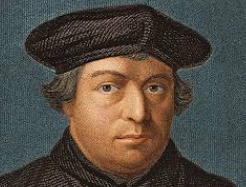
8 months ago
Reason is the greatest enemy that faith has: it never comes to the aid of spiritual things, but--more frequently than not--struggles against the divine Word, treating with contempt all that emanates from God.
▼
Source
source
353
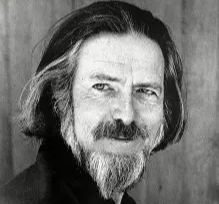
4 months 3 days ago
Just as no thing or organism exists on its own, it does not act on its own. Furthermore, every organism is a process: thus the organism is not other than its actions. To put it clumsily: it is what it does. More precisely, the organism, including its behavior, is a process which is to be understood only in relation to the larger and longer process of its environment. For what we mean by "understanding" or "comprehension" is seeing how parts fit into a whole, and then realizing that they don't compose the whole, as one assembles a jigsaw puzzle, but that the whole is a pattern, a complex wiggliness, which has no separate parts. Parts are fictions of language, of the calculus of looking at the world through a net which seems to chop it up into bits. Parts exist only for purposes of figuring and describing, and as we figure the world out we become confused if we do not remember this all the time.
▼
Source
source
p. 73

7 months 1 week ago
The years as they pass plunder us of one thing after another.
▼
Source
source
Book II, epistle ii, line 55
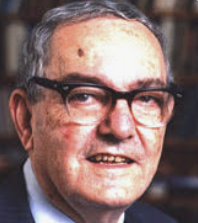
6 months ago
Decision making processes are aimed at finding courses of action that are feasible or satisfactory in the light of multiple goals and constraints.
▼
Source
source
p. 274.

3 months 3 weeks ago
The liberty of the whole earth was depending on the issue of the contest, and was ever such a prize won with so little innocent blood? My own affections have been deeply wounded by some of the martyrs to this cause, but rather than it should have failed, I would have seen half the earth desolated. Were there but an Adam & an Eve left in every country, & left free, it would be better than as it now is.
▼
Source
source
Letter to William Short (January 3, 1793), quoted in Stanley Elkins and Eric McKitrick, The Age of Federalism (1995), pp. 316-317

3 months 3 weeks ago
The ecological teaching of the Bible is simply inescapable: God made the world because He wanted it made. He thinks the world is good, and He loves it. It is His world; He has never relinquished title to it. And He has never revoked the conditions, bearing on His gift to us of the use of it, that oblige us to take excellent care of it.
▼
Source
source
God and Country
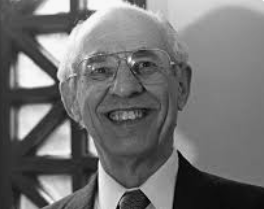
5 months 4 weeks ago
Analytic philosophers - both in the 'constructivist' camp and in the camp that studies 'the ordinary use of words' - are disturbingly unanimous in regarding 2-valued logic as having a privileged position: privileged, not just in the sense of corresponding to the way we do speak, but in the sense of having no serious rival for logical reasons. If the foregoing analysis is correct, this is a prejudice of the same kind as the famous prejudice in favor of a privileged status for Euclidean geometry (a prejudice that survives in the tendency to cite 'space has three dimensions' as some kind of 'necessary' truth). One can go over from a 2-valued to a 3-valued logic without totally changing the meaning of 'true' and 'false'; and not just in silly ways, like the ones usually cited (e.g. equating truth with high probability, falsity with low probability, and middlehood with 'in between' probability).
▼
Source
source
"Three-valued logic"
4 months 1 week ago
Would you really know what philosophy offers to humanity? Philosophy offers counsel.

8 months 1 week ago
As the soul is the life of the body, so God is the life of the soul. As therefore the body perishes when the soul leaves it, so the soul dies when God departs from it.
▼
Source
source
p. 277
6 months 2 weeks ago
I am using the word "perceive". I am using it here in such a way that to say of an object that it is perceived does not entail saying that it exists in any sense at all. And this is a perfectly correct and familiar usage of the word. If there is thought to be a difficulty here, it is perhaps because there is also a correct and familiar usage of the word "perceive", in which to say of an object that it is perceived does carry the implication that it exists.
▼
Source
source
The Foundations of Empirical Knowledge (1940).

6 months 2 weeks ago
It is more blessed to give than to receive.
▼
Source
source
Acts 20:35b
4 months 1 week ago
A good mind possesses a kingdom.
▼
Source
source
line 380; (Chorus)

7 months 3 weeks ago
I have in this treatise followed the mathematical method, if not with all strictness, at least imitatively, not in order, by a display of profundity, to procure a better reception for it, but because I believe such a system to be quite capable of it, and that perfection may in time be obtained by a cleverer hand, if stimulated by this sketch, mathematical investigators of nature should find it not unimportant to treat the metaphysical portion, which anyway cannot be got rid of, as a special fundamental department of general physics, and to bring it into unison with the mathematical doctrine of motion.
▼
Source
source
Preface, Tr. Bax, 1883
7 months 3 weeks ago
Children should from the beginning be bred up in an abhorrence of killing or tormenting any living creature; and be taught not to spoil or destroy any thing, unless it be for the preservation or advantage of some other that is nobler.
▼
Source
source
Sec. 116
8 months 2 weeks ago
An observer studying the Solar system dispassionately, and finding himself capable of bringing the four giant planets to his notice, could reasonably say that the Solar system consisted of one star, four planets, and some traces of debris.

6 months 2 weeks ago
What anxiety when one is not sure of one's doubts or wonders: are these actually doubts?

7 months 3 days ago
Hear gladly!
6 months 3 weeks ago
All those countless battles-those endless, and... for the greater part, useless wars, of which... fills up for so many thousand years... are but little atoms compared with the great whole of human destiny.
6 months 2 weeks ago
In a republic, that paradise of debility, the politician is a petty tyrant who obeys the laws.

7 months 2 weeks ago
What all these people are doing is not aggressive; they are inventing new possibilities of pleasure with strange parts of their body - through the eroticization of the body. I think it's ... a creative enterprise, which has as one of its main features what I call the desexualization of pleasure.
▼
Source
source
In reference to Sadism and Masochism, as quoted in Who's Who in Contemporary Gay & Lesbian History: From World War II to the Present Day (2001) by Robert Aldrich and Gary Wotherspoon
5 months 1 day ago
To say that all philosophy is writing is, minimally, to say that it is never the transparent expression of thought.
▼
Source
source
Chapter 3, Deconstruction and Criticism, p. 46


8 months 3 weeks ago
I have never worked as hard as now. I go for a brief walk in the morning. Then I come home and sit in my room without interruption until about three o'clock. My eyes can barely see. Then with my walking stick in hand I sneak off to the restaurant, but am so weak that I believe that if somebody were to call out my name, I would keel over and die. Then I go home and begin again. In my indolence during the past months I had pumped up a veritable shower bath, and now I have pulled the string and the ideas are cascading down upon me: healthy, happy, merry, gay, blessed children born with ease and yet all of them with the birthmark of my personality.
4 months 2 weeks ago
Where all think alike, no one thinks very much.
▼
Source
source
Ch. IV: "The Line of Least Resistance", p. 51
8 months 3 weeks ago
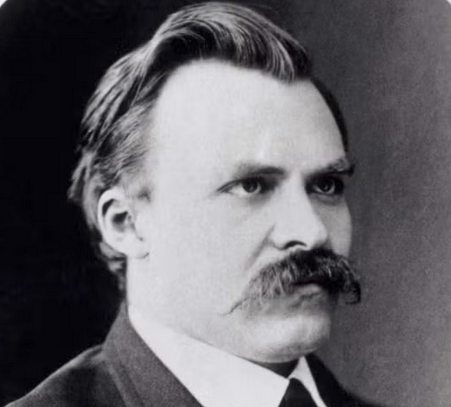
The man who is guided by concepts and abstractions only succeeds by such means in warding off misfortune, without ever gaining any happiness for himself from these abstractions. And while he aims for the greatest possible freedom from pain, the intuitive man, standing in the midst of a culture, already reaps from his intuition a harvest of continually inflowing illumination, cheer, and redemption in addition to obtaining a defense against misfortune. To be sure, he suffers more intensely, when he suffers; he even suffers more frequently, since he does not understand how to learn from experience and keeps falling over and over again into the same ditch.
7 months 3 weeks ago
God gave us the gift of life; it is up to us to give ourselves the gift of living well.

6 months 3 weeks ago
I could never divide myself from any man upon the difference of an opinion, or be angry with his judgement for not agreeing with me in that, from which perhaps within a few days I should dissent myself.
▼
Source
source
Section 6
3 months 3 weeks ago
Whensoever hostile aggressions...require a resort to war, we must meet our duty and convince the world that we are just friends and brave enemies.
▼
Source
source
Letter to Andrew Jackson

4 months 3 days ago
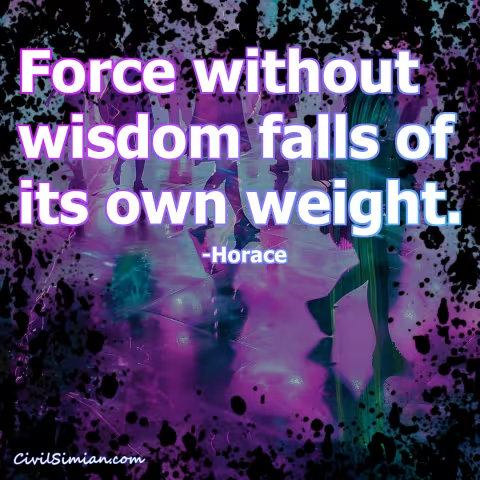
Camus said there is only really one serious philosophical question, which is whether or not to commit suicide. I think there are four or five serious philosophical questions: The first one is: Who started it? The second is: Are we going to make it? The third is: Where are we going to put it? The fourth is: Who's going to clean up? And the fifth: Is it serious?
▼
Source
source
Out Of Your Mind (2004), Audio lecture 1: The Nature of Consciousness: A Game That's Worth The Candle
8 months 1 week ago
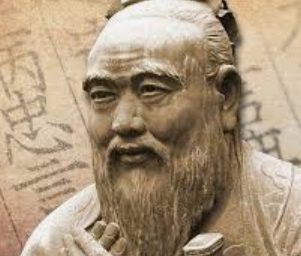
Cornered vessel without corners, strange cornered vessel, strange cornered vessel.

7 months 3 weeks ago
Without the aid of trained emotions the intellect is powerless against the animal organism. I had sooner play cards against a man who was quite skeptical about ethics, but bred to believe that 'a gentleman does not cheat,' than against an irreproachable moral philosopher who had been brought up among sharpers. In battle it is not syllogisms that will keep the reluctant nerves and muscles to their post in the third hour of the bombardment.

5 months 4 days ago
When one is a stranger to oneself then one is estranged from others too. If one is out of touch with oneself, then one cannot touch others.

6 months 1 week ago
If all men, by the act of being born, are destined to suffer violence, that is a truth to which the empire of circumstances closes their minds.
▼
Source
source
in The Simone Weil Reader, p. 163

7 months 3 weeks ago
If you try to imagine, as nearly as you can, what an amount of misery, pain and suffering of every kind the sun shines upon in its course, you will admit that it would be much better if, on the earth as little as on the moon, the sun were able to call forth the phenomena of life; and if, here as there, the surface were still in a crystalline state.
▼
Source
source
"On the Sufferings of the World"
7 months 3 weeks ago
Children are all foreigners.
▼
Source
source
September 25, 1839

8 months 2 weeks ago
Everything considered, a determined soul will always manage.
5 months 2 weeks ago
By electricity we have not been driven out of our senses so much as our senses have been driven out of us.
▼
Source
source
(p. 375)
6 months 4 days ago
In spite of the universalistic spirit of the monotheistic Western religions and of the progressive political concepts that are expressed in the idea "that all men are created equal," love for mankind has not become a common experience. Love for mankind is looked upon as an achievement which, at best, follows love for an individual or as an abstract concept to be realized only in the future. But love for man cannot be separated from love for one individual. To love one person productively means to be related to his human core, to him as representing mankind. Love for one individual, in so far as it is divorced from love for man, can refer only to the superficial and to the accidental; of necessity it remains shallow.
▼
Source
source
Ch. 2
7 months 3 weeks ago
What seem our worst prayers may really be, in God's eyes, our best. Those, I mean, which are least supported by devotional feeling. For these may come from a deeper level than feeling. God sometimes seems to speak to us most intimately when he catches us, as it were, off our guard.

7 months 2 weeks ago
One often makes a remark and only later sees how true it is.
▼
Source
source
Journal entry (11 October 1914), p. 10e
6 months 4 weeks ago
Abstract terms (however useful they may be in argument) should be discarded in meditation, and the mind should be fixed on the particular and the concrete, that is, on the things themselves.
▼
Source
source
Paragraph 4
8 months ago
All the passages in the Holy Scriptures that mention assistance are they that do away with "free-will", and these are countless...For grace is needed, and the help of grace is given, because "free-will" can do nothing.
▼
Source
source
p. 270
CivilSimian.com created by AxiomaticPanic, CivilSimian, Kalokagathia