

8 months 3 weeks ago
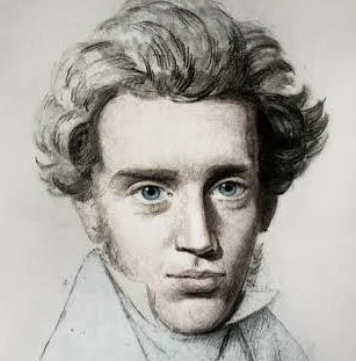
In an age as agitated as ours, it no longer suffices just to be advertised in the newspaper. To be advertised in this way is the same thing as being consigned to oblivion. If one is to be noticed, once must as least appear on the first page under a hand that points to and, as it were, announces or advertises the advertisement.
6 months 1 day ago
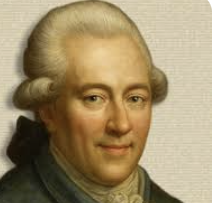
There exists a species of transcendental ventriloquism by means of which men can be made to believe that something said on earth comes from Heaven.
▼
Source
source
F 84
7 months 5 days ago
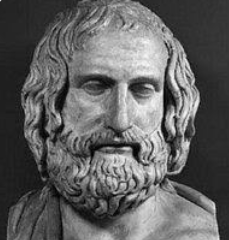
When it comes to consideration of how to do well in running the city, which must proceed entirely through justice and soundness of mind.
▼
Source
source
As quoted in Protagoras by Plato

6 months 3 weeks ago
History, it is easily perceived, is a picture-gallery containing a host of copies and very few originals.
▼
Source
source
p. 88

3 months 2 weeks ago
Being Gentlemen and very far from the litigious humour of loving to wrangle about words or terms or notions as empty; they had before his coming in, readily agreed promiscuously to use when they pleased Elements and Principles as terms equivalent: and to understand both by the one and the other, those primitive and simple bodies of which the mixt ones are said to be composed, and into which they are ultimately resolved.
6 months 3 weeks ago
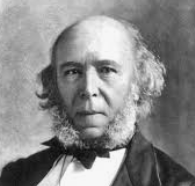
The universal basis of co-operation is the proportioning of benefits received to services rendered.
▼
Source
source
Ch. 8, The Sociological View
7 months 3 weeks ago
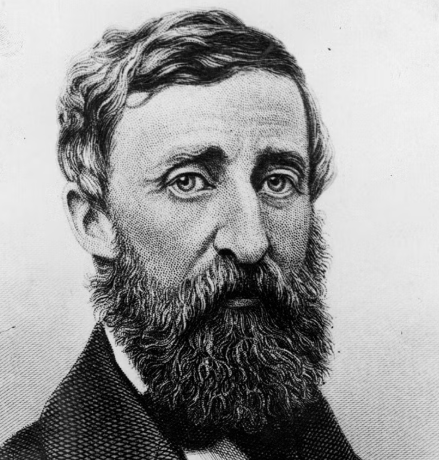
It is remarkable, that almost all speakers and writers feel it to be incumbent on them, sooner or later, to prove or to acknowledge the personality of God. ... In reading a work on agriculture, we have to skip the author's moral reflections, and the words "Providence" and "He" scattered along the page, to come at the profitable level of what he has to say. What he calls his religion is for the most part offensive to the nostrils. ... There is more religion in men's science than there is science in their religion.
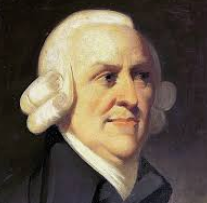
7 months 3 weeks ago
Every man is, no doubt, by nature, first and principally recommended to his own care; and as he is fitter to take care of himself than of any other person, it is fit and right that it should be so.
▼
Source
source
Section II, Chap. II.

5 months 3 weeks ago
Every body continues in its state of rest, or of uniform motion in a right line, unless it is compelled to change that state by forces impressed upon it.
▼
Source
source
Laws of Motion, I
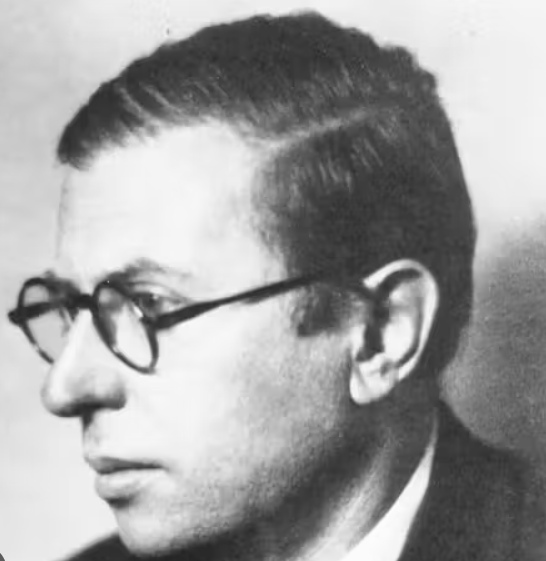
7 months 2 weeks ago
Understand me: I wish to be a man from somewhere, a man among men. You see, a slave, when he passes by, weary and surly, carrying a heavy load, limping along and looking down at his feet, only at his feet to avoid falling down; he is in his town, like a leaf in greenery, like a tree in a forest, argos surrounds him, heavy and warm, full of herself; I want to be that slave, Electra, I want to pull the city around me and to roll myself up in it like a blanket. I will not leave.
▼
Source
source
Orestes to Electra, Act 2


4 months 6 days ago
If you set a high value on liberty, you must set a low value on everything else.

4 months 1 week ago
These are the two vices that beset Government Offices; both of them originating in insufficient Intellect,-that sad insufficiency from which, directly or indirectly, all evil whatsoever springs!

7 months 2 weeks ago
We have two bits of evidence about the Somebody. One is the universe He has made. If we used that as our only clue, I think we should have to conclude that He was a great artist (for the universe is a very beautiful place), but also that He is quite merciless and no friend to man (for the universe is a very dangerous and terrifying place.) ...The other bit of evidence is that Moral Law which He has put in our minds. And this is a better bit of evidence than the other, because it is inside information. You find out more about God from the Moral Law than from the universe in general just as you find out more about a man by listening to his conversation than by looking at a house he has built.
▼
Source
source
Book I, Chapter 5, "We Have Cause to Be Uneasy"

7 months 3 weeks ago
Wherever Macdonald sits, there is the head of the table.
▼
Source
source
par. 37
5 months ago
The point is that philosophy is seen to have come full circle, and to have exhausted itself.
▼
Source
source
Chapter 5, Nietzsche's Styles, p. 95

6 months 4 days ago
Once again, I experienced that overwhelming joy in the universe that I had felt in London outside the V and A. But this time, my consciousness of the world seemed larger, more complex. It was the mystic's sensation of oneness, of everything blending into everything else. Everything I looked at reminded me of something else, which also became present to my consciousness, as if I were simultaneously seeing a million worlds and smelling a million scents and hearing a million sounds-- not mixed up, but each separate and clear. I was overwhelmed with a sense of my smallness in the face of this vast, beautiful, objective universe, this universe whose chief miracle is that it exists, as well as myself. It is no dream, but a great garden in which life is trying to obtain a foothold. I experienced a desire to burst into tears of gratitude; then I controlled it, and the feeling subsided into a calm sense of immense, infinite beauty.
▼
Source
source
pp. 237-238

4 months 4 weeks ago
Instead of enabling humans to improve their lot, science degrades the natural environment in which humans must live. Instead of enabling death to be overcome, it produces ever more powerful technologies of mass destruction. None of this is the fault of science; what it shows is that science is not sorcery. The growth of knowledge enlarges what humans can do. It cannot reprieve them from being what they are.
▼
Source
source
Sweet Morality (p. 235)
7 months 1 week ago
Themistocles being asked whether he would rather be Achilles or Homer, said, "Which would you rather be,-a conqueror in the Olympic games, or the crier that proclaims who are conquerors?"
▼
Source
source
48 Themistocles

7 months 4 weeks ago
There is no man so good that if he placed all his actions and thoughts under the scrutiny of the laws, he would not deserve hanging ten times in his life.
▼
Source
source
Ch. 9
4 months 2 days ago
World-view is a product of life-view, not vice versa.
4 months 1 week ago
O poor mortals, how ye make this earth bitter for each other.
▼
Source
source
Pt. I, Bk. V, ch. 5.
6 months 2 weeks ago
It is not politics that can bring true liberty to the soul; that must be achieved, if at all, by philosophy;
▼
Source
source
"The Irony of Liberalism"

6 months 2 weeks ago
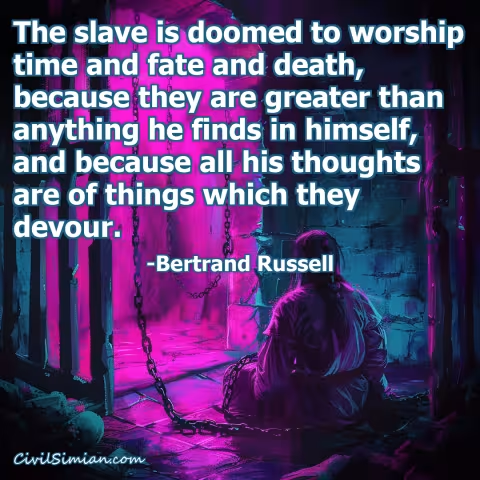
Once we begin to want, we fall under the jurisdiction of the Devil.


7 months 2 weeks ago
Political questions are far too serious to be left to the politicians.
▼
Source
source
Men in Dark Times
7 months 3 weeks ago
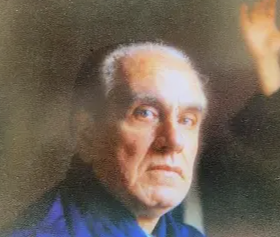
The Upanishads and the Vedas haunt me. In them I have found eternal compensation, unfathomable power, unbroken peace.
▼
Source
source
Quoted in S. Londhe, A Tribute to Hinduism, 2008

3 months 4 weeks ago
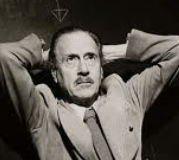
The occult war is a battle that is waged imperceptibly by the forces of global subversion, with means and in circumstances ignored by current historiography. The notion of occult war belongs to a three-dimensional view of history: this view does not regard as essential the two superficial dimensions of time and space (which include causes, facts, and visible leaders) but rather emphasizes the dimension of depth, or the "subterranean" dimension in which forces and influences often act in a decisive manner, and which, more often not than not, cannot be reduced to what is merely human, whether at an individual or a collective level"
5 months 2 weeks ago
Bless advertising art for its pictorial vitality and verbal creativity.
▼
Source
source
(p. 18)
7 months 3 weeks ago
A living dog is better than a dead lion. Shall a man go and hang himself because he belongs to the race of pygmies, and not be the biggest pygmy that he can? Let every one mind his own business, and endeavor to be what he was made. Why should we be in such desperate haste to succeed, and in such desperate enterprises? If a man does not keep pace with his companions, perhaps it is because he hears a different drummer. Let him step to the music which he hears, however measured or far away.
▼
Source
source
pp. 366-67

6 months 2 weeks ago
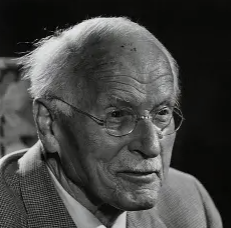
The woman who fights against her father still has the possibility of leading an instinctive, feminine existence, because she rejects only what is alien to her. But when she fights against the mother she may, at the risk of injury to her instincts, attain to greater consciousness, because in repudiating the mother she repudiates all that is obscure, instinctive, ambiguous, and unconscious in her own nature.
▼
Source
source
"Psychological Aspects of the Mother Archetype" (1939). In CW 9, Part I: The Archetypes and the Collective Unconscious. P. 186



8 months ago
This type of man who is devoted to the study of wisdom is always most unlucky in everything, and particularly when it comes to procreating children; I imagine this is because Nature wants to ensure that the evils of wisdom shall not spread further throughout mankind.

8 months 6 days ago
It is unlikely that the good of a snail should reside in its shell: so is it likely that the good of a man should?
▼
Source
source
Book I, ch. 20, 17.
6 months 3 weeks ago
It is not, what a lawyer tells me I may do; but what humanity, reason, and justice, tell me I ought to do.
3 months 1 week ago
I claim credit for nothing. Everything is determined, the beginning as well as the end, by forces over which we have no control. It is determined for the insect as well as for the star. Human beings, vegetables or cosmic dust, we all dance to a mysterious tune, intoned in the distance by an invisible player.
8 months 6 days ago
To the rational being only the irrational is unendurable, but the rational is endurable.
▼
Source
source
Variant translation: To a reasonable creature, that alone is insupportable which is unreasonable; but everything reasonable may be supported. Book I, ch. 2,1.

6 months 3 weeks ago
It cannot at this time be too often repeated; line upon line; precept upon precept; until it comes into the currency of a proverb, To innovate is not to reform.
▼
Source
source
p. 20
6 months 1 week ago
Montaigne puts not self-satisfied understanding but a consciousness astonished at itself at the core of human existence.
▼
Source
source
Signs, trans. R. McCleary (Evanston: 1964), p. 203
8 months 2 weeks ago
Now any dogma, based primarily on faith and emotionalism, is a dangerous weapon to use on others, since it is almost impossible to guarantee that the weapon will never be turned on the user.
5 months 3 weeks ago
All state obligations are against the conscience of a Christian: the oath of allegiance, taxes, law proceedings and military service.
▼
Source
source
Chapter VII, Significance of Compulsory Service
4 months 4 weeks ago
Human rights are not just cultural or legal constructions, as fashionable western relativists are fond of claiming. They are universal values. To deny the benefits of the new regime of rights to other cultures is to patronise them in a way that is reminiscent of the colonial era. If the new regime on torture is good enough for the US, who can say that it is not good for everyone?
4 months 2 days ago
For a country to have a great writer ... is like having another government. That's why no régime has ever loved great writers, only minor ones.
▼
Source
source
Innokenty, in Ch. 57
7 months 3 weeks ago
I myself believe that the evidence for God lies primarily in inner personal experiences.
▼
Source
source
Lecture III, Some Metaphysical Problems Pragmatically Considered
CivilSimian.com created by AxiomaticPanic, CivilSimian, Kalokagathia