

4 months 1 day ago
Modern mind has become more and more calculating. The calculative exactness of practical life which the money economy has brought about corresponds to the ideal of natural science: to transform the world into an arithmetic problem, to fix every part of the world by mathematical formulas. Only money economy has filled the days of so many people with weighing, calculating, with numerical determinations, with a reduction of qualitative values to quantitative ones.
▼
Source
source
p. 414
7 months 4 weeks ago
We are beggars: this is true.
▼
Source
source
"The Last Written Words of Luther," Table Talk No. 5468, (16 February 1546), in Dr. Martin Luthers Werke (1909) as translated by James A. Kellerman, Band 85 (TR 5) 317-318

6 months 1 week ago
But the capacity to enjoy is impossible without the capacity to suffer; and the faculty of enjoyment is one with that of pain. Whosoever does not suffer does not enjoy, just as whosoever is insensible to cold is insensible to heat.

7 months 2 weeks ago
The very man who has argued you down will sometimes be found, years later, to have been influenced by what you said.
▼
Source
source
Reflections on the Psalms (1958), ch. VII: Connivance, p. 73
6 months 1 week ago
The ultimate goal of the arriviste's aspirations is not to acquire a thing of value, but to be more highly esteemed than others. He merely uses the "thing" as an indifferent occasion for overcoming the oppressive feeling of inferiority which results from his constant comparisons.
▼
Source
source
L. Coser, trans. (1973), pp. 55-56
7 months 4 weeks ago
Arts and sciences are not cast in a mould, but are formed and perfected by degrees, by often handling and polishing, as bears leisurely lick their cubs into form.
▼
Source
source
Book II, Ch. 12. Apology for Raimond Sebond
6 months 2 weeks ago
Now, to say that a lot of objects is finite, is the same as to say that if we pass through the class from one to another we shall necessarily come round to one of those individuals already passed; that is, if every one of the lot is in any one-to-one relation to one of the lot, then to every one of the lot some one is in this same relation.
6 months 1 week ago
The function of objective thinking is to reduce all phenomena which bear witness to the union of subject and world, putting in their place the clear idea of the object as in itself and of the subject as pure consciousness. It therefore severs the links which unite the thing and the embodied subject, leaving only sensible qualities to make up our world (to the exclusion of the modes of appearance which we have described), and preferably visual qualities, because these give the impression of being autonomous, and because they are less directly linked to our body and present us with an object rather than introducing us into an atmosphere. But in reality all things are concretions of a setting, and any explicit perception of a thing survives in virtue of a previous communication with a certain atmosphere.
▼
Source
source
p. 374
5 months 1 week ago
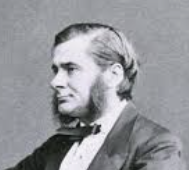
Our reverence for the nobility of manhood will not be lessened by the knowledge, that Man, is in substance and in structure, one with the brutes; for, he alone possesses the marvellous endowment of intelligible and rational speech, whereby, in the secular period of his existence, he has slowly accumulated and organized the experience which is almost wholly lost with the cessation of every individual life in other animals; so that now he stands raised upon it as on a mountain top, far above the level of his humble fellows, and transfigured from his grosser nature by reflecting, here and there, a ray from the infinite source of truth.
▼
Source
source
Ch.2, p. 132
4 months 1 week ago
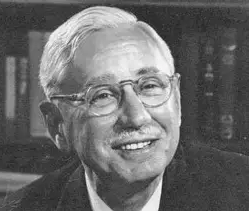
Science tells us how to heal and how to kill; it reduces the death rate in retail and then kills us wholesale in war; but only wisdom - desire coordinated in the light of all experience - can tell us when to heal and when to kill. To observe processes and to construct means is science; to criticize and coordinate ends is philosophy: and because in these days our means and instruments have multiplied beyond our interpretation and synthesis of ideals and ends, our life is full of sound and fury, signifying nothing. For a fact is nothing except in relation to desire; it is not complete except in relation to a purpose and a whole. Science without philosophy, facts without perspective and valuation, cannot save us from havoc and despair. Science gives us knowledge, but only philosophy can give us wisdom.
▼
Source
source
Introduction : On the Uses of Philosophy

7 months 3 weeks ago
We do not count a man's years until he has nothing else to count.
▼
Source
source
Old Age
8 months ago
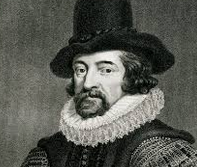
Time, which is the author of authors.
▼
Source
source
Book I, iv, 12
7 months 4 weeks ago
I approached the task of destroying images by first tearing them out of the heart through God's Word and making them worthless and despised. This indeed took place before Dr. Karlstadt ever dreamed of destroying images. For when they are no longer in the heart, they can do no harm when seen with the eyes. But Dr. Karlstadt, who pays no attention to matters of the heart, has reversed the order by removing them from sight and leaving them in the heart. For he does not preach faith, nor can he preach it; unfortunately, only now do I see that. Which of these two forms of destroying images is best, I will let each man judge for himself.
▼
Source
source
pp. 84-85
7 months 3 weeks ago
The cup of life is not so shallow
That we have drained the best
That all the wine at once we swallow
And lees make all the rest.
▼
Source
source
1827
6 months 6 days ago
It is the business of the future to be dangerous; and it is among the merits of science that it equips the future for its duties.
▼
Source
source
Ch. 13: "Requisites for Social Progress", p. 291
7 months 3 weeks ago
Since property here exists in the form of stock, its movement and transfer become purely a result of gambling on the stock exchange, where the little fish are swallowed by the sharks and the lambs by the stock exchange wolves.
▼
Source
source
Vol. III, Ch. XXVII, The Role of Credit, p. 440.
6 months 3 weeks ago
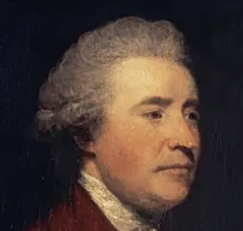
Hypocrisy, of course, delights in the most sublime speculations; for, never intending to go beyond speculation, it costs nothing to have it magnificent.
3 months 1 week ago
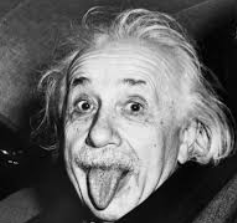
By a clock we understand anything characterized by a phenomenon passing periodically through identical phases so that we must assume, by the principle of sufficient reason, that all that happens in a given period is identical with all that happens in an arbitrary period.
7 months 2 weeks ago
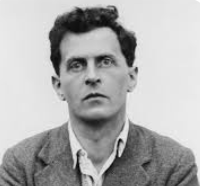
Frazer is much more savage than most of his savages, for they are not as far removed from the understanding of spiritual matter as a twentieth-century Englishman. His explanations of primitive practices are much cruder than the meaning of these practices themselves.
▼
Source
source
Ch. 7 : Remarks on Frazer's Golden Bough, p. 131

8 months 1 week ago
Therefore let every Christian, yea, let the whole body of Christ everywhere cry out, despite the tribulations it endures, despite temptations and countless scandals, saying: "Preserve my soul, for I am holy; save Thy servant, O my God, that trusteth in thee" (Ps. 85:2) No, this holy one is not proud, for he trusts in God.
▼
Source
source
p.429
6 months 3 weeks ago
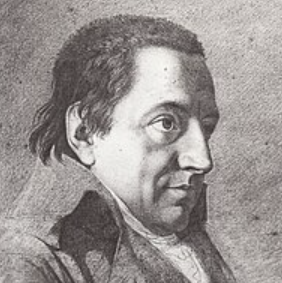
Science raises itself above all Ages and all Times, embracing and apprehending the ONE UNCHANGING TIME as the higher source of all Ages and Epochs, and grasping that vast idea in its free, unbounded comprehension.
▼
Source
source
p. 11
3 months 2 weeks ago
Final causes or intentions are the torment of modern philosophy, which neglects nothing to get rid of them. From this, among other things, comes its great axiom: nature creates only individuals. Indeed, since all classification supposes order, this philosophy has denied classes to deny order. In order to establish this marvellous reasoning, it fixes its suspicious eyes on the differences between beings to dispense itself from turning them to their similarities. It does not want to recognize that nuances between classes and individuals constitute another order, and that diversity in resemblance supposes intention more visibly than mere resemblance.
7 months 2 weeks ago
We may become the makers of our fate when we have ceased to pose as its prophets.
▼
Source
source
Introduction
7 months 3 weeks ago
...they cudgel their brains with absurd questions, such as, for instance, why God did not make the world many centuries earlier. They persuade themselves that it is easy to conceive, to be sure, how God may discern what is present, that is, what is actual in the time in which he is, but how He may foresee what is future, that is, what is actual in the time in which He is not yet, they deem an intellectual difficulty; as if the existence of the Necessary Being descended through all the moments of an imaginary time, and, having already exhausted a part of His duration, saw before Him the eternity He was yet to live simultaneously with the present events of the world. All these difficulties upon proper insight into the notion of time vanish like smoke.
6 months 3 weeks ago
The correct relationship between the higher and lower classes, the appropriate mutual interaction between the two is, as such, the true underlying support on which the improvement of the human species rests. The higher classes constitute the mind of the single large whole of humanity; the lower classes constitute its limbs; the former are the thinking and designing part, the latter the executive part.
▼
Source
source
The System of Ethics According to the Principles of the Wissenschaftslehre (1798; Cambridge, 2005), p. 320.
3 months 3 weeks ago
The Sensations are the 'Objective', the Ideas the 'Subjective' part of every act of perception or knowledge.

4 months 1 week ago
In the true Literary Man there is thus ever, acknowledged or not by the world, a sacredness: he is the light of the world; the world's Priest;-guiding it, like a sacred Pillar of Fire, in its dark pilgrimage through the waste of Time.
5 months 3 weeks ago
There are only a few images that are not forced to provide meaning, or have to go through the filter of a specific idea.
7 months 1 week ago
I think of the course of human history as a long, swelling, increasingly polyphonic poem - a poem that leads up to nothing save itself. When the species is extinct, "human nature's total message" will not be a set of propositions, but a set of vocabularies - the more, and the more various, the better.
▼
Source
source
Response to Hartshorne in 'Rorty and Pragmatism, The Philosopher Responds to his Critics', p. 33

6 months 2 weeks ago
I like thought which preserves a whiff of flesh and blood, and I prefer a thousand times an idea rising from sexual tension or nervous depression to empty abstraction.
5 months 2 weeks ago
For him who loves labor, there is always something to do.
▼
Source
source
Maxim 219
5 months 2 weeks ago
When Fortune flatters, she does it to betray.
▼
Source
source
Maxim 277
7 months 2 weeks ago
... the attempt to make heaven on earth invariably produces hell. It leads to intolerance. It leads to religious wars, and to the saving of souls through the inquisition. And it is, I believe, based on a complete misunderstanding of our moral duties. It is our duty to help those who need help; but it cannot be our duty to make others happy, since this does not depend on us, and since it would only too often mean intruding on the privacy of those towards whom we have such amiable intentions.
▼
Source
source
Vol. 2, Ch. 24 "Oracular Philosophy and the Revolt against Reason"
6 months 2 weeks ago
We must live, you used to say, as if we were never going to die. - Didn't you know that's how everyone lives, including those obsessed with Death?

7 months 3 weeks ago
For in spite of language, in spite of intelligence and intuition and sympathy, one can never really communicate anything to anybody.
▼
Source
source
"Sermons in Cats"
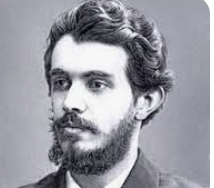
6 months 1 week ago
Ethics occupies a central place in philosophy because it is concerned with sin, with the origin of good and evil and with moral valuations. And since these problems have a universal significance, the sphere of ethics is wider than is generally supposed. It deals with meaning and value and its province is the world in which the distinction between good and evil is drawn, evaluations are made and meaning is sought.
▼
Source
source
The Destiny of Man (1931), p. 15
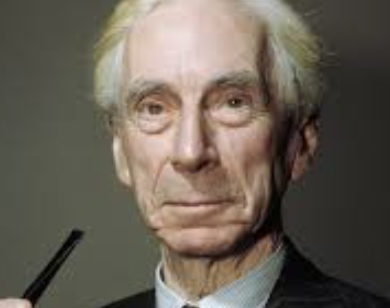
7 months 3 weeks ago
For my part, while I am as convinced a Socialist as the most ardent Marxian, I do not regard Socialism as a gospel of proletarian revenge, nor even, primarily, as a means of securing economic justice. I regard it primarily as an adjustment to machine production demanded by considerations of common sense, and calculated to increase the happiness, not only of proletarians, but of all except a tiny minority of the human race.
▼
Source
source
Ch. 7: The Case for Socialism
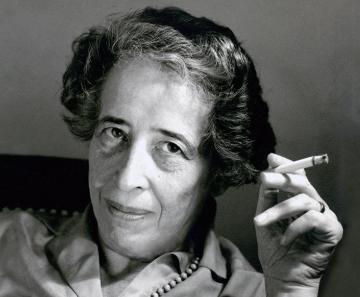
7 months 2 weeks ago
In a head-on clash between violence and power, the outcome is hardly in doubt. Nowhere is the self-defeating factor in the victory of violence over power more evident than in the use of terror to maintain domination, about whose weird successes and eventual failures we know perhaps more than any generation before us. Violence can destroy power; it is utterly incapable of creating it.
▼
Source
source
On Violence

6 months 4 days ago
Sadism is plainly connected with the need for self-assertion. At the same time it cannot be separated from the idea of defeat. A sadist is a man, who, in some sense, has his back to the wall. Nothing is further from sadism, for example, than the cheerful, optimistic mentality of a Shaw or Wells.
▼
Source
source
p. 158
6 months 3 weeks ago
What is the wisdom of a book compared with the wisdom of an angel?
6 months 2 weeks ago
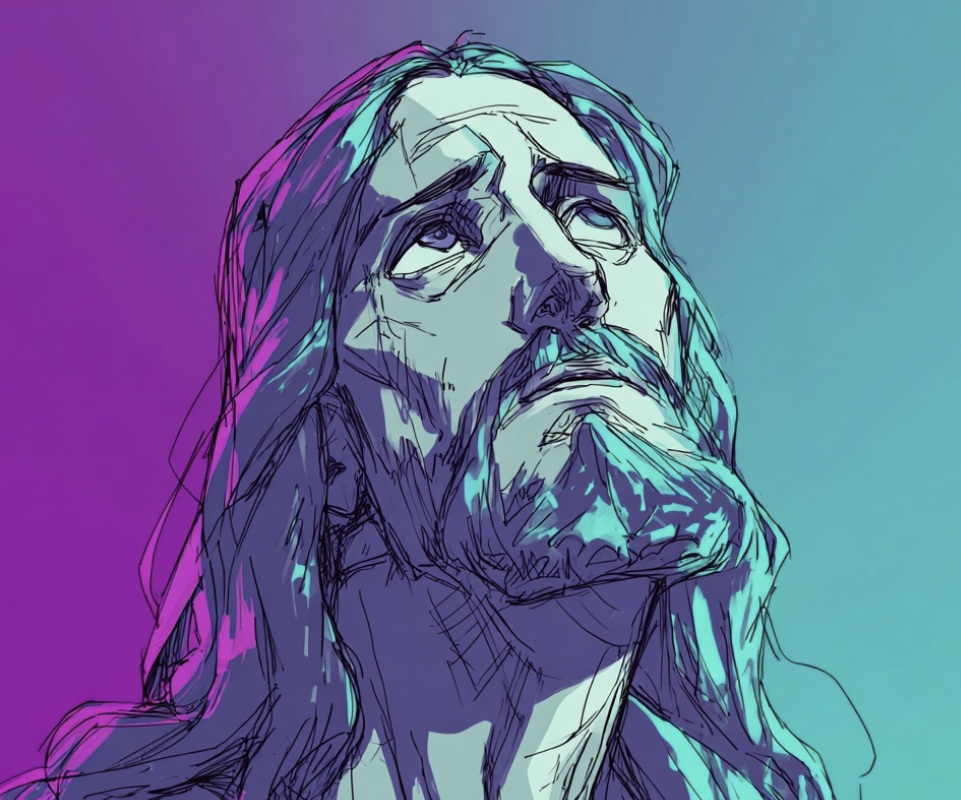
Can the children of the bridechamber mourn, as long as the bridegroom is with them? but the days will come, when the bridegroom shall be taken from them, and then shall they fast. No man putteth a piece of new cloth unto an old garment, for that which is put in to fill it up taketh from the garment, and the rent is made worse. Neither do men put new wine into old bottles: else the bottles break, and the wine runneth out, and the bottles perish: but they put new wine into new bottles, and both are preserved.
▼
Source
source
9:15-17 (KJV)
7 months 3 weeks ago
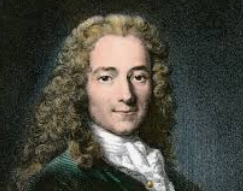
Indeed, history is nothing more than a tableau of crimes and misfortunes.
▼
Source
source
L'Ingénu, ch.10 (1767) Quoted in The End, part 13 of A Series of Unfortunate Events
7 months 3 weeks ago
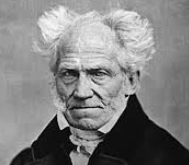
Only a male intellect clouded by the sexual drive could call the stunted, narrow-shouldered, broad-hipped and short-legged sex the fair sex.
▼
Source
source
Vol. 2, Ch. 27, § 369
7 months 4 weeks ago
Let all the 'free-will' in the world do all it can with all its strength; it will never give rise to a single instance of ability to avoid being hardened if God does not give the Spirit, or of meriting mercy if it is left to its own strength.
▼
Source
source
p. 202
7 months 3 weeks ago
If, when a man writes a poem or commits a murder, the bodily movements involved in his act result solely from physical causes, it would seem absurd to put up a statue to him in the one case and to hang him in the other.
▼
Source
source
"The Doctrine of Free Will"
CivilSimian.com created by AxiomaticPanic, CivilSimian, Kalokagathia