

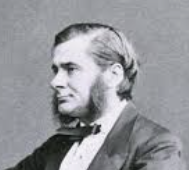
5 months 1 week ago
The whole analogy of natural operations furnishes so complete and crushing an argument against the intervention of any but what are termed secondary causes, in the production of all the phenomena of the universe; that, in view of the intimate relations between Man and the rest of the living world; and between the forces exerted by the latter and all other forces, I can see no excuse for doubting that all are co-ordinated terms of Nature's great progression, from the formless to the formed-from the inorganic to the organic-from blind force to conscious intellect and will.
▼
Source
source
Ch.2, p. 128
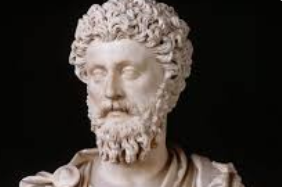
3 months 2 weeks ago
By remembering then that I am a part of such a whole, I shall be content with everything that happens. And inasmuch as I am in a manner intimately related to the parts which are of the same kind with myself, I shall do nothing unsocial, but I shall rather direct myself to the things which are of the same kind with myself, and I shall turn all my efforts to the common interest, and divert them from the contrary.
▼
Source
source
X, 6
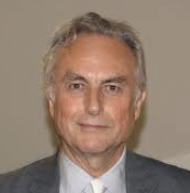
5 months 2 weeks ago
Darwin's 'survival of the fittest' is really a special case of a more general law of survival of the stable. The universe is populated by stable things. The universe is populated by stable things. A stable thing is a collection of atoms that is permanent enough or common enough to deserve a name. It may be a unique collection of atoms, such as the Matterhorn, that lasts long enough to be worth naming. Or it may be a class of entities, such as rain drops, that come into existence at a sufficiently high rate to deserve a collective name, even if any one of them is short-lived.
▼
Source
source
Ch. 2. The replicators

3 months 2 weeks ago
The most beautiful monuments of Athens belong to the century of Pericles. In Rome, what writers were produced under the Republic? Only Plautus and Terence. Lucretius, Sallust, and Cicero saw the Republic die. Then came the century of Augustus when the nation was all that it could be by way of talents. The arts, in general, need a king; they only flourish under the influence of sceptres. Even in Greece, the only country where they flourished in the milieu of a republic, Lysippos and Apelles worked for Alexander. Aristotle owed to Alexander's generosity the means to compose his history of animals; and, after the death of this monarch, the poets, scholars, and artists went to look for protection and rewards in the courts of his successors.
▼
Source
source
p. 179
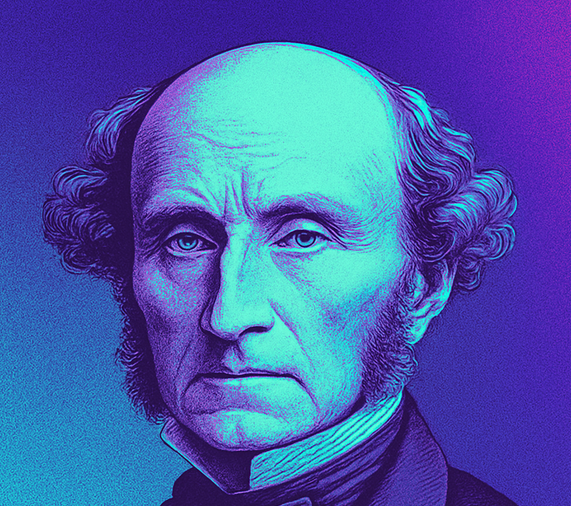
7 months 3 weeks ago
Human beings have faculties more elevated than the animal appetites, and when once made conscious of them, do not regard anything as happiness which does not include their gratification. I do not, indeed, consider the Epicureans to have been by any means faultless in drawing out their scheme of consequences from the utilitarian principle. To do this in any sufficient manner, many Stoic, as well as Christian elements require to be included. But there is no known Epicurean theory of life which does not assign to the pleasures of the intellect, of the feelings and imagination, and of the moral sentiments, a much higher value as pleasures than to those of mere sensation.
▼
Source
source
Ch. 2
5 months 2 weeks ago
The popularity of the paranormal, oddly enough, might even be grounds for encouragement. I think that the appetite for mystery, the enthusiasm for that which we do not understand, is healthy and to be fostered. It is the same appetite which drives the best of true science, and it is an appetite which true science is best qualified to satisfy.
▼
Source
source
"Science Delusion and the Appetite for Wonder", John Brockman, Edge.org, December 29, 1996
3 months 2 weeks ago
Today I escaped from anxiety. Or no, I discarded it, because it was within me, in my own perceptions-not outside.
▼
Source
source
(Hays translation) IX, 13
5 months 3 weeks ago
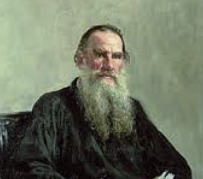
In the upper, rich, more educated classes of European society doubt arose as to the truth of that understanding of life which was expressed by Church Christianity. When, after the Crusades and the maximum development of papal power and its abuses, people of the rich classes became acquainted with the wisdom of the classics and saw, on the one hand, the reasonable lucidity of the teachings of the ancient sages, and on the other hand, the incompatibility of the Church doctrine with the teaching of Christ, they found it impossible to continue to believe the Church teaching.

3 months 3 weeks ago
I deplore with you the putrid state into which our newspapers have passed, and the malignity, the vulgarity, & mendacious spirit of those who write for them: and I enclose you a recent sample, the production of a New England judge, as a proof of the abyss of degradation into which we are fallen. These ordures are rapidly depraving the public taste and lessening its relish for sound food. As vehicles of information and a curb on our functionaries, they have rendered themselves useless by forfeiting all title to belief. That this has in a great degree been produced by the violence and malignity of party spirit I agree with you...
▼
Source
source
Letter to Walter Jones (2 January 1814)
5 months 2 weeks ago
There has been progress in design, but not progress in accomplishment.
▼
Source
source
Chapter 7 "Constructive Evolution" (p. 186)
6 months 1 week ago
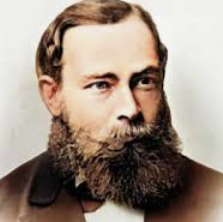
A scientist can hardly meet with anything more undesirable than to have the foundations give way just as the work is finished. I was put in this position by a letter from Mr. Bertrand Russell when the work was nearly through the press.
▼
Source
source
Note in the appendix of Grundlagen der Arithmetik (Vol. 2) after Frege had received a letter of Bertrand Russell in which Russell had explained his discovery of, what is now known as, Russell's paradox.

4 months 2 weeks ago
The political program of nation building in countries like Afghanistan and Iraq is one central example of the productive project of biopower and war. Nothing could be more postmodernist and antiessentialist than this notion of nation building.
7 months 3 weeks ago
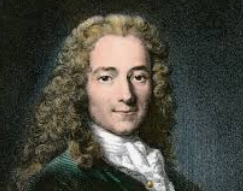
I die adoring God, loving my friends, not hating my enemies, and detesting superstition.
▼
Source
source
Déclaration de Voltaire, note to his secretary, Jean-Louis Wagnière, 28 February 1778


6 months 1 week ago
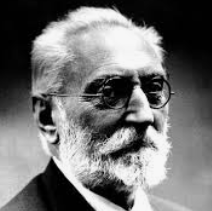
I will not say that the more or less poetical and unphilosophical doctrines that I am about to set forth are those which make me live; but I will venture to say that it is my longing to live and to live for ever that inspires these doctrines within me. And if by means of them I succeed in strengthening and sustaining this same longing in another, perhaps when it is all but dead, then I shall have performed a man's work, and above all, I shall have lived. In a word, be it with reason or without reason or against reason, I am resolved not to die. And if, when at last I die out, I die altogether, then I shall not have died out of myself - that is, I shall not have yielded myself to death, but my human destiny shall have killed me. Unless I come to lose my head, or rather my heart, I will not abdicate from life - life will be wrested from me.

6 months 1 week ago
The thought of being under absolute compulsion, the plaything of another, is unendurable for a human being. Hence, if every way of escape from the constraint is taken from him, there is nothing left for him to do but to persuade himself that he does the things he is forced to do willingly, that is to say, to substitute devotion for obedience. ... It is by this twist that slavery debases the soul: this devotion is in fact based on a lie, since the reasons for it cannot bear investigation. ... Moreover, the master is deceived too by the fallacy of devotion.
▼
Source
source
p. 142

4 months 4 weeks ago
Their minds befogged by fashionable nonsense about globalisation, western leaders believe liberal democracy is spreading unstoppably. The reality is continuing political diversity. Republics, empires, liberal and illiberal democracies, and a wide variety of authoritarian regimes will be with us for the foreseeable future. Globalisation is nothing more than the industrialisation of the planet, and increasing resource nationalism is an integral part of the process. (So is accelerating climate change, but that's another story.) As industrialisation spreads, countries that control natural resources use these resources to advance their strategic objectives.
▼
Source
source
Folly of the progressive fairytale, The Observer

4 months 1 week ago
Sarcasm I now see to be, in general, the language of the Devil; for which reason I have, long since, as good as renounced it.
▼
Source
source
Bk. II, ch. 4.
4 months 1 week ago
The seeing eye! It is this that discloses the inner harmony of things; what Nature meant, what musical idea Nature has wrapped up in these often rough embodiments. Something she did mean. To the seeing eye that something were discernible. Are they base, miserable things? You can laugh over them, you can weep over them; you can in some way or other genially relate yourself to them; - you can, at lowest, hold your peace about them, turn away your own and others' face from them, till the hour come for practically exterminating and extinguishing them!
7 months 3 weeks ago
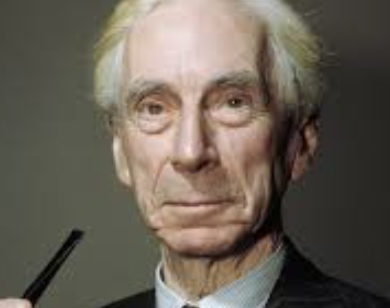
If human nature were unchangeable, as ignorant people still suppose it to be, the situation would indeed be hopeless.
▼
Source
source
Ch. 17: Some Prospects: Cheerful and Otherwise

7 months 3 weeks ago
And the final event to himself has been, that, as he rose like a rocket, he fell like the stick.
▼
Source
source
On Edmund Burke's reactions to the American and French revolutions.


6 months 4 days ago
The Outsider's case against society is very clear. All men and women have these dangerous, unnamable impulses, yet they keep up a pretense, to themselves, to others; their respectability, their philosophy, their religion, are all attempts to gloss over, to make civilized and rational something that is savage, unorganized, irrational. He is an Outsider because he stands for truth.
▼
Source
source
Chapter one, The Country of the Blind
3 months 3 weeks ago
I allow nothing for losses by death, but, on the contrary, shall presently take credit four per cent. per annum, for their increase over and above keeping up their own numbers.
▼
Source
source
On his profits from slavery as quoted in The Dark Side of Thomas Jefferson, by Henry Wiencek, Smithsonian Magazine,
4 months 1 week ago
These things, which we state lightly enough here, are yet of deep import, and indicate a mighty change in our whole manner of existence. For the same habit regulates not our modes of action alone, but our modes of thought and feeling. Men are grown mechanical in head and in heart, as well as in hand. They have lost faith in individual endeavour, and in natural force, of any kind. Not for internal perfection, but for external combinations and arrangements, for institutions, constitutions, for Mechanism of one sort or other, do they hope and struggle. Their whole efforts, attachments, opinions, turn on mechanism, and are of a mechanical character.
3 months 2 weeks ago
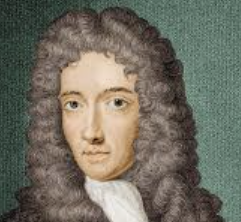
I fear that the chief Reason why Chymists have written so obscurely of their three Principles, may be, That not having Clear and Distinct Notions of them themselves, they cannot write otherwise then Confusedly of what they but Confusedly Apprehend. Not to say that divers of them, being Conscious to the Invalidity of their Doctrine, might well enough discerne that they could scarce keep themselves from being confuted, but by keeping themselves from being clearly understood.
8 months 3 weeks ago
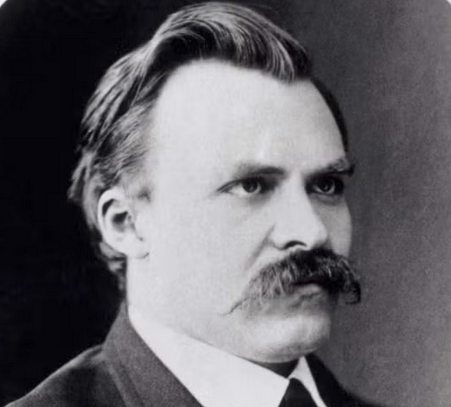
Our destiny exercises its influence over us even when, as yet, we have not learned its nature: it is our future that lays down the law of our today.
6 months 3 weeks ago
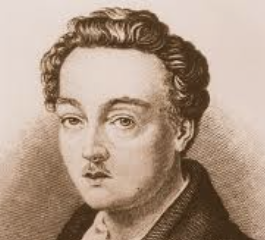
You women could make someone fall in love even with a lie.
▼
Source
source
Act I.
3 months 2 weeks ago
Either all things proceed from one intelligent source and come together as in one body, and the part ought not to find fault with what is done for the benefit of the whole; or there are only atoms, and nothing else than a mixture and dispersion. Why, then, art thou disturbed? Say to this ruling faculty, Art thou dead, art thou corrupted, art thou playing the hypocrite, art thou become a beast, dost thou herd and feed with the rest?
▼
Source
source
IX, 39
5 months 2 weeks ago
Since Sputnik and the satellites, the planet is enclosed in a manmade environment that ends "Nature" and turns the globe into a repertory theater to be programmed.
▼
Source
source
Shakespeare at the Globe mentioning "All the world's a stage, and all the men and women merely players" (As You Like It, Act II, Scene 7)
4 months 2 weeks ago
What we call objective reality is, in the last analysis, what is common to many thinking beings, and could be common to all; this common part, we shall see, can only be the harmony expressed by mathematical laws. It is this harmony... which is the sole objective reality, the only truth we can attain; and when I add that the universal harmony of the world is the source of all beauty, it will be understood what price we should attach to the slow and difficult progress which little by little enables us to know it better.
6 months 2 weeks ago
Now, to say that a lot of objects is finite, is the same as to say that if we pass through the class from one to another we shall necessarily come round to one of those individuals already passed; that is, if every one of the lot is in any one-to-one relation to one of the lot, then to every one of the lot some one is in this same relation.

7 months 2 weeks ago
"What is a thing?" is historical, because every report of the past, that is of the preliminaries to the question about the thing, is concerned with something static. This kind of historical reporting is an explicit shutting down of history, whereas it is, after all, a happening. We question historically if we ask what is still happening even if it seems to be past. We ask what is still happening and whether we remain equal to this happening so that it can really develop.
▼
Source
source
p. 43
3 months 3 weeks ago
Cultivators of the earth are the most valuable citizens. They are the most vigorous, the most independent, the most virtuous, and they are tied to their country and wedded to its liberty and interests by the most lasting bands. As long therefore as they can find employment in this line, I would not convert them into mariners, artisans, or any thing else. But our citizens will find employment in this line till their numbers, and of course their productions, become too great for the demand both internal and foreign.
▼
Source
source
Letter to John Jay (23 August 1785); published in The Papers of Thomas Jefferson (1953), edited by Julian P. Boyd, vol. 8, p. 426

7 months 1 week ago
The goal of maximizing the welfare of all may be better achieved by an ethic that accepts our inclinations and harnesses them so that, taken as a whole, the system works to everyone's advantage.
▼
Source
source
Chapter 6, A New Understanding Of Ethics, p. 157
6 months 1 week ago
Language transcends us and yet, we speak.
▼
Source
source
p. 349
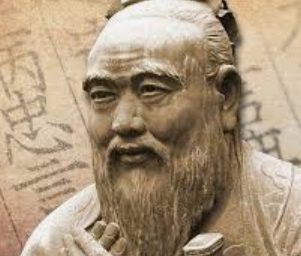
8 months 1 week ago
How abundantly do spiritual beings display the powers that belong to them! We look for them, but do not see them; we listen to, but do not hear them; yet they enter into all things, and there is nothing without them.
5 months ago
Taking the abolitionist project to the rest of the galaxy and beyond sounds crazy today; but it's the application of technology to a very homely moral precept writ large, not the outgrowth of a revolutionary new ethical theory. So long as sentient beings suffer extraordinary unpleasantness - whether on Earth or perhaps elsewhere - there is a presumptive case to eradicate such suffering wherever it is found.
▼
Source
source
4. Objections, No 32
4 months 4 weeks ago
Humans kill one another - and in some cases themselves - for many reasons, but none is more human than the attempt to make sense of their lives. More than the loss of life, they fear loss of meaning.
▼
Source
source
In the Puppet Theatre: Roof Gardens, Feathers and Human Sacrifice (p. 87)
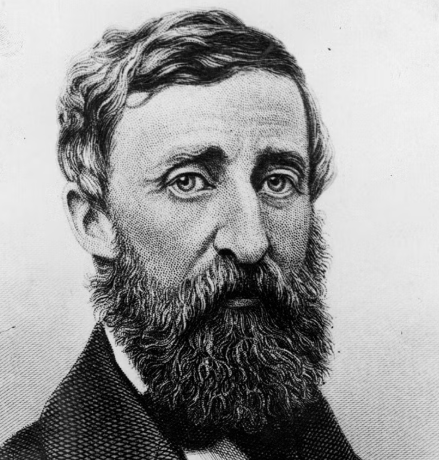
7 months 3 weeks ago
That virtue we appreciate is as much ours as another's. We see so much only as we possess.
▼
Source
source
June 22, 1839
4 months 4 weeks ago
Science is not distinguished from myth by science being literally true and myth only a type of poetic analogy. While their aims are different, both are composed of symbols we use to deal with a slippery world.
▼
Source
source
Beyond the Last Thought: Freud's cigars and the long way round to Nirvana (p. 96)

7 months 4 weeks ago
Hath God obliged himself not to exceed the bounds of our knowledge?
▼
Source
source
Book II, Ch. 12
5 months 2 weeks ago
Without the background of a remembered faith modernism loses its conviction: it becomes routinised. For a long time now it has been assumed that there can be no authentic creation in the sphere of high art which is not is some way a 'challenge' to the ordinary public. Art must give offence, stepping out of the future fully armed against the bourgeois taste for kitsch and cliché. But the result of this is that offence becomes a cliché.
▼
Source
source
Avant-garde and Kitsch (p. 86)
4 months 1 week ago
Music is well said to be the speech of angels.
▼
Source
source
The Opera (1852).
8 months 2 weeks ago
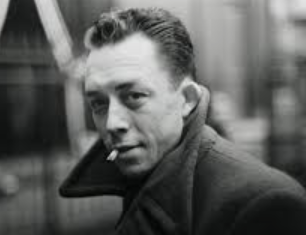
I leave Sisyphus at the foot of the mountain! One always finds one's burden again. But Sisyphus teaches the higher fidelity that negates the gods and raises rocks. He too concludes that all is well. This universe henceforth without a master seems to him neither sterile nor futile. Each atom of that stone, each mineral flake of that night filled mountain, in itself forms a world. The struggle itself toward the heights is enough to fill a man's heart. One must imagine Sisyphus happy.
4 months 1 week ago
Happy the people whose annals are blank in history books!
▼
Source
source
Life of Frederick the Great, Bk. XVI, ch. 1.
6 months 1 week ago
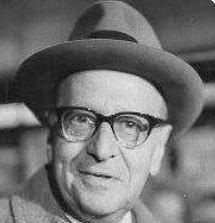
If it were not for the founder of the school, Charles S. Pierce, who has told us that he 'learned philosophy out of Kant,' one might be tempted to deny any philosophical pedigree to a doctrine that holds not that our expectations are fulfilled and our actions successful because our ideas are true, but rather that our ideas are true because our expectations are fulfilled and our actions successful. describing the pragmatist view,
▼
Source
source
p. 42.
3 months 2 weeks ago
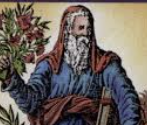
It is irreverent to the Gods to give you this demonstration, but for your sakes it shall be done.
▼
Source
source
As quoted in The Lives of the Sophists by Eunapius
7 months 3 weeks ago
What a queer work the Bible is. ...Some texts are very funny. Deut. XXIV, 5: "When a man hath taken a new wife, he shall not go out to war, neither shall he be charged with any business: but he shall be free at home one year, and shall cheer up his wife which he hath taken." I should never have guessed "cheer up" was a Biblical expression. Here is another really inspiring text: "Cursed be he that lieth with his mother-in-law. And all the people shall say, Amen." St Paul on marriage: "I say therefore to the unmarried and widows, It is good for them if they abide even as I. But if they cannot contain, let them marry: for it is better to marry than to burn." This has remained the doctrine of the Church to this day. It is clear that the Divine purpose in the text "it is better to marry than to burn" is to make us all feel how very dreadful the torments of Hell must be.
▼
Source
source
Letter to Colette, August 10, 1918
5 months 1 week ago
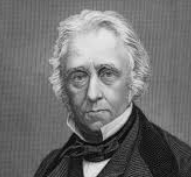
In all ages a chief cause of the intestine disorders of states has been that the natural distribution of power and the legal distribution of power have not corresponded with each other.
▼
Source
source
Speech in the House of Commons (28 February 1832), quoted in Speeches of the Right Honourable T. B. Macaulay, M.P. (1854), p. 91
CivilSimian.com created by AxiomaticPanic, CivilSimian, Kalokagathia