

7 months 4 weeks ago
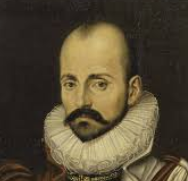
There are some defeats more triumphant than victories.
▼
Source
source
Ch. 30. Of Cannibals, tr. Cotton, rev. W. Hazlitt, 1842
6 months 1 week ago
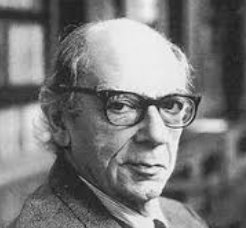
The very desire for guarantees that our values are eternal and secure in some objective heaven is perhaps only a craving for the certainties of childhood or the absolute values of our primitive past.
5 months 1 week ago
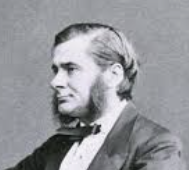
We have always thought that Mr. Darwin has unnecessarily hampered himself by adhering so strictly to his favourite "Natura non facit saltum." We greatly suspect that she does make considerable jumps in the way of variation now and then, and that these saltations give rise to some of the gaps which appear to exist in the series of known forms.


6 months 1 week ago
Everyone knows what made Berkeley notorious. He said that there were no material objects. He said the external world was in some sense immaterial, that nothing existed save ideas - ideas and their authors. His contemporaries thought him very ingenious and a little mad.
6 months 1 week ago
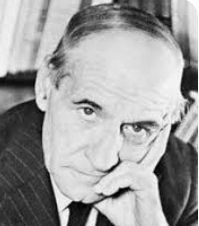
The State is always, whatever be its form - primitive, ancient, medieval, modern - an invitation issued by one group of men to other human groups to carry out some enterprise in common. That enterprise, be its intermediate processes what they may, consists in the long run in the organisation of a certain type of common life. ... [As Renan says,] "To have common glories in the past, a common will in the present; to have done great things together; to wish to do greater; these are the essential conditions which make up a people.... In the past, an inheritance of glories and regrets; in the future, one and the same programme to carry out.... The existence of a nation is a daily plebiscite."
▼
Source
source
Chapter XIV: Who Rules The World?
5 months 2 weeks ago
To travel hopefully is a better thing than to arrive.
▼
Source
source
El Dorado.
6 months 5 days ago
Einstein analyses the ideas of time-order and of simultaneity. Primarily (according to his analysis) time-order only refers to the succession of events at a given place. Accordingly each given place has its own time-order. But these time-orders are not independent in the system of nature, and their correlation is known to us by means of physical measurement. Now ultimately all physical measurement depends upon coincidence in time and place.
▼
Source
source
p. 51
6 months 2 weeks ago
By an object, I mean anything that we can think, i.e. anything we can talk about.
▼
Source
source
"Reflections on Real and Unreal Objects", Undated, MS 966
8 months 3 weeks ago
The immediacy of falling in love recognizes but one immediacy that is ebenburtig (of equal standing), and this is a religious immediacy; falling in love is too virginal to recognize any confidant other than God. But the religious is a new immediacy, has reflection in between-otherwise, paganism would actually be religious and Christianity not. That the religious is a new immediacy every person easily understands who is satisfied with following the honest path of ordinary common sense. And although I imagine I have but few readers, I confess nevertheless that I do imagine my readers to be among these, since I am far from wanting to instruct the admired ones, who make systematic discoveries a la Niels Klim, who have left their good skin in order to put on the “real appearance.
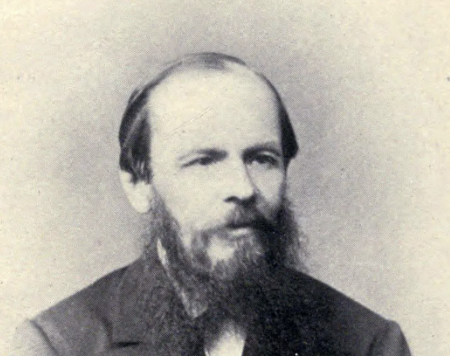
6 months 3 weeks ago
Is it really not possible to touch the gaming table without being instantly infected by superstition?

7 months 3 weeks ago
Society undergoes continual changes; it is barbarous, it is civilized, it is Christianized, it is rich, it is scientific; but this change is not amelioration. For everything that is given something is taken. Society acquires new arts, and loses old instincts. The civilized man has built a coach, but has lost the use of his feet; he has a fine Geneva watch, but cannot tell the hour by the sun.
▼
Source
source
p. 243
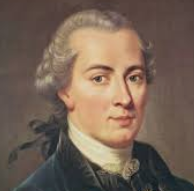
7 months 3 weeks ago
Philosophical knowledge is the knowledge gained by reason from concepts; mathematical knowledge is the knowledge gained by reason from the construction of concepts.
▼
Source
source
A 713, B 741
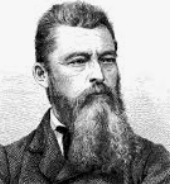
6 months 3 weeks ago
Every presentation of philosophy, whether oral or written, is to be taken and can only be taken in the sense of a means. Every system is only an expression or image of reason, and hence only an object of reason, an object which reason-a living power that procreates itself in new thinking beings-distinguishes from itself and posits as an object of criticism. Every system that is not recognized and appropriated as just a means, limits and warps the mind for it sets up the indirect and formal thought in the place of the direct, original and material thought.
▼
Source
source
Z. Hanfi, trans., in The Fiery Brook (1972), p. 67
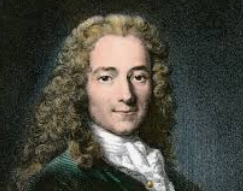
7 months 3 weeks ago
Thought depends largely on the stomach. In spite of this, those with the best stomachs are not always the best thinkers.
▼
Source
source
Letter to Jean le Rond d'Alembert, 20 August 1770
6 months 3 weeks ago
Fathers and teachers, I ponder, "What is hell?" I maintain that it is the suffering of being unable to love.
▼
Source
source
Book VI, Chapter 3 (trans. Constance Garnett)
5 months 3 weeks ago
All these people talk so eloquently about getting back to good old-fashioned values. Well, as an old poop I can remember back to when we had those old-fashioned values, and I say let's get back to the good old-fashioned First Amendment of the good old-fashioned Constitution of the United States-and to hell with the censors! Give me knowledge or give me death!
▼
Source
source
As quoted in "An Interview with Kurt Vonnegut, Jr., Carey Horwitz, Library Journal, Apr. 15, 1973: 1131

5 months 4 days ago
Civilization, as we know it, is a movement and not a condition, a voyage and not a harbour. No known civilization has, ever reached the goal of civilization yet. There has never been a communion of saints on earth. In the least uncivilized society at its least uncivilized moment, the vast majority of its members have remained very near indeed to the primitive human level. And no society has ever been secure of holding such ground as it has managed to gain in its spiritual advance. Ch. 8: Civilization on Trial Variants: Civilization is a movement and not a condition, a voyage and not a harbor.
▼
Source
source
As quoted in Reader's Digest (October 1958)


6 months 3 weeks ago
All those who seek to destroy the liberties of a democratic nation ought to know that war is the surest and shortest means to accomplish it.
▼
Source
source
Book Three, Chapter XXII.
3 months 2 weeks ago
The concept of the state presupposes the concept of the political.
4 months 6 days ago
Why does God afflict the best of men with ill-health, or sorrow, or other troubles? Because in the army the most hazardous services are assigned to the bravest soldiers: a general sends his choicest troops to attack the enemy in a midnight ambuscade, to reconnoitre his line of march, or to drive the hostile garrisons from their strong places. No one of these men says as he begins his march, " The general has dealt hardly with me," but "He has judged well of me."
▼
Source
source
De Providentia (On Providence), 4.8, translated by Aubrey Stewart
7 months 3 days ago
Time is the wisest of all things that are; for it brings everything to light.
▼
Source
source
As quoted in Diogenes Laërtius, The Lives and Opinions of Eminent Philosophers, I, 35
8 months 6 days ago
It is difficulties that show what men are.
▼
Source
source
Book I, ch. 24, 1.
5 months 3 weeks ago
Today's terrorism is not the product of a traditional history of anarchism, nihilism, or fanaticism. It is instead the contemporary partner of globalization.
▼
Source
source
The Spirit of Terrorism (2003) "The Violence of the Global"

4 months 4 weeks ago
The basis of science is the empirical method, which uses the senses to build up a picture of the world; but science tells us that our senses have evolved to help us get by, not to show us the world as it is. Science is only a systematic examination of our impressions, and in the end all each of us has left are our own sensations ... The end-result of the empirical method, then, is that each individual is left alone with their own experiences. We can escape this solitude, Balfour suggested, only if we accept that there is a divine mind.
▼
Source
source
Cross-correspondences (p. 69-70)
5 months 2 weeks ago
By involving all men in all men, by the electric extension of their own nervous systems, the new technology turns the figure of the primitive society into a universal ground that buries all previous figures.
▼
Source
source
(p. 25)

7 months 2 weeks ago
Without the aid of trained emotions the intellect is powerless against the animal organism. I had sooner play cards against a man who was quite skeptical about ethics, but bred to believe that 'a gentleman does not cheat,' than against an irreproachable moral philosopher who had been brought up among sharpers. In battle it is not syllogisms that will keep the reluctant nerves and muscles to their post in the third hour of the bombardment.
8 months ago
Sir Henry Wotton used to say that critics are like brushers of noblemen's clothes.
▼
Source
source
No. 64
6 months 2 weeks ago
We must make a very precise distinction between the official and consequently dictatorial prerogatives of society organized as a state, and of the natural influence and action of the members of a non-official, non-artificial society.

5 months 3 weeks ago
The hero of my tale, whom I love with all the power of my soul, whom I have tried to portray in all his beauty, who has been, is, and will be beautiful, is Truth.
▼
Source
source
Sevastopol in May (1855), Ch. 16
4 months 2 weeks ago
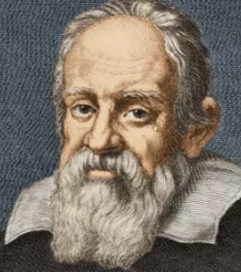
After the publication of my dialogues, I was summoned to Rome by the Congregation of the holy Office, where, being arrived on the 10th of February 1633, I was subjected to the infinite clemency of that tribunal, and of the Sovereign Pontiff, Urban the Eighth; who, notwithstanding, thought me deserving of his esteem.
▼
Source
source
pp. 145-146
6 months 2 weeks ago
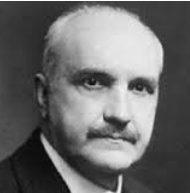
That life is worth living is the most necessary of assumptions and, were it not assumed, the most impossible of conclusions.
6 months 2 weeks ago
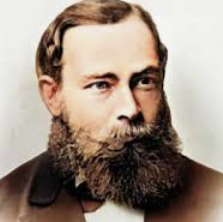
I hope I may claim in the present work to have made it probable that the laws of arithmetic are analytic judgments and consequently a priori. Arithmetic thus becomes simply a development of logic, and every proposition of arithmetic a law of logic, albeit a derivative one. To apply arithmetic in the physical sciences is to bring logic to bear on observed facts; calculation becomes deduction.
▼
Source
source
Gottlob Frege (1950 ). The Foundations of Arithmetic. p. 99.
6 months 3 weeks ago
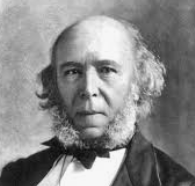
Opinion is ultimately determined by the feelings, and not by the intellect.
▼
Source
source
Pt. IV, Ch. 30 : General Considerations

7 months 2 weeks ago
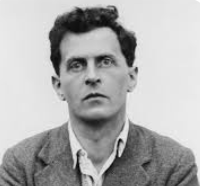
To believe in a God means to understand the question about the meaning of life. To believe in a God means to see that the facts of the world are not the end of the matter. To believe in God means to see that life has a meaning.
▼
Source
source
Journal entry (8 July 1916), p. 74e
4 months 6 days ago
Who profits by a sin has done the sin.
3 months 3 weeks ago
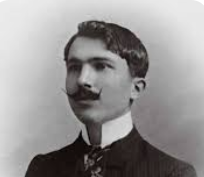
The ultimate most holy form of theory is action. Not to look on passively while the spark leaps from generation to generation, but to leap and to burn with it!
5 months 2 weeks ago
In tetrad form, the artefact is seen to be not netural or passive, but an active logos or utterance of the human mind or body that transforms the user and his ground.
▼
Source
source
p. 99


3 months 2 weeks ago
You, masters of the earth - princes, kings, emperors, powerful majesties, invincible conquerors - simply try to make the people go on such-and-such a day each year to a given place to dance. I ask little of you, but I dare give you a solemn challenge to succeed, whereas the humblest missionary will succeed and be obeyed two thousand years after his death. Every year the people gather around some rustic temple in the name of St John, St Martin, St Benedict, etc.; they come, animated by a feverish and yet innocent eagerness; religion sanctifies their joy and the joy embellishes religion; they forget their troubles; on leaving they think of the pleasure that they will have on the same day the following year, and the date is set in their minds.

7 months 2 weeks ago
My point is not that everything is bad, but that everything is dangerous, which is not exactly the same as bad. If everything is dangerous, then we always have something to do. So my position leads not to apathy but to a hyper- and pessimistic activism. I think that the ethico-political choice we have to make every day is to determine which is the main danger. "
▼
Source
source
On the Genealogy of Ethics: An Overview of Work in Progress." Afterword, in Hubert L. Dreyfus and Paul Rabinow, Michel Foucault: Beyond Structuralism and Hermeneutics, 2nd ed. Chicago: University of Chicago Press.
5 months 2 weeks ago
In an age of multiple and massive innovations, obsolescence becomes the major obsession.
▼
Source
source
"Innovation is obsolete", Evergreen review, Volume 15, Issues 86-94, Grove Press, 1971, p. 64
7 months 2 weeks ago
If anyone would like to acquire humility, I can, I think, tell him the first step. The first step is to realise that one is proud. And a biggish step, too. At least, nothing whatever can be done before it. If you think you are not conceited, it means you are very conceited indeed.
▼
Source
source
Book III, Chapter 8, "The Great Sin"
7 months 4 weeks ago
A true prayer and religious reconciling of ourselves to Almighty God cannot enter into an impure soul, subject at the very time to the dominion of Satan. He who calls God to his assistance whilst in a course of vice, does as if a cut-purse should call a magistrate to help him, or like those who introduce the name of God to the attestation of a lie.
▼
Source
source
Ch. 56, tr. Cotton, rev. W. Carew Hazlitt, 1877
4 months ago
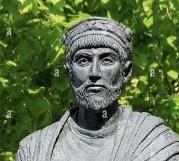
A very weighty argument is this - namely, that neither does the light which descends from thence, chiefly upon the world, mix itself with anything, nor admit of dirtiness or pollution, but remains entirely, and in all things that are, free from defilement, admixture, and suffering. Besides, we must pay attention to the other kinds of phenomena, both to the Intelligible, and yet more to the Sensible - whatever are connected with matter, or will manifest themselves in relation to our subject.
CivilSimian.com created by AxiomaticPanic, CivilSimian, Kalokagathia