ennui "On-WEE" : A feeling of listlessness and dissatisfaction arising from a lack of occupation or excitement — boredom, but with a heavier existential weight to it.


Karl Marx was born at Trier on 5 May 1818, the child of Jewish parents with a long rabbinical tradition on both sides. His grandfathers were rabbis; his father, a well-to-do lawyer, changed his first name from Herschel to Heinrich and adopted Protestantism, which in Prussia was a necessary condition of professional and cultural emancipation.
Music is an ocean, but the repertory is hardly even a lake; it is a pond.

The hatred that men bear to privilege increases in proportion as privileges become fewer and less considerable, so that democratic passions would seem to burn most fiercely just when they have least fuel. I have already given the reason for this phenomenon. [all conditions are unequal, no inequality is so great as to offend the eye, whereas the slightest dissimilarity is odious in the midst of general uniformity; the more complete this uniformity is, the more insupportable the sight of such a difference becomes.] Hence it is natural that the love of equality should constantly increase together with equality itself, and that it should grow by what it feeds on.
A fair exterior is a silent recommendation.
You wanted God's ideas about what was best for you to coincide with your ideas, but you also wanted him to be the almighty Creator of heaven and earth so that he could properly fulfill your wish. And yet, if he were to share your ideas, he would cease to be the almighty Father.
'Tis well to restrain the wicked, and in any case not to join him in his wrong-doing.
I strongly suspect that the average reader does not suspect India has as rich a culture, as creative an imagination and wit and humor as any China has to offer, and that India was China's teacher in religion and imaginative literature, and the world's teacher in trigonometry, quadratic equations, grammar, phonetics, Arabian Nights, animal fables, chess, as well as in philosophy, and that she inspired Boccaccio, Goethe, Herder, Schopenhauer, Emerson, and probably also old Aesop.

None shall rule but the humble, And none but Toil shall have.
Creativity is the universal of universals characterizing ultimate matter of fact. It is that ultimate principle by which the many, which are the universe disjunctively, become the one actual occasion, which is the universe conjunctively. It lies in the nature of things that the many enter into complex unity.

He seldom or never spoke except actually to convey an idea. Measured by quantity of words, he was a talker of fully average copiousness; by extent of meaning communicated, he was the most copious I have listened to. How in few sentences he would sketch you off an entire biography, an entire object or transaction, keen, clear, rugged, genuine, completely rounded In! His words came direct from the heart by the inspiration of the moment.
In a world, man must create his own essence: it is in throwing himself into the world, suffering there, struggling there, that he gradually defines himself.
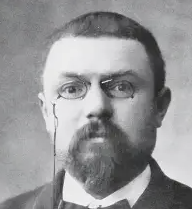
One need only open the eyes to see that the conquests of industry which have enriched so many practical men would never have seen the light, if these practical men alone had existed and if they had not been preceded by unselfish devotees who died poor, who never thought of utility, and yet had a guide far other than caprice.As Mach says, these devotees have spared their successors the trouble of thinking.
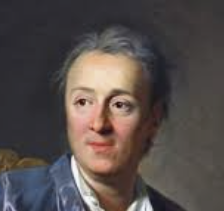
The possibility of divorce renders both marriage partners stricter in their observance of the duties they owe to each other. Divorces help to improve morals and to increase the population.
Men do not sufficiently realise that their future is in their own hands. Theirs is the task of determining first of all whether they want to go on living or not. Theirs is the responsibility, then, for deciding if they want merely to live, or intend to make just the extra effort required for fulfilling, even on their refractory planet, the essential function of the universe, which is a machine for the making of gods.
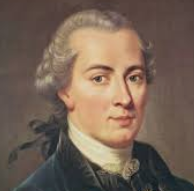
I have therefore found it necessary to deny knowledge in order to make room for faith.

Know that death comes to everyone, and that wealth will sometimes be acquired, sometimes lost. Whatever griefs mortals suffer by divine chance, whatever destiny you have, endure it and do not complain. But it is right to improve it as much as you can, and remember this: Fate does not give very many of these griefs to good people.
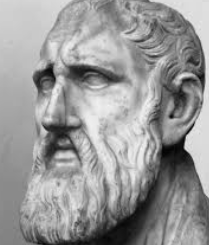
(The end is) life in agreement with nature.
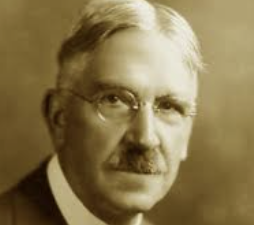
The recurrence of relations-not of elements-in different contexts, which constitutes transposition is qualitative and hence directly experienced in perception.
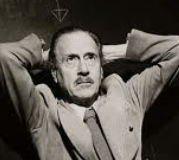
Every innovation scraps its immediate predecessor and retrieves still older figures - it causes floods of antiques or nostalgic art forms and stimulates the search for museum pieces.
In Catch-22, the figure of the black market and the ground of war merge into a monster presided over by the syndicate. When war and market merge, all money transactions begin to drip blood.
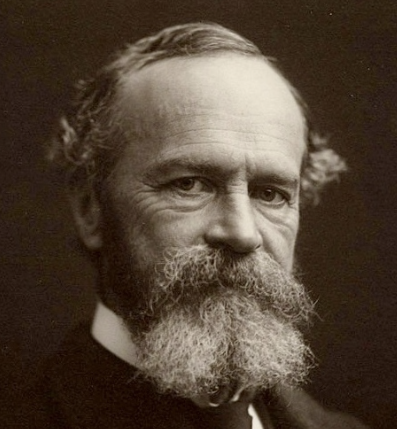
Act as if what you do makes a difference. It does.
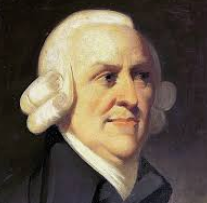
Nothing but the most exemplary morals can give dignity to a man of small fortune.
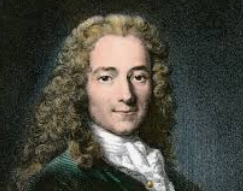
Such then is the human condition, that to wish greatness for one's country is to wish harm to one's neighbors.

As for me, when you want a good laugh, you will find me in fine state... fat and sleek, a true hog of Epicurus' herd.
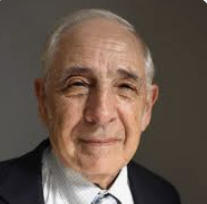
Well, what does "good" mean anyway...? As Wittgenstein suggested, "good," like "game," has a family of meanings. Prominent among them is this one: "meets the criteria or standards of assessment or evaluation."
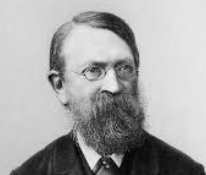
Not bodies produce sensations, but element-complexes (sensation-complexes) constitute the bodies. When the physicist considers the bodies as the permanent reality, the `elements' as the transient appearance, he does not realise that all `bodies' are only mental symbols for element-complexes (sensation-complexes)
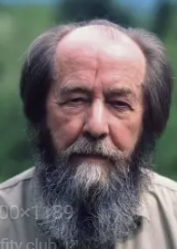
The belly is an ungrateful wretch, it never remembers past favors, it always wants more tomorrow.
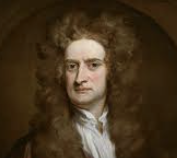
I can calculate the motions of erratic bodies, but not the madness of a multitude.
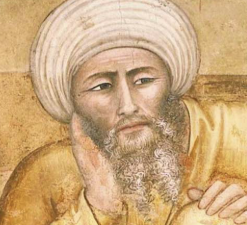
The Law teaches that the universe was invented and created by God, and that it did not come into being by chance or by itself.
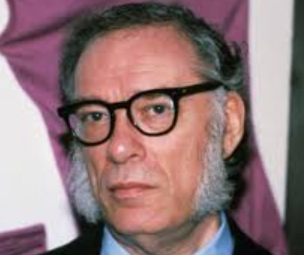
Scientists have pushed back the horizon of time from the biblical 6,000 years to 4,600,000,000 years for the age of Earth a 760,000-fold increase.
The deceiver is really the fool.
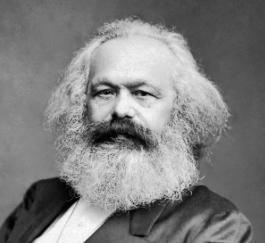
Long hours of labour seem to be the secret of the rational and healthful processes, which are to raise the condition of the labourer by an improvement of his mental and moral powers and to make a rational consumer out of him.
Roemer used eclipses of the satellites of Jupiter, and sought how much the event fell behind its prediction. But... this prediction is made... by... astronomic laws; for instance Newton's... The velocity of light... is adopted, such that the astronomic laws compatible with this value may be as simple as possible.
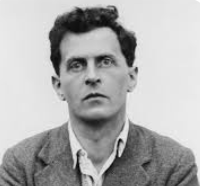
The limits of my language mean the limits of my world.

When the whole is at stake, there is no crime except that of rejecting the whole, or not defending it. ... Those who identify themselves with the whole, who are installed as the leaders and defenders of the whole can make mistakes, but they cannot do wrong-they are not guilty. They may become guilty again when this identification no longer holds, when they are gone.
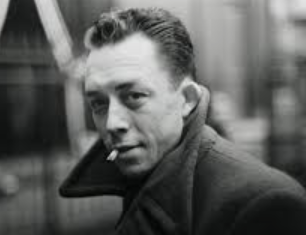
Nothing is harder to understand than a symbolic work. A symbol always transcends the one who makes use of it and makes him say in reality more than he is aware of expressing.
I don't explain-I explore.
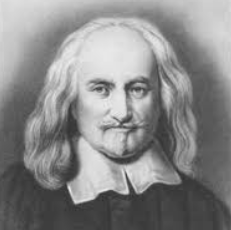
Another doctrine repugnant to Civill Society, is that whatsoever a man does against his Conscience, is Sinne; and it dependeth on the presumption of making himself judge of Good and Evill. For a man's Conscience and his Judgement are the same thing, and as the Judgement, so also the Conscience may be erroneous.

Existing is plagiarism.
I am sitting with a philosopher in the garden; he says again and again "I know that that's a tree", pointing to a tree that is near us. Someone else arrives and hears this, and I tell them: "This fellow isn't insane. We are only doing philosophy."
Consider any individual at any period of his life, and you will always find him preoccupied with fresh plans to increase his comfort.
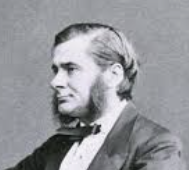
I cannot say that I am in the slightest degree impressed by your bigness, or your material resources, as such. Size is not grandeur, and territory does not make a nation. The great issue, about which hangs true sublimity, and the terror of overhanging fate, is what are you going to do with all these things?
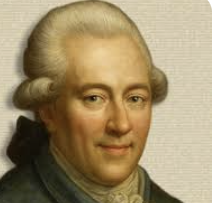
Man is always partial and is quite right to be. Even impartiality is partial.
Civil government does by its nature include much that is mechanical, and must be treated accordingly. We term it indeed, in ordinary language, the Machine of Society, and talk of it as the grand working wheel from which all private machines must derive, or to which they must adapt, their movements.
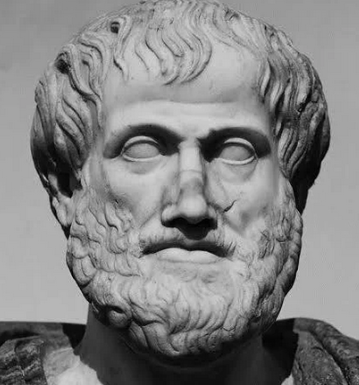
A tragedy, then, is the imitation of an action that is serious and also, as having magnitude, complete in itself; in language ... not in a narrative form; with incidents arousing pity and fear, wherewith to accomplish its catharsis of such emotions.
CivilSimian.com created by AxiomaticPanic, CivilSimian, Kalokagathia