

6 months 3 days ago
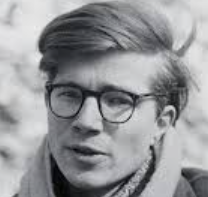
The Outsider's case against society is very clear. All men and women have these dangerous, unnamable impulses, yet they keep up a pretense, to themselves, to others; their respectability, their philosophy, their religion, are all attempts to gloss over, to make civilized and rational something that is savage, unorganized, irrational. He is an Outsider because he stands for truth.
▼
Source
source
Chapter one, The Country of the Blind

4 months 1 week ago
All this of Liberty and Equality, Electoral suffrages, Independence and so forth, we will take, therefore, to be a temporary phenomenon, by no means a final one. Though likely to last a long time, with sad enough embroilments for us all, we must welcome it, as the penalty of sins that are past, the pledge of inestimable benefits that are coming.
6 months 2 weeks ago
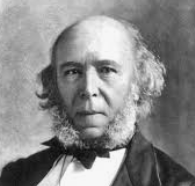
Throughout all organic nature there is at work a modifying influence of the kind... as the cause, these specific differences: an influence which, though slow in its action, does, in time, if the circumstances demand it, produce marked changes-an influence, which to all appearance, would produce in the millions of years, and under the great varieties of condition which geological records imply, any amount of change.
7 months 2 weeks ago
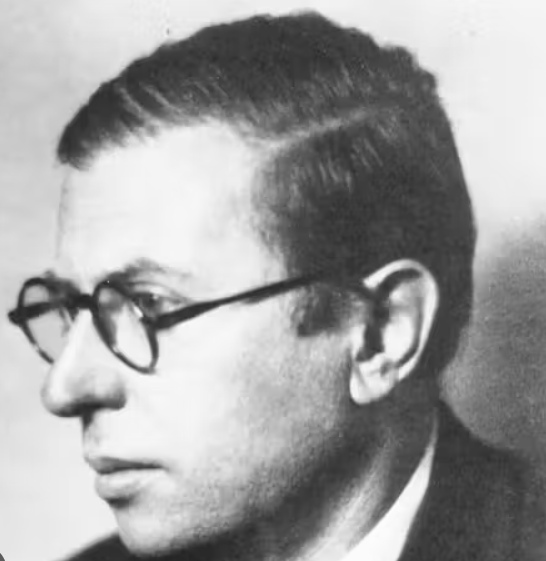
Dostoevsky once wrote: "If God did not exist, everything would be permitted"; and that, for existentialism, is the starting point. Everything is indeed permitted if God does not exist, and man is in consequence forlorn, for he cannot find anything to depend upon either within or outside himself. He discovers forthwith, that he is without excuse.
▼
Source
source
pp. 33-34
5 months 4 weeks ago
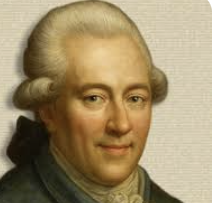
It is almost everywhere the case that soon after it is begotten the greater part of human wisdom is laid to rest in repositories.
▼
Source
source
K 37
7 months 1 week ago
Perhaps there is one chain [of inference] leading from the mental and the physical to a common source. It is conceivable in the abstract that if mental phenomena derive from the properties of matter at all, these may be identical at some level with nonphysical properties from which physical phenomena also derive. ...If there were such properties, they would be discoverable only by explanatory inference from both mental and physical phenomena. ... There would be properties of matter that were not physical from which the mental properties of organic systems were derived. This could still be called panpsychism.
▼
Source
source
"Panpsychism" (1979), pp. 184-185.

6 months 4 days ago
Indeed much of the literature written about black folks in the post-civil rights era emphasized the need for jobs. Material advancement was deemed the pressing agenda. Mental health concerns were not a high priority.

6 months 2 weeks ago
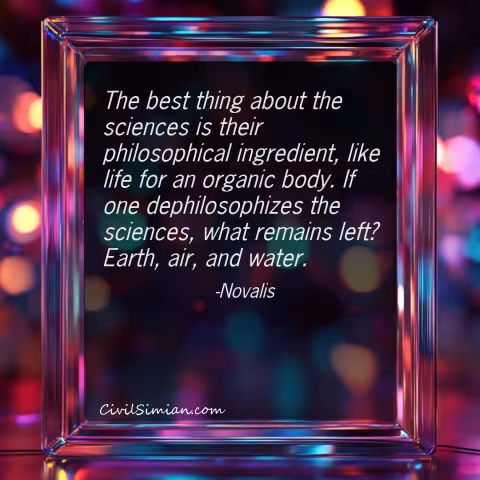
Boldness formerly was not the character of Atheists as such. ... But of late they are grown active, designing, turbulent, and seditious.
▼
Source
source
"Thoughts on French Affairs" (December 1791), in Three Memorials on French Affairs (1797), p. 53
3 months 2 weeks ago
The other reason is that what happens to the individual is a cause of well-being in what directs the world--of its well-being, its fulfillment, or its very existence, even. Because the whole is damaged if you cut away anything--anything at all--from its continuity and its coherence. Not only its parts, but its purposes. And that's what you're doing when you complain: hacking and destroying.
▼
Source
source
(Hays translation) V, 7
7 months 3 weeks ago
There is needed, no doubt, a body of servants (ministerium) of the invisible church, but not officials (officiales), in other words, teachers but not dignitaries, because in the rational religion of every individual there does not yet exist a church as a universal union (omnitudo collectiva).
▼
Source
source
Book IV, Part 1, Section 1, "The Christian religion as a natural religion"
6 months 3 days ago
The Outsider cannot accept life as it is, who cannot consider his own existence or anyone else's necessary. He sees 'too deep and too much'. It is still a question of self-expression.
▼
Source
source
Chapter Four The Attempt to Gain Control
3 months 2 weeks ago
That we are overdone with banking institutions which have banished the precious metals and substituted a more fluctuating and unsafe medium, that these have withdrawn capital from useful improvements and employments to nourish idleness, that the wars of the world have swollen our commerce beyond the wholesome limits of exchanging our own productions for our own wants, and that, for the emolument of a small proportion of our society who prefer these demoralizing pursuits to labors useful to the whole, the peace of the whole is endangered and all our present difficulties produced, are evils more easily to be deplored than remedied.
▼
Source
source
Letter to Abbe Salimankis, 1810. ME 12:379
4 months 3 weeks ago
There is no social entity with a good that undergoes some sacrifice for its own good. There are only individual people, different individual people, with their own individual lives. Using one of these people for the benefit of others, uses him and benefits the others. Nothing more.
▼
Source
source
Ch. 3 : Moral Constraints and the State; Why Side Constraints?, p. 32
3 months 4 weeks ago
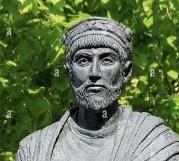
We celebrate the most solemn of our Games, dedicating it to the honour of the "Invincible Sun," during which it is not lawful for anything cruel (although necessary), which the previous month presented in its Shows, should be perpetrated on this occasion. The Saturnalia, being the concluding festival, are closely followed in cyclic order by the Festival of the Sun; the which I hope that the Powers above will grant me frequently to chaunt, and to celebrate; and above all others may the Sovereign Sun, lord of the universe! He who proceeding from all eternity in the generative being of the Good, stationed as the central one amidst the central intelligible deities, and replenishing them all with concord, infinite beauty, generative superabundance, and perfect intelligence, and with all blessings collectively without limit of time; and in time present illuminating his station which moves as the centre of all the heavens, his own possession from all eternity!
7 months 3 weeks ago
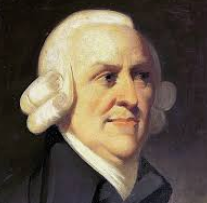
It is the necessary, though very slow and gradual, consequence of a certain propensity in human nature which has in view no such extensive utility; the propensity to truck, barter, and exchange one thing for another.
▼
Source
source
Chapter II
8 months 1 week ago
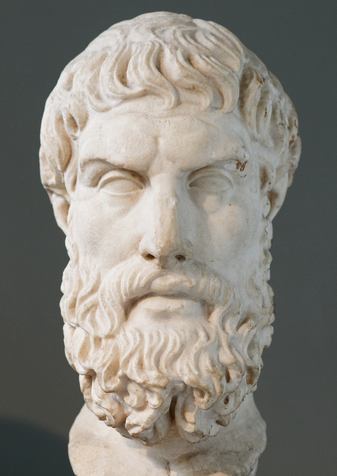
Temperance is that discreet regulation of the desires and passions, by which we are enabled to enjoy pleasures without suffering any consequent inconvenience. They who maintain such a constant self-command, as never to be enticed by the prospect of present indulgence, to do that which will be productive of evil, obtain the truest pleasure by declining pleasure.
8 months 3 weeks ago
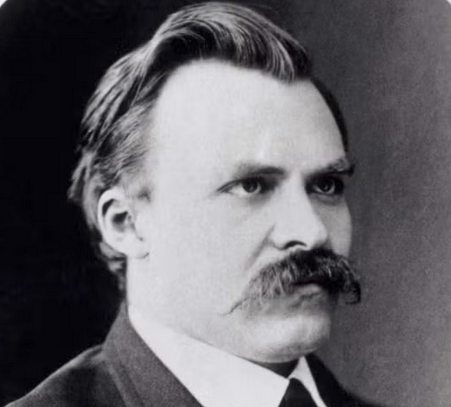
Style ought to prove that one believes in an idea; not only that one thinks it but also feels it.
5 months 4 weeks ago
Man loves company - even if it is only that of a small burning candle.
▼
Source
source
K 40
3 months 2 weeks ago
Disturbance comes only from within-from our own perceptions.
▼
Source
source
(Hays translation) IV, 4
4 months 2 weeks ago
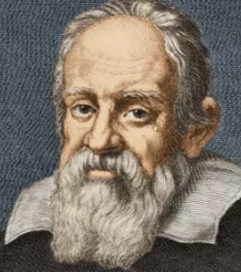
Copernicus never discusses matters of religion or faith, nor does he use argument that depend in any way upon the authority of sacred writings which he might have interpreted erroneously. ... He did not ignore the Bible, but he knew very well that if his doctrine were proved, then it could not contradict the Scriptures when they were rightly understood.
7 months 3 weeks ago
To desire you to read my book over and mark all the corrections you would wish me to make...would oblige me greatly: I know how much I shall be benefitted and I shall at the same time preserve the pretious right of private judgement for the sake of which our forefathers kicked out the Pope and the Pretender. I believe you to be much more infalliable than the Pope, but as I am a Protestant my conscience makes me scruple to submit to any unscriptural authority.
▼
Source
source
Letter to William Strahan (4 April 1760), quoted in Adam Smith, The Correspondence of Adam Smith, eds. E. C. Mossner and I. S. Ross (1987), pp. 67-68
3 months 2 weeks ago
The idea of creating a national bank I do not concur in, because it seems now decided that Congress has not that power (although I sincerely wish they had it exclusively), and because I think there is already a vast redundancy rather than a scarcity of paper medium.
▼
Source
source
Letter to Thomas Law, 1813. FE 9:433
7 months 3 weeks ago
Human freedom is realised in the adoption of humanity as an end in itself, for the one thing that no-one can be compelled to do by another is to adopt a particular end.
▼
Source
source
Part Two : Metaphysical Principles of Virtue
6 months 1 week ago
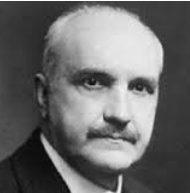
A child educated only at school is an uneducated child.
▼
Source
source
"Why I Am Not a Marxist" "Modern Monthly: Volume: 9″ (April 1935); Page: 77-79.
3 months 2 weeks ago
Truth will do well enough if left to shift for herself. She seldom has received much aid from the power of great men to whom she is rarely known & seldom welcome. She has no need of force to procure entrance into the minds of men. Error indeed has often prevailed by the assistance of power or force. Truth is the proper & sufficient antagonist to error.
▼
Source
source
Notes on Religion (October 1776), published in The Writings of Thomas Jefferson : 1816-1826 (1899) edited by Paul Leicester Ford, v. 2, p. 102
7 months 2 weeks ago
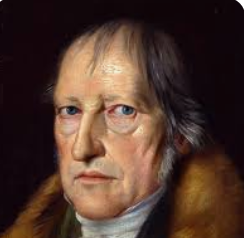
Philosophy is by its nature something esoteric, neither made for the mob nor capable of being prepared for the mob.
▼
Source
source
Introduction to the Critical Journal of Philosophy, cited in W. Kaufmann, Hegel (1966), p. 56
6 months 1 week ago
The doctrine of Right and Wrong, is perpetually disputed, both by Pen and the Sword: Whereas the doctrine of Lines, and Figures, is not so; because men care not, in that subject what be truth, as a thing that crosses no mans ambition, profit, or lust. For I doubt not, but if it had been a thing contrary to any mans right of dominion, or to the interest of men that have dominion, That the three Angles of a Triangle, should be equall to two Angles of a Square; that doctrine should have been, if not disputed, yet by the burning of all books of Geometry, suppressed, as far as he whom it concerned was able.
▼
Source
source
The First Part, Chapter 11, p. 80-81

7 months 2 weeks ago
I have nothing but contempt for you idiotic chosen ones who have the heart to rejoice when there are the damned in Hell and the poor on earth; as for me, I am on the side of men and I will not leave it.
▼
Source
source
Act 6, sc. 6
5 months 5 days ago
I have endeavoured to show that no absolute structural line of demarcation, wider than that between the animals which immediately succeed us in the scale, can be drawn between the animal world and ourselves; and I may add the expression of my belief that the attempt to draw a physical distinction is equally futile, and that even the highest faculties of feeling and of intellect begin to germinate in lower forms of life.
▼
Source
source
Ch.2, p. 129
6 months 3 days ago
The vitality of the ordinary members of society is dependent on its Outsiders.
▼
Source
source
Chapter Three, The Romantic Outsider
6 months 3 days ago
Religion, mysticism and magic all spring from the same basic 'feeling' about the universe: a sudden feeling of meaning, which human beings sometimes 'pick up' accidentally, as your radio might pick up some unknown station. Poets feel that we are cut off from meaning by a thick, lead wall, and that sometimes for no reason we can understand the wall seems to vanish and we are suddenly overwhelmed with a sense of the infinite interestingness of things.
▼
Source
source
p. 28

7 months 2 weeks ago
Every genuine work of art has as much reason for being as the earth and the sun.
▼
Source
source
Art
7 months 1 week ago
The problem is one of opposition between subjective and objective points of view. There is a tendency to seek an objective account of everything before admitting its reality. But often what appears to a more subjective point of view cannot be accounted for in this way. So either the objective conception of the world is incomplete, or the subjective involves illusions that should be rejected.
▼
Source
source
"Subjective and Objective" (1979), p. 196.
4 months 2 weeks ago
I did not direct my life. I didn't design it. I never made decisions. Things always came up and made them for me. That's what life is.
▼
Source
source
As quoted in "Unpacking the Skinner Box : Revisiting B. F. Skinner through a Postformal Lens" by Dana Salter in The Praeger Handbook of Education and Psychology Vol. 4 (2008) edited by Joe L. Kincheloe and Raymond A. Horn, Ch. 99, p. 872

6 months 2 weeks ago
I was walking late one night along a tree-lined path; a chestnut fell at my feet. The noise it made as it burst, the resonance it provoked in me, and an upheaval out of all proportion to this insignificant event thrust me into miracle, into the rapture of the definitive, as if there were no more questions - only answers. I was drunk on a thousand unexpected discoveries, none of which I could make use of. This is how I nearly reached the Supreme. But instead I went on with my walk.
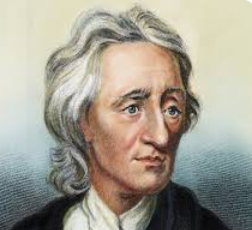
7 months 3 weeks ago
Freedom of Men under Government is, to have a standing Rule to live by, common to every one of that Society, and made by the Legislative Power erected in it; a Liberty to follow my own Will in all things, where the Rule prescribes not; and not to be subject to the inconstant, uncertain, unknown, Arbitrary Will of another Man: as Freedom of Nature is, to be under no other restraint but the Law of Nature.
▼
Source
source
Second Treatise of Civil Government, Ch. IV, sec. 21
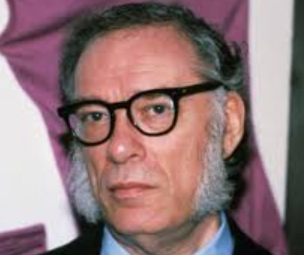
8 months 2 weeks ago
I believe that every human being with a physically normal brain can learn a great deal and can be surprisingly intellectual. I believe that what we badly need is social approval of learning and social rewards for learning.We can all be members of the intellectual elite and then, and only then, will a phrase like "America's right to know" and, indeed, any true concept of democracy, have any meaning.
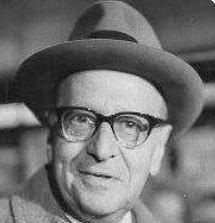
6 months 1 week ago
The hypostasis of the particular methods of procedure employed by natural science ... results in the view that all theoretical differences which rest on historically conditioned antagonisms of interest are to be settles by a "crucial experiment" rather than by struggle and counter-struggle. The harmonious relation of individuals to one another becomes a fact, therefore, that has even more general character than a law of nature.
▼
Source
source
p. 148.
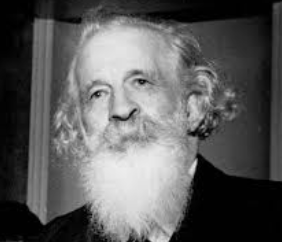
6 months 1 week ago
Two half philosophers will probably never a whole metaphysician make.
▼
Source
source
A Retrospective Glance at the Lifework of a Master of Books
6 months 2 weeks ago
By asserting the objectivity of the physical world, naturalism identifies the existence and the conditions of existence of the physical world with existence and the conditions of existence in general. It forgets that the world of the physicist necessarily refers back, through its intrinsic meaning, through the subjective world which one tries to exclude from reality as being pure appearance, conditioned by the empirical nature of man, which is incapable of reaching directly to a world of things in themselves. But while the world of the physicist claims to go beyond naive experience, his world really exists only in relation to naive experience.
▼
Source
source
The Theory Of Intuition In Husserls Phenomenology 1963, 1995 p. 9
3 months 2 weeks ago
If you wish to extinguish that enthusiasm, which inspires great thoughts, and impels to noble enterprises;-if you wish to render men's hearts cold, and unfeeling; and to substitute egotism in the room of generous, and ardent, patriotism,-if you wish to do this, only take away from the people their faith, and make them philosophers.
▼
Source
source
p. 61
5 months 1 week ago
In the greatest confusion there is still an open channel to the soul. It may be difficult to find because by midlife it is overgrown, and some of the wildest thickets that surround it grow out of what we describe as our education. But the channel is always there, and it is our business to keep it open, to have access to the deepest part of ourselves.
▼
Source
source
Foreword to The Closing of the American Mind by Allan Bloom
4 months 3 weeks ago
Is not the minimal state, the framework for utopia, an inspiring vision? The minimal state treats us as inviolate individuals, who may not be used in certain ways by others as means or tools or instruments or resources; it treats us as persons having individual right with the dignity this constitutes. Treating us with respect by respecting our rights, it allows us, individually or with whom we please, to choose our life and to realize our ends and our conception of ourselves, insofar as we can, aided by the voluntary cooperation of other individuals possessing the same dignity. How dare any state or group of individuals do more. Or less.
▼
Source
source
Ch. 10 : A Framework for Utopia; Utopia and the Minimal State, p. 333
7 months 3 weeks ago
Many agnostics (including myself) are quite as doubtful of the body as they are of the soul, but this is a long story taking one into difficult metaphysics. Mind and matter alike, I should say, are only convenient symbol in discourse, not actually existing things.
▼
Source
source
What is an Agnostic?, 1953
3 months 4 weeks ago
I too am not one to despise myths, and I am far from rejecting those that have the right tendency; indeed I am of the same opinion as you and your admired, or rather the universally admired, Plato. He also often conveyed a serious lesson in his myths.
CivilSimian.com created by AxiomaticPanic, CivilSimian, Kalokagathia