



6 months 2 weeks ago
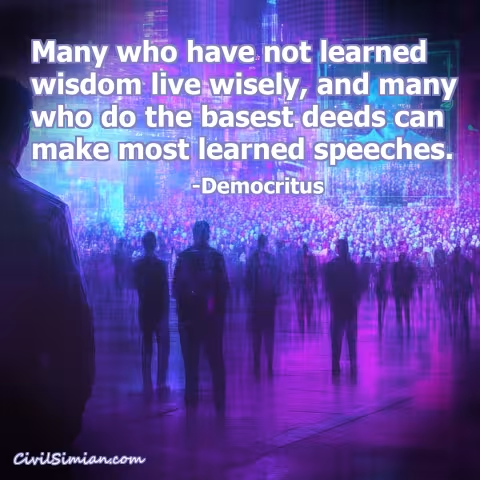
I react like everyone else, even like those I most despise; but I make up for it by deploring every action I commit, good or bad.
8 months 1 week ago
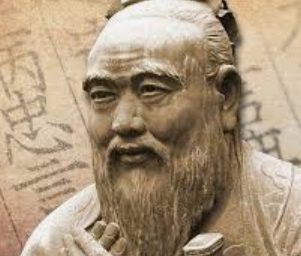
It is soft, smooth and shining like intelligence. Its edges seem sharp but do not cut like justice. It hangs down to the ground like humility. When struck, it gives a clear, ringing sound like music. The strains in it are not hidden and add to its beauty like truthfulness.' What imagination! Confucius extolled Jade's virtues this way.

7 months 3 weeks ago
There is no pleasure to me without communication: there is not so much as a sprightly thought comes into my mind that it does not grieve me to have produced alone, and that I have no one to tell it to.
5 months 2 weeks ago
There's nothing nonsensical about saying that what would evolve if Darwinian selection has its head is something that you don't want to happen. And I could easily imagine trying to go against Darwinism.
6 months 2 weeks ago
Seldom, or perhaps never, does a marriage develop into an individual relationship smoothly and without crises; there is no coming to consciousness without pain.
▼
Source
source
p. 193

5 months 1 week ago
In argument about moral problems, relativism is the first refuge of the scoundrel.
▼
Source
source
Some More -isms, p. 32
8 months 1 week ago
It is impossible to live a pleasant life without living wisely and honorably and justly, and it is impossible to live wisely and honorably and justly without living pleasantly. Whenever any one of these is lacking, when, for instance, the man is not able to live wisely, though he lives honorably and justly, it is impossible for him to live a pleasant life.

7 months 3 weeks ago
Men did not make the earth... It is the value of the improvements only, and not the earth itself, that is individual property... Every proprietor owes to the community a ground rent for the land which he holds.
▼
Source
source
Agrarian Justice

3 months 2 weeks ago
Pain is the opposite of strength, and so is anger.
▼
Source
source
(Hays translation) XI, 18
3 months 1 week ago
We shall, therefore, assume the complete physical equivalence of a gravitational field and a corresponding acceleration of the reference system.
3 months 2 weeks ago
Only to the rational animal is it given to follow voluntarily what happens; but simply to follow is a necessity imposed on all.
▼
Source
source
X, 28

7 months 2 weeks ago
The doctrine of the Second Coming has failed, so far as we are concerned, if it does not make us realize that at every moment of every year in our lives Donne's question "What if this present were the world's last night?" is equally relevant.

3 months 2 weeks ago
Believing with you that religion is a matter which lies solely between man and his God, that he owes account to none other for his faith or his worship, that the legislative powers of government reach actions only, and not opinions, I contemplate with sovereign reverence that act of the whole American people which declared that their legislature should "make no law respecting an establishment of religion, or prohibiting the free exercise thereof," thus building a wall of separation between church and State.
▼
Source
source
Letter to Danbury Baptist Association, CT. (1 January 1802) This statement is the origin of the often used phrase "separation of Church and State".
3 months 2 weeks ago
He who lives in harmony with himself lives in harmony with the universe.
▼
Source
source
Attributed in The Life You Were Born to Live : Finding Your Life Purpose (1995) by Dan Millman, Pt. 2, Ch. 2 : Cooperation and Balance
8 months 2 weeks ago
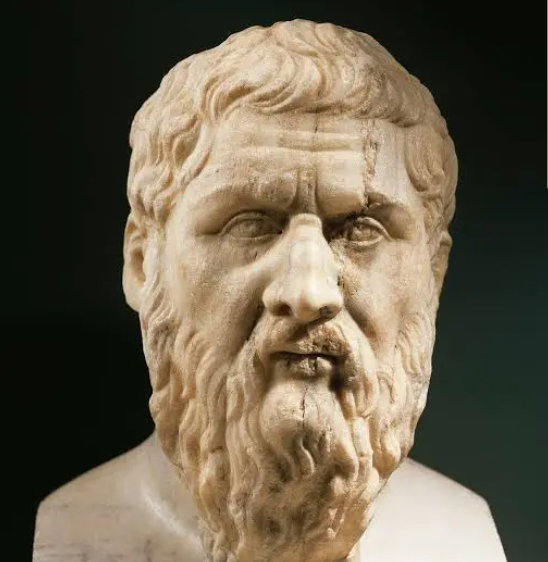
For once touched by love, everyone becomes a poet.
7 months 2 weeks ago
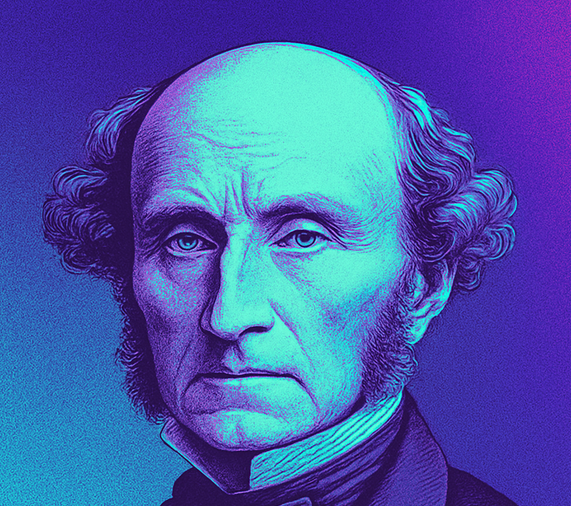
Compared with the greatest poets, he may be said to be the poet of unpoetical natures, possessed of quiet and contemplative tastes. But unpoetical natures are precisely those which require poetic cultivation. This cultivation Wordsworth is much more fitted to give, than poets who are intrinsically far more poets than he.
▼
Source
source
(p. 149)
4 months 4 weeks ago
I predict we will abolish suffering throughout the living world. Our descendants will be animated by gradients of genetically pre-programmed well-being that are orders of magnitude richer than today's peak experiences.
▼
Source
source
Quoted in Ethics Matters (2012) by Peter and Charlotte Vardy, p. 114 ISBN 978-0334043911
6 months 2 weeks ago
There is no self-knowledge except historical self-knowledge. No one knows what he is if he doesn't know what his contemporaries are.
▼
Source
source
"Ideas," Lucinde and the Fragments, P. Firchow, trans. (1991), § 139
3 months 2 weeks ago
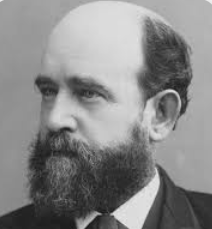
That there is a common cause, an that it is either what we call material progress or something closely connected with material progress, becomes more than an inference when it is noted that the phenomena we class together and speak of as industrial depression are but intensifications of phenomena which always accompany material progress, and which show themselves more clearly and strongly as material progress goes on. Where the conditions to which material progress everywhere tends are the most fully realized-that is to say, where population is densest, wealth greatest, and the machinery of production and exchange most highly developed - we find the deepest poverty, the sharpest struggle for existence, and the most of enforced idleness.
▼
Source
source
Introductory : The Problem

6 months 3 days ago
Maslow explained that, some time in the late thirties, he had been struck by the thought that modern psychology is based on the study of sick people. But since there are more healthy people around than sick people, how can this psychology give a fair idea of the workings of the human mind? It struck him that it might be worthwhile to devote some time to the study of healthy people.
▼
Source
source
p. 15
6 months 3 days ago
I could see clearly that this problem could only be solved on the individual and personal level; political revolt is irrelevant. Both Camus and Sartre had been neatly hog-tied by their earlier radicalism. Camus came to see that rebellion is a political roundabout that revolves back to the same old tyranny; too ashamed to admit that he had outgrown his leftism, he found himself in an intellectual cul-de-sac. Sartre accused Camus of being a reactionary; but he paid for his own refusal to reexamine his political convictions by congealing into a grotesque attitude of permanent indignation, shaking his fist at some abstract Authority. Where politics is concerned, he seemed determined to be guided by his emotions.
▼
Source
source
p. 101
8 months 2 weeks ago
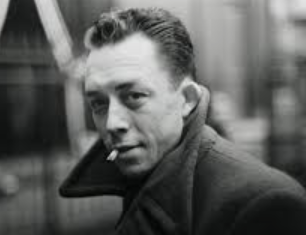
Man is the only creature who refuses to be what he is.
7 months 3 weeks ago
An untempted woman cannot boast of her chastity.
7 months 2 weeks ago
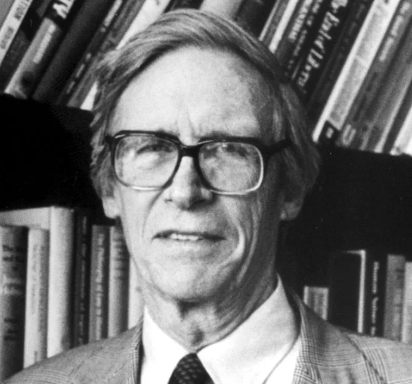
When the basic structure of society is publicly known to satisfy its principles for an extended period of time, those subject to these arrangements tend to develop a desire to act in accordance with these principles and to do their part in institutions which exemplify them.
▼
Source
source
Chapter III, Section 29, pg.177
8 months 1 week ago
The institutions of the Ruler are rooted in his own character and conduct, and sufficient attestation of them is given by the masses of the people. He examines them by comparison with those of the three kings, and finds them without mistake. He sets them up before Heaven and Earth, and finds nothing in them contrary to their mode of operation. He presents himself with them before spiritual beings, and no doubts about them arise. He is prepared to wait for the rise of a sage a hundred ages after, and has no misgivings. His presenting himself with his institutions before spiritual beings, without any doubts arising about them, shows that he knows Heaven. His being prepared, without any misgivings, to wait for the rise of a sage a hundred ages after, shows that he knows men.
5 months 2 weeks ago
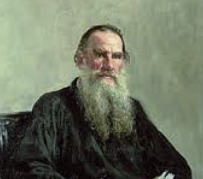
If you want to be happy, be.
▼
Source
source
Attributed in Wisdom for the Soul : Five Millennia of Prescriptions for Spiritual Healing (2006) by Larry Chang, p. 352
7 months 3 weeks ago
Of all our infirmities, the most savage is to despise our being.
▼
Source
source
Book III, Ch. 13 Variant: Of all the infirmities we have, 'tis the most savage to despise our being. (Charles Cotton translation)
4 months 4 days ago
Who profits by a sin has done the sin.
8 months 2 weeks ago
There are limits beyond which your folly will not carry you. I am glad of that. In fact, I am relieved.

7 months 1 week ago
O Fortune, cruellest of heavenly powers, why make such game of this poor life of ours?
▼
Source
source
Book II, satire viii, line 61 (trans. Conington)
3 months 2 weeks ago
You may break your heart, but men will still go on as before.
▼
Source
source
VIII, 4
7 months 3 weeks ago
Those who read and rightly understand my teaching will not start an insurrection; they have not learned that from me.
▼
Source
source
p. 65
6 months 3 weeks ago
We indeed, who are beings of finite powers, are forced to make use of instruments. And the use of an instrument sheweth the agent to be limited by rules of another's prescription, and that he cannot obtain his end but in such a way, and by such conditions. Whence it seems a clear consequence, that the supreme unlimited agent useth no tool or instrument at all. The will of an Omnipotent Spirit is no sooner exerted than executed, without the application of means; which, if they are employed by inferior agents, it is not upon account of any real efficacy that is in them, or necessary aptitude to produce any effect, but merely in compliance with the laws of nature, or those conditions prescribed to them by the First Cause, who is Himself above all limitation or prescription whatsoever.
▼
Source
source
Philonous to Hylas. The Second Dialogue

4 months 1 week ago
But deepest of all illusory Appearances, for hiding Wonder, as for many other ends, are your two grand fundamental world-enveloping Appearances, SPACE and TIME. These, as spun and woven for us from before Birth itself, to clothe our celestial ME for dwelling here, and yet to blind it, - lie all-embracing, as the universal canvas, or warp and woof, whereby all minor Illusions, in this Phantasm Existence, weave and paint themselves. In vain, while here on Earth, shall you endeavor to strip them off; you can, at best, but rend them asunder for moments, and look through.
▼
Source
source
Bk. III, ch. 8.
6 months 1 week ago
It is necessary to insist upon this extraordinary but undeniable fact: experimental science has progressed thanks in great part to the work of men astoundingly mediocre, and even less than mediocre. That is to say, modern science, the root and symbol of our actual civilization, finds a place for the intellectually commonplace man and allows him to work therein with success.
▼
Source
source
Chapter XII: The Barbarism Of "Specialisation"
7 months 2 weeks ago
We are told that a utilitarian will be apt to make his own particular case an exception to moral rules, and, when under temptation, will see a utility in the breach of a rule, greater than he will see in its observance. But is utility the only creed which is able to furnish us with excuses for evil doing, and means of cheating our own conscience? They are afforded in abundance by all doctrines which recognise as a fact in morals the existence of conflicting considerations; which all doctrines do, that have been believed by sane persons. It is not the fault of any creed, but of the complicated nature of human affairs, that rules of conduct cannot be so framed as to require no exceptions, and that hardly any kind of action can safely be laid down as either always obligatory or always condemnable.
▼
Source
source
Ch. 2

4 months 2 weeks ago
Empire is emerging today as the center that supports the globalization of productive networks and casts its widely inclusive net to try to envelop all power relations within its world order - and yet at the same time it deploys a powerful police function against the new barbarians and the rebellious slaves who threaten its order.

7 months 2 weeks ago
Keep cool: it will be all one a hundred years hence.
▼
Source
source
Montaigne; or, The Skeptic
5 months 2 weeks ago
The assertion that art may be good art and at the same time incomprehensible to a great number of people is extremely unjust, and its consequences are ruinous to art itself...it is the same as saying some kind of food is good but most people can't eat it.

7 months 4 weeks ago
Animals only follow their natural instincts; but man, unless he has experienced the influence of learning and philosophy, is at the mercy of impulses that are worse than those of a wild beast. There is no beast more savage and dangerous than a human being who is swept along by the passions of ambition, greed, anger, envy, extravagance, and sensuality.
▼
Source
source
Translated by Beert C. Verstraete as On Education for Children, in The Erasmus Reader (University of Toronto Press: 1990), p. 73
5 months 5 days ago
The only medicine for suffering, crime, and all the other woes of mankind, is wisdom.


7 months 2 weeks ago
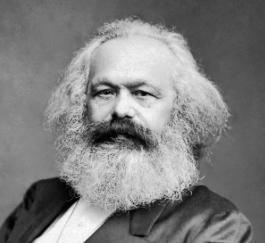
When we have chosen the vocation in which we can contribute most to humanity, burdens cannot bend us because they are only sacrifices for all. Then we experience no meager, limited, egotistic joy, but our happiness belongs to millions, our deeds live on quietly but eternally effective, and glowing tears of noble men will fall on our ashes.
▼
Source
source
Writings of the Young Marx on Philosophy and Society, L. Easton, trans. (1967), p. 39
7 months 3 weeks ago
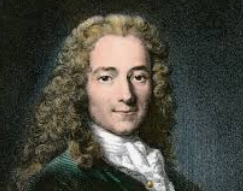
Let us read, and let us dance; these two amusements will never do any harm to the world.
CivilSimian.com created by AxiomaticPanic, CivilSimian, Kalokagathia