

3 months 1 week ago
The most simple picture one can form about the creation of an empirical science is along the lines of an inductive method. Individual facts are selected and grouped together such that their lawful connection becomes clearly apparent. ... The truly great advances in our understanding of nature originated in a manner almost diametrically opposed to induction. The intuitive grasp of the essentials or a large complex of facts leads the scientist to the postulation of a hypothetical basic law, or several such basic laws. From the basic laws (system of axioms) he derives his conclusions as completely as possible in a purely logically deductive manner. These conclusions, derived from the basic laws (and often only after time-consuming developments and calculations), can then be compared to experience, and in this manner provide criteria for the justification of the assumed basic law.
6 months 1 week ago
Christian Kings may erre in deducing a Consequence, but who shall Judge?
▼
Source
source
The Third Part, Chapter 43, p. 330
6 months 4 days ago
Systems, scientific and philosophic, come and go. Each method of limited understanding is at length exhausted. In its prime each system is a triumphant success: in its decay it is an obstructive nuisance.
▼
Source
source
p. 203.

6 months 3 days ago
What is obscene about pornography is not an excess of sex, but the fact that it contains no sex at all.
6 months 5 days ago
To be sure, exchange-value exerts its power in a special way in the realm of cultural goods. For in the world of commodities this realm appears to be exempted from the power of exchange, to be in an immediate relationship with the goods, and it is this appearance in turn which alone gives cultural goods their exchange-value. But they nevertheless simultaneously fall completely into the world of commodities, are produced for the market, and are aimed at the market.
▼
Source
source
p. 279

3 months 2 weeks ago
The leadership has failed. Even so, the leadership can and must be recreated from the masses and out of the masses. The masses are the decisive element, they are the rock on which the final victory of the revolution will be built. The masses were on the heights; they have developed this 'defeat' into one of the historical defeats which are the pride and strength of international socialism. And that is why the future victory will bloom from this 'defeat'. 'Order reigns in Berlin!' You stupid henchmen! Your 'order' is built on sand. Tomorrow the revolution will already 'raise itself with a rattle' and announce with fanfare, to your terror: I was, I am, I will be!
▼
Source
source
"Order reigns in Berlin", Last written words. Collected Works 4




6 months 2 weeks ago
From these two immediate perceptions, we gain a mediate, or inferential perception of the relation of all four instants. This mediate perception is objectively, or as to the object being represented, spread over the four instants; but subjectively, or as itself the subject of duration, it is completely embraced in the second moment. (The reader will observe that I use the word instant to mean a point in time, and moment to mean an infinitesimal duration.
7 months 2 weeks ago
Technology discloses the active relation of man towards nature, as well as the direct process of production of his very life, and thereby the process of production of his basic societal relations, of his own mentality, and his images of society, too.
▼
Source
source
Vol. I, Ch. 13: "Machinery and Big Industry".
6 months 2 weeks ago
Whatever is supreme in a state, ought to have, as much as possible, its judicial authority so constituted as not only not to depend upon it, but in some sort to balance it. It ought to give a security to its justice against its power. It ought to make its judicature, as it were, something exterior to the state.
7 months 2 weeks ago
But genius looks forward: the eyes of men are set in his forehead, not in his hindhead: man hopes: genius creates.
▼
Source
source
par. 18
3 months 2 weeks ago
When common words are appropriated as technical terms, their meaning and relations in common use should be retained as far as can conveniently be done.

4 months 1 week ago
Nature admits no lie.
▼
Source
source
Latter Day Pamphlet, No. 5.

8 months 1 week ago
The Asharites have expressed a very peculiar opinion, both with regard to reason and religion; about this problem they have explained it in a way in which religion has not, but have adopted quite an opposite method.
5 months 2 weeks ago
No longer able to believe in the Church religion, whose falsehood they had detected, and incapable of accepting true Christian teaching, which denounced their whole manner of life, these rich and powerful people, stranded without any religious conception of life, involuntarily returned to that pagan view of things which places life's meaning in personal enjoyment. And then among the upper classes what is called the "Renaissance of science and art" took place, which was really not only a denial of every religion, but also an assertion that religion was unnecessary.
7 months 2 weeks ago
Stupidity or reason? Oh, there was no choice now. It was imbecility every time.
▼
Source
source
The Gioconda smile, in Mortal Coils, 1921
5 months 2 weeks ago
Man is a creature who lives not upon bread alone, but principally by catchwords; and the little rift between the sexes is astonishingly widened by simply teaching one set of catchwords to the girls and another to the boys.
▼
Source
source
Virginibus Puerisque, Ch. 2.
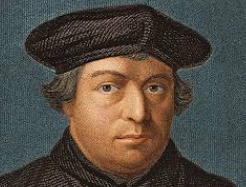
7 months 3 weeks ago
Our stubbornness is right, because we want to preserve the liberty which we have in Christ. Only by preserving our liberty shall we be able to retain the truth of the Gospel inviolate.
▼
Source
source
Chapter 2
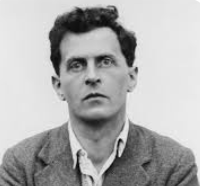
7 months 2 weeks ago
It is so characteristic, that just when the mechanics of reproduction are so vastly improved, there are fewer and fewer people who know how the music should be played.
▼
Source
source
p. 96
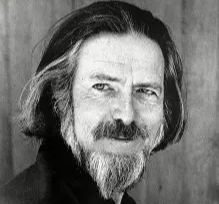
4 months ago
The psychotherapist ... tries to help the individual to be himself and to go it alone without giving unnecessary offense to his community, to be in the world (of social convention) but not of the world.
▼
Source
source
p. 7

6 months 3 weeks ago
In cities men cannot be prevented from concerting together, and from awakening a mutual excitement which prompts sudden and passionate resolutions. Cities may be looked upon as large assemblies, of which all the inhabitants are members; their populace exercises a prodigious influence upon the magistrates, and frequently executes its own wishes without their intervention. Variant translation: In towns it is impossible to prevent men from assembling, getting excited together and forming sudden passionate resolves. Towns are like great meeting houses with all the inhabitants as members. In them the people wield immense influence over their magistrates and often carry their desires into execution without intermediaries.
▼
Source
source
Chapter XVII.

7 months 2 weeks ago
The process of being brought up, however well it is done, cannot fail to offend.

7 months 1 day ago
Work at these things, practice them, these are the things you ought to desire; they are what will put you on the path of divine virtue - yes, by the one who entrusted our soul with the tetraktys, source of ever-flowing nature. Pray to the gods for success and get to work.
▼
Source
source
As quoted in Divine Harmony: The Life and Teachings of Pythagoras by John Strohmeier and Peter Westbrook.

6 months 2 days ago
On the whole, the scientist is better off if he collects his facts by accident, little by little, so he can study them before he tries to fit them into a jigsaw puzzle, This is how the late Tom Lethbridge came to arrive at his theories about other dimensions of reality. It is also how Guy Lyon Playfair came to develop his own theories about the nature of the poltergeist.
▼
Source
source
p. 196

6 months 2 days ago
The motto should not be: Forgive one another; rather, Understand one another.
5 months 2 weeks ago
The man who holds the divine theory of life recognizes life not in his own individuality, and not in societies of individualities (in the family, the clan, the nation, the tribe, or the government), but in the eternal undying source of life-in God; and to fulfill the will of God he is ready to sacrifice his individual and family and social welfare. The motor power of his life is love. And his religion is the worship in deed and in truth of the principle of the whole-God.
▼
Source
source
Chapter IV, Christianity Misunderstood by Men of Science
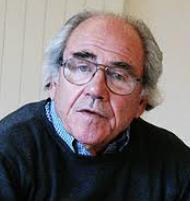
5 months 3 weeks ago
People no longer look at each other, but there are institutes for that. They no longer touch each other, but there is contactotherapy. They no longer walk, but they go jogging, etc. Everywhere one recycles lost faculties, or lost bodies, or lost sociality, or the lost taste for food.
▼
Source
source
"The Precession of Simulacra," p. 13
6 months 2 days ago
These men traveling down to the City in the morning, reading their newspapers or staring at advertisements above the opposite seats, they have no doubt of who they are. Inscribe on the placard in place of the advertisement for corn-plasters, Elliot's lines: We are the hollow men

8 months 5 days ago
I too have sworn heedlessly and all the time, I have had this most repulsive and death-dealing habit. I'm telling your graces; from the moment I began to serve God, and saw what evil there is in forswearing oneself, I grew very afraid indeed, and out of fear I applied the brakes to this old, old, habit.
▼
Source
source
180:10:1
5 months 4 weeks ago
Rational free spirits are the light brigade who go on ahead and reconnoitre the ground which the heavy brigade of the orthodox will eventually occupy.
▼
Source
source
H 36

6 months 2 weeks ago
Someday the old shack we call the world will fall apart. How, we don't know, and we don't really care either. Since nothing has real substance, and life is a twirl in the void, its beginning and its end are meaningless.

4 months 3 weeks ago
The idea of a law of progress, or of an all but irresistible tendency to general improvement, is then merely a superstition, one of the tents of the modernist pseudo-religion of humanism. Even if such a law or tendency existed and were demonstrable, the liberal faith in progress would for Santayana be pernicious. For it leads to a corrupt habit of mind in which things are valued, not for their present excellence or perfection, but instrumentally, as leading to something better; and it insinuates into thought and feeling a sort of historical theodicy, in which past evil is justified as a means to present or future good. The idea of progress embodies a kind of time-worship (to adopt an expression used by Wyndham Lewis) in which the particularities of our world are seen and valued, not in themselves, but for what they might perhaps become, thereby leaving us destitute of the sense of the present and, at the same time, of the perspective of eternity.
▼
Source
source
'Santayana's Alternative' (p.67-8)
6 months 2 weeks ago
This day I heard from Laurence who has sent me papers confirming the portentous State of France-where the Elements which compose Human Society seem all to be dissolved, and a world of Monsters to be producd in the place of it-where Mirabeau presides as the Grand Anarch; and the late Grand Monarch makes a figure as ridiculous as pitiable.
▼
Source
source
Letter to Richard Burke (c. 10 October 1789), quoted in Alfred Cobban and Robert A. Smith (eds.), The Correspondence of Edmund Burke, Volume VI: July 1789-December 1791 (1967), p. 30
3 months 2 weeks ago
If a man is mistaken, instruct him kindly and show him his error. But if thou art not able, blame thyself, or blame not even thyself.
▼
Source
source
X, 4
7 months 2 weeks ago
Friends are not primarily absorbed in each other. It is when we are doing things together that friendship springs up - painting, sailing ships, praying, philosophizing, fighting shoulder to shoulder. Friends look in the same direction. Lovers look at each other - that is, in opposite directions. To transfer bodily all that belongs to one relationship into the other is blundering.

6 months 5 days ago
The eulogies of my intelligence are positively intended to evade the question "Is what she says true?"
▼
Source
source
Letter to her parents (1943), as quoted in the Introduction by Siân Miles p. 2
6 months 1 week ago
Experience has repeatedly confirmed that well-known maxim of Bacon's that "a little philosophy inclineth a man's mind to atheism, but depth in philosophy bringeth men's minds about to religion." At the same time, when Bacon penned that sage epigram... he forgot to add that the God to whom depth in philosophy brings back men's minds is far from being the same from whom a little philosophy estranges them.
▼
Source
source
Ch. I
7 months 2 weeks ago
The product of mental labor - science - always stands far below its value, because the labor-time necessary to reproduce it has no relation at all to the labor-time required for its original production.
▼
Source
source
Addenda, "Relative and Absolute Surplus Value" in Economic Manuscripts, 1861-63
3 months 2 weeks ago
In the history of bourgeois society, legislative reform served to strengthen progressively the rising class till the latter was sufficiently strong to seize political power, to suppress the existing juridical system and to construct itself a new one.
▼
Source
source
Ch.8
6 months 5 days ago
We are really no longer ourselves a part of nature at the moment when we notice, when we recognize, that we are a part of nature.
▼
Source
source
Probleme der Moralphilosophie (Frankfurt: Suhrkamp, 1996), p. 154; as quoted in Andrew Bowie, Adorno and the Ends of Philosophy (Cambridge: Polity, 2013), p. 94

5 months 3 days ago
Properties perceived in nature will depend on how one looks and how one looks depends on the economic interest one has in the resources of nature. The value of profit maximization is thus linked to reductionist systems, while the value of life and the maintenance of life is linked to holistic and ecological systems.
▼
Source
source
Staying Alive: Women, Ecology, and Development

7 months 1 week ago
The pleasures that give most joy are the ones that most rarely come.
6 months 3 weeks ago
Nothing is quite so wretchedly corrupt as an aristocracy which has lost its power but kept its wealth and which still has endless leisure to devote to nothing but banal enjoyments. All its great thoughts and passionate energy are things of the past, and nothing but a host of petty, gnawing vices now cling to it like worms to a corpse.
▼
Source
source
Book Three, Chapter XI.
3 months 1 week ago
We shall, therefore, assume the complete physical equivalence of a gravitational field and a corresponding acceleration of the reference system.
4 months ago
Engels feared that the Socialists, in order to gain adherents in the electoral struggles rapidly, would make promises which were contrary to Marxist doctrine. The antisemites told the peasants and the small shopkeepers that they would protect them from the development of capitalism. Engels thought that an imitation of this procedure would be dangerous, since, in his opinion, the social revolution could only be realised when capitalism had almost completely destroyed the small proprietors and small industries; if the Socialists, then, endeavoured to hinder this evolution, they would ultimately compromise their own cause.
▼
Source
source
Reflections on Violence, London: UK, George Allen & Unwin, (reprinted in Saxony 1925) p. 180

3 months 2 weeks ago
Our opinion here is that that place has been so deeply concerned in smuggling, that if it wants it is because it has illegally sent away what it ought to have retained for its own consumption.
▼
Source
source
Letter to Lieutenant Governor Levi Lincoln of Massachusetts (November 13, 1808) concerning a petition from the island of Nantucket for food during the American embargo.

4 months 1 week ago
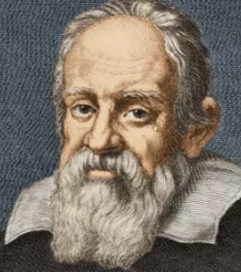
Wine is a mixture of moisture and light.
▼
Source
source
As quoted in Lorenzo Magalotti's Scientific and Scholarly Letter
CivilSimian.com created by AxiomaticPanic, CivilSimian, Kalokagathia