



8 months 3 weeks ago
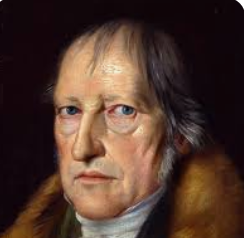
The destiny of the spiritual World, and, - since this is the substantial World, while the physical remains subordinate to it, or, in the language of speculation, has no truth as against the spiritual, - the final cause of the World at large, we allege to be the consciousness of its own freedom on the part of Spirit, and ipso facto, the reality of that freedom.
7 months 3 weeks ago
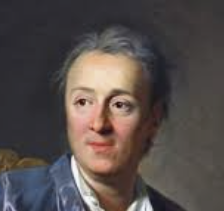
It is said that desire is a product of the will, but the converse is in fact true: will is a product of desire.
▼
Source
source
"Will, Freedom"

7 months 1 week ago
The intellectual is called on the carpet. ... Don't you conceal something? You talk a language which is suspect. You don't talk like the rest of us, like the man in the street, but rather like a foreigner who does not belong here. We have to cut you down to size, expose your tricks, purge you.
▼
Source
source
p. 192
7 months 6 days ago
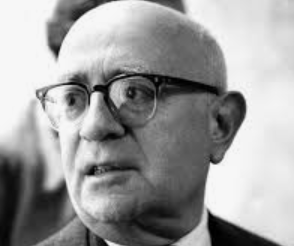
The phrase, the world wants to be deceived, has become truer than had ever been intended. People are not only, as the saying goes, falling for the swindle; if it guarantees them even the most fleeting gratification they desire a deception which is nonetheless transparent to them. They force their eyes shut and voice approval, in a kind of self-loathing, for what is meted out to them, knowing fully the purpose for which it is manufactured. Without admitting it they sense that their lives would be completely intolerable as soon as they no longer clung to satisfactions which are none at all.
▼
Source
source
Section 10
8 months 2 weeks ago
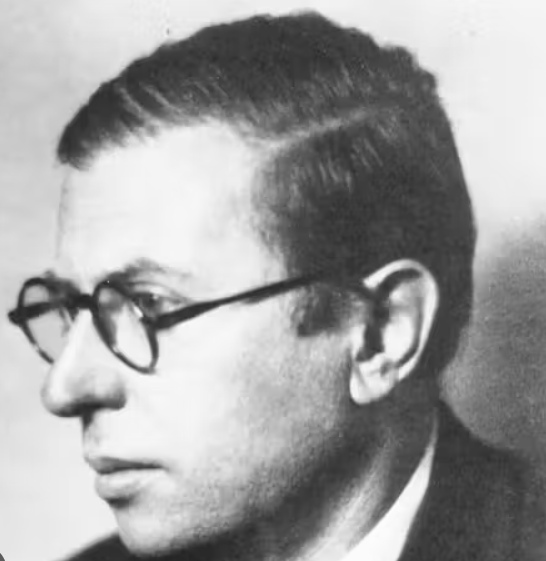
The homosexual never thinks of himself when someone is branded in his presence with the name homosexual. ...His sexual tastes will doubtless lead him to enter into relationships with this suspect category, but he would like to make use of them without being likened to them. Here, too, the ban that is cast on certain men by society has destroyed all possibility of reciprocity among them. Shame isolates.
6 months 3 days ago
On this showing, the nature of the breakdowns of civilizations can be summed up in three points: a failure of creative power in the minority, an answering withdrawal of mimesis on the part of the majority, and a consequent loss of social unity in the society as a whole.
▼
Source
source
Vol. 4 (1955 ), part B, p. 6
9 months 2 weeks ago
A robot must obey the orders given it by human beings except where such orders would conflict with the First Law.
8 months 2 weeks ago
Democracy is still upon its trial. The civic genius of our people is its only bulwark.
▼
Source
source
Robert Gould Shaw: Oration upon the Unveiling of the Shaw Monument
6 months 2 weeks ago
Age may have one side, but assuredly Youth has the other. There is nothing more certain than that both are right, except perhaps that both are wrong. Let them agree to differ; for who knows but what agreeing to differ may not be a form of agreement rather than a form of difference?
▼
Source
source
Crabbed Age and Youth.
8 months 1 week ago
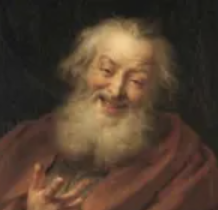
Of all things the worst to teach the young is dalliance, for it is this that is the parent of those pleasures from which wickedness springs.
1 year 3 weeks ago
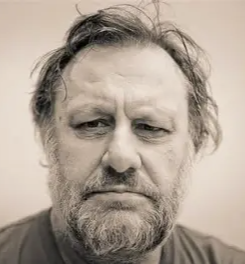
Think about the strangeness of today's situation. Thirty, forty years ago, we were still debating about what the future will be: communist, fascist, capitalist, whatever. Today, nobody even debates these issues. We all silently accept global capitalism is here to stay. On the other hand, we are obsessed with cosmic catastrophes: the whole life on earth disintegrating, because of some virus, because of an asteroid hitting the earth, and so on. So the paradox is, that it's much easier to imagine the end of all life on earth than a much more modest radical change in capitalism.
4 months 2 weeks ago
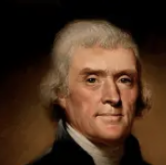
No freeman shall be debarred the use of arms within his own lands.
▼
Source
source
Draft Constitution for Virginia (June 1776)
8 months 3 weeks ago
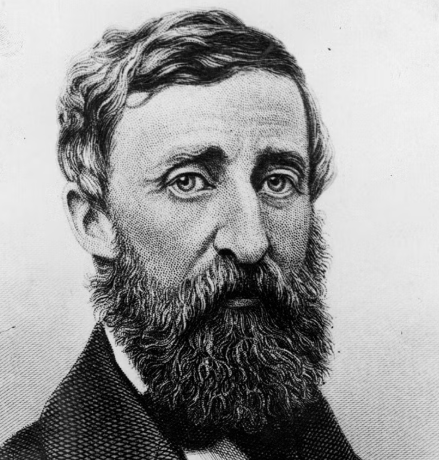
The eye may see for the hand, but not for the mind.
5 months 3 weeks ago
In ancient Europe, Stoics asserted that a slave could be freer than a master who suffers from self-division. In China, Daoists imagined a type of sage who responded to the flow of events without weighing alternatives. Disciples of monotheistic faiths have believed something similar: freedom, they say, is obeying God's will. What those who follow these traditions want most is not any kind of freedom of choice. Instead, what they long for is freedom from choice.
▼
Source
source
The Faith of Puppets: The Freedom of the Marionette (p. 6-7)
6 months 2 weeks ago
What! all of us, Christians, not only profess to love one another, but do actually live one common life; we whose social existence beats with one common pulse-we aid one another, learn from one another, draw ever closer to one another to our mutual happiness, and find in this closeness the whole meaning of life!-and to-morrow some crazy ruler will say some stupidity, and another will answer in the same spirit, and then I must go expose myself to being murdered, and murder men-who have done me no harm-and more than that, whom I love. And this is not a remote contingency, but the very thing we are all preparing for, which is not only probable, but an inevitable certainty.
▼
Source
source
Chapter V, Contradiction Between our Life and our Christian Conscience
7 months 3 days ago
We are now living in an age of literary exhaustion; we get used to the bleak landscape. Cyril Connolly said that the writer's business is to produce masterpieces; but what masterpieces have been produced in the past fifty years?
▼
Source
source
p. 11
7 months 1 week ago
"The bitterest sorrow that man can know is to aspire to do much and to achieve nothing"... so Herodotus relates that a Persian said to a Theban at a banquet (book ix., chap. xvi.). And it is true. With knowledge and desire we can embrace everything , or almost everything; with the will nothing, or almost nothing. And contemplation is not happiness - no! not if this contemplation implies impotence. And out of this collision between our knowledge and our power pity arises.
7 months 2 weeks ago
The same feeling of not belonging, of futility, wherever I go: I pretend interest in what matters nothing to me, I bestir myself mechanically or out of charity, without ever being caught up, without ever being somewhere. What attracts me is elsewhere, and I don't know where that elsewhere is.
6 months 2 weeks ago
At the speed of light there is no sequence; everything happens at the same instant.
6 months 2 weeks ago
There is no spirit-driven life force, no throbbing, heaving, pullulating, protoplasmic, mystic jelly. Life is just bytes and bytes and bytes of digital information.
7 months 2 weeks ago
I get along quite well with someone only when he is at his lowest point and has neither the desire nor the strength to restore his habitual illusions.

6 months 3 weeks ago
Lives matter in the sense that they assume physical form within the sphere of appearance; lives matter because they are to be valued equally.
▼
Source
source
p. 12
6 months 3 weeks ago
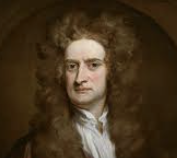
It is indeed a matter of great difficulty to discover, and effectually to distinguish, the true motions of particular bodies from the apparent; because the parts of that immovable space, in which those motions are performed, do by no means come under the observation of our senses. Yet the thing is not altogether desperate; for we have some arguments to guide us, partly from the apparent motions, which are the differences of the true motions; partly from the forces, which are the causes and effects of the true motions.
▼
Source
source
Definitions - Scholium
8 months 2 weeks ago
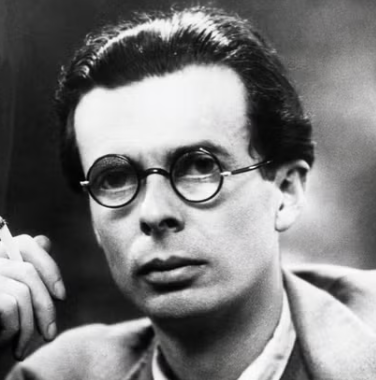
I was looking at my furniture, not as the utilitarian who has to sit on chairs, to write at desks and tables, and not as the cameraman or scientific recorder, but as the pure aesthete whose concern is only with forms and their relationships within the field of vision or the picture space. But as I looked, this purely aesthetic, Cubist's-eye view gave place to what I can only describe as the sacramental vision of reality. I was back where I had been when I was looking at the flowers-back in a world where everything shone with the Inner Light, and was infinite in its significance.
▼
Source
source
describing his experiment with mescaline, p. 22
6 months 2 weeks ago
What is the Jew?...What kind of unique creature is this whom all the rulers of all the nations of the world have disgraced and crushed and expelled and destroyed; persecuted, burned and drowned, and who, despite their anger and their fury, continues to live and to flourish. What is this Jew whom they have never succeeded in enticing with all the enticements in the world, whose oppressors and persecutors only suggested that he deny (and disown) his religion and cast aside the faithfulness of his ancestors?! The Jew - is the symbol of eternity. ... He is the one who for so long had guarded the prophetic message and transmitted it to all mankind. A people such as this can never disappear. The Jew is eternal. He is the embodiment of eternity.
▼
Source
source
Attributed in "The Final Resolution", in Jewish World Periodical (1908), p. 189
9 months 3 days ago
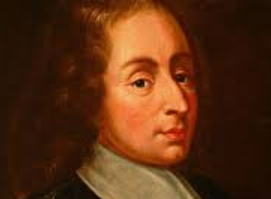
The source of the errors of these two sects, is in not having known that the state of man at the present time differs from that of his creation; so that the one, remarking some traces of his first greatness and being ignorant of his corruption, has treated nature as sound and without need of redemption, which leads him to the height of pride; whilst the other, feeling the present wretchedness and being ignorant of the original dignity, treats nature as necessarily infirm and irreparable, which precipitates it into despair of arriving at real good, and thence into extreme laxity.
5 months 1 week ago
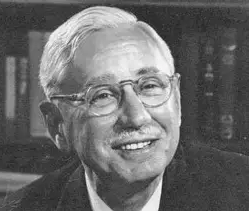
Nothing in all literature is so depressing as the "Dissertations" of the slave [Epictetus], unless it be the "Meditations" of the Emperor [Marcus Aurelius] ...[after some excerpts from the two books]..... In such passages we feel the proximity of Christianity and its dauntless martyrs; indeed were not the Christian ethic of self-denial, the Christian political ideal of an almost communistic brotherhood of man, and the Christian eschatology of the final conflagration of all the world, fragments of Stoic doctrine floating on the stream of thought? In Epictetus the Greco-Roman soul has lost its paganism, and is ready for a new faith".
8 months 2 weeks ago
To the gross senses the chair seems solid and substantial. But the gross senses and be refined by means of instruments. Closer observations are made, as the result of which we are forced to conclude that the chair is "really" a swarm of electric charges whizzing about in empty space. ... While the substantial chair is an abstraction easily made from the memories of innumerable sensations of sight and touch, the electric charge chair is a difficult and far-fetched abstraction from certain visual sensations so excessively rare (they can only come to us in the course of elaborate experiments) that not one man in a million has ever been in the position to make it for himself. The overwhelming majority of us accept the electric-charge chair on authority, as good Catholics accept transubstantiation.
▼
Source
source
"One and Many," pp. 8-9
8 months 2 weeks ago
How shall we define a god? Expressed in psychological terms (which are primary-there is no getting behind them) a god is something that gives us the peculiar kind of feeling which Professor Otto has called "numinous". Numinous feelings are the original god-stuff from which the theory-making mind extracts the individualised gods of the pantheon.
▼
Source
source
"Meditation on the Moon"
6 months 3 weeks ago
Our entire linear and accumulative culture collapses if we cannot stockpile the past in plain view. "
▼
Source
source
The Precession of Simulacra," p. 10
1 year 1 month ago
No subgroup, race, nationalism, religious group, gender based groups or other identity essence based groups will ever be more important than, and should never ethically take precedence over the existence based universal group, the human group. Universal identity takes precedence over subgroup identity, and when we are forced to subgroup in reaction to injustice, that is the only ethical subgroup.
4 months 2 weeks ago
But though an old man, I am but a young gardener.
▼
Source
source
Letter to Charles Willson Peale
8 months 3 weeks ago
Theologian: But what is to love? Philosopher: To be delighted by the happiness of another.
▼
Source
source
Confessio philosophi, 1673
7 months 3 weeks ago
All those countless battles-those endless, and... for the greater part, useless wars, of which... fills up for so many thousand years... are but little atoms compared with the great whole of human destiny.
6 months 2 weeks ago
Do not resist the evil-doer and take no part in doing so, either in the violent deeds of the administration, in the law courts, the collection of taxes, or above all in soldiering, and no one in the world will be able to enslave you.
▼
Source
source
V. "Do not resist the evil-doer" is an allusion to the words of Jesus Christ in Matthew 5:39.
5 months 6 days ago
For the time being, the ominous peril of the communist parties in the West lies in their stand on foreign affairs. The distinctive mark of all present-day communist parties is their devotion to the aggressive foreign policy of the Soviets. Whenever they must choose between Russia and their own country, they do not hesitate to prefer Russia. Their principle is: Right or wrong, my Russia. They strictly obey all orders issued from Moscow. When Russia was an ally of Hitler, the French communists sabotaged their own country's war effort and the American communists passionately opposed President Roosevelt's plans to aid England and France in their struggle against the Nazis.

5 months 1 week ago
The crop of spiritual talent that is born to you, of human nobleness and intellect and heroic faculty, this is infinitely more important than your crops of cotton or corn, or wine or herrings or whale-oil, which the Newspapers record with such anxiety every season.
7 months 2 weeks ago
Each of us is born with a share of purity, predestined to be corrupted by our commerce with mankind, by that sin against solitude.
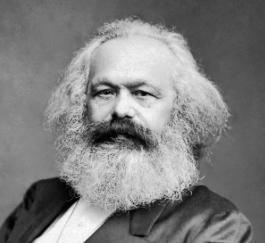
8 months 3 weeks ago
When we have weighed everything, and when our relations in life permit us to choose any given position, we may take that one which guarantees us the greatest dignity, which is based on ideas of whose truth we are completely convinced, which offers the largest field to work for mankind and approach the universal goal for which every position is only a means: perfection.
▼
Source
source
Writings of the Young Marx on Philosophy and Society, L. Easton, trans. (1967), p. 38

7 months 3 weeks ago
If there ever are great revolutions there, they will be caused by the presence of the blacks upon American soil. That is to say, it will not be the equality of social conditions but rather their inequality which may give rise thereto.
▼
Source
source
Book Three, Chapter XXI.
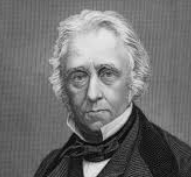
6 months 1 week ago
The object of oratory alone is not truth, but persuasion.
▼
Source
source
'On the Athenian Orators', Knight's Quarterly Magazine (August 1824), quoted in The Miscellaneous Writings of Lord Macaulay, Vol. I (1860), p. 135
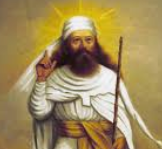
8 months 1 week ago
Satisfaction linked with dishonor or with harm to others is a prison for the seeker.
▼
Source
source
Vahishto-Ishti Gatha; Yasna 53, 6.
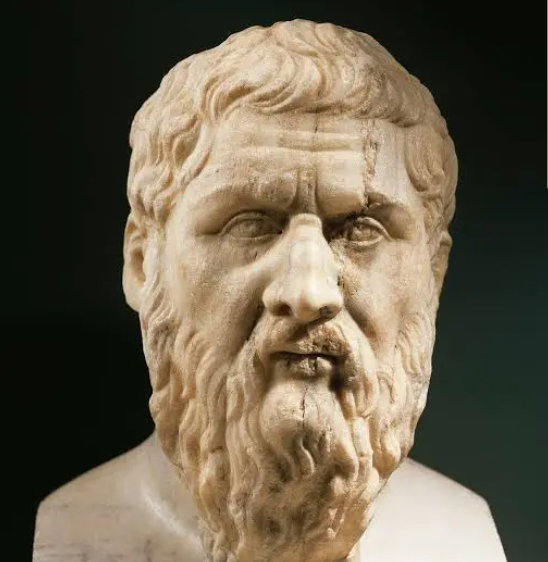
9 months 2 weeks ago
They despised everything but virtue, caring little for their present state of life, and thinking lightly of the possession of gold and other property, which seemed only a burden to them; neither were they intoxicated by luxury; nor did wealth deprive them of their self-control; but they were sober, and saw clearly that all these goods are increased by virtue and friendship with one another, whereas by too great regard and respect for them, they are lost and friendship with them.
5 months 2 weeks ago
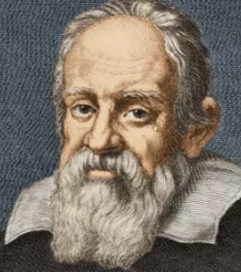
After the publication of my dialogues, I was summoned to Rome by the Congregation of the holy Office, where, being arrived on the 10th of February 1633, I was subjected to the infinite clemency of that tribunal, and of the Sovereign Pontiff, Urban the Eighth; who, notwithstanding, thought me deserving of his esteem.
▼
Source
source
pp. 145-146
9 months 1 week ago
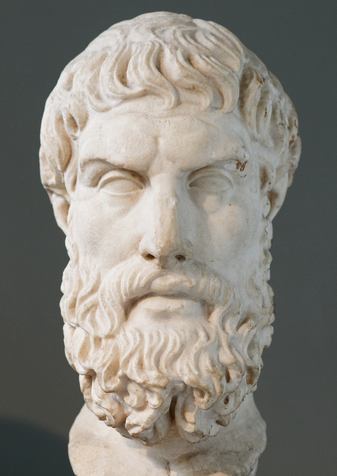
Temperance is that discreet regulation of the desires and passions, by which we are enabled to enjoy pleasures without suffering any consequent inconvenience. They who maintain such a constant self-command, as never to be enticed by the prospect of present indulgence, to do that which will be productive of evil, obtain the truest pleasure by declining pleasure.
6 months 1 week ago
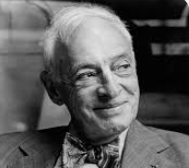
As for types like my own, obscurely motivated by the conviction that our existence was worthless if we didn't make a turning point of it, we were assigned to the humanities, to poetry, philosophy, painting - the nursery games of humankind, which had to be left behind when the age of science began. The humanities would be called upon to choose a wallpaper for the crypt, as the end drew near.
▼
Source
source
Ch. 6
7 months 1 week ago
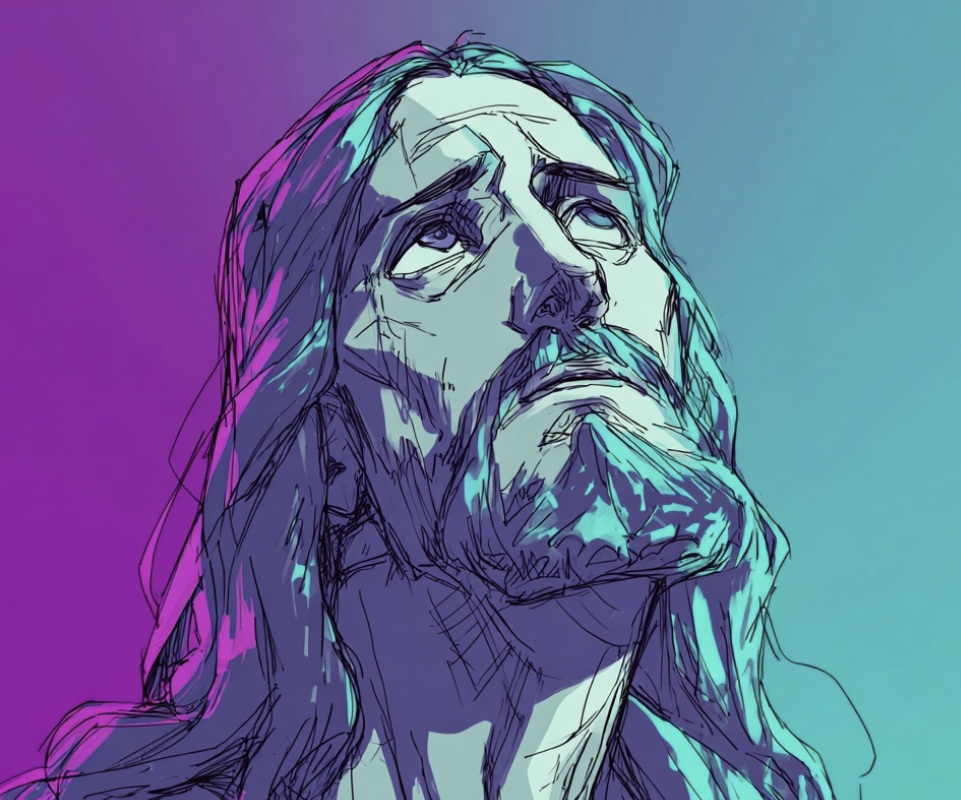
The sun will be darkened, and the moon will not give its light; the stars will fall from the sky, and the heavenly bodies will be shaken. They will see the Son of Man coming on the clouds of the sky, with power and great glory... I tell you the truth, this generation will certainly not pass away until all these things have happened.
▼
Source
source
24:29-34 (NIV)
7 months 4 days ago
Since we live in a society that promotes faddism and temporary superficial adaptation of different values, we are easily convinced that changes have occurred in arenas where there has been little or no change.
CivilSimian.com created by AxiomaticPanic, CivilSimian, Kalokagathia