


2 months 1 week ago
Being in humaneness is good. If we select other goodness and thus are far apart from humaneness, how can we be the wise? The opening phrase of this chapter after which the chapter is named in Chinese.

1 month 2 weeks ago
I am sorry that my convictions do not allow me to repeat my friend's offer, said one of the others. But I have had to abandon the humanitarian and egalitarian fancies. His name was Mr. Neo-Classical.
▼
Source
source
Pilgrim's Regress 89

2 months 2 weeks ago
We still do not yet know where the drive for truth comes from. For so far we have heard only of the duty which society imposes in order to exist: to be truthful means to employ the usual metaphors. Thus, to express it morally, this is the duty to lie according to a fixed convention, to lie with the herd and in a manner binding upon everyone. Now man of course forgets that this is the way things stand for him. Thus he lies in the manner indicated, unconsciously and in accordance with habits which are centuries' old; and precisely by means of this unconsciousness and forgetfulness he arrives at his sense of truth.

2 months 6 days ago
Opposition brings concord. Out of discord comes the fairest harmony.

1 month 3 weeks ago
There are and can be only two ways of searching into and discovering truth. The one flies from the senses and particulars to the most general axioms, and from these principles, the truth of which it takes for settled and immovable, proceeds to judgment and to the discovery of middle axioms. And this way is now in fashion. The other derives axioms from the senses and particulars, rising by a gradual and unbroken ascent, so that it arrives at the most general axioms last of all. This is the true way, but as yet untried.
▼
Source
source
Aphorism 19

4 weeks ago
Rest satisfied with doing well, and leave others to talk of you as they please.
▼
Source
source
As quoted in The World's Laconics: Or, The Best Thoughts of the Best Authors (1853) by Everard Berkeley Variant: Rest satisfied with doing well, and leave others to talk of you as they will.
1 month 2 weeks ago
Democracy is still upon its trial. The civic genius of our people is its only bulwark.
▼
Source
source
Robert Gould Shaw: Oration upon the Unveiling of the Shaw Monument
1 week 6 days ago
For two thousand years, Jesus has revenged himself on us for not having died on a sofa.

1 month 2 weeks ago
The supreme enjoyment is in satisfaction with oneself ; it is in order to deserve this satisfaction that we are placed on earth and endowed with freedom.
▼
Source
source
As quoted in Dreamer of Democracy by James Miller and Jim Miller, p. 194.
1 week 6 days ago
Tolerance - the function of an extinguished ardor - tolerance cannot seduce the young.
1 month 2 weeks ago
An extra-terrestrial philosopher, who had watched a single youth up to the age of twenty-one and had never come across any other human being, might conclude that it is the nature of human beings to grow continually taller and wiser in an indefinite progress towards perfection; and this generalisation would be just as well founded as the generalisation which evolutionists base upon the previous history of this planet.
▼
Source
source
Ch. 6: On the Scientific Method in Philosophy.Ethics is in origin the art of recommending to others the sacrifices required for co-operation with oneself.
4 days ago
I write to thee on this subject, friend, because I am angry at a book which I have just left, which is so large, that it seems to contain universal science, but it hath almost split my head, without teaching me anything.
▼
Source
source
No. 66.
1 month 4 days ago
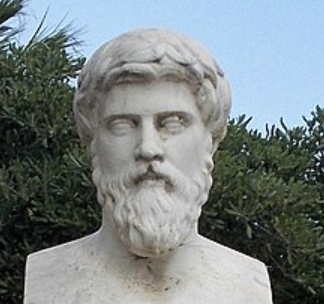
Lamachus chid a captain for a fault; and when he had said he would do so no more, "Sir," said he, "in war there is no room for a second miscarriage." Said one to Iphicrates, "What are ye afraid of?" "Of all speeches," said he, "none is so dishonourable for a general as 'I should not have thought of it.'"
▼
Source
source
52 Iphicrates
1 month 2 weeks ago
Most men do not feel in themselves the competence required for leading their group to victory, and therefore seek out a captain who appears to possess the courage and sagacity necessary for the achievement of supremacy. Even in religion this impulse appears. Nietzsche accused Christianity of inculcating a slave-morality, but ultimate triumph was always the goal. "Blessed are the meek, for they shall inherit the earth."
▼
Source
source
Ch. 2: Leaders and Followers
3 days ago
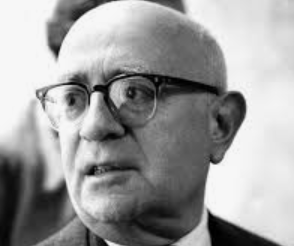
What appears as the positive is essentially the negative, i.e. the thing that is to be criticized.
▼
Source
source
p. 18
4 days ago
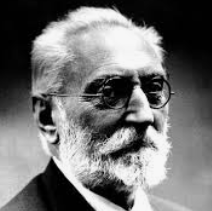
And He is the God of the humble, for in the words of the Apostle, God chose the foolish things of the world to confound the wise and the weak things of the world to confound the things which are mighty (I Cor. i. 27) And God is in each of us in the measure in which one feels Him and loves Him. "If of two men," says Kierkegaard, "one prays to the true God without sincerity of heart, and the other prays to the an idol with all the passion of an infinite yearning, it is the first who really prays to the idol, while the second really prays to God." It would be better to say that the true God is He to whom man truly prays and whom man truly desires. And there may even be a truer revelation in superstition itself than in theology.
1 month 3 weeks ago
Courtesy is a science of the highest importance. It is, like grace and beauty in the body, which charm at first sight, and lead on to further intimacy and friendship, opening a door that we may derive instruction from the example of others, and at the same time enabling us to benefit them by our example, if there be anything in our character worthy of imitation.
1 week 2 days ago
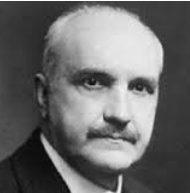
Skepticism is the chastity of the intellect, and it is shameful to surrender it too soon or to the first comer: there is nobility in preserving it coolly and proudly through long youth, until at last, in the ripeness of instinct and discretion, it can be safely exchanged for fidelity and happiness.
▼
Source
source
The Works of George Santayana p. 65
1 month 2 weeks ago
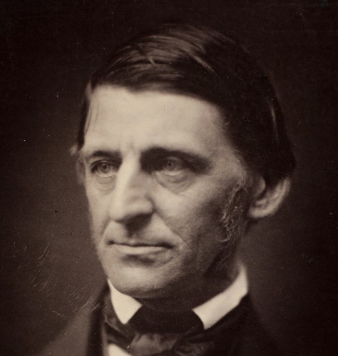
So much of our time is spent in preparation, so much in routine and so much in retrospect, that the amount of each person's genius is confined to a very few hours.
▼
Source
source
Quoted in Simon Brown (ed.) The New England Farmer, vol. 9 (January 1857) p. 18
1 month 2 weeks ago
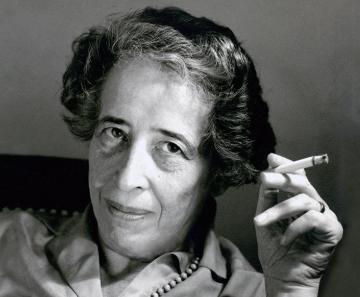
Kant [...] stated that he had "found it necessary to deny knowledge [...] to make room for faith," but all he had "denied" was knowledge of things that are unknowable, and he had not made room for faith but for thought.
▼
Source
source
p. 63
1 month 3 weeks ago
I do not speak the minds of others except to speak my own mind better.
▼
Source
source
Ch. 26. On the Education of Children

1 month 3 weeks ago
In such a chain, too, or succession of objects, each part is caused by that which preceded it, and causes that which succeeds it. Where then is the difficulty? But the WHOLE, you say, wants a cause. I answer, that the uniting of these parts into a whole, like the uniting of several distinct countries into one kingdom, or several distinct members into one body, is performed merely by an arbitrary act of the mind, and has no influence on the nature of things. Did I show you the particular causes of each individual in a collection of twenty particles of matter, I should think it very unreasonable, should you afterwards ask me, what was the cause of the whole twenty. This is sufficiently explained in explaining the cause of the parts.
▼
Source
source
Cleanthes to Demea, Part IX
1 week 2 days ago
Miracles are propitious accidents, the natural causes of which are too complicated to be readily understood.
1 month 2 weeks ago
In skating over thin ice our safety is our speed.
▼
Source
source
Prudence
1 week 1 day ago
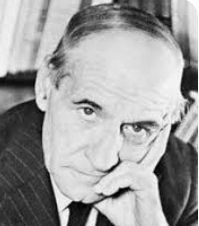
Life cannot wait until the sciences may have explained the universe scientifically. We cannot put off living until we are ready. The most salient characteristic of life is its coerciveness: it is always urgent, "here and now" without any possible postponement. Life is fired at us point-blank. And culture, which is but its interpretation, cannot wait any more than can life itself.
▼
Source
source
Mission of the University [Misión de la Universidad (PDF)] (1930; translation © 1944, first published 1946), p. 73 [p. 15 in Spanish PDF], translated by Howard Lee Nostrand. ISBN 978-1-56000-560-5
1 month 2 weeks ago
To plead the organic causation of a religious state of mind, then, in refutation of its claim to possess superior spiritual value, is quite illogical and arbitrary, unless one have already worked out in advance some psycho-physical theory connecting spiritual values in general with determinate sorts of physiological change. Otherwise none of our thoughts and feelings, not even our scientific doctrines, not even our dis-beliefs, could retain any value as revelations of the truth, for every one of them without exception flows from the state of their possessor's body at the time.
▼
Source
source
Lecture I, "Religion and Neurology"
Just now
Theory is taught so as to make the student believe that he or she can become a Marxist, a feminist, an Afrocentrist, or a deconstructionist with about the same effort and commitment required in choosing items from a menu.
▼
Source
source
Chap 4, Sect 2

1 month 1 week ago
The perfect disciplinary apparatus would make it possible for a single haze to see everything constantly. A central point would be both the source of light illuminating everything, and a locus of convergence for everything that must be known: a perfect eye that nothing would escape and a centre towards which all gazes would be turned.
▼
Source
source
Part Three, The Means of Correct Training

1 week 2 days ago
Did ye never read in the scriptures, The stone which the builders rejected, the same is become the head of the corner: this is the Lord's doing, and it is marvellous in our eyes? Therefore say I unto you, The kingdom of God shall be taken from you, and given to a nation bringing forth the fruits thereof. And whosoever shall fall on this stone shall be broken: but on whomsoever it shall fall, it will grind him to powder.
▼
Source
source
21:27-42 and 44 (KJV)
1 week 1 day ago
He [the "specialist"] is one who, out of all that has to be known in order to be a man of judgment, is only acquainted with one science, and even of that one only knows the small corner in which he is an active investigator. He even proclaims it as a virtue that he takes no cognisance of what lies outside the narrow territory specially cultivated by himself, and gives the name of "dilettantism" to any curiosity for the general scheme of knowledge.
▼
Source
source
Chapter XII: The Barbarism Of "Specialisation"
1 month 2 weeks ago
The most essential characteristic of scientific technique is that it proceeds from experiment, not from tradition. The experimental habit of mind is a difficult one for most people to maintain; indeed, the science of one generation has already become the tradition of the next...
▼
Source
source
The Scientific Outlook, 1931

2 weeks 4 days ago
Life-saving medications cost pennies to produce, thousands to purchase. Patent monopolies enable price gouging that kills people for profit. When public funding develops drugs, private companies patent them. Pharmaceutical pricing is socially sanctioned murder.
1 month 3 weeks ago
The middle sort of historians (of which the most part are) spoil all; they will chew our meat for us.
▼
Source
source
Book II, Ch. 10. Of Books
3 days ago
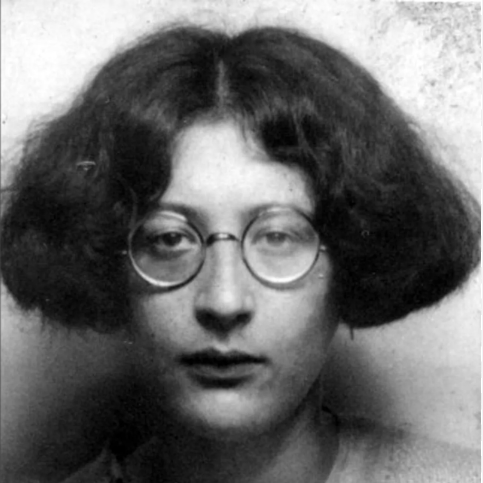
The prestige which constitutes three-fourths of might is first of all made up of that superb indifference which the powerful have for the weak, an indifference so contagious that it is communicated even to those who are its object.
▼
Source
source
in The Simone Weil Reader, p. 168
1 month 2 weeks ago
Your crystal? That's silly. Whom do you think you are fooling? Come on, everyone knows that I threw the baby out of the window. The crystal is shattered on earth, and I do not care. I am no longer anything but a skin, and my skin does not belong to you.
▼
Source
source
Estelle to Inès, Act 1, sc. 5
1 week 6 days ago
When ethics thus moves into the domain of politics and becomes morality, the possibility of violence appears because of the threat of the application of such absolutist forms of thought. Further, although the moral agent must remain free in order to avoid the totalizing domination of the state, morality must still be grounded in the ethical relation of the face-to-face.
▼
Source
source
Steven Bindeman, Levinas: The Face of Otherness and the Ethics of Therapy
1 month 2 weeks ago
When I was 4 years old ... I dreamt that I'd been eaten by a wolf, and to my great surprise I was in the wolf's stomach and not in heaven.
▼
Source
source
BBC interview on "Face to Face" (1959); The Listener, Vol. 61 (1959), p. 503
3 days ago
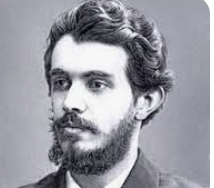
In order to be able to go on living it is possible that the bankrupt peoples will have to enter on a new path of self-denial, by curbing their covetousness and putting a check on the indefinite expansion of their wants, and by having smaller families.
▼
Source
source
p. 94
1 month 2 weeks ago
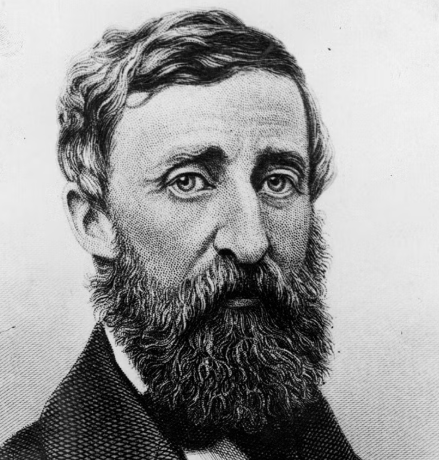
It is remarkable that, notwithstanding the universal favor with which the New Testament is outwardly received, and even the bigotry with which it is defended, there is no hospitality shown to, there is no appreciation of, the order of truth with which it deals.
1 month 2 weeks ago
The person who screams, or uses the superlative degree, or converses with heat, puts whole drawing-rooms to flight. If you wish to be loved, love measure. You must have genius or a prodigious usefulness if you will hide the want of measure.
▼
Source
source
p. 167
4 days ago
"The bitterest sorrow that man can know is to aspire to do much and to achieve nothing"... so Herodotus relates that a Persian said to a Theban at a banquet (book ix., chap. xvi.). And it is true. With knowledge and desire we can embrace everything , or almost everything; with the will nothing, or almost nothing. And contemplation is not happiness - no! not if this contemplation implies impotence. And out of this collision between our knowledge and our power pity arises.
1 week 6 days ago
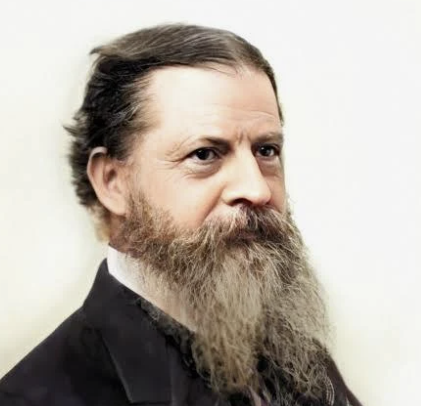
In an article published in The Monist for January, 1891, I endeavored to show what ideas ought to form the warp of a system of philosophy, and particularly emphasized that of absolute chance. In the number of April, 1892, I argued further in favor of that way of thinking, which it will be convenient to christen tychism (from τύχη, chance). A serious student of philosophy will be in no haste to accept or reject this doctrine; but he will see in it one of the chief attitudes which speculative thought may take, feeling that it is not for an individual, nor for an age, to pronounce upon a fundamental question of philosophy. That is a task for a whole era to work out. I have begun by showing that tychism must give birth to an evolutionary cosmology, in which all the regularities of nature and of mind are regarded as products of growth, and to a Schelling-fashioned idealism which holds matter to be mere specialized and partially deadened mind.
1 month 1 week ago
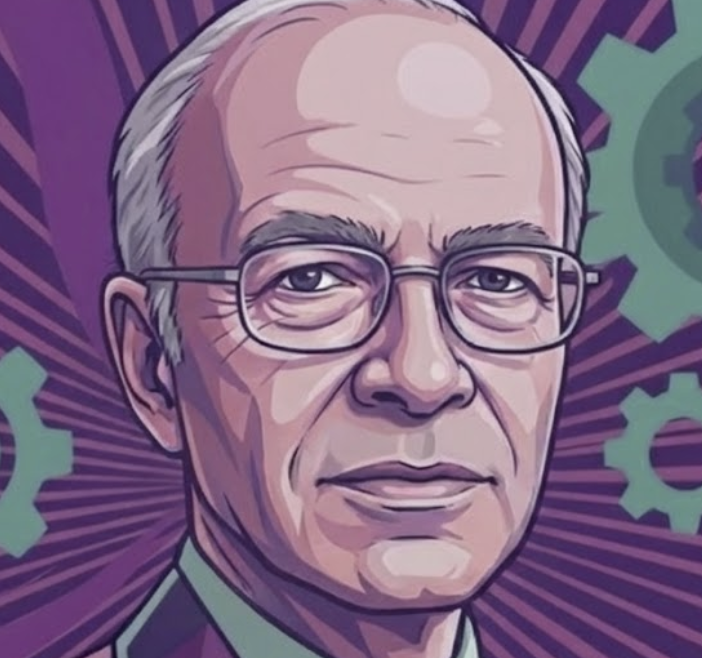
People do not feel in any way ashamed or guilty about spending money on new clothes or a new car instead of giving it to famine relief. (Indeed, the alternative does not occur to them.) This way of looking at the matter cannot be justified. When we buy new clothes not to keep ourselves warm but to look "well-dressed" we are not providing for any important need. We would not be sacrificing anything significant if we were to continue to wear our old clothes, and give the money to famine relief. By doing so, we would be preventing another person from starving. It follows from what I have said earlier that we ought to give money away, rather than spend it on clothes which we do not need to keep us warm. To do so is not charitable, or generous. Nor is it the kind of act which philosophers and theologians have called "supererogatory" - an act which it would be good to do, but not wrong not to do. On the contrary, we ought to give the money away, and it is wrong not to do so.
1 week 6 days ago
The tendency to regard continuity, in the sense in which I shall define it, as an idea of prime importance in philosophy conveniently may be be termed synechism. The present paper is intended chiefly to show what synechism is, and what it leads to.
1 month 2 weeks ago
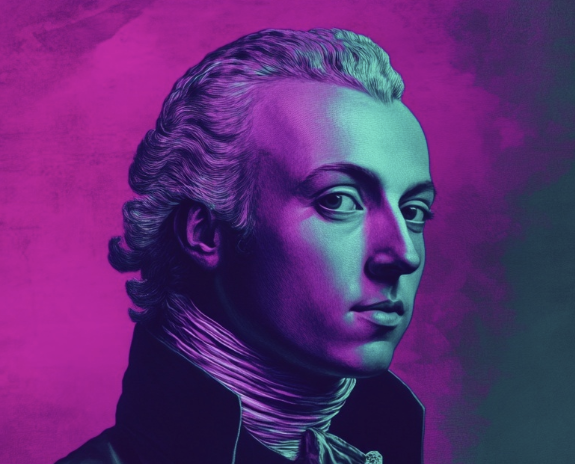
Man's greatest concern is to know how he shall properly fill his place in the universe and correctly understand what he must be in order to be a man.
▼
Source
source
Part III : Selection on Education from Kant's other Writings, Ch. I Pedagogical Fragments, # 53

1 month 2 weeks ago
The king Frederic has sent me some of his dirty linen to wash; I will wash yours another time.
▼
Source
source
Reply to General Manstein. Voltaire writes to his niece Dennis, July 24, 1752, "Voilà le roi qui m'envoie son linge à blanchir"; reported in Bartlett's Familiar Quotations, 10th ed.,1919

Just now
...I pray to God to make me free of God.

1 month 1 week ago
The world and life are one.
▼
Source
source
(5.621) Original German: Die Welt und das Leben sind Eins.
1 month 2 weeks ago
No one ever told me that grief felt so like fear. First line.

2 months 2 weeks ago
That body is heavier than another which, in an equal bulk, moves downward quicker.
CivilSimian.com created by AxiomaticPanic, CivilSimian, Kalokagathia