


1 month 2 weeks ago
A creative economy is the fuel of magnificence.
▼
Source
source
Aristocracy
2 weeks ago
Simplify the social system, in the manner which every motive, but those of usurpation and ambition, powerfully recommends; render the plain dictates of justice level to every capacity; remove the necessity of implicit faith; and we may expect the whole species to become reasonable and virtuous.
▼
Source
source
Portable Enlightenment Reader, p. 477

1 month 1 week ago
Harvard now, I think, suffers from a kind of self-idolatry, that it needs to be critical of itself in order to grow. And again, if you can be in contact with the best of its past, then it's got a chance. But if it just remains well adjusted to the status quo, generating careerist and opportunist students rather than critically oriented students who have a heart and soul, concerned about suffering here and around the world - then Harvard has a chance. I'm not giving up on Harvard, but I am making my way to New York.
▼
Source
source
Speaking in Too Radical for Harvard? Cornel West on Failed Fight for Tenure, Biden's First 50 Days & More, Democracy Now!

1 week 6 days ago
For a long while I have lived with the notion that I was the most normal being that ever existed. This notion gave me the taste, even the passion for being unproductive: what was the use of being prized in a world inhabited by madmen, a world mired in mania and stupidity? For whom was one to bother, and to what end? It remains to be seen if I have quite freed myself from this certitude, salvation in the absolute, ruin in the immediate.
1 month 4 weeks ago
The mind must not be forced; artificial and constrained manners fill it with foolish presumption, through unnatural elevation and vain and ridiculous inflation, instead of solid and vigorous nutriment.
1 week ago
Ressentiment is always to some degree a determinant of the romantic type of mind. At least this is so when the romantic nostalgia for some past era (Hellas, the Middle Ages, etc.) is not primarily based on the values of that period, but on the wish to escape from the present. Then all praise of the "past" has the implied purpose of downgrading present-day reality.
▼
Source
source
L. Coser, trans. (1973), p. 68
1 week 2 days ago
What is exalted among men is an abomination in the sight of God.
▼
Source
source
16:15 ESV

3 weeks ago
There is hardly a member of Congress who can make up his mind to go home without having despatched at least one speech to his constituents; nor who will endure any interruption until he has introduced into his harangue whatever useful suggestions may be made touching the four-and-twenty States of which the Union is composed, and especially the district which he represents.
▼
Source
source
Book One, Chapter XXI.
2 days ago
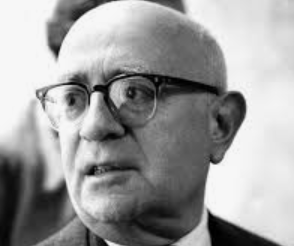
What appears as the positive is essentially the negative, i.e. the thing that is to be criticized.
▼
Source
source
p. 18
2 weeks 2 days ago
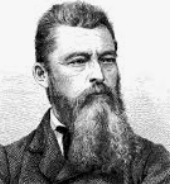
Feuerbach is saying: No, wait a minute - if you are going to be allowed to go on living as you are living, then you also have to admit that you are not Christians. Feuerbach has understood the requirements but cannot force himself to submit to them - ergo, he prefers to renounce being a Christian. And now, no matter how great a responsibility he must bear, he takes a position that is not unsound, that is, it is wrong of established Christendom to say that Feuerbach is attacking Christianity; it is not true, he is attacking the Christians by demonstrating that their lives do not correspond to the teachings of Christianity.
▼
Source
source
Soren Kierkegaard, Journals X2A 163
1 week ago
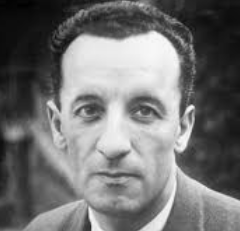
By becoming the pure subject who knows the world objectively, man ultimately realizes that absolute consciousness with respect to which the body and individual existence are no longer anything but objects; death is deprived of meaning. Reduced to the status of object of consciousness, the body could not be conceived as an intermediary between "things" and the consciousness which knows them.
▼
Source
source
p. 204
1 month 2 weeks ago
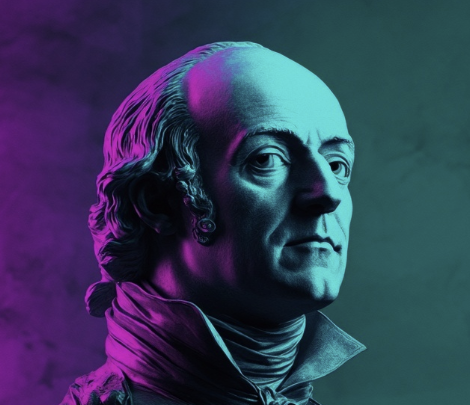
But though empires, like all the other works of men, have all hitherto proved mortal, yet every empire aims at immortality.
▼
Source
source
Chapter II, Part II, p. 896.
1 month 2 weeks ago
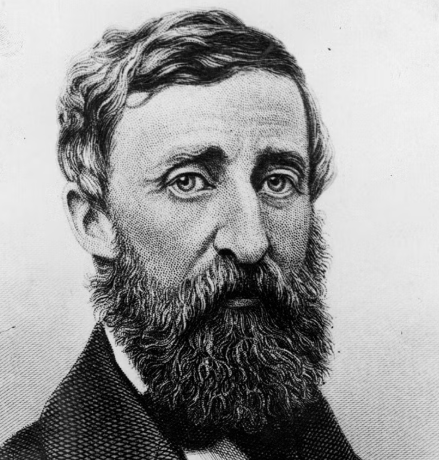
If I knew for a certainty that a man was coming to my house with the conscious design of doing me good, I should run for my life.
▼
Source
source
p. 85
1 month 2 weeks ago
Do not be too timid and squeamish about your actions. All life is an experiment. The more experiments you make the better.
▼
Source
source
November 11, 1842
1 month 1 week ago
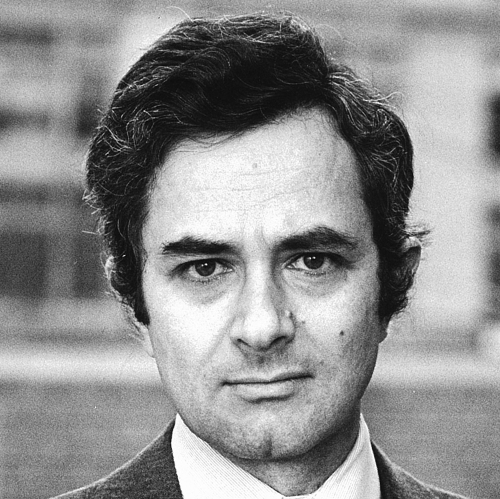
Usually, when we are told that X is Y we know how it is supposed to be true, but that depends on a conceptual or theoretical background and is not conveyed by the 'is' alone. ... But when the two terms of the identification are very disparate it may not be so clear how it could be true ... and a theoretical framework may have to be supplied to enable us to understand this. Without the framework, an air of mysticism surrounds the identification.This explains the magical flavor of popular presentations of fundamental scientific discoveries, given out as propositions to which one must subscribe without really understanding them. For example, people are now told at an early age that all matter is really energy. But despite the fact that they know what 'is' means, most of them never form a conception of what makes this claim true, because they lack the theoretical background.
▼
Source
source
pp. 176-177.
2 weeks 3 days ago
...what I look to with seriousness is the Phalanx of Party which exists in the body of the dissenters, who are, at the very least, nine tenths of them entirely devoted, some with greater some with less zeal, to the principles of the French Revolution.
▼
Source
source
Letter to the Home Secretary, Henry Dundas (30 September 1791), quoted in Alfred Cobban and Robert A. Smith (eds.), The Correspondence of Edmund Burke, Volume VI: July 1789-December 1791 (1967), p. 419
3 days ago
Ethics occupies a central place in philosophy because it is concerned with sin, with the origin of good and evil and with moral valuations. And since these problems have a universal significance, the sphere of ethics is wider than is generally supposed. It deals with meaning and value and its province is the world in which the distinction between good and evil is drawn, evaluations are made and meaning is sought.
▼
Source
source
The Destiny of Man (1931), p. 15
1 week 6 days ago
As long as one believes in philosophy, one is healthy; sickness begins when one starts to think.
1 month 2 weeks ago
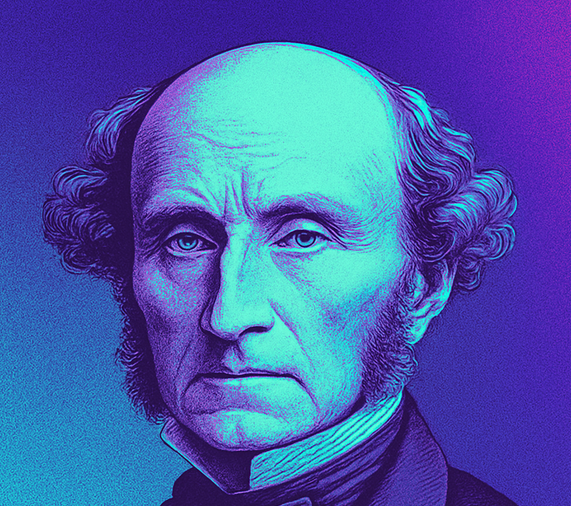
There is room in the world, no doubt, and even in old countries, for a great increase of population, supposing the arts of life to go on improving, and capital to increase. But even if innocuous, I confess I see very little reason for desiring it. The density of population necessary to enable mankind to obtain, in the greatest degree, all the advantages both of co-operation and of social intercourse, has, in all the most populous countries, been attained. If the earth must lose that great portion of its pleasantness which it owes to things that the unlimited increase of wealth and population would extirpate from it, for the mere purpose of enabling it to support a larger but not a better or a happier population, I sincerely hope, for the sake of posterity, that they will be content to be stationary, long before necessity compels them to it..
▼
Source
source
Book IV, Chapter VI, §3, p. 516
2 months 6 days ago
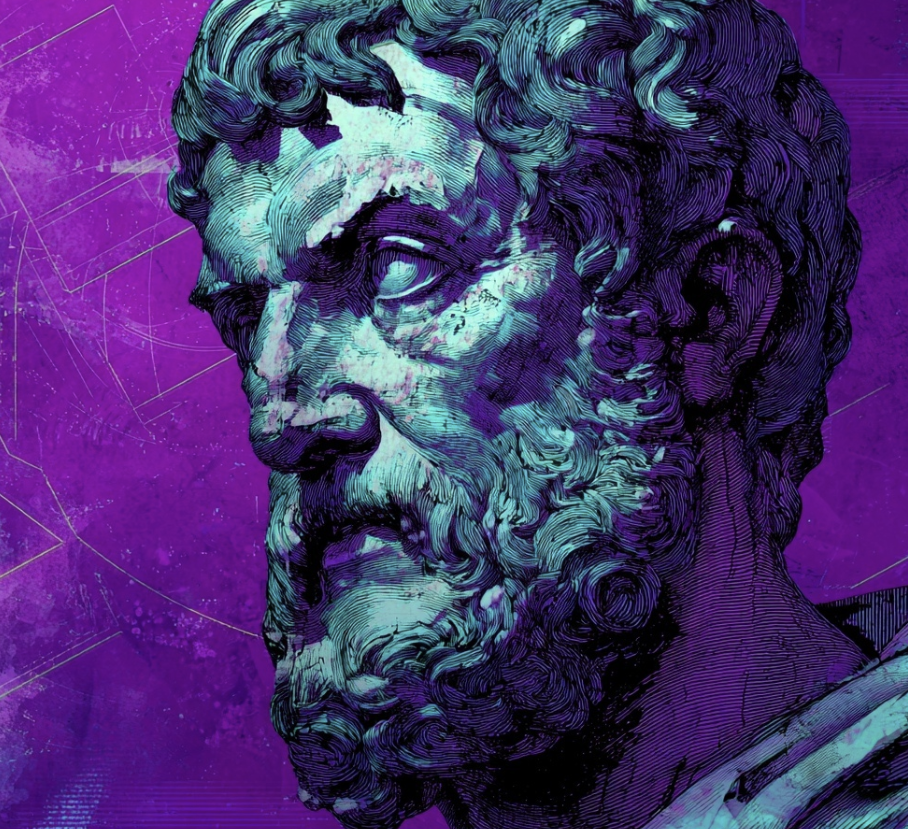
Gentleness, as opposed to an irascible temper, greatly contributes to the tranquility and happiness of life, by preserving the mind from perturbation, and arming it against the assaults of calumny and malice.
Just now
Power is more 'spacious' than violence. And violence becomes power if it 'gives itself more time.' Looked at from this perspective, power rests on an excess of space and time.
2 months 1 day ago
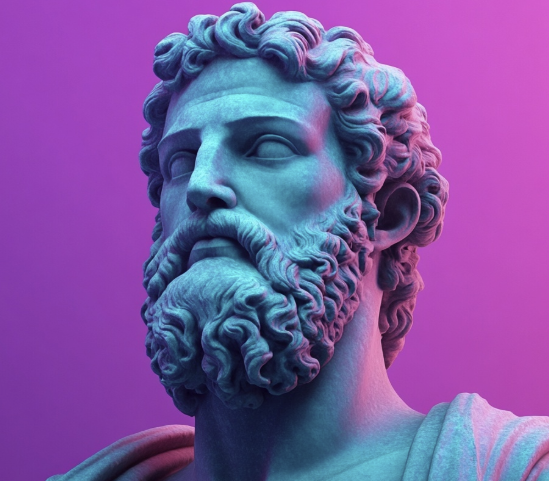
For what is it that everyone is seeking? To live securely, to be happy, to do everything as they wish to do, not to be hindered, not to be subject to compulsion.
▼
Source
source
Book IV, ch. 1, 46.
1 month 2 weeks ago
The only purpose for which power can be rightfully exercised over any member of a civilized community, against his will, is to prevent harm to others. His own good, either physical or moral, is not a sufficient warrant.
▼
Source
source
Ch. 1: Introductory

2 weeks 4 days ago
They sell you meritocracy while running a hereditary aristocracy. Talent matters, they claim, while legacy admissions fill elite universities. Hard work pays off, they insist, while inherited wealth compounds tax-free. The meritocracy myth is how privilege justifies itself to those it excludes.

1 month 3 weeks ago
As to the people; in all these countries the greater part of the people certainly detest war, and most devoutly wish for peace. A very few of them, indeed, whose unnatural happiness depends upon the public misery, may wish for war; but be it yours to decide, whether it is equitable or not, that the unprincipled selfishness of such wretches should have more weight than the anxious wishes of all good men united.
2 months 2 weeks ago
Music directly represents the passion of the soul. If one listens to the wrong kind of music, he will become the wrong kind of person.

4 weeks ago
Choose rather to be strong in soul than in body.
▼
Source
source
"Pythagorean Ethical Sentences From Stobæus" (1904) Choose rather to be strong of soul than strong of body. As quoted in Florilegium, I.22, as translated in Dictionary of Quotations (1906) by Thomas Benfield Harbottle, p. 396

2 months 1 week ago
Autumn is a second Spring when every leaf is a flower.
1 month 2 weeks ago
All the better; they do not force me to do anything that I would not have done of my own accord if I did not dread scandal. But since they want it that way, I enter gladly on the path that is opened to me, with the consolation that my departure will be more innocent than was the exodus of the early Hebrews from Egypt.
▼
Source
source
Statement after his excommunication from Jewish society, attributed by Lucas, in The Oldest Biography of Spinoza (1970) by A. Wolf; also in Spinoza: A Life (1999) by Steven Nadler
1 month 3 weeks ago
They [theologians] will explain to you how Christ was formed in the Virgin's womb; how accident subsists in synaxis without domicile in place. The most ordinary of them can do this. Those more fully initiated explain further whether there is an instans in Divine generation; whether in Christ there is more than a single filiation; whether 'the Father hates the Son' is a possible proposition; whether God can become the substance of a woman, of an ass, of a pumpkin, or of the devil, and whether, if so, a pumpkin could preach a sermon, or work miracles, or be crucified. And they can discover a thousand other things to you besides these. They will make you understand notions, and instants, formalities, and quiddities, things which no eyes ever saw, unless they were eyes which could see in the dark what had no existence.
▼
Source
source
as quoted by Froude ibid.,
Just now
Promising, committment, and fidelity, for instance, are genuinely temporal practices.

1 month 2 weeks ago
I believe in Christianity as I believe that the sun has risen. Not only because I see it, but because by it I see everything else.
▼
Source
source
"Is Theology Poetry?", 1945
3 weeks ago
Scepticism is the first step towards truth. Variant: A thing is not proved just because no one has ever questioned it. What has never been gone into impartially has never been properly gone into. Hence skepticism is the first step toward truth. It must be applied generally, because it is the touchstone.
▼
Source
source
As quoted in The Anchor Book of French Quotations with English Translations (1963) by Norbert Gutermam
3 weeks ago
In the United States a man builds a house to spend his latter years in it and he sells it before the roof is on. He plants a garden and lets it just as the trees are coming into bearing. He brings a field into tillage and leaves other men to gather the crops. He embraces a profession and gives it up. He settles in a place which he soon afterward leaves to carry his changeable longings elsewhere. If his private affairs leave him any leisure he instantly plunges into the vortex of politics and if at the end of a year of unremitting labour he finds he has a few days' vacation, his eager curiosity whirls him over the vast extent of the United States, and he will travel fifteen hundred miles in a few days to shake off his happiness.
▼
Source
source
Chapter XXIX.
1 month 2 weeks ago
The heights of popularity and patriotism are still the beaten road to power and tyranny ; flattery to treachery ; standing armies to arbitrary government ; and the glory of God to the temporal interest of the clergy.
▼
Source
source
Part I, Essay 8: Of Public Credit (This appears as a footnote in editions H to P. Other editions include it in the body of the text, and some number it Essay 9.)

2 months 6 days ago
The way of the superior man may be found, in its simple elements, in the intercourse of common men and women; but in its utmost reaches, it shines brightly through Heaven and Earth.
1 month 2 weeks ago
It might be plausibly maintained, that in almost every one of the leading controversies, past or present, in social philosophy, both sides were in the right in what they affirmed, though wrong in what they denied.
▼
Source
source
J. S. Mill, Dissertations and discussions: political, philosophical, and historical, Volume 2, H. Holt, 1864, p. 11.

2 months 2 weeks ago
There are limits beyond which your folly will not carry you. I am glad of that. In fact, I am relieved.
2 months 1 week ago
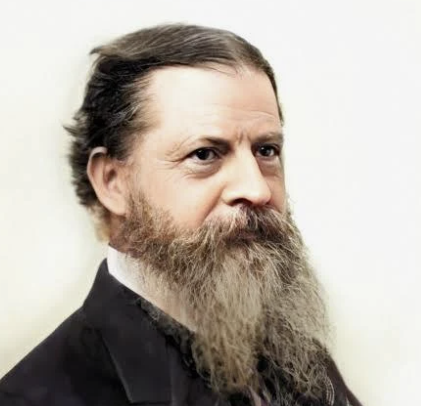
There is no fate that can not be surmounted by scorn. If the descent is thus sometimes performed in sorrow, it can also take place in joy. This word is not too much. Again I fancy Sisyphus returning toward his rock, and the sorrow was in the beginning.
1 week 6 days ago
The Protestant churches generally hold that the elements of the sacrament are flesh and blood only in a tropical sense; they nourish our souls as meat and the juice of it would our bodies. But the Catholics maintain that they are literally just that; although they possess all the sensible qualities of wafer-cakes and diluted wine. But we can have no conception of wine except what may enter into a belief, either -
1 week 6 days ago
Love of the absolute engenders a predilection for self-destruction. Hence the passion for monasteries and brothels. Cells and women, in both cases. Weariness with life fares well in the shadow of whores and saintly women.
1 week 6 days ago
Thanks to depression - that alpinism of the indolent - we scale every summit and daydream over every precipice from our bed.
1 week ago
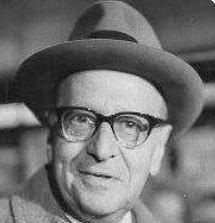
Plato and his objectivistic successors ... preserved the awareness of differences that pragmatism has been invented to deny-the difference between thinking in the laboratory and in philosophy, and consequently the difference between the destination of mankind and its present course.
▼
Source
source
p. 53.
1 week 6 days ago
It is trifling to believe in what you do or in what others do. You should avoid simulacra and even "realities"; you should take up a position external to everything and everyone, drive off or grind down your appetites, live, according to a Hindu adage, with as few desires as a "solitary elephant.
1 month 2 weeks ago
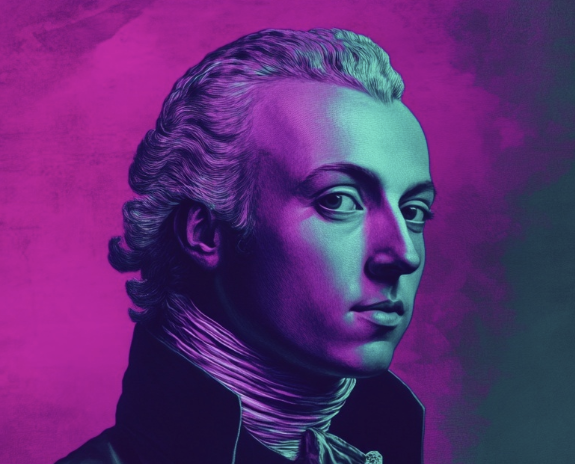
Even if a civil society were to be dissolved by the consent of all its members (e.g., if a people inhabiting an island decided to separate and disperse throughout the world), the last murderer remaining in prison would first have to be executed, so that each has done to him what his deeds deserve and blood guilt does not cling to the people for not having insisted upon this punishment; for otherwise the people can be regarded as collaborators in his public violation of justice.
▼
Source
source
Kt6:333
1 month 2 weeks ago
In ease of body and peace of mind, all the different ranks of life are nearly upon a level, and the beggar, who suns himself by the side of the highway, possesses that security which kings are fighting for.
▼
Source
source
Chap. I.

1 month 2 weeks ago
Oh providence! Oh nature! Treasure of the poor, resource of the unfortunate. The person who feels, knows your holy laws and trusts them, the person whose heart is at peace and whose body does not suffer, thanks to you is not entirely prey to adversity.
▼
Source
source
Second Dialogue; translated by Judith R. Bush, Christopher Kelly, Roger D. Masters
1 month 6 days ago
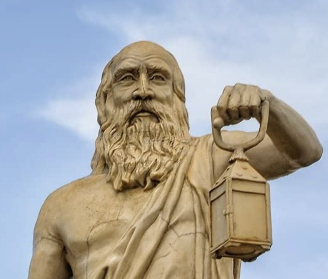
The noblest people are those despising wealth, learning, pleasure and life; esteeming above them poverty, ignorance, hardship and death.
▼
Source
source
Stobaeus, iv. 29a. 19
1 month 3 weeks ago
It may be observed, that provinces amid the vicissitudes to which they are subject, pass from order into confusion, and afterward recur to a state of order again; for the nature of mundane affairs not allowing them to continue in an even course, when they have arrived at their greatest perfection, they soon begin to decline. In the same manner, having been reduced by disorder, and sunk to their utmost state of depression, unable to descend lower, they, of necessity, reascend; and thus from good they gradually decline to evil, and from evil again return to good. The reason is, that valor produces peace; peace, repose; repose, disorder; disorder, ruin; so from disorder order springs; from order virtue, and from this, glory and good fortune.
▼
Source
source
Book V, Chapter 1
1 month 3 weeks ago
Apollo said that every one's true worship was that which he found in use in the place where he chanced to be.
▼
Source
source
Book II, Ch. 12. Apology for Raimond Sebond
CivilSimian.com created by AxiomaticPanic, CivilSimian, Kalokagathia