

1 month 2 weeks ago
The whole conception of God is a conception derived from the ancient Oriental despotisms. It is a conception quite unworthy of free men. When you hear people in church debasing themselves and saying that they are miserable sinners, and all the rest of it, it seems contemptible and not worthy of self-respecting human beings. We ought to stand up and look the world frankly in the face. We ought to make the best we can of the world, and if it is not so good as we wish, after all it will still be better than what these others have made of it in all these ages. A good world needs knowledge, kindliness, and courage; it does not need a regretful hankering after the past, or a fettering of the free intelligence by the words uttered long ago by ignorant men.
▼
Source
source
"What We Must Do"

1 month 4 weeks ago
But there is nothing sweeter than to dwell in towers that rise On high, serene and fortified with teachings of the wise, From which you may peer down upon the others as they stray This way and that, seeking the path of life, losing their way: The skirmishing of wits, the scramble for renown, the fight, Each striving harder than the next, and struggling day and night, To climb atop a heap of riches and lay claim to might.
▼
Source
source
Book II, lines 7-13 (tr. Stallings)

1 month 2 weeks ago
Love is of all the passions the strongest, for it attacks simultaneously the head, the heart, and the body.
▼
Source
source
Le Dernier Volume Des Œuvres De Voltaire: Contes - Comédie - Pensées - Poésies - Lettres, 1862

1 month 2 weeks ago
The owl of Minerva first begins her flight with the onset of dusk.
1 week 3 days ago
Though we may prefer ourselves to the universe, we nonetheless loathe ourselves much more than we suspect. If the wise man is so rare a phenomenon, it is because he seems unshaken by the aversion which, like all beings, he must feel for himself.
1 month 2 weeks ago
A third illusion haunts us, that a long duration, as a year, a decade, a century, is valuable. But an old French sentence says, "God works in moments," - "En peu d'heure Dieu labeure." We ask for long life, but 't is deep life, or grand moments, that signify. Let the measure of time be spiritual, not mechanical. Life is unnecessarily long. Moments of insight, of fine personal relation, a smile, a glance, - what ample borrowers of eternity they are! Life culminates and concentrates; and Homer said, "The Gods ever give to mortals their appointed share of reason only on one day."
▼
Source
source
Works and Days
1 week 3 days ago
The surest means of not losing your mind on the spot: remembering that everything is unreal, and will remain so...
1 month 2 weeks ago
By the rude bridge that arched the flood, Their flag to April's breeze unfurled, Here once the embattled farmers stood, And fired the shot heard round the world. The foe long since in silence slept; Alike the conqueror silent sleeps; And Time the ruined bridge has swept Down the dark stream which seaward creeps. On this green bank, by this soft stream, We set to-day a votive stone; That memory may their deed redeem, When, like our sires, our sons are gone. Spirit, that made those heroes dare, To die, and leave their children free, Bid Time and Nature gently spare The shaft we raise to them and thee.
▼
Source
source
Concord Hymn, 1837

2 weeks 5 days ago
It is the common wonder of all men, how among so many million of faces there should be none alike.
▼
Source
source
Section 2

1 month 1 week ago
I believe it might interest a philosopher, one who can think himself, to read my notes. For even if I have hit the mark only rarely, he would recognize what targets I had been ceaselessly aiming at.
1 month 2 weeks ago
The alleged power to charm down insanity, or ferocity in beasts, is a power behind the eye.
▼
Source
source
Behavior
1 week 3 days ago
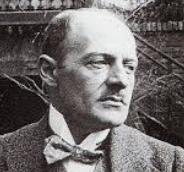
By asserting the objectivity of the physical world, naturalism identifies the existence and the conditions of existence of the physical world with existence and the conditions of existence in general. It forgets that the world of the physicist necessarily refers back, through its intrinsic meaning, through the subjective world which one tries to exclude from reality as being pure appearance, conditioned by the empirical nature of man, which is incapable of reaching directly to a world of things in themselves. But while the world of the physicist claims to go beyond naive experience, his world really exists only in relation to naive experience.
▼
Source
source
The Theory Of Intuition In Husserls Phenomenology 1963, 1995 p. 9
4 days ago
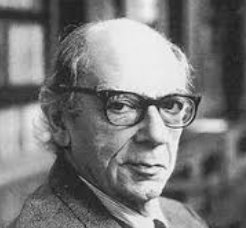
It is precisely the essential feature of egoism that it does not apprehend the full value of the isolated self. The egoist sees himself only with regard to the others, as a member of society who wishes to possess and acquire more than the others. Self-directedness or other-directedness have no essential bearing on the specific quality of love or hatred. These acts are different in themselves, quite independently of their direction.
▼
Source
source
L. Coser, trans. (1961), p. 96
5 days ago
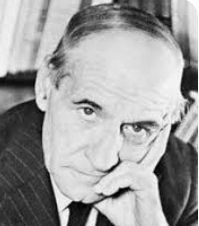
If, as I believe, the ends of men are many, and not all of them are in principle compatible with each other, then the possibility of conflict - and of tragedy - can never wholly be eliminated from human life, either personal or social. The necessity of choosing between absolute claims is then an inescapable characteristic of the human condition. This gives its value to freedom as Acton conceived of it - as an end in itself, and not as a temporary need, arising out of our confused notions and irrational and disordered lives, a predicament which a panacea could one day put right.
1 week 3 days ago
Skepticism is the sadism of embittered souls.
4 days ago
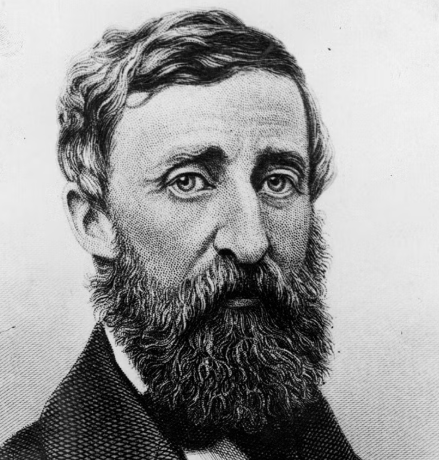
I have never said that human society ought to be aristocratic, but a great deal more than that. What I have said, and still believe with ever-increasing conviction, is that human society is always, whether it will or no, aristocratic by its very essence, to the extreme that it is a society in the measure that it is aristocratic, and ceases to be such when it ceases to be aristocratic. Of course I am speaking now of society and not of the State.
▼
Source
source
Chap.II: The Rise Of The Historic Level
1 month 2 weeks ago
My life is like a stroll upon the beach, As near the ocean's edge as I can go.
▼
Source
source
"The Fisher's Boy", in Edmund Clarence Stedman (ed.) An American Anthology, 1787-1900, Boston and New York: Houghton, Mifflin and Co., 1900

2 months 3 days ago
If I hear the Way [of truth] in the morning, I am content even to die in that evening.
4 days ago
To a lesser degree, a secret ressentiment underlies every way of thinking which attributes creative power to mere negation and criticism. Thus modern philosophy is deeply penetrated by a whole type of thinking which is nourished by ressentiment. I am referring to the view that the "true" and the "given" is not that which is self-evident, but rather that which is "indubitable" or "incontestable," which can be maintained against doubt and criticism.
▼
Source
source
L. Coser, trans. (1973), p. 67
1 week 6 days ago
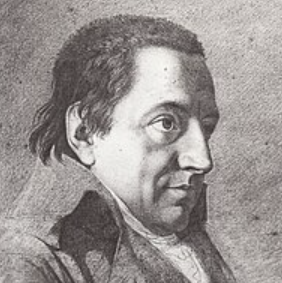
There is nothing whatever in Existence but immediate and living Thought:-Thought, I say, but by no means a thinking substance, a dead body in which thought inheres,-with which no-thought indeed a no-thinker is full surely at hand:-Thought, I say, and also the real Life of this Thought, which at bot tom is the Divine Life; both of which-Thought and , this its real Life-are molten together into one inward organic Unity; like as, outwardly, they are one simple, identical, eternal, and unchangeable Unity.
▼
Source
source
P. 56
1 week 3 days ago
There is always someone above you: beyond God Himself rises Nothingness.

2 months 1 week ago
Of all the cultural aspects of humanity, the only one which is not broken up into national or regional splinters is science. Different nations have different languages, they may have different religions, may have different dietaries, may have different holidays, different ways of thinking, but here's only one science.
▼
Source
source
Interview by Richard Heffner on The Open Mind (19 June 1988); video (25:31)
1 month 2 weeks ago
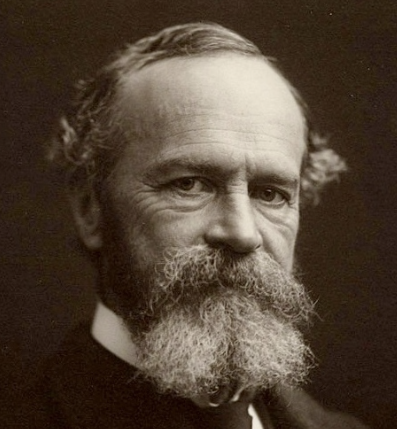
We have nothing to do but to receive, resting absolutely upon the merit, power, and love of our Redeemer.
▼
Source
source
Reported in Dictionary of Burning Words of Brilliant Writers (1895) edited by Josiah Hotchkiss Gilbert, p. 225
1 month 2 weeks ago
The believers in the non-natural character of sudden conversion have had practically to admit that there is no unmistakable class-mark distinctive of all true converts. The super-normal incidents, such as voices and visions and overpowering impressions of the meaning of suddenly presented scripture texts, the melting emotions and tumultuous affections connected with the crisis of change, may all come by way of nature, or worse still, be counterfeited by Satan. The real witness of the spirit to the second birth is to be found only in the disposition of the genuine child of God, the permanently patient heart, the love of self eradicated. And this, it has to be admitted, is also found in those who pass no crisis, and may even be found outside of Christianity altogether.
▼
Source
source
Lecture X, "Conversion, concluded"
5 days ago
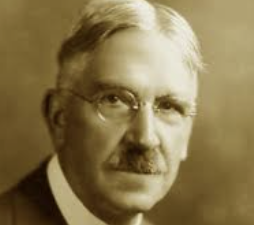
The rise of new science in the seventeenth century laid hold upon general culture in the next century. The enlightenment... testified to the widespread belief that at last light had dawned, that dissipation of ignorance, superstition, and bigotry was at hand, and the triumph of reason was assured -- for reason was counterpart in man of the laws of nature which science was disclosing. The reign of law in the natural world was to be followed by the reign of law in human affairs.
1 month 4 days ago
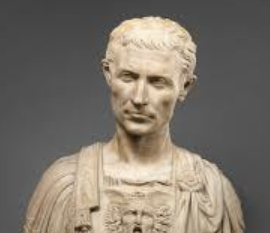
Nay, men, if any of you had heeded what I was ever foretelling and advising, ye would now neither be fearing a single man nor putting your hopes in a single man.
▼
Source
source
Quoted by Plutarch, Life of Cato the Younger, 52 Bernadotte Perrin, ed. Plutarch's Lives, Vol. 8, LCL 100 (1919), pp. 247, 361

2 weeks 1 day ago
Housing scarcity drives up prices, which benefits landlords and developers. Empty homes outnumber homeless people, but homelessness persists because housing is treated as investment commodity, not human necessity. The housing crisis is manufactured by those who profit from artificial scarcity and desperation.
2 months 1 week ago
Scientific writing is abhorrently stylized and places a premium on poor quality.

6 days ago
When you make the two into one, you will become children of Adam, and when you say, 'Mountain, move from here!' it will move.

1 month 1 week ago
God can make good use of all that happens, but the loss is real.

2 months 2 weeks ago
The truth is a trap: you can not get it without it getting you; you cannot get the truth by capturing it, only by its capturing you.
1 month 1 week ago
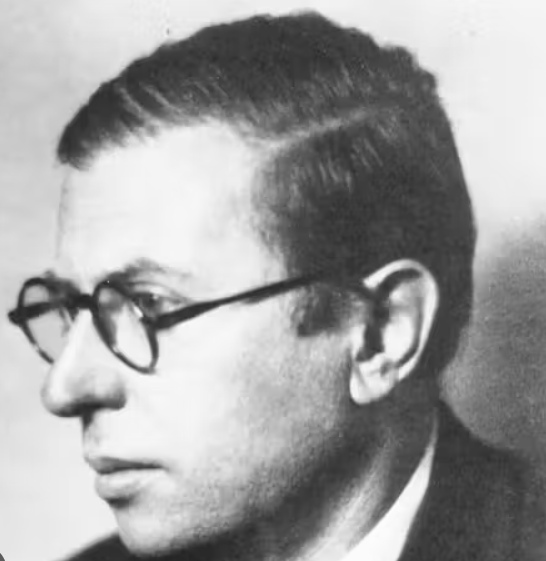
A man who belongs to some communist or revolutionary society wills certain concrete ends, which imply the will to freedom, and that freedom is willed in community. We will freedom for freedom's sake, and in and through the particular circumstances. And in thus willing freedom, we discover that it depends entirely upon the freedom of others and that the freedom of others depends upon our own.
▼
Source
source
pp. 51-52
1 month 1 week ago
I know. I know that I shall never again meet anything or anybody who will inspire me with passion. You know, it's quite a job starting to love somebody. You have to have energy, generosity, blindness. There is even a moment, in the very beginning, when you have to jump across a precipice: if you think about it you don't do it. I know I'll never jump again.

1 month 2 weeks ago
Virtue is harder to be got than knowledge of the world; and, if lost in a young man, is seldom recovered.
▼
Source
source
Sec. 70

1 month 3 weeks ago
Origen, of course, is also a great advocate of the allegorical approach. Yet I think you will have to admit that our modem theologians either despise this method of interpretation or are completely ignorant of it. As a matter of fact they surpass the pagans of antiquity in the subtlety of their distinctions.
▼
Source
source
p. 63

3 weeks 4 days ago
If thou intend to do any good; tarry not till to-morrow! for thou knowest not what may chance thee this night.
1 week 3 days ago
Every thought derives from a thwarted sensation.
2 weeks ago
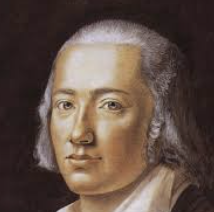
You seek life, and a godly fire Gushes and gleams for you out of the earth, As, with shuddering long, you Hurl yourself down to the flames of the Etna. So by a queen's wanton whim Pearls were dissolved in wine- heed her not! What folly, poet, to cast your riches Into that bright and bubbling cup! Yet still are you holy to me, as the might of the earth That bore you away, audaciously perishing! And I would follow the hero into the depths Did love not hold me.
▼
Source
source
"Empedokles"
1 month 2 weeks ago
Government by majorities can be made less oppressive by devolution, by placing the decision of questions primarily affecting only a section of the community in the hands of that section, rather than of a Central Chamber. In this way, men are no longer forced to submit to decisions made in a hurry by people mostly ignorant of the matter in hand and not personally interested.
▼
Source
source
Ch VIII: The World As It Could Be Made
4 days ago
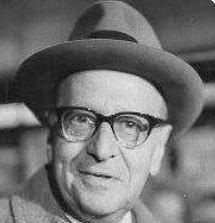
If this truth has once and for all been discarded and men have decided for integral adjustment, if reason has been purged of all morality regardless of cost, and has triumphed over all else, no one may remain outside and look on. The existence of one solitary "unreasonable" man elucidates the shame of the entire nation. His existence testifies to the relativity of the system of radical self-preservation that has been posited as absolute.
▼
Source
source
p. 45.
1 month 1 week ago
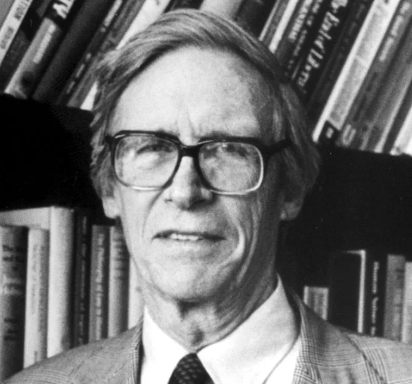
The extreme nature of dominant-end views is often concealed by the vagueness and ambiguity of the end proposed.
▼
Source
source
Chapter IX, Section 83, p. 554
1 month 1 week ago
What I see is teeming cohesion, contained dispersal.... For him, to sculpt is to take the fat off space.
▼
Source
source
On Alberto Giacometti's work, Situations, in Braziller
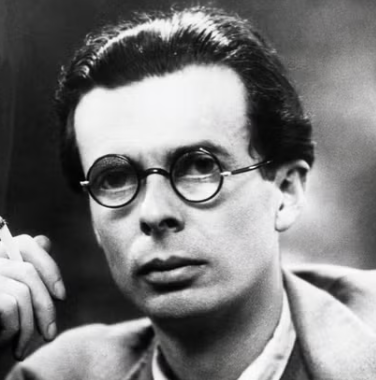
1 month 1 week ago
Wherever we turn we find that the real obstacles to peace are human will and feeling, human convictions, prejudices, opinions. If we want to get rid of war we must get rid first of all of its psychological causes. Only when this has been done will the rulers of the nations even desire to get rid of the economic and political causes.
▼
Source
source
Ch. 9, p. 138 [2012 reprint]

2 weeks 6 days ago
If it is not true, it is a good story.
▼
Source
source
as quoted in A Book of Quotations, Proverbs and Household Words (1907) edited by Sir William Gurney Benham
1 week 3 days ago
All philosophers should end their days at Pythia's feet. There is only one philosophy, that of unique moments.
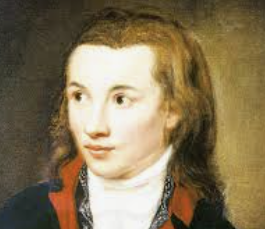
1 week 4 days ago
Poetry heals the wounds inflicted by reason.
▼
Source
source
As quoted in Quote, Unquote (1989) by Jonathan Williams, p. 136
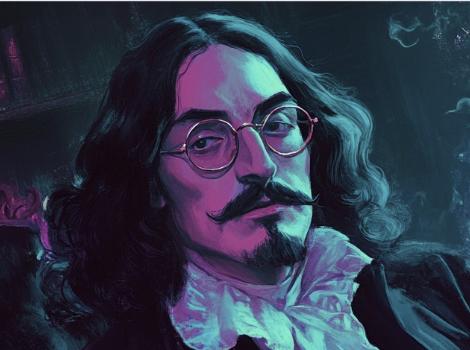
1 month 3 weeks ago
No doubt you know that Galileo had been convicted not long ago by the Inquisition, and that his opinion on the movement of the Earth had been condemned as heresy. Now I will tell you that all things I explain in my treatise, among which is also that same opinion about the movement of the Earth, all depend on one another, and are based upon certain evident truths. Nevertheless, I will not for the world stand up against the authority of the Church. ...I have the desire to live in peace and to continue on the road on which I have started.
▼
Source
source
Letter to Marin Mersenne (end of Feb., 1634) as quoted by Amir Aczel, Pendulum: Leon Foucault and the Triumph of Science
1 month 2 weeks ago
We should be considerate to the living; to the dead we owe only the truth.
▼
Source
source
Letter to M. de Grenonville, 1719
1 month 2 weeks ago
Most people, at a crisis, feel more loyalty to their nation than to their class.
▼
Source
source
Ch. 8: Economic Power
2 months 3 days ago
In archery we have something like the way of the superior man. When the archer misses the center of the target, he turns round and seeks for the cause of his failure in himself.
CivilSimian.com created by AxiomaticPanic, CivilSimian, Kalokagathia