

1 month 2 weeks ago
The qualities most useful to ourselves are, first of all, superior reason and understanding, by which we are capable of discerning the remote consequences of all our actions, and of foreseeing the advantage or detriment which is likely to result from them: and secondly, self-command, by which we are enabled to abstain from present pleasure or to endure present pain, in order to obtain a greater pleasure or to avoid a greater pain in some future time. In the union of those two qualities consists the virtue of prudence, of all the virtues that which is most useful to the individual.
▼
Source
source
Chap. II.

1 month 2 weeks ago
When we reflect on the long and dense night in which France and all Europe have remained plunged by their governments and their priests, we must feel less surprise than grief at the bewilderment caused by the first burst of light that dispels the darkness.
▼
Source
source
Author's Inscription: French Edition

2 months 1 week ago
I will not by suppression, or by performing tricks, try to produce the impression that the ordinary Christianity in the land and the Christianity of the New Testament are alike. "What Do I Want?"

1 week 2 days ago
Endless brooding over a question undermines you as much as a dull pain.

1 month 1 week ago
The significance of that 'absolute commandment', know thyself - whether we look at it in itself or under the historical circumstances of its first utterance - is not to promote mere self-knowledge in respect of the particular capacities, character, propensities, and foibles of the single self. The knowledge it commands means that of man's genuine reality - of what is essentially and ultimately true and real - of spirit as the true and essential being.
1 month 2 weeks ago
The education of the common people requires, perhaps, in a civilized and commercial society, the attention of the public more than that of people of some rank and fortune.
▼
Source
source
Chapter I, Part III, p. 845.
1 week 2 days ago
For his the artist's life is, of necessity, full of conflicts, since two forces fight in him: the ordinary man with his justified claim for happiness, contentment, and guarantees for living on the one hand, and the ruthless creative passion on the other, which under certain conditions crushes all personal desires into the dust.
2 months 1 week ago
How close men, despite all their knowledge, usually live to madness? What is truth but to live for an idea? When all is said and done, everything is based on a postulate; but not until it no longer stands on the outside, not until one lives in it, does it cease to be a postulate.
3 days ago
To-day the Enlightenment ideal has been changed into a reality; not only in legislation, which is the mere framework of public life, but in the heart of every individual, whatever his ideas may be, and even if he be a reactionary in his ideas, that is to say, even when he attacks and castigates institutions by which those rights are sanctioned.... The sovereignty of the unqualified individual, of the human being as such, generically, has now passed from being a juridical idea or ideal to be a psychological state inherent in the average man. And note this, that when what was before an ideal becomes a component part of reality, it inevitably ceases to be an ideal. The prestige and the magic that are attributes of the ideal are volatilised.
▼
Source
source
Chap.II: The Rise Of The Historic Level

2 weeks 5 days ago
After it hath been seen how the obstinate and the ignorant of evil disposition are accustomed to dispute, it will further be shewn how disputes are wont to conclude; although others are so wary that without losing their composure, but with a sneer, a smile, a certain discreet malice, that which they have not succeeded in proving by argument - nor indeed can it be understood by themselves - nevertheless by these tricks of courteous disdain they pretend to have proven, endeavouring not only to conceal their own patently obvious ignorance but to cast it on to the back of their adversary. For they dispute not in order to find or even to seek Truth, but for victory, and to appear the more learned and strenuous upholders of a contrary opinion. Such persons should be avoided by all who have not a good breastplate of patience.
▼
Source
source
"Introductory Epistle : Argument of the Third Dialogue"
1 week 2 days ago
The seat of faith, however, is not consciousness but spontaneous religious experience, which brings the individual's faith into immediate relation with God. Here we must ask: Have I any religious experience and immediate relation to God, and hence that certainty which will keep me, as an individual, from dissolving in the crowd?
▼
Source
source
p 85
1 month 3 days ago
My principal motive is the belief that we can still make admirable sense of our lives even if we cease to have ... "an ambition of transcendence."
▼
Source
source
Introduction to Objectivity, Relativism, and Truth: Philosophical Papers, Volume I (1991).
2 months 1 week ago
Let us suppose that a man believes in eternal life on Christ's word. In that case he believes without any fuss about being profound and searching and philosophical and racking his brains.

1 month 4 weeks ago
But the inner part is the better part; for to it, as both ruler and judge, all these messengers of the senses report the answers of heaven and earth and all the things therein, who said, "We are not God, but he made us." My inner man knew these things through the ministry of the outer man, and I, the inner man, knew all this, I, the soul, through the senses of my body. I asked the whole frame of earth about my God, and it answered, "I am not he, but he made me."
▼
Source
source
X, 6
1 month 2 weeks ago
The demands of a free populace, too, are very seldom harmful to liberty, for they are due either to the populace being oppressed or to the suspicious that it is going to be oppressed... and, should these impressions be false, a remedy is provided in the public platform on which some man of standing can get up, appeal to the crowd, and show that it is mistaken. And though, as Tully remarks, the populace may be ignorant, it is capable of grasping the truth and readily yields when a man, worthy of confidence, lays the truth before it.
▼
Source
source
Book 1, Ch. 4 (as translated by LJ Walker and B Crick)
5 days ago
Ideas are invented only as correctives to the past. Through repeated rectifications of this kind one may hope to disengage an idea that is valid.
▼
Source
source
A Retrospective Glance at the Lifework of a Master of Books
1 month 2 weeks ago
Intense, long, certain, speedy, fruitful, pure-Such marks in pleasures and in pains endure.Such pleasures seek if private be thy end:If it be public, wide let them extend.Such pains avoid, whichever be thy view:If pains must come, let them extend to few.
▼
Source
source
Ch. 4: Value of a Lot of Pleasure or Pain, How to be Measured
1 month 2 weeks ago
If the material world rests upon a similar ideal world, this ideal world must rest upon some other; and so on, without end. It were better, therefore, never to look beyond the present material world. By supposing it to contain the principle of its order within itself, we really assert it to be God; and the sooner we arrive at that Divine Being, so much the better. When you go one step beyond the mundane system, you only excite an inquisitive humour which it is impossible ever to satisfy.
▼
Source
source
Philo to Cleanthes, Part IV
1 month 2 weeks ago
Women are the most charitable creatures, and the most troublesome. He who shuns women passes up the trouble, but also the benefits. He who puts up with them gains the benefits, but also the trouble. As the saying goes, there's no honey without bees.
▼
Source
source
Act III, scene iv
5 days ago
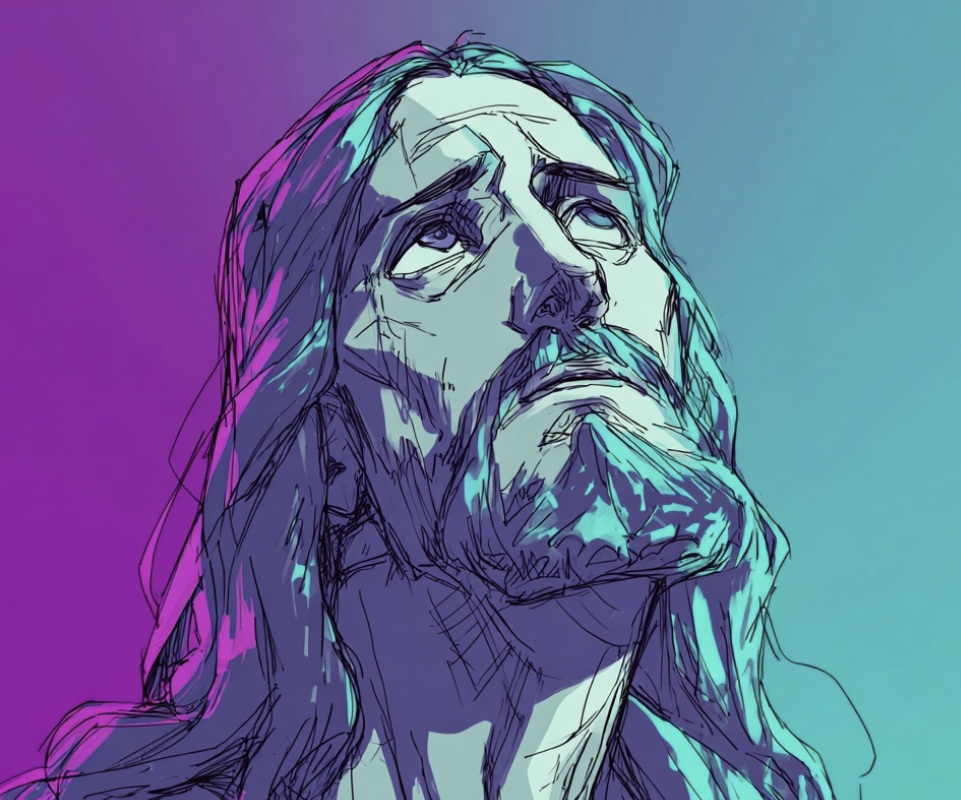
One of the scribes came to Jesus and asked him, "Which is the first of all commandments?" Jesus replied,"The first is this: Hear, O Israel! The Lord our God is Lord alone! You shall love the Lord your God with all your heart, with all your soul, with all your mind, and with all your strength. The second is like: You shall love your neighbor as yourself. There is no other commandment greater than these."
▼
Source
source
Mark 12:28-34
1 month 2 weeks ago
Men who are unhappy, like men who sleep badly, are always proud of the fact.
1 month 4 weeks ago
The true servants of God are not solicitous that He should order them to do what they desire to do, but that they may desire to do what He orders them to do.
▼
Source
source
p. 616
1 month 2 weeks ago
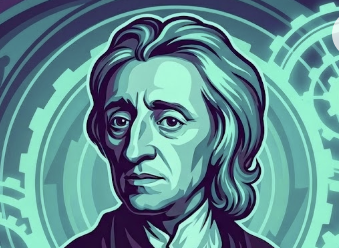
Mark what 'tis his mind aims at in the question, and not what words he expresses it in: and when you have informed and satisfied him in that, you shall see how his thoughts will enlarge themselves, and how by fit answers he may be led on farther than perhaps you could have imagine. For knowledge is grateful to the understanding, as light to the eyes.
▼
Source
source
Sec. 118

1 month 2 days ago
We are but numbers, born to consume resources.
▼
Source
source
Book I, epistle ii, line 27

1 month 3 weeks ago
A constant element of enjoyment must be mingled with our studies, so that we think of learning as a game rather than a form of drudgery, for no activity can be continued for long if it does not to some extent afford pleasure to the participant.
▼
Source
source
Letter to Christian Northoff (1497), as translated in Collected Works of Erasmus (1974), p. 114

1 month 1 week ago
This is the value of the Communities; not what they have done, but the revolution which they indicate as on the way.
1 month 3 weeks ago
As to the people; in all these countries the greater part of the people certainly detest war, and most devoutly wish for peace. A very few of them, indeed, whose unnatural happiness depends upon the public misery, may wish for war; but be it yours to decide, whether it is equitable or not, that the unprincipled selfishness of such wretches should have more weight than the anxious wishes of all good men united.
2 months 1 week ago
If someone were to expound that godliness is to belong to childhood in the temporal sense and thus dwindle and die with the years as childhood does, is to be a happy frame of mind that cannot be preserved but only recollected; if someone were to expound that repentance as a weakness of old age accompanies the decline of one's powers, when the senses are dulled, when sleep no longer strengthens but increases lethargy-this would be ungodliness and foolishness.
1 month 2 weeks ago
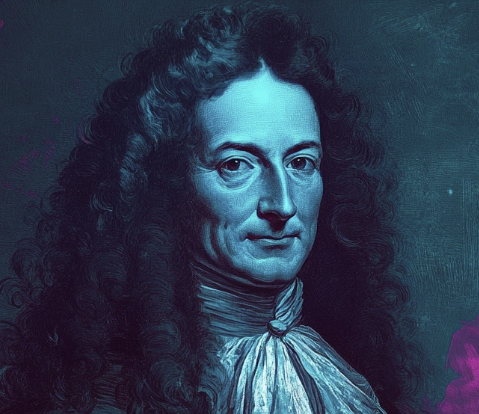
As regards the objection that possibles are independent of the decrees of God I grant it of actual decrees (although the Cartesians do not at all agree to this), but I maintain that the possible individual concepts involve certain possible free decrees; for example, if this world was only possible, the individual concept of a particular body in this world would involve certain movements as possible, it would also involve the laws of motion, which are the free decrees of God; but these, also, only as possibilities. Because, as there are an infinity of possible worlds, there are also an infinity of laws, certain ones appropriate to one; others, to another, and each possible individual of any world involves in its concept the laws of its world.
▼
Source
source
(May, 1686) as quoted in George R. Montgomery, Tr., "Correspondence between Leibniz and Arnauld," Leibniz: Discourse on metaphysics; correspondence with Arnauld, and Monadology (1916) VIII, p. 108
1 week 6 days ago
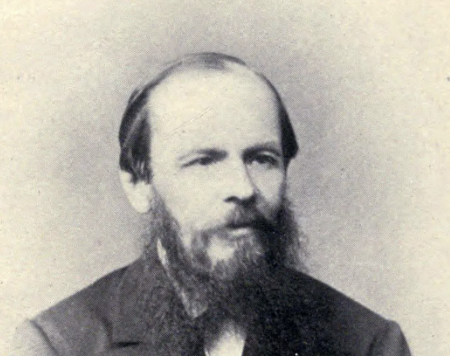
So long as man remains free he strives for nothing so incessantly and so painfully as to find someone to worship. But man seeks to worship what is established beyond dispute, so that all men would agree at once to worship it. For these pitiful creatures are concerned not only to find what one or the other can worship, but to find community of worship is the chief misery of every man individually and of all humanity from the beginning of time. For the sake of common worship they've slain each other with the sword. They have set up gods and challenged one another, 'Put away your gods and come and worship ours, or we will kill you and your gods!' And so it will be to the end of the world, even when gods disappear from the earth; they will fall down before idols just the same.
1 month 2 weeks ago
An unbiased reader, on opening one of their [Fichte's, Schelling's or Hegel's] books and then asking himself whether this is the tone of a thinker wanting to instruct or that of a charlatan wanting to impress, cannot be five minutes in any doubt. ... The tone of calm investigation, which had characterized all previous philosophy, is exchanged for that of unshakeable certainty, such as is peculiar to charlatanry of every kind and at all times. ... From every page and every line, there speaks an endeavor to beguile and deceive the reader, first by producing an effect to dumbfound him, then by incomprehensible phrases and even sheer nonsense to stun and stupefy him, and again by audacity of assertion to puzzle him, in short, to throw dust in his eyes and mystify him as much as possible.
▼
Source
source
E. Payne, trans. (1974) Vol. 1, p. 23

1 month 1 week ago
Sometimes, because my position has not been made clear enough, people think I'm a sort of radical anarchist who has an absolute hatred of power. No! What I am trying to do is to approach this extremely important and tangled phenomenon in our society, the exercise of power, with the most reflective, and I would say prudent attitude. Prudent in my analysis, in the moral and theoretical postulates I use: I try to figure out what's at stake. But to question the relations of power in the most scrupulous and attentive manner possible, looking into all the domains of its exercise, that's not the same thing as constructing a mythology of power as the beast of the apocalypse.
▼
Source
source
"Power, Moral Values, and the Intellectual", interview in History of the Present 4
1 month 2 weeks ago
This freedom from absolute, arbitrary power, is so necessary to, and closely joined with a man's preservation, that he cannot part with it, but by what forfeits his preservation and life together: for a man, not having the power of his own life, cannot, by compact, or his own consent, enslave himself to any one, nor put himself under the absolute, arbitrary power of another, to take away his life, when he pleases.
▼
Source
source
Second Treatise of Civil Government, Ch. IV, sec. 23
1 month 3 weeks ago
But tell me this: did you never love any person... were you never commanded by the person beloved to do something which you did not wish to do? Have you never flattered your little slave? Have you never kissed her feet? And yet if any man compelled you to kiss Caesar's feet, you would think it an insult and excessive tyranny. What else then is slavery?
▼
Source
source
Book IV, ch. 1, 17.
1 week 2 days ago
I think of so many people who are no more, and I pity them. Yet they are not so much to be pitied, for they have solved every problem, beginning with the problem of death.

2 weeks 4 days ago
Not to be content with Life is the unsatisfactory state of those which destroy themselves; who being afraid to live, run blindly upon their own Death, which no Man fears by Experience.
1 week 3 days ago
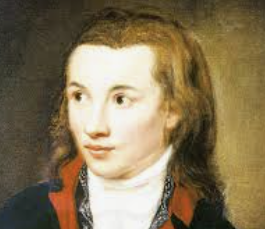
Denotation by means of sounds and markings is a remarkable abstraction. Three letters designate God for me; several lines a million things. How easy becomes the manipulation of the universe here, how evident the concentration of the intellectual world! Language is the dynamics of the spiritual realm. One word of command moves armies; the word Liberty entire nations.
▼
Source
source
Fragment No. 2

2 weeks ago
The news doesn't inform - it frames. It sets boundaries of acceptable discourse, defines reasonable positions, marginalizes radical alternatives. Not through conspiracy but through institutional pressures: corporate ownership, advertising dependence, access to power. Manufacturing consent is the media's core function, not an occasional failure.

1 month 1 week ago
In these downbeat times, we need as much hope and courage as we do vision and analysis; we must accent the best of each other even as we point out the vicious effects of our racial divide and pernicious consequences of our maldistribution of wealth and power. We simply cannot enter the twenty-first century at each other's throats, even as we acknowledge the weighty forces of racism, patriarchy, economic inequality, homophobia, and ecological abuse on our necks. We are at a crucial crossroad in the history of this nation--and we either hang together by combating these forces that divide and degrade us or we hang separately. Do we have the intelligence, humor, imagination, courage, tolerance, love, respect, and will to meet the challenge? Time will tell. None of us alone can save the nation or world. But each of us can make a positive difference if we commit ourselves to do so.
▼
Source
source
(p 109)
1 month 2 weeks ago
The statesman who should attempt to direct people in what manner they ought to employ their capitals, would not only load himself with a most unnecessary attention, but assume an authority which could safely be trusted, not only to no single person, but to no council or senate whatever, and which would nowhere be so dangerous as in the hands of a man who had folly and presumption enough to fancy himself fit to exercise it.
▼
Source
source
Chapter II
1 month 1 week ago
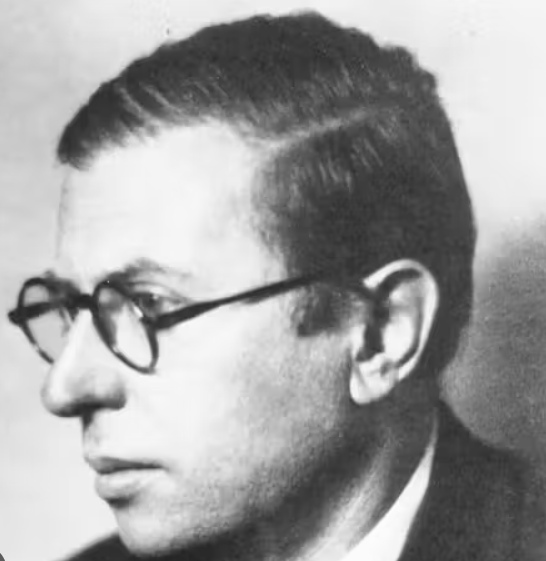
Since he is unable to be the beloved, he will become the lover.
▼
Source
source
p. 90
5 days ago
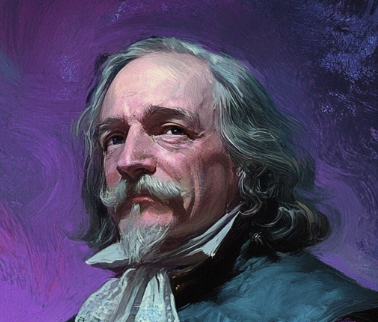
But if one Subject giveth Counsell to another, to do anything contrary to the Lawes, whether that Counsell proceed from evil intention, or from ignorance onely, it is punishable by the Common-wealth; because ignorance of the Law, is no good excuse, where every man is bound to take notice of the Lawes to which he is subject.
▼
Source
source
The Second Part, Chapter 25, p. 132
1 month 1 week ago
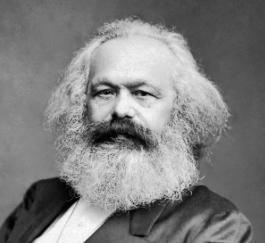
We are obviously heading for revolution-something I have never once doubted since 1850. The first act will include a by no means gratifying rehash of the stupidities of '48-'49. However, that's how world history runs its course, and one has to take it as one finds it.
▼
Source
source
Letter to Ludwig Kugelmann (28 December 1862), quoted in The Collected Works of Karl Marx and Friedrich Engels: Volume 41. Letters 1860-64 (2010), p. 437
1 month 4 weeks ago
Inasmuch as love grows in you, in so much beauty grows; for love is itself the beauty of the soul.
▼
Source
source
as translated by H. Browne and J. H. Meyers, The Nicene and Post Nicene Fathers (1995)
1 month 4 weeks ago
Certainly He says this for me, for thee, for this other man, since He bears His body, the Church. Unless you imagine, brethren, that when He said: My Father, if it be possible, let this cup pass away from (Matt. 26:39), it was the Lord that feared to die. . . . But Paul longed to die, that he might be with Christ. What? The Apostle desires to die, and Christ Himself should fear death? What can this mean, except that He bore our infirmity in Himself, and uttered these words for those who are in His body and still fear death? It is from these that the voice came; it was the voice of His members, not of the Head. When He said, My soul is sorrowful unto death (Matt. 26:38), He manifested Himself in thee, and thee in Himself. And when He said, My God, my God, why has Thou forsaken Me? (Matt. 27:46), the words He uttered on the cross were not His own, but ours.
5 days ago
If your brother sins against you, go and show him his fault, just between the two of you. If he listens to you, you have won your brother over.
▼
Source
source
(Matthew 18:15) (NIV)
1 month 3 days ago
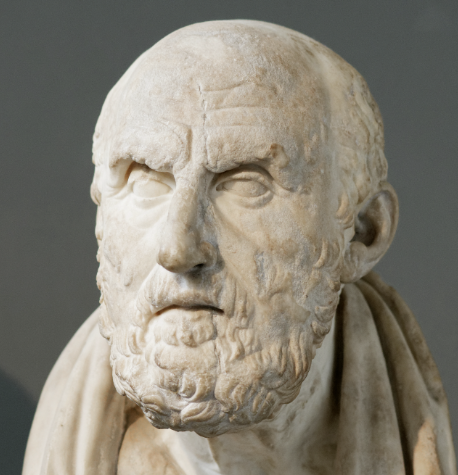
If I knew that it was fated for me to be sick, I would even wish for it; for the foot also, if it had intelligence, would volunteer to get muddy.
▼
Source
source
As quoted by Epictetus, Discourses, ii. 6. 10.
1 month 1 week ago
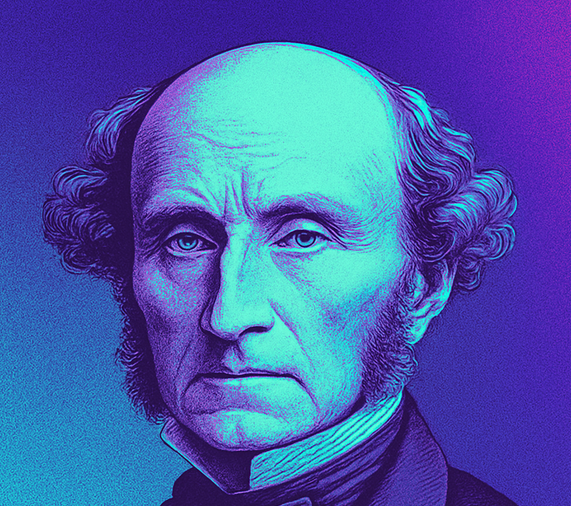
The entire history of social improvement has been a series of transitions, by which one custom or institution after another, from being a supposed primary necessity of social existence, has passed into the rank of an universally stigmatized injustice and tyranny. So it has been with the distinctions of slaves and freemen, nobles and serfs, patricians and plebeians; and so it will be, and in part already is, with the aristocracies of colour, race, and sex.
▼
Source
source
Ch. 5

1 month 1 week ago
Enough had been thought, and said, and felt, and imagined. It was about time that something should be done.

1 month 2 weeks ago
He that I am reading seems always to have the most force.
▼
Source
source
Book II, Ch. 12. Apology for Raimond Sebond
CivilSimian.com created by AxiomaticPanic, CivilSimian, Kalokagathia