
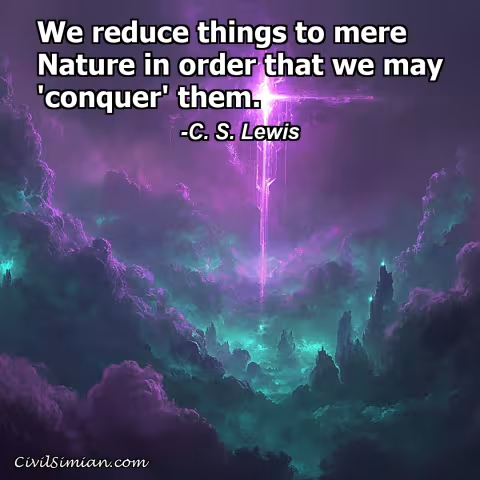
...or justify inhumane treatment, human over human, because animals do it...


The determination to print them (his lectures), and to communicate them to the General Public, must also speak for itself; and should it not do so, any other recommendation of them would be thrown away. Thus, with respect to the appearance of this work, I have nothing further to say to the Public, than that I have nothing to say.
The world is his, who has money to go over it.
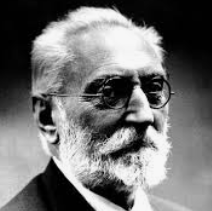
In the most secret chamber of the spirit of him who believes himself convinced that death puts an end to his personal consciousness, his memory, for ever, and all unknown to him perhaps, there lurks a shadow, a vague shadow, a shadow of uncertainty, and while he says within himself, "Well, let us live this life that passes away, for there is no other!" the silence of this secret chamber speaks to him and murmurs, "Who knows!... " These voices are like the humming of a mosquito when the south-west wind roars through the trees in the wood; we cannot distinguish this faint humming, yet nevertheless, merged in the clamor of the storm, it reaches the ear.
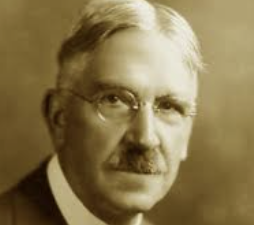
Because energy is not restrained by other elements that are at once antagonistic and cooperative, action proceeds by jerks and spasms. There is discontinuity.

We suffer: the external world begins to exist . . . ; we suffer to excess: it vanishes. Pain instigates the world only to unmask its unreality.
No one has yet been found so firm of mind and purpose as resolutely to compel himself to sweep away all theories and common notions, and to apply the understanding, thus made fair and even, to a fresh examination of particulars. Thus it happens that human knowledge, as we have it, is a mere medley and ill-digested mass, made up of much credulity and much accident, and also of the childish notions which we at first imbibed.

The absurd ... is an experience to be lived through, a point of departure, the equivalent, in existence of Descartes' methodical doubt. Absurdism, like methodical doubt, has wiped the slate clean. It leaves us in a blind alley. But, like methodical doubt, it can, by returning upon itself, open up a new field of investigation, and in the process of reasoning then pursues the same course. I proclaim that I believe in nothing and that everything is absurd, but I cannot doubt the validity of my proclamation and I must at least believe in my protest. The first and only evidence that is supplied me, within the terms of the absurdist experience, is rebellion ... Rebellion is born of the spectacle of irrationality, confronted with an unjust and incomprehensible condition.
There is nothing to say about anything. So there can be no limit to the number of books.
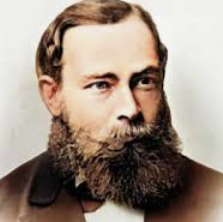
Every good mathematician is at least half a philosopher, and every good philosopher is at least half a mathematician.
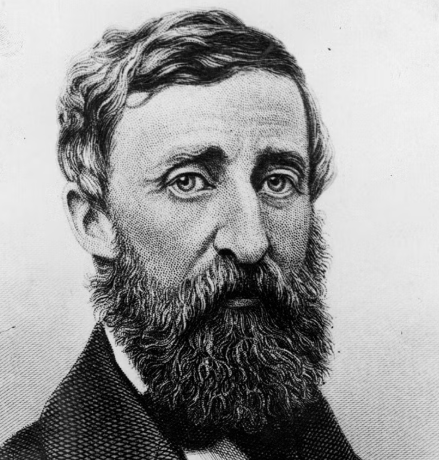
We do not directly go about the execution of the purpose that thrills us, but shut our doors behind us, and ramble with prepared minds, as if the half were already done. Our resolution is taking root or hold on the earth then, as seeds first send a shoot downward, which is fed by their own albumen, ere they send one upwards to the light.
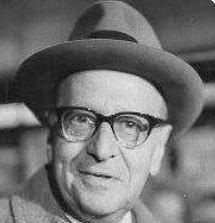
The disparagement of empirical evidence in favor of a metaphysical world of illusion has its origin in the conflict between the emancipated individual of bourgeois society and his fate within that society.
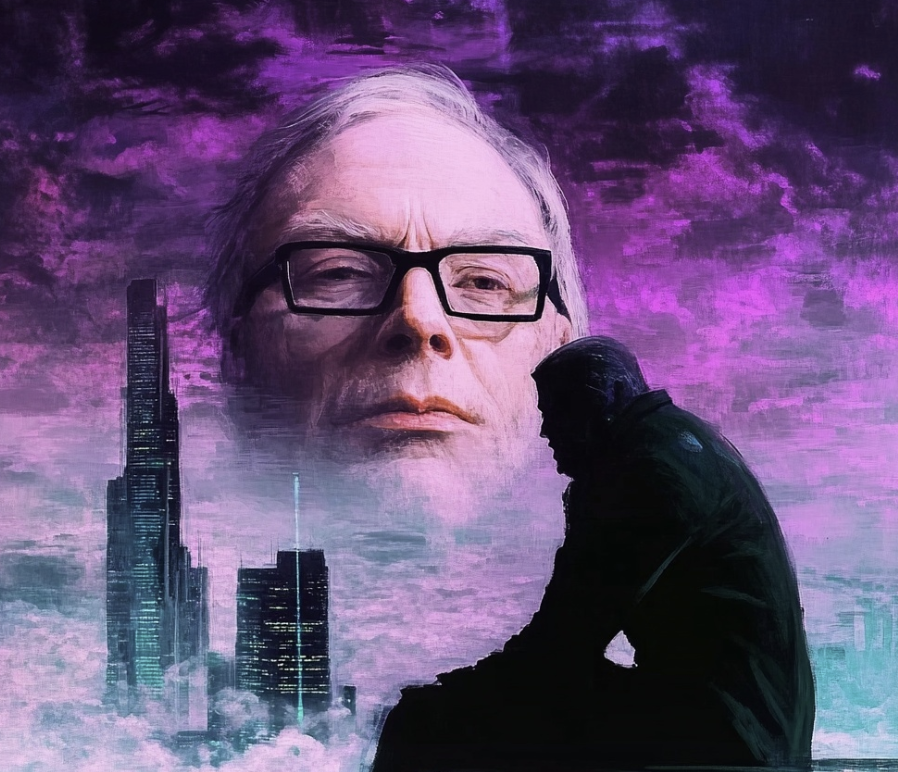
I consider one of the most important duties of any scientist the teaching of science to students and to the general public.
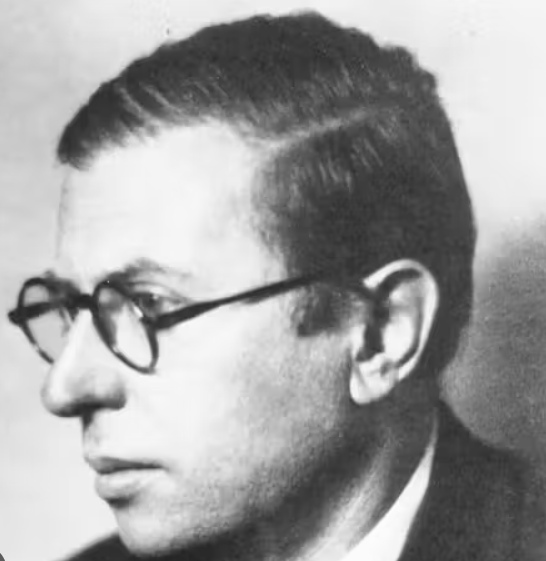
...in order to change poverty into wealth, one must start by displaying it.
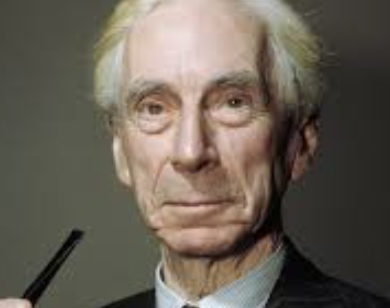
...You could take up the line that some of the gnostics took up - a line which I often thought was a very plausible one - that as a matter of fact this world that we know was made by the devil at a moment when God was not looking. There is a good deal to be said for that, and I am not concerned to refute it.
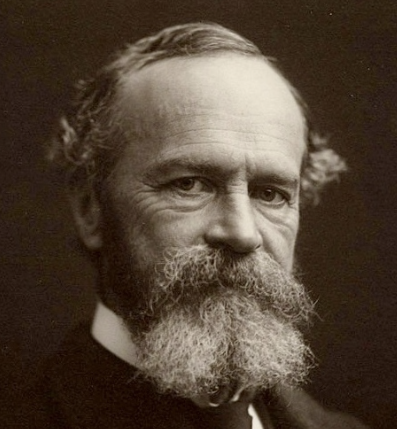
The militarily-patriotic and the romantic-minded everywhere, and especially the professional military class, refuse to admit for a moment that war may be a transitory phenomenon in social evolution. The notion of a sheep's paradise like that revolts, they say, our higher imagination. Where then would be the steeps of life? If war had ever stopped, we should have to re-invent it, on this view, to redeem life from flat degeneration. Reflective apologists for war at the present day all take it religiously. It is a sort of sacrament. It's profits are to the vanquished as well as to the victor; and quite apart from any question of profit, it is an absolute good, we are told, for it is human nature at its highest dynamic.
Not to be born is undoubtedly the best plan of all. Unfortunately, it is within no one's reach.

Reading the Socratic dialogues one has the feeling: what a frightful waste of time! What's the point of these arguments that prove nothing and clarify nothing?
When even the dictators of today appeal to reason, they mean that they possess the most tanks. They were rational enough to build them; others should be rational enough to yield to them.
What every man who loves his country hopes for in his inmost heart: the suppression of half his compatriots.
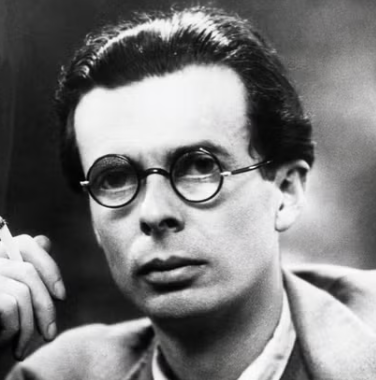
Somebody ought to make a historical study of the relations between theology and corporal punishment in childhood. I have a theory that, wherever little boys and girls are systematically flagellated, the victims grow up to think of God as - 'Wholly Other'... A people's theology reflects the state of its children's bottoms. Look at the Hebrews - enthusiastic child-beaters. And so were all good Christians in the Age of Faith. Hence Jehovah, hence Original Sin and the infinitely offended Father of Roman and Protestant orthodoxy. Whereas among Buddhists and Hindus education has always been nonviolent. No laceration of little buttocks - therefore Tat tvam asi, thou art That, mind from Mind is not divided.... Major premise: God is Wholly Other. Minor premise: man is totally depraved. Conclusion: Do to your children's bottoms what was done to yours, what your Heavenly Father has been doing to the collective bottom of humanity ever since the Fall: whip, whip, whip!

A proud man is always looking down on things and people: and, of course, as long as you are looking down, you cannot see something that is above you.

In Mohammedanism the narrow principle of the Jews is expanded into universality and thereby overcome. Here, God is no longer, as in the Far East, regarded as existent in an immediately sensory way but is conceived as the one infinite power elevated above all the multiplicity of the world. Mohammedanism is, therefore, in the strictest sense of the word, the religion of sublimity.

We find that everything that makes up difference and number is pure accident, pure show, pure constitution. Every production, of whatever kind, is an alteration, but the substance remains always the same, because it is only one, one divine immortal being.
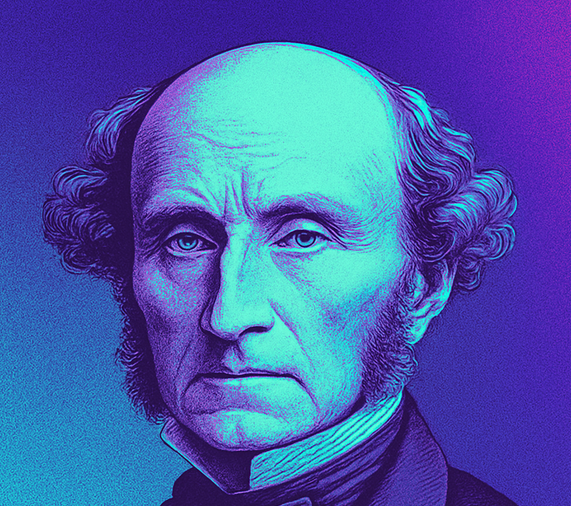
The possession and the exercise of political, and among others of electoral, rights, is one of the chief instruments both of moral and of intellectual training for the popular mind; and all governments must be regarded as extremely imperfect, until every one who is required to obey the laws, has a voice, or the prospect of a voice, in their enactment and administration.
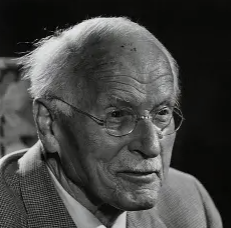
Sometimes I had an overwhelming urge to speak, not about that, but only to hint that there were some curious things about me which no one knew of. I wanted to find out whether other people had undergone similar experiences. I never succeeded in discovering so much as a trace of them in others. As a result, I had the feeling that I was either outlawed or elect, accursed or blessed.
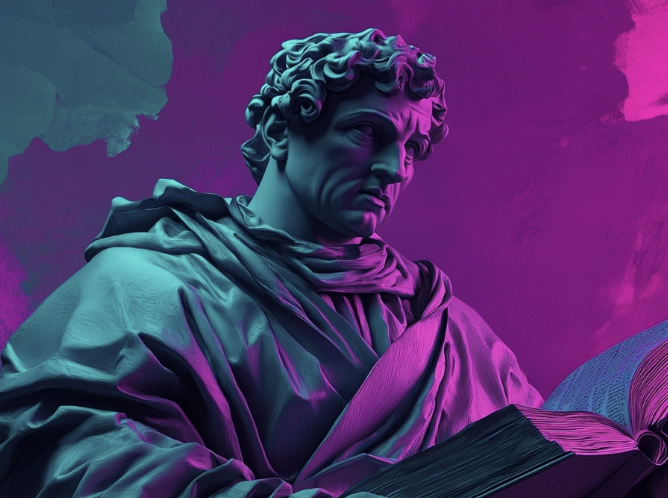
She is rightly called not only the mother of the man, but also the Mother of God ... It is certain that Mary is the Mother of the real and true God.
When you get over an infatuation, to fall for someone ever again seems so inconceivable that you imagine no one, not even a bug, that is not mired in disappointment.
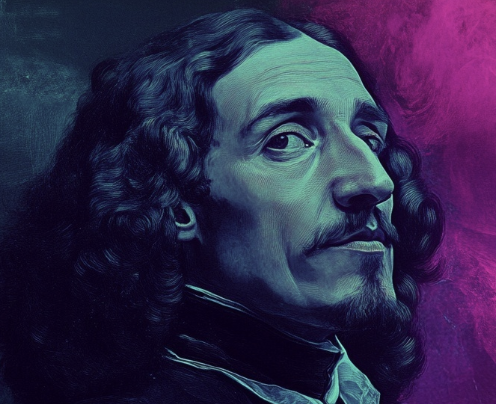
Needs must it be hard, since it is so seldom found. How would it be possible, if salvation were ready to our hand, and could without great labour be found, that it should be by almost all men neglected? But all things excellent are as difficult as they are rare.

We're sold identity through consumption. You're not person but consumer, defined by purchases. This isn't natural - it's manufactured. Consumerism distracts from collective action, provides temporary satisfaction instead of lasting fulfillment, and keeps you working to buy things you don't need.
Universal is known according to reason, but that which is particular, according to sense...
If we cut up beasts simply because they cannot prevent us and because we are backing our own side in the struggle for existence, it is only logical to cut up imbeciles, criminals, enemies, or capitalists for the same reasons.
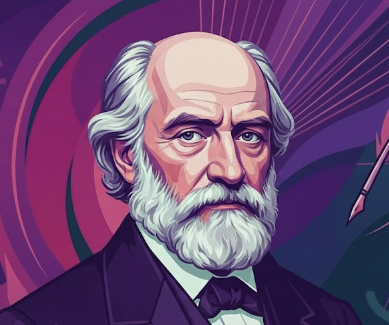
The chief objection I have to Pantheism is that it says nothing. To call the world "God" is not to explain it; it is only to enrich our language with a superfluous synonym for the word "world".
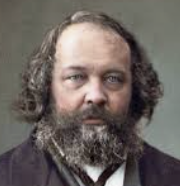
If there is a devil in human history, that devil is the principle of command. It alone, sustained by the ignorance and stupidity of the masses, without which it could not exist, is the source of all the catastrophes, all the crimes, and all the infamies of history.
Not content with real sufferings, the anxious man imposes imaginary ones on himself; he is a being for whom unreality exists, must exist; otherwise where would he obtain the ration of torment his nature demands?
Nature does not do anything in vain.
Friendship is unnecessary, like philosophy, like art, like the universe itself (for God did not need to create). It has no survival value; rather it is one of those things which give value to survival.
Literature is the effort of man to indemnify himself for the wrongs of his condition.
However hard they try, men cannot create a social organism, they can only create an organization. In the process of trying to create an organism they will merely create a totalitarian despotism.
For nature is not merely present, but is implanted within things, distant from none; naught is distant from her except the false, and that which existed never and nowhere-nullity. And while the outer face of things changeth so greatly, there flourisheth the origin of being more intimately within all things than they themselves. The fount of all kinds, Mind, God, Being, One, Truth, Destiny, Reason, Order.

The knowledge of anything, since all things have causes, is not acquired or complete unless it is known by its causes. Therefore in medicine we ought to know the causes of sickness and health. And because health and sickness and their causes are sometimes manifest, and sometimes hidden and not to be comprehended except by the study of symptoms, we must also study the symptoms of health and disease. Now it is established in the sciences that no knowledge is acquired save through the study of its causes and beginnings, if it has had causes and beginnings; nor completed except by knowledge of its accidents and accompanying essentials. Of these causes there are four kinds: material, efficient, formal, and final.
I shall assume that your silence gives consent.
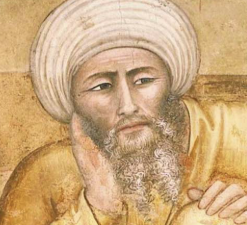
It is quite clear to you that all the people see that lower kinds of creation could have been made in a different way from that in which they really are, and as they see this lower degree in many things they think that they must have been made by chance.

You can't lead the people if you don't love the people. You can't save the people, if you don't serve the people.
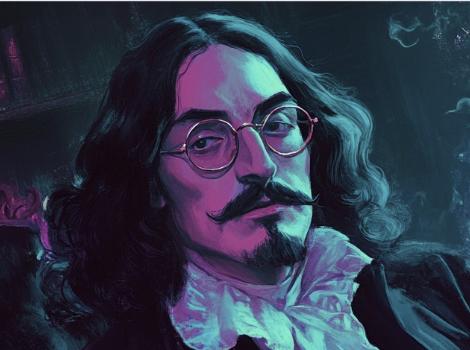
Thus, all unknown quantities can be expressed in terms of a single quantity, whenever the problem can be constructed by means of circles and straight lines, or by conic sections, or even by some other curve of degree not greater than the third or fourth.But I shall not stop to explain this in more detail, because I should deprive you of the pleasure of mastering it yourself, as well as of the advantage of training your mind by working over it, which is in my opinion the principal benefit to be derived from this science. Because, I find nothing here so difficult that it cannot be worked out by anyone at all familiar with ordinary geometry and with algebra, who will consider carefully all that is set forth in this treatise.
A philosopher who is not taking part in discussions is like a boxer who never goes into the ring.

The Nazis were 'convinced that evil-doing in our time has a morbid force of attraction,' Bolshevik assurances inside and outside Russia that they do not recognize ordinary moral standards have become a mainstay of Communist propaganda, and experience has proven time and again that the propaganda value of evil deeds and general contempt for moral standards is independent of mere self-interest, supposedly the most powerful psychological factor in politics.
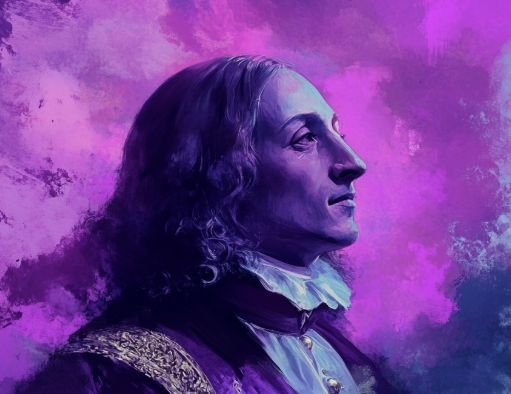
If they have entered into the spirit if these rules, and if the rules have made sufficient impression on them to become rooted and established in their minds, they will feel how much difference there is between what is said here and what a few logicians may perhaps have written by chance approximating to it in a few passages of their works.
We boil at different degrees.
CivilSimian.com created by AxiomaticPanic, CivilSimian, Kalokagathia