

1 month 1 week ago
It seems that sin is geographical. From this conclusion, it is only a small step to the further conclusion that the notion of "sin" is illusory, and that the cruelty habitually practised in punishing it is unnecessary.
▼
Source
source
A Fresh Look at Empiricism: 1927-42 (1996), p. 283

2 months 2 days ago
Men are at variance with the one thing with which they are in the most unbroken communion, the reason that administers the whole universe.

1 month 1 week ago
If someone asked us 'but is that true?' we might say "yes" to him; and if he demanded grounds we might say "I can't give you any grounds, but if you learn more you too will think the same."
1 month 1 week ago
What do I care about Jupiter? Justice is a human issue, and I do not need a god to teach it to me.
▼
Source
source
Orestes, Act 2

1 month 1 week ago
The problem is not to discover in oneself the truth of one's sex, but, rather, to use one's sexuality henceforth to arrive at a multiplicity of relationships. And, no doubt, homosexuality is not a form of desire but something desirable. Therefore, we have to work at becoming homosexuals.
▼
Source
source
"Friendship as a Way of Life," interview in Gai pied, April 1981, as translated in Ethics, Subjectivity and Truth (1994), pp. 135-136
2 weeks 3 days ago
Social positivism only accepts duties, for all and towards all. Its constant social viewpoint cannot include any notion of rights, for such notion always rests on individuality. We are born under a load of obligations of every kind, to our predecessors, to our successors, to our contemporaries. These obligations then increase or accumulate, for it is some time before we can return any service. ... Any human right is therefore as absurd as immoral. Since there are no divine rights anymore, this concept must therefore disappear completely as related only to the preliminary regime and totally inconsistent with the final state where there are only duties based on functions.
▼
Source
source
Le Catéchisme positiviste
2 months 1 week ago
Courtiers don't take wagers against the king's skill.
1 month 1 week ago
New truth is often uncomfortable, especially to the holders of power; nevertheless, amid the long record of cruelty and bigotry, it is the most important achievement of our intelligent but wayward species.
▼
Source
source
Religion and Science (1935), Ch. X: Conclusion

2 weeks ago
Quality childcare costs as much as college while childcare workers earn poverty wages. Parents can't afford care; workers can't survive on wages. This crisis isn't mysterious - we refuse to collectively fund what families and children need. Childcare should be infrastructure.
1 month 1 week ago
It is impossible to imagine a more dramatic and horrifying combination of scientific triumph with political and moral failure than has been shown to the world in the destruction of Hiroshima. From the scientific point of view, the atomic bomb embodies the results of a combination of genius and patience as remarkable as any in the history of mankind.
1 week 5 days ago
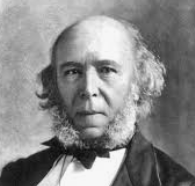
Influences of various kinds conspire to increase corporate action and decrease individual action. And the change is being on all sides aided by schemers, each of whom thinks only of his pet plan and not at all of the general reorganization which his plan, joined with others such, are working out. It is said that the French Revolution devoured its own children. Here, an analogous catastrophe seems not unlikely. The numerous socialistic changes made by Act of Parliament, joined with the numerous others presently to be made, will by-and-by be all merged in State-socialism-swallowed in the vast wave which they have little by little raised."But why is this change described as 'the coming slavery'?," is a question which many will still ask. The reply is simple. All socialism involves slavery.
1 month 2 weeks ago
Make your educational laws strict and your criminal ones can be gentle; but if you leave youth its liberty you will have to dig dungeons for ages.
1 month 1 week ago
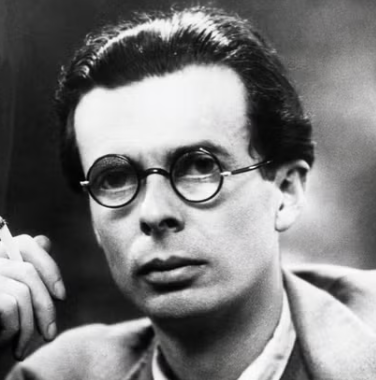
Facts are ventriloquists' dummies. Sitting on a wise man's knee they may be made to utter words of wisdom; elsewhere, they say nothing, or talk nonsense, or indulge in sheer diabolism.
▼
Source
source
"Bruno Rontini"
1 month 1 week ago
The best life is the one in which the creative impulses play the largest part and the possessive impulses the smallest.
1 week 1 day ago
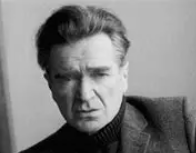
Fear is the antidote to boredom: the remedy must be stronger than the disease.
2 months 1 week ago
Like great works, deep feelings always mean more than they are conscious of saying.
1 month 2 weeks ago
So in all human affairs one notices, if one examines them closely, that it is impossible to remove one inconvenience without another emerging.
▼
Source
source
Book 1, Ch. 6 (as translated by LJ Walker and B Crick)

1 month 4 weeks ago
But the inner part is the better part; for to it, as both ruler and judge, all these messengers of the senses report the answers of heaven and earth and all the things therein, who said, "We are not God, but he made us." My inner man knew these things through the ministry of the outer man, and I, the inner man, knew all this, I, the soul, through the senses of my body. I asked the whole frame of earth about my God, and it answered, "I am not he, but he made me."
▼
Source
source
X, 6
4 days ago
Because rhythm is a universal scheme of existence, underlying all realization of order in change, it pervades all the arts, literary, musical, plastic and architectural, as well as the dance. Since man succeeds only as he adapts his behavior to the order of nature, his achievements and victories, as they ensue upon resistance and struggle, become the matrix of all esthetic subject-matter; in some sense they constitute the common pattern of art, the ultimate conditions of form. Their cumulative orders of succession become without express intent the means by which man commemorates and celebrates the most intense and full moments of his experience. Underneath the rhythm of every art and every work of art there lies, as a substratum in the depths of the subconsciousness, the basic pattern of the relations of the live creature to his environment.
▼
Source
source
p. 156
1 month 1 week ago
Immortality. I notice that as soon as writers broach this question they begin to quote. I hate quotation. Tell me what you know.
▼
Source
source
May 1849
2 months 1 week ago
If the world were clear, art would not exist.
1 week 5 days ago
Education has for its object the formation of character. To curb restive propensities, to awaken dormant sentiments, to strengthen the perceptions, and cultivate the tastes, to encourage this feeling and repress that, so as finally to develop the child into a man of well proportioned and harmonious nature - this is alike the aim of parent and teacher.
▼
Source
source
Pt. II, Ch. 17 : The Rights of Children

3 weeks 3 days ago
Happy is that City that hath a wise man to govern it.
2 months 2 days ago
Guide the people by law, subdue them by punishment; they may shun crime, but will be void of shame. Guide them by example, subdue them by courtesy; they will learn shame, and come to be good.
1 month 1 week ago
In the days before machinery men and women who wanted to amuse themselves were compelled, in their humble way, to be artists. Now they sit still and permit professionals to entertain them by the aid of machinery. It is difficult to believe that general artistic culture can flourish in this atmosphere of passivity.
1 month 3 weeks ago
It is necessary to have regard to the person whom we wish to persuade, of whom we must know the mind and the heart, what principles he acknowledges, what things he loves; and then observe in the thing in question what affinity it has with the acknowledged principles, or with the objects so delightful by the pleasure which they give him.
1 month 1 week ago
On the death of a friend, we should consider that the fates through confidence have devolved on us the task of a double living, that we have henceforth to fulfill the promise of our friend's life also, in our own, to the world.
▼
Source
source
February 28, 1840
1 month 1 week ago
One must look into hell before one has any right to speak of heaven.
▼
Source
source
Letter to Colette O'Niel, October 23, 1916; published in The Selected Letters of Bertrand Russell: The Public Years, 1914-1970, p. 87
1 month 1 week ago
Nevertheless, among all the temptations I will have to resist today. There would be the temptation of memory: to recount what was for me, and for those of my generation who shared it during a whole lifetime. The experience of Marxism. The quasi-paternal figure of Marx, the way it fought in us with other filiations, the reading of texts and the interpretation of a world in which the Marxist inheritance was-and still remains, and so it will remain-absolutely and thoroughly determinate. One need not be a Marxist or a communist in order to accept this obvious fact. We all live in a world, some would say a culture, that still bears, at an incalculable depth, the mark of this inheritance, whether in a directly visible fashion or not.
▼
Source
source
Injunctions of Marx
1 month 1 week ago
Ah! Do not judge the gods, young man, they have painful secrets.
▼
Source
source
Jupiter, Act 1

2 weeks 3 days ago
Every central government worships uniformity: uniformity relieves it from inquiry into an infinity of details.
▼
Source
source
Book Four, Chapter III.
1 week 5 days ago
You women could make someone fall in love even with a lie.
▼
Source
source
Act I.
3 days ago
The concept of guilt is found most powerfully developed even in the most primitive communal forms which we know: ... the man is guilty who violates one of the original laws which dominate the society and which are mostly derived from a divine founder; the boy who is accepted into the tribal community and learns its laws, which bind him thenceforth, learns to promise; this promise is often given under the sign of death, which is symbolically carried out on the boy, with a symbolical rebirth.
▼
Source
source
p. 178
1 week 6 days ago
Whatever is supreme in a state, ought to have, as much as possible, its judicial authority so constituted as not only not to depend upon it, but in some sort to balance it. It ought to give a security to its justice against its power. It ought to make its judicature, as it were, something exterior to the state.
1 month 2 weeks ago
We can come to look upon the deaths of our enemies with as much regret as we feel for those of our friends, namely, when we miss their existence as witnesses to our success.
▼
Source
source
Vol. 2, Ch. 26, sect. 311a
2 weeks 3 days ago
The Americans never use the word peasant, because they have no idea of the class which that term denotes; the ignorance of more remote ages, the simplicity of rural life, and the rusticity of the villager have not been preserved among them; and they are alike unacquainted with the virtues, the vices, the coarse habits, and the simple graces of an early stage of civilization.
▼
Source
source
Chapter XVII.
1 month 2 weeks ago
My purpose is to explain, not the meaning of words, but the nature of things.
▼
Source
source
Part III, Def. XX
1 month 1 week ago
Don't for heaven's sake, be afraid of talking nonsense! But you must pay attention to your nonsense.
▼
Source
source
p. 56e
1 week 5 days ago
On condition that you protect my rights, I will protect your rights. How, then, does some party obtain the right to claim the protection of the other? Evidently, by actually protecting the rights of the other. But if this is so, no party will ever obtain a strictly legal claim to the protection of the other.
▼
Source
source
P. 220
2 months 2 days ago
Moderation, in the pursuit of honors or riches, is the only security against disappointment and vexation. A wise man, therefore, will prefer the simplicity of rustic life to the magnificence of courts.
3 days ago
Now, apparently, many men are again feeling homesick for the herd. They devote themselves passionately to whatever there is left in them of the sheep. They want to march through life together, along the collective path, shoulder to shoulder, wool rubbing wool, and the head down. This is the reason why so many European peoples are looking for a shepherd and a sheep dog.
▼
Source
source
p. 170

2 months 1 week ago
It is the duty of the human understanding to understand that there are things which it cannot understand, and what those things are. Human understanding has vulgarly occupied itself with nothing but understanding, but if it would only take the trouble to understand itself at the same time it would simply have to posit the paradox.

1 month 1 week ago
Perfect humility dispenses with modesty.
1 month 2 weeks ago
Let me have none of your Popish stuff! Get away with you, good morning.
▼
Source
source
Last words (June 1809), as quoted in The Fortnightly, vol. 25; vol. 31, p. 398
1 week 2 days ago
It is only natural that I should constantly have revolved in my mind the question of the relationship of the symbolism of the unconscious to Christianity as well as to other religions. Not only do I leave the door open for the Christian message, but I consider it of central importance for Western man. It needs, however, to be seen in a new light, in accordance with the changes wrought by the contemporary spirit.
1 month 1 week ago
It is wrong to think that belief in freedom always leads to victory; we must always be prepared for it to lead to defeat. If we choose freedom, then we must be prepared to perish along with it. Poland fought for freedom as no other country did. The Czech nation was prepared to fight for its freedom in 1938; it was not lack of courage that sealed its fate. The Hungarian Revolution of 1956 - the work of young people with nothing to lose but their chains - triumphed and then ended in failure. ... Democracy and freedom do not guarantee the millennium. No, we do not choose political freedom because it promises us this or that. We choose it because it makes possible the only dignified form of human coexistence, the only form in which we can be fully responsible for ourselves. Whether we realize its possibilities depends on all kinds of things - and above all on ourselves.
5 days ago
For Warre, consisteth not in Battell onely, or the act of fighting; but in a tract of time, wherein the Will to contend by Battell is sufficiently known: and therefore the notion of Time, is to be considered in the nature of Warre; as it is in the nature of Weather.
▼
Source
source
The First Part, Chapter 13, p. 62
1 month 1 week ago
I believe in Christianity as I believe that the sun has risen. Not only because I see it, but because by it I see everything else.
▼
Source
source
"Is Theology Poetry?", 1945
1 month 1 week ago
Announced by all the trumpets of the sky Arrives the snow, and, driving o'er the fields, Seems nowhere to alight: the whited air Hides hills and woods, the river and the heaven, And veils the farm-house at the garden's end.
▼
Source
source
The Snow-Storm
1 week 2 days ago
For lack of empirical data I have neither knowledge nor understanding of such forms of being, which are commonly called spiritual. ...Nevertheless, we have good reason to suppose that behind this veil there exists the uncomprehended absolute object which affects and influences us-and to suppose it even, or particularly, in the case of psychic phenomena about which no verifiable statements can be made.
▼
Source
source
p.351
CivilSimian.com created by AxiomaticPanic, CivilSimian, Kalokagathia