


2 weeks 4 days ago
The long habit of living indisposeth us for dying.
▼
Source
source
Chapter V
1 month 1 week ago
It is not by prayer and humility that you cause things to go as you wish, but by acquiring a knowledge of natural laws.
1 week 3 days ago
Liberty is so great a magician, endowed with so marvelous a power of productivity, that under the inspiration of this spirit alone, North America was able within less than a century to equal, and even surpass, the civilization of Europe.
2 weeks 3 days ago
Evil always turns up in this world through some genius or other.
▼
Source
source
As quoted in Dictionary of Foreign Quotations (1980) by Mary Collison, Robert L. Collison, p. 98

2 weeks 3 days ago
You may set the Negro free, but you cannot make him otherwise than an alien to the European. Nor is this all we scarcely acknowledge the common features of humanity in this stranger whom slavery has brought among us. His physiognomy is to our eyes hideous, his understanding weak, his tastes low; and we are almost inclined to look upon him as a being intermediate between man and the brutes.
▼
Source
source
Chapter XVIII.
5 days ago
If you have money, don't lend it at interest. Rather, give it to someone from whom you won't get it back.
1 month 1 week ago
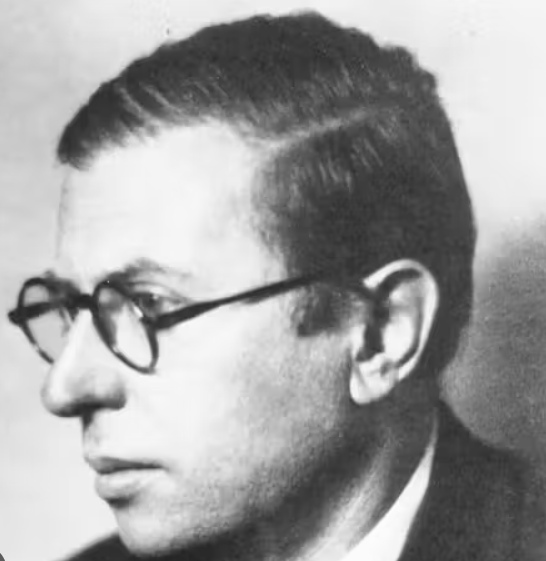
He was free, free in every way, free to behave like a fool or a machine, free to accept, free to refuse, free to equivocate; to marry, to give up the game, to drag this death weight about with him for years to come. He could do what he liked, no one had the right to advise him, there would be for him no Good or Evil unless he thought them into being.
▼
Source
source
L'âge de raison (The Age of Reason)
2 months 1 week ago
Knowledge is the food of the soul; and we must take care, my friend, that the Sophist does not deceive us when he praises what he sells, like the dealers wholesale or retail who sell the food of the body; for they praise indiscriminately all their goods, without knowing what are really beneficial or hurtful.
1 month 1 week ago
Only in thought is man a God; in action and desire we are the slaves of circumstance.
▼
Source
source
Letter to Lucy Donnely, November 25, 1902
1 month 3 weeks ago
For as children tremble and fear everything in the blind darkness, so we in the light sometimes fear what is no more to be feared than the things that children in the dark hold in terror and imagine will come true. This terror, therefore, and darkness of mind must be dispelled not by the rays of the sun and glittering shafts of daylight, but by the aspect and law of nature.
▼
Source
source
Book II, lines 55-61 (tr. Rouse)

1 month 2 weeks ago
Superstition is to religion what astrology is to astronomy, the mad daughter of a wise mother. These daughters have too long dominated the earth.
▼
Source
source
"Whether it is useful to maintain the people in superstition," Treatise on Toleration, 1763
3 days ago
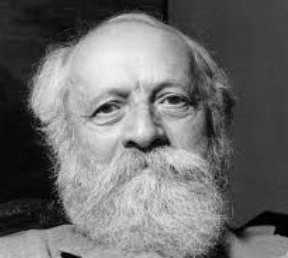
When we rise out of [the night] into the new life and there begin to receive the signs, what can we know of that which - of him who gives them to us? Only what we experience from time to time from the signs themselves. If we name the speaker of this speech God, then it is always the God of a moment, a moment God.
▼
Source
source
p. 15
1 month 3 weeks ago
We ought neither to fasten our ship to one small anchor nor our life to a single hope.
▼
Source
source
Fragment 30 (Oldfather translation)
2 months 1 week ago
Outside intelligences, exploring the Solar System with true impartiality, would be quite likely to enter the Sun in their records thus: Star X, spectral class G0, 4 planets plus debris.
1 month 2 weeks ago
As usurpation is the exercise of power which another has a right to, so tyranny is the exercise of power beyond right, which nobody can have a right to...
▼
Source
source
Second Treatise of Government, Ch. XVIII, sec. 199

5 days ago
Resignation' is a keynote in Comte's writings, deriving directly from assent to invariable social laws. 'True resignation, that is, a disposition to endure necessary evils steadfastly and without any hope of compensation therefore, can result only from a profound feeling for the invariable laws that govern the variety of natural phenomena.
▼
Source
source
P. 345
1 month 2 weeks ago
If a big diamond is cut up into pieces, it immediately loses its value as a whole; or if an army is scattered or divided into small bodies, it loses all its power; and in the same way a great intellect has no more power than an ordinary one as soon as it is interrupted, disturbed, distracted, or diverted; for its superiority entails that it concentrates all its strength on one point and object, just as a concave mirror concentrates all the rays of light thrown upon it. Noisy interruption prevents this concentration. This is why the most eminent intellects have always been strongly averse to any kind of disturbance, interruption and distraction, and above everything to that violent interruption which is caused by noise; other people do not take any particular notice of this sort of thing.
▼
Source
source
On Noise
1 month 1 week ago
I do not think it possible to get anywhere if we start from scepticism. We must start from a broad acceptance of whatever seems to be knowledge and is not rejected for some specific reason.
▼
Source
source
p. 200
1 month 2 weeks ago
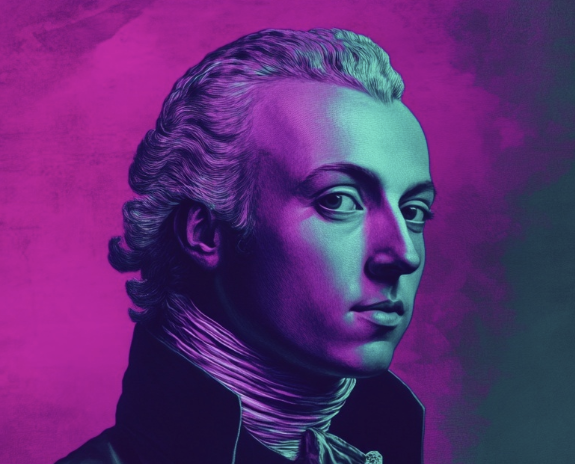
The man of principles has character. Of him we know definitely what to expect. He does not act on the basis of his instinct, but on the basis of his will. Therefore, without being redundant one can classify characteristics according to a person's faculty of desire (what is practical), as a) his nature, or natural talent, b) his temperament, or disposition, and c) his general character, or mode of thinking.
▼
Source
source
Kant, Immanuel (1996), page 195
5 days ago
It is more blessed to give than to receive.
▼
Source
source
Acts 20:35b
1 week 6 days ago
"War," says Machiavel, "ought to be the only study of a prince;" and by a prince he means every sort of state, however constituted. "He ought," says this great political doctor, "to consider peace only as a breathing-time, which gives him leisure to contrive, and furnishes ability to execute military plans." A meditation on the conduct of political societies made old Hobbes imagine that war was the state of nature.

1 month 3 days ago
Hearken with your ears to these best counsels,Reflect upon them with illumined judgment.Let each one choose his creed with that freedom of choice each must have at great events.
▼
Source
source
Ahunuvaiti Gatha; Yasna 30, 2.

1 month 1 week ago
If we cut up beasts simply because they cannot prevent us and because we are backing our own side in the struggle for existence, it is only logical to cut up imbeciles, criminals, enemies, or capitalists for the same reasons.
▼
Source
source
"Vivisection" (1947), p. 227
2 weeks 3 days ago
The infant runs toward it with its eyes closed, the adult is stationary, the old man approaches it with his back turned.
▼
Source
source
"Death"
1 month 1 week ago
Much of the modern resistance to chastity comes from men's belief that they "own" their bodies - those vast and perilous estates, pulsating with the energy that made the worlds, in which they find themselves without their consent and from which they are ejected at the pleasure of Another!
▼
Source
source
Letter XXI
2 months 1 week ago
Predicting the future is a hopeless, thankless task, with ridicule to begin with and, all too often, scorn to end with.
1 month 2 weeks ago
A minister of state is excusable for the harm he does when the helm of government has forced his hand in a storm; but in the calm he is guilty of all the good he does not do.
▼
Source
source
Le Siècle de Louis XIV, ch. VI: "État de la France jusqu'à la mort du cardinal Mazarin en 1661" (1752)
1 week 5 days ago
Among other men Reason awakes in another form-as the impulse towards Personal Freedom, which, although it never opposes the mild rule of the inward Instinct which it loves, yet rises in rebellion against the pressure of a stranger Instinct which has usurped its rights; and in this awakening it breaks the chains,-not of Reason as Instinct itself, but of the Instinct of foreign natures clothed in the garb of external power.
▼
Source
source
p. 8
1 month 1 week ago
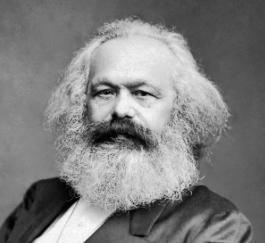
The very cannibalism of the counterrevolution will convince the nations that there is only one way in which the murderous death agonies of the old society and the bloody birth throes of the new society can be shortened, simplified and concentrated, and that way is revolutionary terror.
▼
Source
source
"The Victory of the Counter-Revolution in Vienna," Neue Rheinische Zeitung, 7 November 1848.
1 month 2 weeks ago
It is not titles that make men illustrious, but men who make titles illustrious.
▼
Source
source
Book 3, Ch. 38
1 month 1 week ago
Ramsgate is full of Jews and fleas.
▼
Source
source
MEKOR IV, 490, 25 August 1879

1 month 1 week ago
If people did not sometimes do silly things, nothing intelligent would ever get done.
▼
Source
source
p. 50e
1 month 3 weeks ago
I dare affirm in knowledge of nature, that a little natural philosophy, and the first entrance into it, doth dispose the opinion to atheism; but on the other side, much natural philosophy and wading deep into it, will bring about men's minds to religion; wherefore atheism every way seems to be combined with folly and ignorance, seeing nothing can can be more justly allotted to be the saying of fools than this, "There is no God" Of Atheism
1 month 1 week ago
God offers to every mind its choice between truth and repose.
▼
Source
source
Intellect
5 months 2 weeks ago
What is at stake here is precisely the problem of the fulfillment of desire: when we encounter in reality an object which has all the properties of the fantasized object of desire, we are nevertheless necessarily somewhat disappointed; we experience a certain this is not it; it becomes evident that the finally found real object is not the reference of desire even though it possesses all the required properties.
1 month 1 week ago
But if the labourers could live on air they could not be bought at any price.
▼
Source
source
Vol. I, Ch. 24, Section 4, pg. 657.
1 month 2 weeks ago
A sound mind in a sound body, is a short but full description of a happy state in this world.
▼
Source
source
Sec. 1

1 month 1 week ago
The blues is relevant today because when we look down through the corridors of time, the black American interpretation of tragicomic hope in the face of dehumanizing hate and oppression will be seen as the only kind of hope that has any kind of maturity in a world of overwhelming barbarity and bestiality. That barbarity is found not just in the form of terrorism but in the form of the emptiness of our lives - in terms of the wasted human potential that we see around the world. In this sense, the blues is a great democratic contribution of black people to world history.
▼
Source
source
(p20)
1 month 2 weeks ago
He that thinks diversion may not lie in hard and painful labour, forgets the early rising, hard riding, heat, cold and hunger of huntsmen, which is yet known to be the constant recreation of men of the greatest condition.
▼
Source
source
Sec. 206

1 month 1 week ago
The inclination to act as the laws command, a virtue, is a synthesis in which the law ... loses its universality and the subject its particularity; both lose their opposition, while in the Kantian conception of virtue this opposition remains, and the universal becomes the master and the particular the mastered.
1 week 5 days ago
Marriage is a union between two persons - one man and one woman. A woman who has given herself up to one, can not give herself up to a second, for her whole dignity requires that she should belong only to this one.
▼
Source
source
p. 406
1 month 1 week ago
Children must be under authority, and are themselves aware that they must be, although they like to play a game of rebellion at times. The case of children is unique in the fact that those who have authority over them are sometimes fond of them. Where this is the case, the children do not resent the authority in general, even when they resist it on particular occasions. Education authorities, as opposed to teachers, have not this merit, and do in fact sacrifice the children to what they consider the good of the State by teaching them "patriotism," i.e., a willingness to kill and be killed for trivial reasons.
▼
Source
source
Ch. 13: Freedom in Society
1 week 5 days ago
I: My consciousness of the object is only a yet unrecognised consciousness of my production of the representation of an object. Of this production I know no more than that it is I who produce, and thus is all consciousness no more than a consciousness of myself, and so far perfectly comprehensible. Am I in the right? Spirit. Perfectly so ; but whence then is derived the necessity and universality thou hast ascribed to these propositions, to that of causality for instance?
▼
Source
source
Jane Sinnett, trans 1846 p. 47
5 days ago
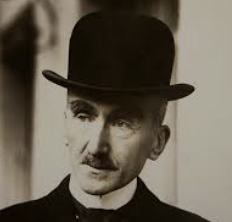
The present contains nothing more than the past, and what is found in the effect was already in the cause.
▼
Source
source
Creative Evolution (1907), Chapter I, as translated by Arthur Mitchell (1911), p. 14.; italicized in the original.
2 months 1 week ago
Zeno: The many do not know that except by this devious passage through all things the mind cannot attain to the truth. Zeno: Most people are not aware that this roundabout progress through all things is the only way in which the mind can attain truth and wisdom.
1 month 1 week ago
What do we mean by saying that existence precedes essence? We mean that man first of all exists, encounters himself, surges up in the world-and defines himself afterwards. If man as the existentialist see him is not definable, it is because to begin with he is nothing. He will not be anything until later, and then he will be what he makes of himself. Thus, there is no human nature, because there is no God to have a conception of it. Man simply is. Not that he is simply what he conceives himself to be, but he is what he wills, and as he conceives himself after already existing - as he wills to be after that leap towards existence. Man is nothing else but that which he makes of himself. That is the first principle of existentialism.
▼
Source
source
p. 28
1 week 5 days ago
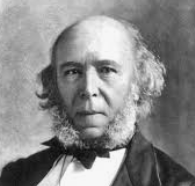
The ideal form for a poem, essay, or fiction, is that which the ideal writer would evolve spontaneously. One in whom the powers of expression fully responded to the state of feeling, would unconsciously use that variety in the mode of presenting his thoughts, which Art demands.
▼
Source
source
Pt. II, sec. 4, "The Ideal Writer"
1 month 1 week ago
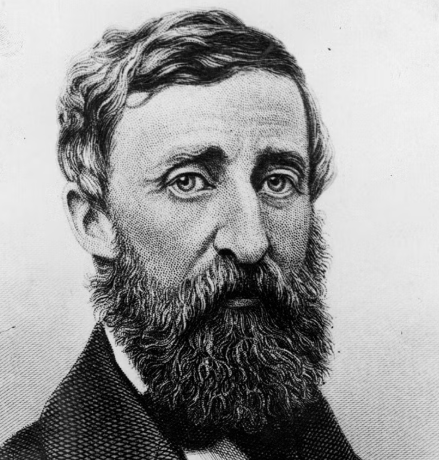
When a sixth of the population of a nation which has undertaken to be the refuge of liberty are slaves, and a whole country is unjustly overrun and conquered by a foreign army, and subjected to military law, I think that it is not too soon for honest men to rebel and revolutionize. What makes this duty the more urgent is the fact that the country so overrun is not our own, but ours is the invading army.
1 month 2 weeks ago
Nature may certainly produce whatever can arise from habit: Nay, habit is nothing but one of the principles of nature, and derives all its force from that origin.
▼
Source
source
Part 3, Section 16
1 week 1 day ago
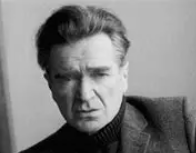
No one commits suicide for external reasons, only because of inner disequilibrium. Under similar adverse circumstances, some are indifferent, some are moved, some are driven to suicide.
CivilSimian.com created by AxiomaticPanic, CivilSimian, Kalokagathia