

1 month 1 week ago
Undoubtedly we have no questions to ask which are unanswerable. We must trust the perfection of the creation so far, as to believe that whatever curiosity the order of things has awakened in our minds, the order of things can satisfy. Every man's condition is a solution in hieroglyphic to those inquiries he would put. He acts it as life, before he apprehends it as truth.
▼
Source
source
Introduction
1 week 3 days ago
Surely this voice meant our Teacher; for it is he that can collect the indications which lie scattered on all sides. A singular light kindles in his looks, when at length the high Rune lies before us, and he watches in our eyes whether the star has yet risen upon us, which is to make the Figure visible and intelligible.
2 months 2 days ago
When a man at forty is the object of dislike, he will always continue what he is.

1 month 1 week ago
The political, ethical, social, philosophical problem of our day is not to try to liberate the individual from the state and from the state's institutions but to liberate us both from the state and from the type of individualization which is linked to the state. We have to promote new forms of subjectivity through the refusal of this kind of individuality which has been imposed on us for several centuries.
▼
Source
source
p. 785

3 weeks 3 days ago
A good Soul hath neither too great joy, nor too great sorrow: for it rejoiceth in goodness; and it sorroweth in wickedness. By the means whereof, when it beholdeth all things, and seeth the good and bad so mingled together, it can neither rejoice greatly; nor be grieved with over much sorrow.
1 month 2 weeks ago
Men are by nature merely indifferent to one another; but women are by nature enemies.
▼
Source
source
Vol. 2 "On Women" as translated in Essays and Aphorisms (1970), as translated by R. J. Hollingdale
1 month 1 week ago
Value, therefore, does not stalk about with a label describing what it is.
▼
Source
source
Vol. I, Ch. 1, Section 4, pg. 85.
3 days ago
If the subjectivist view hold true, thinking cannot be of any help in determining the desirability of any goal in itself. The acceptability of ideals, the criteria for our actions and beliefs, the leading principles of ethics and politics, all our ultimate decisions are made to depend upon factors other than reason. They are supposed to be matters of choice and predilection, and it has become meaningless to speak of truth in making practical, moral or esthetic decisions.
▼
Source
source
pp. 7-8.

1 week 1 day ago
The more one has suffered, the less one demands. To protest is a sign one has traversed no hell.
1 month 1 week ago
To the gross senses the chair seems solid and substantial. But the gross senses and be refined by means of instruments. Closer observations are made, as the result of which we are forced to conclude that the chair is "really" a swarm of electric charges whizzing about in empty space. ... While the substantial chair is an abstraction easily made from the memories of innumerable sensations of sight and touch, the electric charge chair is a difficult and far-fetched abstraction from certain visual sensations so excessively rare (they can only come to us in the course of elaborate experiments) that not one man in a million has ever been in the position to make it for himself. The overwhelming majority of us accept the electric-charge chair on authority, as good Catholics accept transubstantiation.
▼
Source
source
"One and Many," pp. 8-9
2 months 2 days ago
We must consider both the ultimate end and all clear sensory evidence, to which we refer our opinions; for otherwise everything will be full of uncertainty and confusion.
1 month 1 week ago
How significant is the enormous heightening, under mescalin, of the perception of color! ... Man's highly developed color sense is a biological luxury-inestimably precious to him as an intellectual and spiritual being, but unnecessary to his survival as an animal. ... Mescalin raises all colors to a higher power and makes the percipient aware of innumerable fine shades of difference, to which, at ordinary times, he is completely blind. It would seem that, for Mind at Large, the so-called secondary characters of things are primary.
▼
Source
source
describing his experiment with mescaline, pp. 26-27
1 month 2 weeks ago
Bad company will lead a man to the gallows!
▼
Source
source
Act IV, scene vi
1 month 1 week ago
When will the world learn that a million men are of no importance compared with one man?
▼
Source
source
Letter to Ralph Waldo Emerson, 8 June 1843
1 month 2 days ago
The friendship of one wise man is better than the friendship of a host of fools.
1 week 1 day ago
The universal view melts things into a blur.
4 days ago
The sin of pride may be a small or a great thing in someone's life, and hurt vanity a passing pinprick or a self-destroying or even murderous obsession. Possibly, more people kill themselves and others out of hurt vanity than out of envy, jealousy, malice or desire for revenge.
▼
Source
source
The Philosopher's Pupil (1983) p. 76.
1 month 1 week ago
Nature is the best posture-master.
▼
Source
source
p. 167

1 month 2 weeks ago
A single part of physics occupies the lives of many men, and often leaves them dying in uncertainty.
▼
Source
source
"A Madame la Marquise du Châtelet, Avant-Propos," Eléments de Philosophie de Newton, 1738

2 months 2 weeks ago
Man has an invincible inclination to allow himself to be deceived and is, as it were, enchanted with happiness when the rhapsodist tells him epic fables as if they were true, or when the actor in the theater acts more royally than any real king. So long as it is able to deceive without injuring, that master of deception, the intellect, is free; it is released from its former slavery and celebrates its Saturnalia. It is never more luxuriant, richer, prouder, more clever and more daring.
1 week 3 days ago
All religions are cruel, all founded on blood; for all rest principally on the idea of sacrifice - that is, on the perpetual immolation of humanity to the insatiable vengeance of divinity.
1 week 5 days ago
Man has many wishes that he does not really wish to fulfil, and it would be a misunderstanding to suppose the contrary. He wants them to remain wishes, they have value only in his imagination; their fulfilment would be a bitter disappointment to him. Such a desire is the desire for eternal life. If it were fulfilled, man would become thoroughly sick of living eternally, and yearn for death. In reality man wishes merely to avoid a premature, violent or gruesome death. Everything has its measure, says a pagan philosopher; in the end we weary of everything, even of life; a time comes when man desires death. Consequently there is nothing frightening about a normal, natural death, the death of a man who has fulfilled himself and lived out his life.
▼
Source
source
Lecture XXX, Atheism alone a Positive View
1 week 1 day ago
The only thing the young should be taught is that there is virtually nothing to be hoped for from life. One dreams of a Catalogue of Disappointments which would include all the disillusionments reserved for each and every one of us, to be posted in the schools.

3 weeks 3 days ago
Hope is the only good that is common to all men; those who have nothing else possess hope still.
▼
Source
source
A Dictionary of Thoughts (1908) by Tryon Edwards, p. 234
1 week 1 day ago
Imaginary pains are by far the most real we suffer, since we feel a constant need for them and invent them because there is no way of doing without them.
1 month 1 week ago
The fundamental defect of fathers, in our competitive society, is that they want their children to be a credit to them.
▼
Source
source
Ch. 14: Freedom Versus Authority in Education
5 days ago
Animals are born and bred in litters. Solitude grows blessed and peaceful only in old age.
▼
Source
source
p. 61
1 month 1 week ago
There is no power relation without the correlative constitution of a field of knowledge, nor any knowledge that does not presuppose and constitute at the same time power relations.

2 weeks 4 days ago
I am not so much afraid of death, as ashamed thereof; 'tis the very disgrace and ignominy of our natures, that in a moment can so disfigure us that our nearest friends, Wife, and Children stand afraid and start at us.
▼
Source
source
Section 40
1 month 1 week ago
In how many churches, by how many prophets, tell me, is man made sensible that he is an infinite Soul; that the earth and heavens are passing into his mind; that he is drinking forever the soul of God?
▼
Source
source
p. 18
1 month 2 weeks ago
I pass, at length, to the third and perfectly absolute dominion, which we call democracy.
▼
Source
source
Ch. 11, Of Democracy
1 week 2 days ago
We do not know whether Hitler is going to found a new Islam. (He is already on the way; he is like Mohammed. The emotion in Germany is Islamic; warlike and Islamic. They are all drunk with a wild god.)
▼
Source
source
The Symbolic Life - in The Collected Works: The Symbolic Life. Miscellaneous Writings (1977), p. 281
1 month 1 week ago
A third illusion haunts us, that a long duration, as a year, a decade, a century, is valuable. But an old French sentence says, "God works in moments," - "En peu d'heure Dieu labeure." We ask for long life, but 't is deep life, or grand moments, that signify. Let the measure of time be spiritual, not mechanical. Life is unnecessarily long. Moments of insight, of fine personal relation, a smile, a glance, - what ample borrowers of eternity they are! Life culminates and concentrates; and Homer said, "The Gods ever give to mortals their appointed share of reason only on one day."
▼
Source
source
Works and Days
5 days ago
He that is not on my side is against me, and he that does not gather with me scatters.
▼
Source
source
12:30, New World Translation


1 month 1 week ago
It is simply no good trying to keep any thrill: that is the very worst thing you can do. Let the thrill go-let it die away-go on through that period of death into the quieter interest and happiness that follow-and you will find you are living in a world of new thrills all the time. But if you decide to make thrills your regular diet and try to prolong them artificially, they will all get weaker and weaker, and fewer and fewer, and you will be a bored, disillusioned old man for the rest of your life. It is because so few people understand this that you find many middle-aged men and women maundering about their lost youth, at the very age when new horizons ought to be appearing and new doors opening all round them. It is much better fun to learn to swim than to go on endlessly (and hopelessly) trying to get back the feeling you had when you first went paddling as a small boy.
▼
Source
source
Book III, Chapter 6, "Christian Marriage"

5 days ago
At the classical origins of philosophic thought, the transcending concepts remained committed to the prevailing separation between intellectual and manual labor to the established society of enslavement. ... Those who bore the brunt of the untrue reality and who, therefore, seemed to be most in need of attaining its subversion were not the concern of philosophy. It abstracted from them and continued to abstract from them.
▼
Source
source
pp. 134-135

1 month 3 weeks ago
Thus the sum of things is ever being renewed, and mortal creatures live dependent one upon another. Some species increase, others diminish, and in a short space the generations of living creatures are changed and, like runners, pass on the torch of life.
▼
Source
source
Book II, line 75 (tr. Rouse)
2 months 2 weeks ago
Haste is universal because everyone is in flight from himself.
1 week 6 days ago
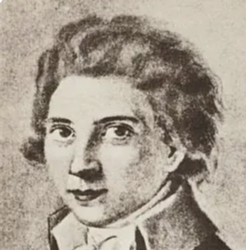
To disrespect the masses is moral; to honor them, lawful.
▼
Source
source
Lucinde and the Fragments, P. Firchow, trans. (1991), "Athenaeum Fragments" § 211

1 month 4 weeks ago
(On the Trinitarian indwelling personally experienced by Saint Augustine) But what is it that I love in loving You? Not corporeal beauty, nor the splendour of time, nor the radiance of the light, so pleasant to our eyes, nor the sweet melodies of songs of all kinds, nor the fragrant smell of flowers, and ointments, and spices, not manna and honey, not limbs pleasant to the embracements of flesh. I love not these things when I love my God; and yet I love a certain kind of light, and sound, and fragrance, and food, and embracement in loving my God, who is the light, sound, fragrance, food, and embracement of my inner man — where that light shines unto my soul which no place can contain, where that sounds which time snatches not away, where there is a fragrance which no breeze disperses, where there is a food which no eating can diminish, and where that clings which no satiety can sunder. This is what I love, when I love my God.
▼
Source
source
X, 6, 8
1 week 6 days ago
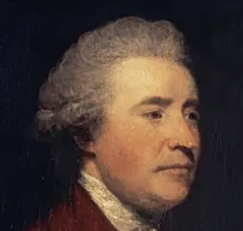
Cast your eyes on the journals of parliament. It is for fear of losing the inestimable treasure we have, that I do not venture to game it out of my hands for the vain hope of improving it. I look with filial reverence on the constitution of my country, and never will cut it in pieces, and put it into the kettle of any magician, in order to boil it, with the puddle of their compounds, into youth and vigour. On the contrary, I will drive away such pretenders; I will nurse its venerable age, and with lenient arts extend a parent's breath.
▼
Source
source
Speech in the House of Commons against William Pitt's motion for parliamentary reform (7 May 1782), quoted in The Works of the Right Honorable Edmund Burke ...: Miscellaneous speeches, letters, and fragments, Vol. VI (1890), p. 153
1 week 5 days ago
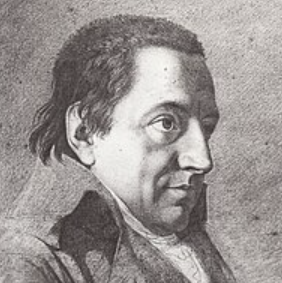
The Teutons believed that the only possible way to get rid of barbarism was to become Romans. The immigrants to what was formerly Roman soil became as Roman as they possibly could. But in their imagination the term "barbarous" soon acquired the secondary meaning of " common, plebeian, and loutish," and in this way "Roman," on the contrary, became synonymous with " distinguished."
▼
Source
source
Consequences of the Difference p. 81
1 month 1 week ago
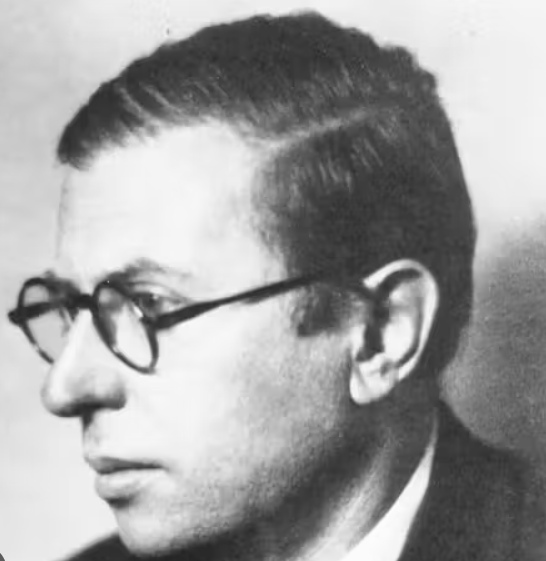
If the Jew did not exist, the anti-Semite would invent him.
▼
Source
source
p. 8
2 months 2 days ago
This is the ideal world, a perfect world of equality, fraternity, harmony, welfare, and justice.
1 month 1 week ago
Hast thou named all the birds without a gun; Loved the wood-rose, and left it on its stalk.
▼
Source
source
Forbearance

1 month 1 week ago
The inclination to act as the laws command, a virtue, is a synthesis in which the law ... loses its universality and the subject its particularity; both lose their opposition, while in the Kantian conception of virtue this opposition remains, and the universal becomes the master and the particular the mastered.

2 months 1 week ago
Consciousness presupposes itself, and asking about its origin is an idle and just as sophistical a question as that old one, "What came first, the fruit-tree or the stone? Wasn't there a stone out of which came the first fruit-tree? Wasn't there a fruit-tree from which came the first stone?
1 month 1 week ago
To plead the organic causation of a religious state of mind, then, in refutation of its claim to possess superior spiritual value, is quite illogical and arbitrary, unless one have already worked out in advance some psycho-physical theory connecting spiritual values in general with determinate sorts of physiological change. Otherwise none of our thoughts and feelings, not even our scientific doctrines, not even our dis-beliefs, could retain any value as revelations of the truth, for every one of them without exception flows from the state of their possessor's body at the time.
▼
Source
source
Lecture I, "Religion and Neurology"
1 month 3 weeks ago
For he who is unmusical is a child in music; he who is without letters is a child in learning; he who is untaught, is a child in life.
▼
Source
source
Book III, ch. 19, 6.
CivilSimian.com created by AxiomaticPanic, CivilSimian, Kalokagathia