

1 month 1 week ago
Science is not a system of certain, or well established, statements; nor is it a statement which steadily advances towards state of finality. Our science is not knowledge (epistēmē): it can newer claim to have attained truth, or even substitute for it, such as probability. . . . We do not know; we can only guess.
▼
Source
source
Ch. 10 "Corroboration, or How a Theory Stands up to Tests", section 85: The Path of Science, p. 278.

1 week 1 day ago
What every man who loves his country hopes for in his inmost heart: the suppression of half his compatriots.

1 month 1 week ago
Suppose atomic bombs had reduced the population of the world to one brother and one sister, should they let the human race die out? I do not know the answer, but I do not think it can be in the affirmative merely on the ground that incest is wicked.
▼
Source
source
p. 47

1 month 2 weeks ago
When the qualification to vote is regulated by years, it is placed on the firmest possible ground, because the qualification is such as nothing but dying before the time can take away; and the equality of Rights, as a principle, is recognized in the act of regulating the exercise. But when Rights are placed upon, or made dependent upon property, they are on the most precarious of all tenures. "Riches make themselves wings, and fly away," and the rights fly with them ; and thus they become lost to the man when they would be of most value.
1 month 4 weeks ago
We are He, since we are His body and since He was made man in order to be our Head.
▼
Source
source
p.432
1 month 2 weeks ago
The little honesty that exists among authors is discernible in the unconscionable way they misquote from the writings of others.
3 days ago
All things in nature become identical with the phenomena they present when submitted to the practices of our laboratories, whose problems no less than their apparatus express in turn the problems and interests of society as it is. This view may be compared with that of a criminologist maintaining that trustworthy knowledge of a human being can be obtained only by the well-tested and streamlined examining methods applied to a suspect in the hands of the metropolitan police.
▼
Source
source
describing the pragmatist view, p. 49.
1 month 3 weeks ago
The first and most necessary topic in philosophy is that of the use of moral theorems, such as, "We ought not to lie;" the second is that of demonstrations, such as, "What is the origin of our obligation not to lie;" the third gives strength and articulation to the other two, such as, "What is the origin of this is a demonstration." For what is demonstration? What is consequence? What contradiction? What truth? What falsehood? The third topic, then, is necessary on the account of the second, and the second on the account of the first. But the most necessary, and that whereon we ought to rest, is the first. But we act just on the contrary. For we spend all our time on the third topic, and employ all our diligence about that, and entirely neglect the first.
▼
Source
source
(51).
1 month 1 week ago
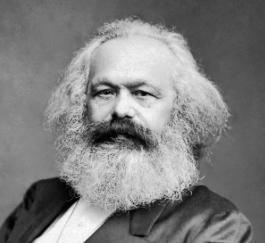
It is our interest and our task to make the revolution permanent until all the more or less propertied classes have been driven from their ruling positions, until the proletariat has conquered state power and until the association of the proletarians has progressed sufficiently far - not only in one country but in all the leading countries of the world - that competition between the proletarians of these countries ceases and at least the decisive forces of production are concentrated in the hands of the workers. Our concern cannot simply be to modify private property, but to abolish it, not to hush up class antagonisms but to abolish classes, not to improve the existing society but to found a new one.
▼
Source
source
Address of the Central Committee to the Communist League in London, March 1850
1 month 1 week ago
The universe is what it is, not what I choose that it should be.
▼
Source
source
The Value of Free Thought: How to Become a Truth-seeker and Break the Chains of Mental Slavery (1944), p. 24
1 week 1 day ago
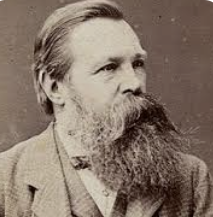
So long as it is not possible to produce so much that there is enough for all, with more left over for expanding the social capital and extending the forces of production - so long as this is not possible, there must always be a ruling class directing the use of society's productive forces, and a poor, oppressed class. How these classes are constituted depends on the stage of development.
1 month 1 week ago
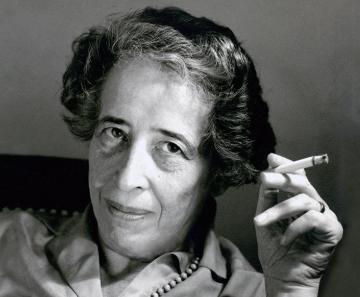
The cultural treasures of the past, believed to be dead, are being made to speak, in the course of which it turns out that they propose things altogether different than what had been thought.
▼
Source
source
"Martin Heidegger at Eighty," in Heidegger and Modern Philosophy: Critical Essays (1978) by Michael Murray, p. 294
1 month 2 weeks ago
The trade of governing has always been monopolized by the most ignorant and the most rascally individuals of mankind.
▼
Source
source
Earliest citation to Paine appears to be in "Freedom: A Journal of Anarchist Communism Vol. XXIV". Not found in any of his works.
1 month 2 weeks ago
The most manifest sign of wisdom is a continual cheerfulness; her state is like that in the regions above the moon, always clear and serene.
▼
Source
source
Book I, Ch. 26
1 week 1 day ago
To win the guilty kiss of a saint, I'd welcome the plague as a blessing
1 month 2 weeks ago
The question of the principle of the form of the intelligible world turns, therefore, upon making apparent in what manner it is possible for several substances to be in mutual commerce, and for this reason to pertain to the same whole, which is called world. We do not here consider the world, let it be understood, as to matter, that is, as to the nature of the substances of which it consists, whether they be material or immaterial, but as to form, that is to say, how among several things taken separately a connection, and among them all, totality can have place.

2 months ago
Those who deny the first principle should be flogged or burned until they admit that it is not the same thing to be burned and not burned, or whipped and not whipped.
1 month 1 week ago
Your comments on the Cuban crisis are, to me, utterly amazing. You say that the way the solution was arrived at was that 'the Russians discontinued their suicidal policy; and President Kennedy by his resolution and farsightedness saved the world'. This seems to me a complete reversal of the truth. Russia and America had policies leading directly to nuclear war. Khrushchev, when he saw the danger, abandoned his policy. Kennedy did not. It was Khrushchev who allowed the human race to continue, not Kennedy.
▼
Source
source
Letter to Lord Gladwyn, November 14, 1964.There is an artist imprisoned in each one of us. Let him loose to spread joy everywhere.
5 days ago
People talk, indeed, of a "primitive mentality", as, for example, to-day that of the inferior races, and in days gone by that of humanity in general, at whose door the responsibility for superstition should be laid.
▼
Source
source
Chapter II : Static Religion
5 days ago
There is no cure for birth and death save to enjoy the interval.
▼
Source
source
"War Shrines"

1 month 2 weeks ago
Such then is the human condition, that to wish greatness for one's country is to wish harm to one's neighbors.
▼
Source
source
"Fatherland", 1764
1 week 3 days ago
The plebeian must expect to find himself neglected and despised in proportion as he is remiss in cultivation the objects of esteem; the lord will always be surrounded with sycophants and slaves. The lord therefore has no motive to industry and exertion; no stimulus to rouse him from the lethargic 'oblivious pool', out of which every human intellect originally arose.
▼
Source
source
Book V, Chapter 10, "Of Hereditary Distinction"
1 month 1 week ago
Since the state must necessarily provide subsistence for the criminal poor while undergoing punishment, not to do the same for the poor who have not offended is to give a premium on crime.
▼
Source
source
Book V, Chapter XI, §13
1 month 1 week ago
The finest workers in stone are not copper or steel tools, but the gentle touches of air and water working at their leisure with a liberal allowance of time.

1 month 3 days ago
By Thy perfect Intelligence, O MazdaThou didst first create us having bodies and spiritual consciences,And by Thy Thought gave our selves the power of thought, word, and deed.Thus leaving us free to choose our faith at our own will.
▼
Source
source
Ahunuvaiti Gatha; Yasna 31, 11.

1 month 2 days ago
Think to yourself that every day is your last; the hour to which you do not look forward will come as a welcome surprise.
▼
Source
source
Book I, epistle iv, line 13-14
1 month 2 weeks ago
What I have given in the second book on the nature and properties of curved lines, and the method of examining them, is, it seems to me, as far beyond the treatment in the ordinary geometry, as the rhetoric of Cicero is beyond the a, b, c of children.
▼
Source
source
Letter to Marin Mersenne (1637) as quoted by D. E. Smith & M. L. Latham Tr. The Geometry of René Descartes
1 week 5 days ago
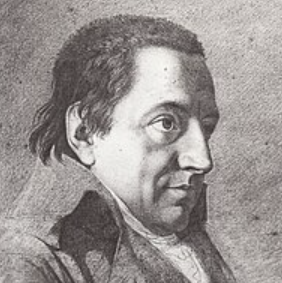
This tendency towards a Christian-European Universal Monarchy has shown itself successively in the several States which could make pretensions to such a dominion, and, since the fall of the Papacy, it has become the sole animating principle of our History. We by no means seek to determine whether this notion of Universal Monarchy has ever been distinctly entertained as a definite plan .... Thus each State either strives to attain this Universal Christian Monarchy, or at least to acquire the power of striving after it;-to maintain the Balance of Power when it is in danger of being disturbed by another; and, in secret, for power, that it may eventually disturb it itself.
▼
Source
source
P. 213-214
1 month 3 weeks ago
Remember that it is not he who gives abuse or blows who affronts, but the view we take of these things as insulting. When, therefore, any one provokes you, be assured that it is your own opinion which provokes you.
▼
Source
source
(20).

2 weeks 5 days ago
All things are in all.
▼
Source
source
V 9; as translated by Dorothea Waley Singer
3 days ago
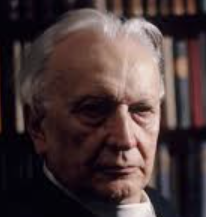
Today war seems to have undergone a change of meaning, insofar as it is not a war of religion but a war of interests, not a war of conflicting cultures or civilizations but a war of national areas, not a war of human beings but a technical struggle of machines one against another and all against the non-combatant population.

2 months 2 weeks ago
One will rarely err if extreme actions be ascribed to vanity, ordinary actions to habit, and mean actions to fear.
1 month 1 week ago
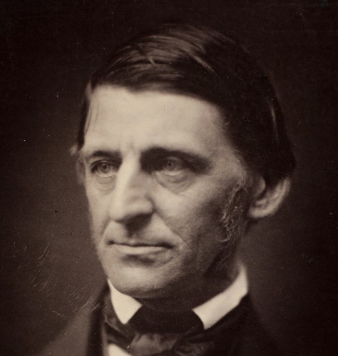
Great men are they who see that spiritual is stronger than any material force, that thoughts rule the world. No hope so bright but is the beginning of its own fulfillment. Progress of Culture Phi Beta Kappa Address
▼
Source
source
July 18, 1867
1 week 2 days ago
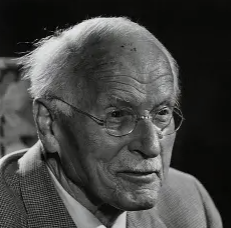
Modern man may assert that he can dispense with them, and he may bolster his opinion by insisting that there is no scientific evidence of their truth. But since we are dealing with invisible and unknowable things (for God is beyond human understanding, and there is no mean of proving immortality), why should we bother with evidence?
▼
Source
source
p. 75-76
1 week 6 days ago
... people only count their misfortunes; their good luck they take no account of. But if they were to take everything into account, as they should, they'd find that they had their fair share of it.
▼
Source
source
Part 2, Chapter 6 (tr. ?)

2 months 1 week ago
The division between human and robot is perhaps not as significant as that between intelligence and nonintelligence.
1 week 1 day ago
Even in childhood I watched the hours flow, independent of any reference, any action, any event, the disjunction of time from what was not itself, its autonomous existence, its special status, its empire, its tyranny. I remember quite clearly that afternoon when, for the first time, confronting the empty universe, I was no more than a passage of moments reluctant to go on playing their proper parts. Time was coming unstuck from being - at my expense.
1 month 1 week ago
I wish to suggest that a man may be very industrious, and yet not spend his time well. There is no more fatal blunderer than he who consumes the greater part of his life getting his living. All great enterprises are self-supporting. The poet, for instance, must sustain his body by his poetry, as a steam planing-mill feeds its boilers with the shavings it makes. You must get your living by loving.
▼
Source
source
pp. 486-7
1 month 1 week ago
The plan we are advocating amounts essentially to this: that a certain small income, sufficient for necessaries, should be secured to all, whether they work or not, and that a larger income, as much larger as might be warranted by the total amount of commodities produced, should be given to those who are willing to engage in some work which the community recognizes as useful.
▼
Source
source
Ch. IV: Work and Pay, discussing Universal Basic Income (UBI)

3 weeks 3 days ago
The best and greatest winning is a true friend; and the greatest loss is the loss of time.
1 month 2 weeks ago
The wise and virtuous man is at all times willing that his own private interests should be sacrificed to the public interest of his own particular society--that the interests of this order of society be sacrificed to the greater interest of the state. He should therefore he equally willing that all those inferior interests should be sacrificed to the greater society of all sensible and intelligent beings.
▼
Source
source
Section II, Chap. III; cited by Reinhold Niebuhr, The Children of Light and the Children of Darkness, New York: Charles Scribner's Sons, 1941, 24-25.
4 days ago
People from a planet without flowers would think we must be mad with joy the whole time to have such things about us.
▼
Source
source
A Fairly Honourable Defeat (1970); 2001, p. 170.
1 week 1 day ago
The fear of your own solitude, of its vast surface and its infinity... Remorse is the voice of solitude. And what does this whispering voice say? Everything in us that is not human anymore.
1 month 2 weeks ago
How many people ruin themselves by laying out money on trinkets of frivolous utility? What pleases these lovers of toys is not so much the utility, as the aptness of the machines which are fitted to promote it. All their pockets are stuffed with little conveniences. They contrive new pockets, unknown in the clothes of other people, in order to carry a greater number. They walk about loaded with a multitude of baubles, in weight and sometimes in value not inferior to an ordinary Jew's-box, some of which may sometimes be of some little use, but all of which might at all times be very well spared, and of which the whole utility is certainly not worth the fatigue of bearing the burden.
▼
Source
source
Chap. I.
5 days ago
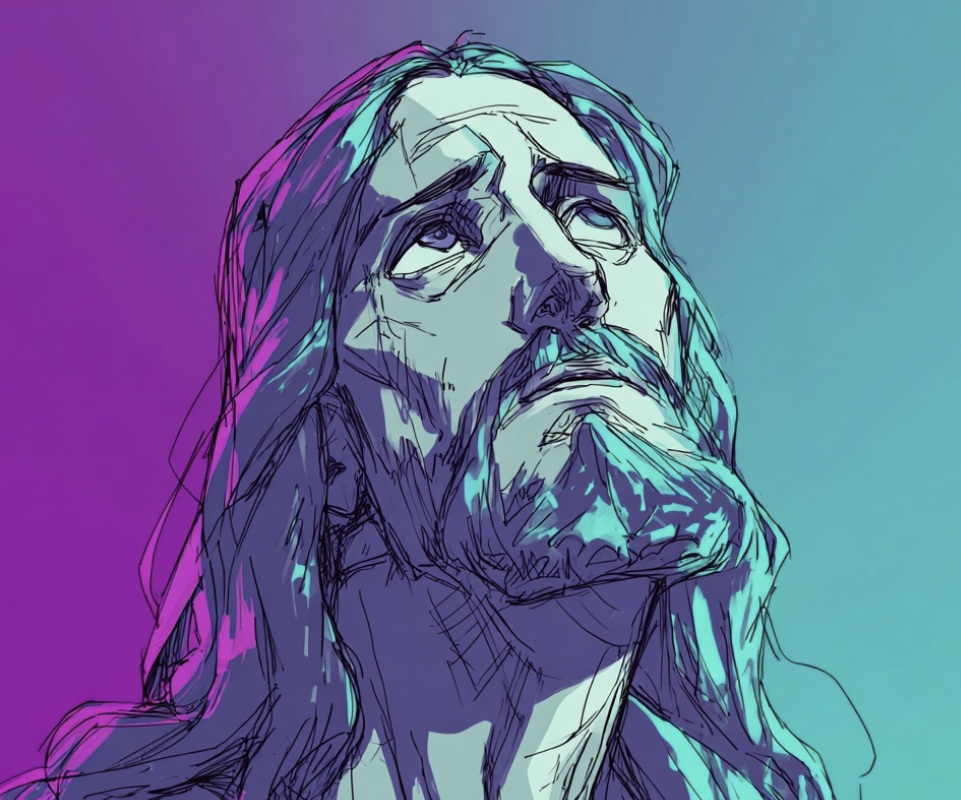
Why do ye also transgress the commandment of God by your tradition? For God commanded, saying, Honour thy father and mother: and, He that curseth father or mother, let him die the death. But ye say, Whosoever shall say to his father or his mother, It is a gift, by whatsoever thou mightest be profited by me; And honour not his father or his mother, he shall be free. Thus have ye made the commandment of God of none effect by your tradition. Ye hypocrites, well did Esaias prophesy of you, saying, This people draweth nigh unto me with their mouth, and honoureth me with their lips; but their heart is far from me. But in vain they do worship me, teaching for doctrines the commandments of men.
▼
Source
source
15:3-9 (KJV)
1 month ago
He made one of Antipater's recommendation a judge; and perceiving afterwards that his hair and beard were coloured, he removed him, saying, "I could not think one that was faithless in his hair could be trusty in his deeds."
▼
Source
source
40 Philip
1 week 1 day ago
The mind advances only when it has the patience to go in circles, in other words, to deepen.

2 months 1 week ago
Spontaneous love can reach the point of despair, shows that it is in despair, that even when it is happy it loves with the power of despair.

5 days ago
In the Platonic dialectic, ... the terms "Being" "Non-being" "Movement," "the One and the Many" "Identity" and "Contradiction" are methodically kept open, ambiguous, not fully defined. They have an open horizon, an entire universe of meaning which is gradually structured in the process of communication itself, but which is never closed. The propositions are submitted, developed, and tested in a dialogue, in which the partner is led to question the normally unquestioned universe of experience and speech, and to enter a new dimension of discourse - otherwise he is free and the discourse is addressed to his freedom. He is supposed to go beyond that which is given to him - as the speaker, in his proposition, goes beyond the initial setting of the terms. These terms have many meanings because the conditions to which they refer have many sides, implications, and effects which cannot be insulated and stabilized.
▼
Source
source
p. 131
CivilSimian.com created by AxiomaticPanic, CivilSimian, Kalokagathia