

1 month 1 week ago
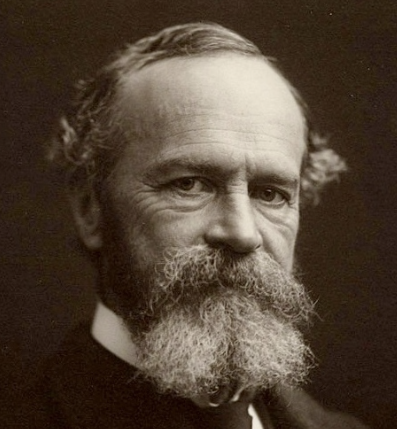
Without risks or prizes for the darer, history would be insipid indeed; and there is a type of military character which every one feels that the race should never cease to breed, for everyone is sensitive to its superiority. The duty is incumbent on mankind, of keeping military character in stock - if keeping them, if not for use, then as ends in themselves and as pure pieces of perfection, - so that Roosevelt's weaklings and mollycoddles may not end by making everything else disappear from the face of nature.
2 months ago
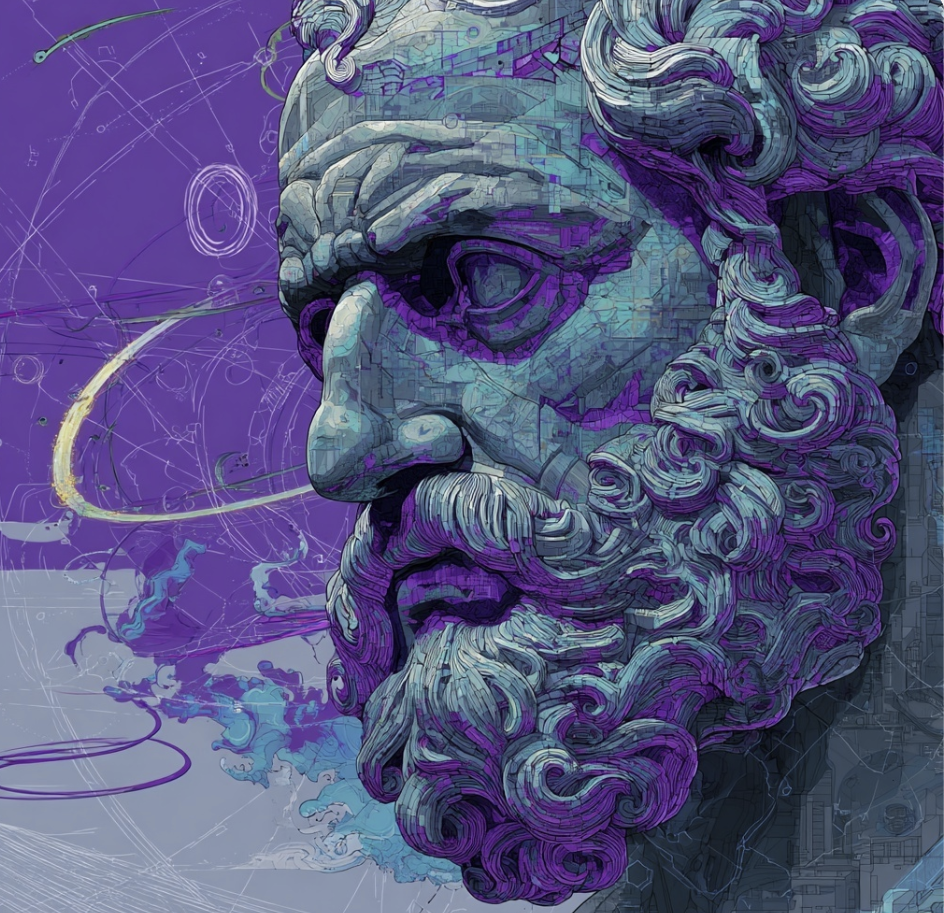
The best people renounce all for one goal, the eternal fame of mortals; but most people stuff themselves like cattle. For what sense or understanding have they? They follow minstrels and take the multitude for a teacher, not knowing that many are bad and few good. For the best men choose one thing above all immortal glory among mortals; but the masses stuff themselves like cattle.
3 days ago
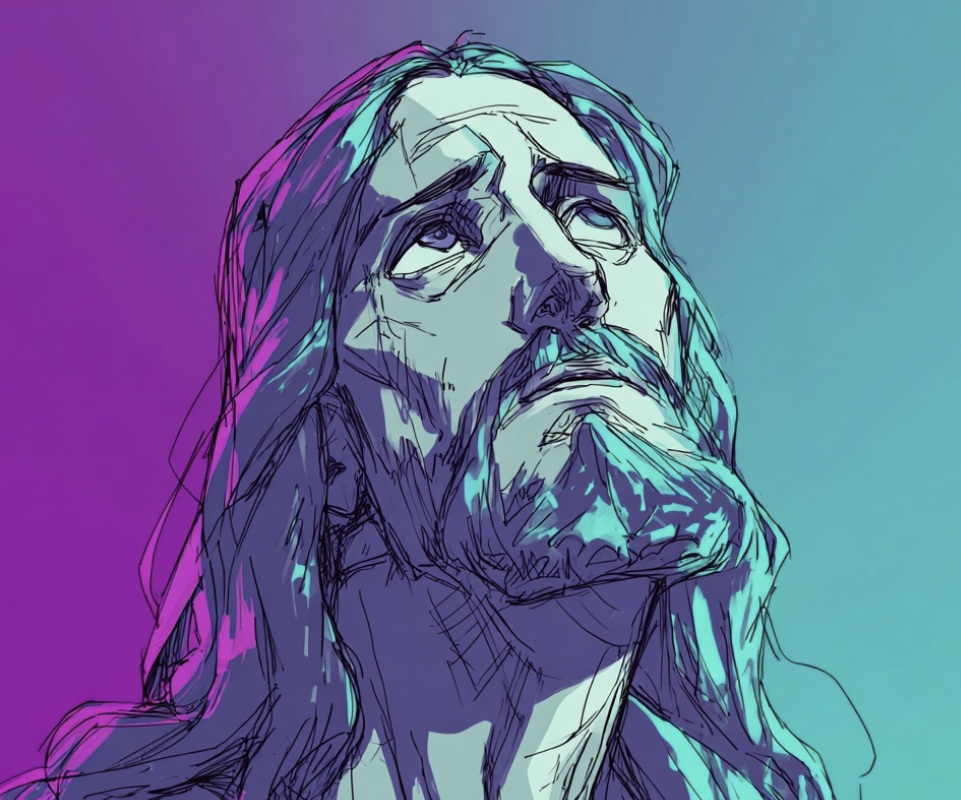
Yet lackest thou one thing: sell all that thou hast, and distribute unto the poor, and thou shalt have treasure in heaven: and come, follow me.
▼
Source
source
18:22 (KJV)
1 month 1 day ago
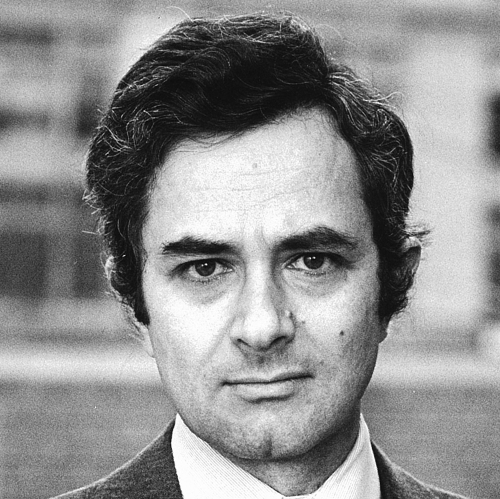
The essence of the belief that bats have experience is that there is something that it is like to be a bat. Now we know that most bats (the microchiroptera, to be precise) perceive the external world primarily by sonar, or echolocation. ... But bat sonar, though clearly a form of perception, is not similar in its operation to any sense that we possess, and there is no reason to suppose that it is subjectively like anything we can experience or imagine. This appears to create difficulties for the notion of what it is like to be a bat.
▼
Source
source
p. 168.
1 month 1 week ago
Suppose that I wish to deserve the title of "robber of remorse" and that I place in myself all [the townspeople's] repentence?
▼
Source
source
Orestes to Electra, Act 2
1 week 4 days ago
Prejudice is of ready application in the emergency; it previously engages the mind in a steady course of wisdom and virtue and does not leave the man hesitating in the moment of decision sceptical, puzzled, and unresolved. Prejudice renders a man's virtue his habit, and not a series of unconnected acts. Through just prejudice, his duty becomes a part of his nature.

2 months 1 week ago
The man who does not wish to belong to the mass needs only to cease taking himself easily; let him follow his conscience, which calls to him: Be your self! All you are now doing, thinking, desiring, is not you yourself.

2 months 1 week ago
It seems to be my destiny to discourse on truth, insofar as I discover it, in such a way that all possible authority is simultaneously demolished. Since I am incompetent and extremely undependable in men's eyes, I speak the truth and thereby place them in the contradiction from which they can be extricated only by appropriating the truth themselves. A man's personality is matured only when he appropriates the truth, whether it is spoken by Balaam's ass or a sniggering wag or an apostle or an angel.
1 day ago
Man does not exercise his thought because he finds it amusing, but because, obliged as he is to live immersed in the world and to force his way among things, he finds himself under the necessity of organizing his psychic activities, which are not very different from those of the anthropoid, in the form of thought - which is what the animal does not do.
▼
Source
source
p. 28
1 week ago
Man starts over again everyday, in spite of all he knows, against all he knows.
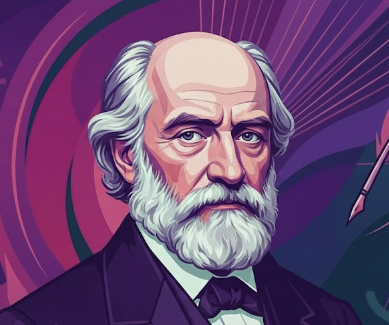
1 month 1 week ago
Truth that has been merely learned is like an artificial limb, a false tooth, a waxen nose; at best, like a nose made out of another's flesh; it adheres to us only because it is put on. But truth acquired by thinking of our own is like a natural limb; it alone really belongs to us. This is the fundamental difference between the thinker and the mere man of learning. The intellectual attainments of a man who thinks for himself resemble a fine painting, where the light and shade are correct, the tone sustained, the colour perfectly harmonised; it is true to life. On the other hand, the intellectual attainments of the mere man of learning are like a large palette, full of all sorts of colours, which at most are systematically arranged, but devoid of harmony, connection and meaning.
▼
Source
source
Vol. 2, Ch. 22, § 261

3 days ago
The radical empiricist onslaught ... provides the methodological justification for the debunking of the mind by the intellectuals-a positivism which, in its denial of the transcending elements of Reason, forms the academic counterpart of the socially required behavior.
▼
Source
source
p. 13
1 day ago
Logical empiricism holds the view, notwithstanding some its assertions, that the forms of knowledge and consequently the relations of man to nature and to other men never change. According to rationalism, too, all subjective and objective potentialities are rooted in insights which the individual already possesses, but rationality uses existing objects as well as the active inner striving and ideas of man to construct standards for the future. In this regard, it is not so closely associated with the present order as is empiricism.
▼
Source
source
p. 148.
2 months ago
The wise is one only. It is unwilling and willing to be called by the name of Zeus.
1 week 3 days ago
All life, Omnipotent Father, is thy life! and the eye of religion alone penetrates to the realms of truth and beauty. I am related to thee, and what I behold around me is related to me; all is full of animation, and looks towards me with bright spiritual eyes, and speaks with spirit voices to my heart.
▼
Source
source
Jane Sinnett, trans 1846 p.125
3 days ago
Verily I say unto you, I have not found so great faith, no, not in Israel. And I say unto you, That many shall come from the east and west, and shall sit down with Abraham, and Isaac, and Jacob, in the kingdom of heaven. But the children of the kingdom shall be cast out into outer darkness: there shall be weeping and gnashing of teeth.
▼
Source
source
8:10-12 (KJV) Said about the officer.

3 weeks 1 day ago
When going to the temple to adore Divinity neither say nor do any thing in the interim pertaining to the common affairs of life.
▼
Source
source
Symbol 1
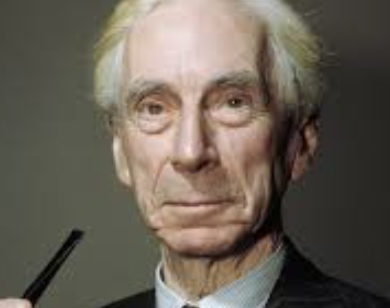
1 month 1 week ago
Politics is concerned with herds rather than with individuals, and the passions which are important in politics are, therefore, those in which the various members of a given herd can feel alike.
1 month 1 week ago
I think if I had met him [Lenin] without knowing who he was, I should not have guessed that he was a great man; he struck me as too opinionated and narrowly orthodox. His strength comes, I imagine, from his honesty, courage, and unwavering faith-religious faith in the Marxian gospel, which takes the place of the Christian martyr's hopes of Paradise, except that it is less egotistical... I went to Russia a Communist; but contact with those who have no doubts has intensified a thousandfold my own doubts, not as to Communism in itself, but as to the wisdom of holding a creed so firmly that for its sake men are willing to inflict widespread misery.
▼
Source
source
Part I, Ch. 3: Lenin, Trotsky and Gorky

2 weeks 2 days ago
A little water makes a sea, a small puff of wind a Tempest.
3 days ago
Did ye never read in the scriptures, The stone which the builders rejected, the same is become the head of the corner: this is the Lord's doing, and it is marvellous in our eyes? Therefore say I unto you, The kingdom of God shall be taken from you, and given to a nation bringing forth the fruits thereof. And whosoever shall fall on this stone shall be broken: but on whomsoever it shall fall, it will grind him to powder.
▼
Source
source
21:27-42 and 44 (KJV)
1 week ago
Tolerance - the function of an extinguished ardor - tolerance cannot seduce the young.
1 month 1 week ago
As the chosen people bore in their features the sign manual of Jehovah, so the division of labour brands the manufacturing workman as the property of capital.
▼
Source
source
Vol. I, Ch. 14, Section 5, pg. 396.
1 month 2 weeks ago
Every man is rich or poor according to the degree in which he can afford to enjoy the necessaries, conveniences, and amusements of human life. But after the division of labour has once thoroughly taken place, it is but a very small part of these with which a man's own labour can supply him. The far greater part of them he must derive from the labour of other people, and he must be rich or poor according to the quantity of that labour which he can command, or which he can afford to purchase. The value of any commodity, therefore, to the person who possesses it, and who means not to use or consume it himself, but to exchange it for other commodities, is equal to the quantity of labour which it enables him to purchase or command. Labour, therefore, is the real measure of the exchangeable value of all commodities.
▼
Source
source
Chapter V.

1 month 6 days ago
Certainly it is correct to say: Conscience is the voice of God.
▼
Source
source
p. 75
6 days ago
I can prove now, for instance, that two human hands exist. How? By holding up my two hands, and saying, as I make a certain gesture with the right hand, "Here is one hand," and adding, as I make a certain gesture with the left, "and here is another." And if, by doing this, I have proved ipso facto the existence of external things, you will all see that I can also do it now in numbers of other ways: there is no need to multiply examples.
▼
Source
source
"Proof of an External World," Proceedings of the British Academy 25 (1939).
2 months 1 week ago
Law could never, by determining exactly what is noblest and must just for one and all, enjoin upon them that which is best; for the differences of men and of actions and the fact that nothing, I may say, in human life is ever at rest, forbid any science whatsoever to promulgate any simple rule for everything and for all time. So, that which is persistently simple is inapplicable to things which are never simple.
1 month 2 weeks ago
By nature a philosopher is not in genius and disposition half so different from a street porter, as a mastiff is from a greyhound.
▼
Source
source
Chapter II, p. 17.
1 week ago
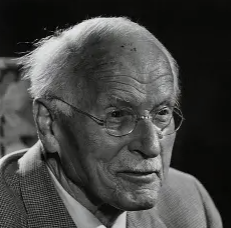
As far as we can discern, the sole purpose of human existence is to kindle a light in the darkness of mere being.
▼
Source
source
p. 326
3 days ago
All his life he [the American] jumps into the train after it has started and jumps out before it has stopped; and he never once gets left behind, or breaks a leg.
▼
Source
source
"Materialism and Idealism" p. 175 (Hathi Trust)
1 month 1 week ago
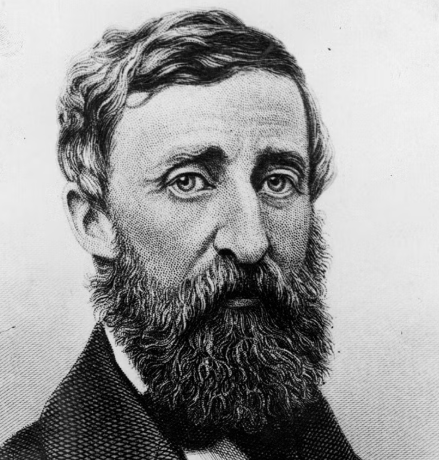
The present hour is always wealthiest when it is poorer than the future ones, as that is the pleasantest site which affords the pleasantest prospect.
▼
Source
source
Pearls of Thought (1881) p. 210
3 days ago
To the degree to which they correspond to the given reality, thought and behavior express a false consciousness, responding to and contributing to the preservation of a false order of facts. And this false consciousness has become embodied in the prevailing technical apparatus which in turn reproduces it.
▼
Source
source
p. 145
1 month 1 week ago
That virtue we appreciate is as much ours as another's. We see so much only as we possess.
▼
Source
source
June 22, 1839
1 week 4 days ago
Revolution is like Saturn, it devours its own children.
▼
Source
source
Act I.
1 week ago
Saints live in flames; wise men, next to them.
1 week 3 days ago
We have repeatedly observed that while any whole is evolving, there is always going on an evolution of the parts into which it divides itself; but we have not observed that this equally holds of the totality of things, which is made up of parts within parts from the greatest down to the smallest.
▼
Source
source
Pt. II, The Knowable; Ch. XV, The Law of Evolution (continued)

1 month 1 week ago
Whether, then, all ought not immediately to discontinue and renounce it, with grief and abhorrence? Should not every society bear testimony against it, and account obstinate persisters in it bad men, enemies to their country, and exclude them from fellowship; as they often do for much lesser faults?
1 month 1 week ago
A good symbol is the best argument and is a missionary to persuade thousands.
▼
Source
source
Poetry and Imagination
3 days ago
This heaven will pass away, and the one above it will pass away. The dead are not alive, and the living will not die. In the days when you consumed what is dead, you made it what is alive. When you come to dwell in the light, what will you do? On the day when you were one you became two. But when you become two, what will you do?
1 week ago
Impossible for me to know whether or not I take myself seriously. The drama of detachment is that we cannot measure its progress. We advance into a desert, and we never know where we are in it.
1 month 1 week ago
I will not talk about people a thousand miles off, but come as near home as I can. As the time is short, I will leave out all the flattery, and retain all the criticism. Let us consider the way in which we spend our lives.
▼
Source
source
p. 484
1 month 1 day ago
Even if I could by gradual degrees be transformed into a bat, nothing in my present constitution enables me to imagine what the experiences of such a future stage of myself thus metamorphosed would be like. The best evidence would come from the experience of bats, if we only knew what they were like.
▼
Source
source
p. 169.
1 month 1 day ago
I think of the course of human history as a long, swelling, increasingly polyphonic poem - a poem that leads up to nothing save itself. When the species is extinct, "human nature's total message" will not be a set of propositions, but a set of vocabularies - the more, and the more various, the better.
▼
Source
source
Response to Hartshorne in 'Rorty and Pragmatism, The Philosopher Responds to his Critics', p. 33
2 months 1 week ago
A friend is one soul abiding in two bodies. p. 188; also reported in various sources as:Friendship is a single soul dwelling in two bodies. A true friend is one soul in two bodies. Love is composed of a single soul inhabiting two bodies. What is a friend? A single soul dwelling in two bodies.
2 months ago
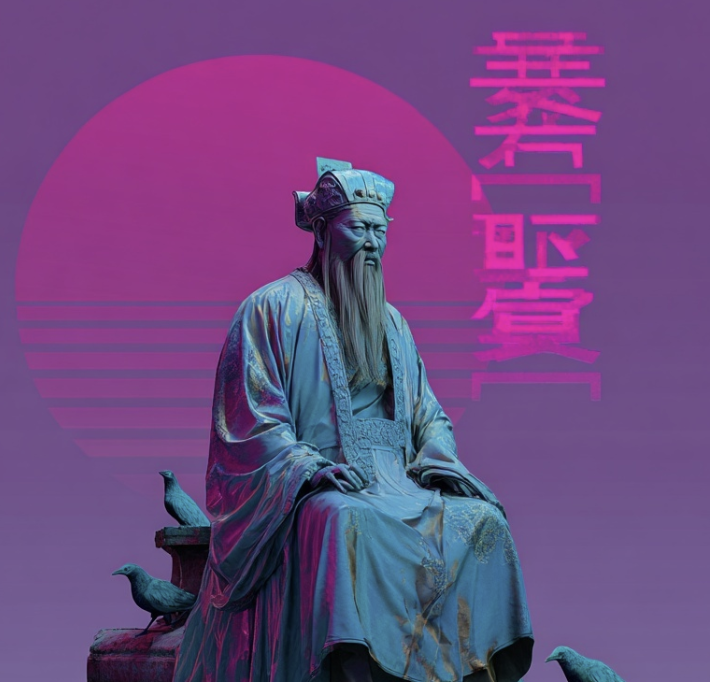
The administration of government lies in getting proper men. Such men are to be got by means of the ruler's own character. That character is to be cultivated by his treading in the ways of duty. And the treading those ways of duty is to be cultivated by the cherishing of benevolence.
1 month 1 week ago
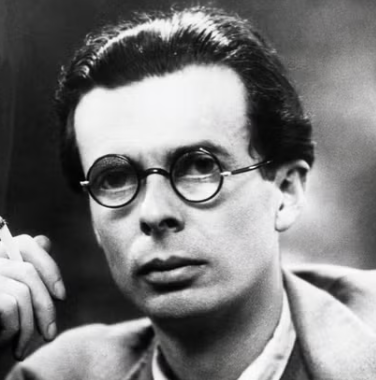
An unexciting truth may be eclipsed by a thrilling falsehood.
▼
Source
source
Chapter 11 (p. 104)
3 days ago
The fault with Hegel lies much deeper than in his glorification of the Prussian monarchy. He is guilty not so much of being servile as of betraying his highest philosophical ideas. His political doctrine surrenders society to nature, freedom to necessity, reason to caprice. And in so doing, it mirrors the destiny of the social order that falls, while in pursuit of its freedom, into a state of nature far below reason.
▼
Source
source
P. 218
2 months 1 week ago
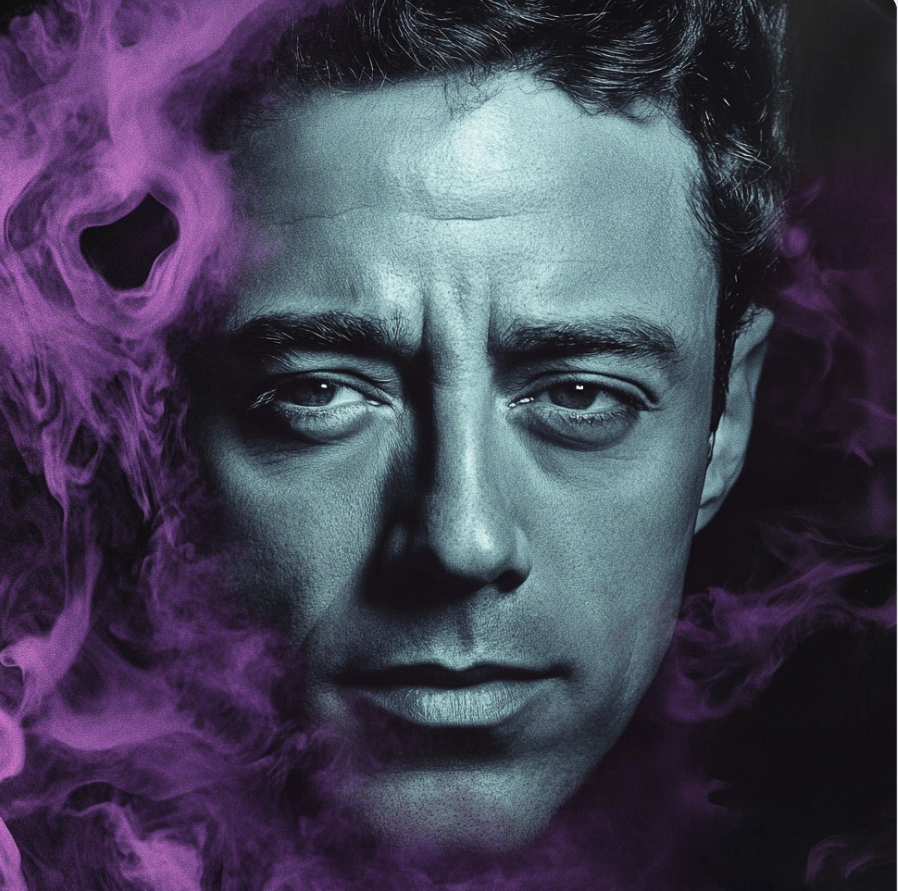
The absurd does not liberate; it binds. It does not authorize all actions. "Everything is permitted" does not mean that nothing is forbidden.
1 month 2 weeks ago
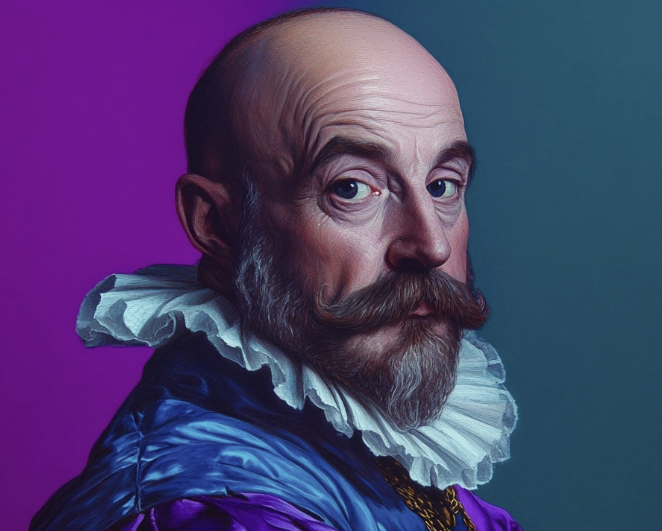
It is more of a job to interpret the interpretations than to interpret the things, and there are more books about books than about any other subject: we do nothing but write glosses about each other.
▼
Source
source
Ch. 13
3 weeks 1 day ago
None can be free who is a slave to, and ruled by, his passions.
▼
Source
source
As quoted in Florilegium, XVIII, 23, as translated in Dictionary of Quotations (1906) by Thomas Benfield Harbottle, p. 368
CivilSimian.com created by AxiomaticPanic, CivilSimian, Kalokagathia