

1 month 3 weeks ago
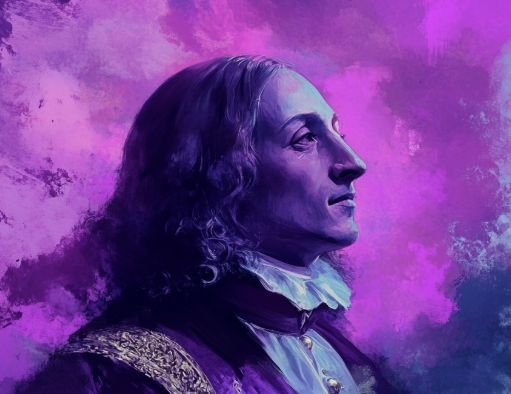
There are some men who expose themselves to damnation so foolishly by avarice, by brutality, by debauches, by violence, by excesses, by blasphemies! ...it is always a great folly for a man to expose himself to damnation... He must despise desire and its kingdom, and aspire to that kingdom of love in which all the subjects breathe nothing but love, and desire nothing but the benefits of love.
1 month 1 week ago
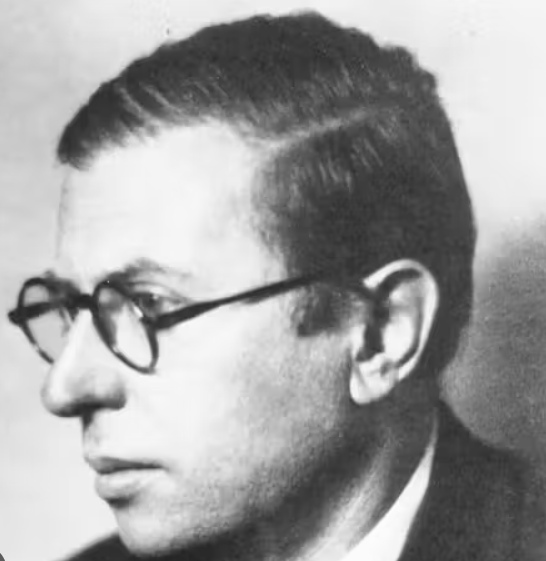
He was free, free in every way, free to behave like a fool or a machine, free to accept, free to refuse, free to equivocate; to marry, to give up the game, to drag this death weight about with him for years to come. He could do what he liked, no one had the right to advise him, there would be for him no Good or Evil unless he thought them into being.
▼
Source
source
L'âge de raison (The Age of Reason)

1 week 5 days ago
Endless war is profit engine. Defense contractors need conflict to justify budgets. Politicians need threats to maintain power. Media needs drama to sell advertising. War persists not because it works but because powerful interests benefit from its continuation.
1 month 2 weeks ago
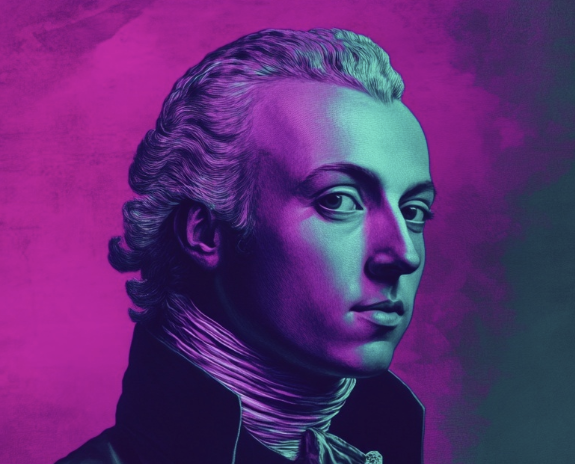
What alone has value is the use to which life is put and the end to which it is directed. The value of life has to be created by man, it cannot be obtained through luck but only through wisdom. He who is anxiously concerned over losing his life will never enjoy life.
▼
Source
source
Kant, Immanuel (1996), pages 141
1 month 1 week ago
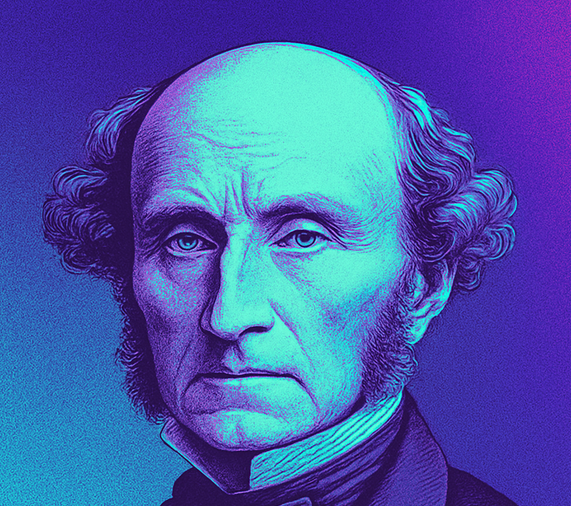
It's not too much to say that every indication of Design in the Kosmos is evidence against the Omnipotence of the Designer. For what is meant by Design? Contrivance: the adaptation of means to an end. But the necessity for contrivance - the need of employing means - is a consequence of the limitation of power. Who would have recourse to means if to attain his end his mere word was sufficient? The very idea of means implies that the means have an efficacy which the direct action of the being who employs them has not. ...

1 month 6 days ago
But more correctly: The fact that I use the word "hand" and all the other words in my sentence without a second thought, indeed that I should stand before the abyss if I wanted so much as to try doubting their meanings - shows that absence of doubt belongs to the essence of the language-game, that the question "How do I know..." drags out the language-game, or else does away with it.
1 month 1 week ago
Modern transcendental idealism, Emersonianism, for instance, also seems to let God evaporate into abstract Ideality. Not a deity in concreto, not a superhuman person, but the immanent divinity in things, the essentially spiritual structure of the universe, is the object of the transcendentalist cult. In that address of the graduating class at Divinity College in 1838 which made Emerson famous, the frank expression of this worship of mere abstract laws was what made the scandal of the performance.
▼
Source
source
Lecture II, "Circumscription of the Topic"
1 week 4 days ago
The objects of a financier are, then, to secure an ample revenue; to impose it with judgment and equality; to employ it economically; and, when necessity obliges him to make use of credit, to secure its foundations in that instance, and for ever, by the clearness and candour of his proceedings, the exactness of his calculations, and the solidity of his funds.

1 month 1 week ago
A sensible human once said, "If people knew how much ill-feeling unselfishness occasions, it would not be so often recommended from the pulpit"; and again, "She's the sort of woman who lives for others-you can always tell the others by their hunted expression."
▼
Source
source
Letter XXVI
1 month 3 weeks ago
For what is lacking now is not quibbles; nay, the books of the Stoics are full of quibbles.
▼
Source
source
Book I, ch. 29, § 56
1 month 1 week ago
All honour to those who can abnegate for themselves the personal enjoyment of life, when by such renunciation they contribute worthily to increase the amount of happiness in the world; but he who does it, or professes to do it, for any other purpose, is no more deserving of admiration than the ascetic mounted on his pillar. He may be an inspiriting proof of what men can do, but assuredly not an example of what they should.
▼
Source
source
Ch. 2
1 week 4 days ago
Influences of various kinds conspire to increase corporate action and decrease individual action. And the change is being on all sides aided by schemers, each of whom thinks only of his pet plan and not at all of the general reorganization which his plan, joined with others such, are working out. It is said that the French Revolution devoured its own children. Here, an analogous catastrophe seems not unlikely. The numerous socialistic changes made by Act of Parliament, joined with the numerous others presently to be made, will by-and-by be all merged in State-socialism-swallowed in the vast wave which they have little by little raised."But why is this change described as 'the coming slavery'?," is a question which many will still ask. The reply is simple. All socialism involves slavery.
1 month 1 day ago
Anything can be made to look good or bad by being redescribed.
▼
Source
source
Contingency, Irony, and Solidarity (1989), p. 73
1 week 4 days ago
The universal basis of co-operation is the proportioning of benefits received to services rendered.
▼
Source
source
Ch. 8, The Sociological View

1 week ago
The seat of faith, however, is not consciousness but spontaneous religious experience, which brings the individual's faith into immediate relation with God. Here we must ask: Have I any religious experience and immediate relation to God, and hence that certainty which will keep me, as an individual, from dissolving in the crowd?
▼
Source
source
p 85
1 month 2 weeks ago
It should be noted that children at play are not playing about; their games should be seen as their most serious-minded activity. Variants: It should be noted that the games of children are not games, and must be considered as their most serious actions. For truly it is to be noted, that children's plays are not sports, and should be deemed as their most serious actions.
▼
Source
source
Book I, Ch. 23
1 month 2 weeks ago
We rarely hear, it has been said, of the combinations of masters, though frequently of those of the workman. But whoever imagines, upon this account, that masters rarely combine, is as ignorant of the world as of the subject.
▼
Source
source
Chapter VIII, p. 80.
1 week 5 days ago
Poverty serves capital. It creates a desperate labor pool willing to work for less, accept worse conditions, tolerate greater indignity. The poor aren't failed by the system - they're required by it. Their desperation is someone else's negotiating advantage. Poverty is a feature, not a bug.

3 days ago
Hegel's theological discussion repeatedly asks what the true relation is between the individual man and a state that no longer satisfies his capacities but exists rather as an 'estranged' institution from which the active political interest of the citizens has disappeared. Hegel defined this state with almost the same categories as those of eighteenth century liberalism: the state rests on the consent of the individuals, it circumscribes their rights and duties and protects its members from those internal and external dangers that might threaten the perpetuation of the whole.
▼
Source
source
P. 32
1 month 2 weeks ago
The importation of gold and silver is not the principal, much less the sole benefit which a nation derives from its foreign trade.
▼
Source
source
Chapter I, p. 479.
1 month 1 week ago
Worry means always and invariably inhibition of associations and loss of effective power. Of course, the sovereign cure for worry is religious faith; and this, of course, you also know. The turbulent billows of the fretful surface leave the deep parts of the ocean undisturbed, and to him who has a hold on vaster and more permanent realities the hourly vicissitudes of his personal destiny seem relatively insignificant things. The really religious person is accordingly unshakable and full of equanimity, and calmly ready for any duty that the day may bring forth.
▼
Source
source
"The Gospel of Relaxation"
3 days ago
Either one defines "personality" and "individuality" in terms of their possibilities within the established form of civilization, in which case their realization is for the vast majority tantamount to successful adjustment. Or one defines them in terms of their transcending content, including their socially denied potentialities beyond (and beneath) their actual existence; in this case, their realization would imply transgression, beyond the established form of civilization, to radically new modes of "personality" and "individuality" incompatible with the prevailing ones. Today, this would mean "curing" the patient to become a rebel or (which is saying the same thing) a martyr.
▼
Source
source
"Critique of Neo-Freudian Revisionism"

1 month 1 week ago
Rhodora! if the sages ask thee why This charm is wasted on the earth and sky, Tell them, dear, that, if eyes were made for seeing, Then beauty is its own excuse for Being.
▼
Source
source
The Rhodora
1 day ago
The "kingdom of God" has become the "other world," which stands mechanically beside "this world"-an opposition unknown to the strongest periods of Christianity.
▼
Source
source
L. Coser, trans. (1961), p. 97
1 day ago
Antiquity believed that the forces of love in the universe were limited. Therefore they were to be used sparingly,and everyone was to be loved only according to his value.
▼
Source
source
L. Coser, trans. (1961), p. 94
1 month 2 weeks ago
I have never seen a greater monster or miracle in the world than myself.
▼
Source
source
Book III, Ch. 11. Of Cripples
1 week ago
The origin of things, considered not as leading to anything, but in itself, contains the idea of First, the end of things that of Second, the process mediating between them that of Third. A philosophy which emphasises the idea of the One, is generally a dualistic philosophy in which the conception of Second receives exaggerated attention: for this One (though of course involving the idea of First) is always the other of a manifold which is not one. The idea of the Many, because variety is arbitrariness and arbitrariness is repudiation of any Secondness, has for its principal component the conception of First. In psychology Feeling is First, Sense of reaction Second, General conception Third, or mediation. In biology, the idea of arbitrary sporting is First, heredity is Second, the process whereby the accidental characters become fixed is Third. Chance is First, Law is Second, the tendency to take habits is Third. Mind is First, Matter is Second, Evolution is Third.
3 days ago
Beware of false prophets, which come to you in sheep's clothing, but inwardly they are ravening wolves.
▼
Source
source
Matthew 7:15 (KJV)
1 month 1 week ago
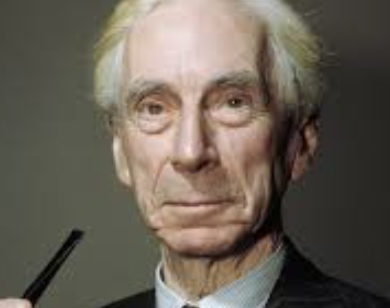
If human nature were unchangeable, as ignorant people still suppose it to be, the situation would indeed be hopeless.
▼
Source
source
Ch. 17: Some Prospects: Cheerful and Otherwise

1 week ago
There are no arguments. Can anyone who has reached the limit bother with arguments, causes, effects, moral considerations, and so forth? Of course not. For such a person there are only unmotivated motives for living. On the heights of despair, the passion for the absurd is the only thing that can still throw a demonic light on chaos. When all the current reasons - moral, esthetic, religious, social, and so on - no longer guide one's life, how can one sustain life without succumbing to nothingness? Only by a connection with the absurd, by love of absolute uselessness, loving something which does not have substance but which simulates an illusion of life. I live because the mountains do not laugh and the worms do not sing.
1 month 1 week ago
What modern apologists call 'true' Christianity is something depending upon a very selective process. It ignores much that is to be found in the Gospels: for example, the parable of the sheep and the goats, and the doctrine that the wicked will suffer eternal torment in Hell fire. It picks out certain parts of the Sermon on the Mount, though even these it often rejects in practice. It leaves the doctrine of non-resistance, for example, to be practised only by non-Christians such as Gandhi. The precepts that it particularly favours are held to embody such a lofty morality that they must have had a divine origin. And yet ... these precepts were uttered by Jews before the time of Christ.
▼
Source
source
"Can Religion Cure Our Troubles?", in Stockholm newspaper Dagens Nyheter, part II., 11/11/1954
2 months 1 week ago
It is simplicity that makes the uneducated more effective than the educated when addressing popular audiences.
1 week 4 days ago
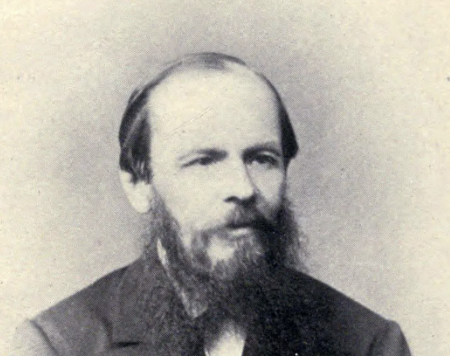
It is better to be unhappy and know the worst, than to be happy in a fool's paradise!
▼
Source
source
Part 4, Chapter 5
1 month 1 week ago
I do not think it possible to get anywhere if we start from scepticism. We must start from a broad acceptance of whatever seems to be knowledge and is not rejected for some specific reason.
▼
Source
source
p. 200

1 month ago
Tomorrow we will be back on the vast ocean.
▼
Source
source
The Routledge Dictionary of Latin Quotations: The Illiterati's Guide to Latin Maxims, Mottoes, Proverbs and Sayings
1 day ago
It is peculiar to "ressentiment criticism" that it does not seriously desire that its demands be fulfilled. It does not want to cure the evil. The evil is merely the pretext for the criticism.
▼
Source
source
L. Coser, trans. (1973), p. 51

1 month 1 week ago
The goal to be reached is the mind's insight into what knowing is. Impatience asks for the impossible, wants to reach the goal without the means of getting there. The length of the journey has to be borne with, for every moment is necessary, ... because by nothing less could that all-pervading mind ever manage to become conscious of what itself is - for that reason, the individual mind, in the nature of the case, cannot expect by less toil to grasp what its own substance contains.
▼
Source
source
Preface (J. B. Baillie translation), § 29
1 week 4 days ago
Above all, avoid falsehood, every kind of falsehood, especially falseness to yourself. Watch over your own deceitfulness and look into it every hour, every minute.
▼
Source
source
Book II, ch. 4 (trans. Constance Garnett) The Elder Zossima, speaking to Mrs. Khoklakov
1 month 2 weeks ago
It is good to rub and polish our brain against that of others.
▼
Source
source
Book I, Ch. 26
1 month 1 week ago
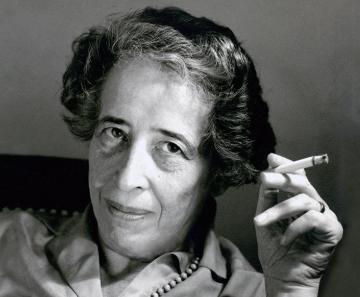
Totalitarianism in power invariably replaces all first-rate talents, regardless of their sympathies, with those crackpots and fools whose lack of intelligence and creativity is still the best guarantee of their loyalty.
▼
Source
source
Part 3, Chapter 10
1 month 1 week ago
Society can and does execute its own mandates: and if it issues wrong mandates instead of right, or any mandates at all in things with which it ought not to meddle, it practises a social tyranny more formidable than many kinds of political oppression, since, though not usually upheld by such extreme penalties, it leaves fewer means of escape, penetrating much more deeply into the details of life, and enslaving the soul itself. Protection, therefore, against the tyranny of the magistrate is not enough: there needs protection also against the tyranny of the prevailing opinion and feeling; against the tendency of society to impose, by other means than civil penalties, its own ideas and practices as rules of conduct on those who dissent from them; to fetter the development, and, if possible, prevent the formation, of any individuality not in harmony with its ways, and compel all characters to fashion themselves upon the model of its own.
▼
Source
source
Ch. 1: Introductory
1 week 4 days ago
For my part for one, though I make no doubt of preferring the antient Course, or almost any other to this vile chimera, and sick mans dream of Government yet I could not actively, or with a good heart, and clear conscience, go to the establishment of a monarchical despotism in the place of this system of Anarchy.
▼
Source
source
Letter to Richard Burke (26 September 1791), quoted in Alfred Cobban and Robert A. Smith (eds.), The Correspondence of Edmund Burke, Volume VI: July 1789-December 1791 (1967), p. 414

1 month 2 weeks ago
What peculiar privilege has this little agitation of the brain which we call thought, that we must thus make it the model of the whole universe? Our partiality in our own favour does indeed present it on all occasions; but sound philosophy ought carefully to guard against so natural an illusion.
▼
Source
source
Philo to Cleanthes, Part II
1 month 2 weeks ago
Nature may certainly produce whatever can arise from habit: Nay, habit is nothing but one of the principles of nature, and derives all its force from that origin.
▼
Source
source
Part 3, Section 16

1 month 2 weeks ago
As Christ had recommended peace during the whole of his life, mark with what anxiety he enforces it at the approach of his dissolution. Love one another, says he; as I have loved you, so love one another; and again, my peace I give unto you, my peace I leave you. Do you observe the legacy he leaves to those whom he loves? Is it a pompous retinue, a large estate, or empire? Nothing of this kind. What is it then? Peace he giveth, his peace he leaveth; peace, not only with our near connections, but with enemies and strangers!

1 month 1 week ago
It is dangerous to be right in matters where established men are wrong.
▼
Source
source
Le Siècle de Louis XIV (1752) Fontenelle Note: The most frequently attributed variant of this quote is: It is dangerous to be right when the government is wrong.

2 weeks 2 days ago
Were the happiness of the next world as closely apprehended as the felicities of this, it were a martyrdom to live.
▼
Source
source
Chapter IV
1 month 1 week ago
Matter is indeed infinitely and incredibly refined. To anyone who has ever looked on the face of a dead child or parent the mere fact that matter could have taken for a time that precious form, ought to make matter sacred ever after. It makes no difference what the principle of life may be, material or immaterial, matter at any rate co-operates, lends itself to all life's purposes. That beloved incarnation was among matter's possibilities.
▼
Source
source
Lecture III, Some Metaphysical Problems Pragmatically Considered

2 months 1 week ago
To stand on one leg and prove God's existence is a very different thing from going on one's knees and thanking Him.
CivilSimian.com created by AxiomaticPanic, CivilSimian, Kalokagathia