


2 months 4 days ago
Let me mention another requirement for a better understanding of Holy Scripture. I would suggest that you read those commentators who do not stick so closely to the literal sense. The ones I would recommend most highly after St. Paul himself are Origen, Ambrose, Jerome, and Augustine. Too many of our modern theologians are prone to a literal interpretation, which they subtly misconstrue.
▼
Source
source
p.37
1 month 3 weeks ago
It is the courage to make a clean breast of it in the face of every question that distinguishes the philosopher. He must be like Sophocles' Oedipus, who, seeking enlightenment concerning his terrible fate, pursues his indefatigable inquiry even though he divines that appalling horror awaits him in the answer. But most of us carry with us the Jocasta in our hearts, who begs Oedipus, for God's sake, not to inquire further.
▼
Source
source
Letter to Johann Wolfgang von Goethe (November 1815)
2 months 1 week ago
In a word, neither death, nor exile, nor pain, nor anything of this kind is the real cause of our doing or not doing any action, but our inward opinions and principles.
▼
Source
source
Book I, ch. 11,33.
3 weeks 2 days ago
The peoples' revolution .... will arrange its revolutionary organisation from the bottom up and from the periphery to the centre, in keeping with the principle of liberty.

3 weeks ago
Someday the old shack we call the world will fall apart. How, we don't know, and we don't really care either. Since nothing has real substance, and life is a twirl in the void, its beginning and its end are meaningless.
2 weeks 4 days ago
Blessed art thou, Simon Barjona: for flesh and blood hath not revealed it unto thee, but my Father which is in heaven. And I say also unto thee, That thou art Peter, and upon this rock I will build my church; and the gates of hell shall not prevail against it. And I will give unto thee the keys of the kingdom of heaven: and whatsoever thou shalt bind on earth shall be bound in heaven: and whatsoever thou shalt loose on earth shall be loosed in heaven.
▼
Source
source
16:17-19 (KJV)
1 month 3 weeks ago
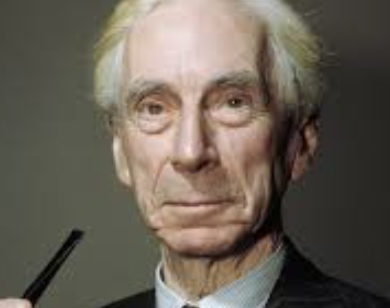
It is the duty of all who care for their country or for civilisation to point out that we cannot further any of our ideals by participation in the next war, and that we ought therefore to resist all measures based upon the assumption that we shall take part in it. In the late war it was arguable that victory, being possible, might do some good. With the modern technique of gas attack, no belligerent can hope for victory. Absolute pacifism, therefore, in every country, in which it is politically possible, is the only sane policy both for Governments and individuals.
▼
Source
source
Letter to The New Statesman and Nation (10 August 1935), quoted in Yours Faithfully, Bertrand Russell

2 months 2 weeks ago
How great is the path proper to the Sage! Like overflowing water, it sends forth and nourishes all things, and rises up to the height of heaven. All-complete is its greatness! It embraces the three hundred rules of ceremony, and the three thousand rules of demeanor. It waits for the proper man, and then it is trodden. Hence it is said, "Only by perfect virtue can the perfect path, in all its courses, be made a fact."

1 week 4 days ago
The necessity for power is obvious, because life cannot be lived without order; but the allocation of power is arbitrary because all men are alike, or very nearly. Yet power must not seem to be arbitrarily allocated, because it will not then be recognized as power. Therefore prestige, which is illusion, is of the very essence of power.
▼
Source
source
p. 235
1 month 1 week ago
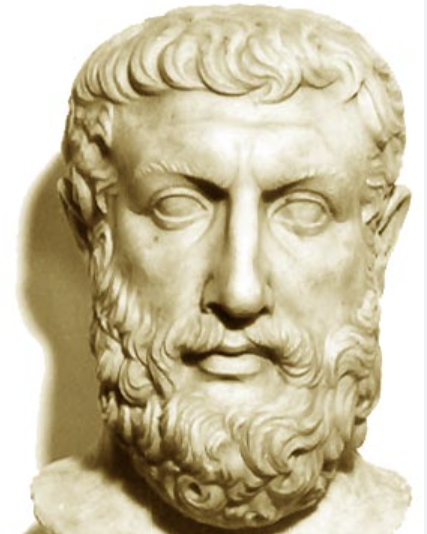
The only roads of enquiry there are to think of: one, that it is and that it is not possible for it not to be, this is the path of persuasion (for truth is its companion); the other, that it is not and that it must not be - this I say to you is a path wholly unknowable.
▼
Source
source
Frag. B 2.2-6, quoted by Proclus, Commentary on the Timaeus I, 345
1 month 3 weeks ago
I may as well say at once that I do not distinguish between inference and deduction. What is called induction appears to me to be either disguised deduction or a mere method of making plausible guesses.
▼
Source
source
Principles of Mathematics (1903), Ch. II: Symbolic Logic, p. 11
1 month 4 weeks ago
A spurious axiom of the first class is: Whatever is, is somewhere and sometime.

1 month 3 weeks ago
You could attach prices to ideas. Some cost a lot some little. ... And how do you pay for ideas? I believe: with courage.
▼
Source
source
p. 60e
3 weeks 4 days ago
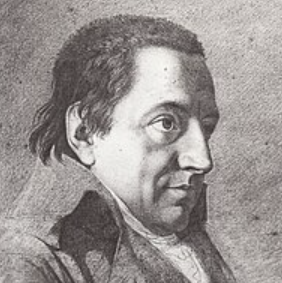
Blessed be the hour in which I was first led to inquire into my own spiritual nature and destination! All my doubts are removed; I know what I can know, and have no fears for what I cannot know. I am satisfied; perfect clearness and harmony reign in my soul, and a new and more glorious existence begins for me. My entire destiny I cannot comprehend; what I am to become, exceeds my present power of conception. A part, which is concealed from me, is visible to the father of spirits. I know only that it is secure, everlasting and glorious. That part of it which is confided to me I know, for it is the root of all my other knowledge.
▼
Source
source
Jane Sinnett, trans 1846 p.120
3 weeks 5 days ago
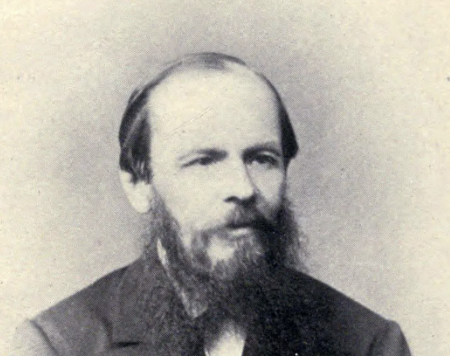
What terrible tragedies realism inflicts on people.'
1 month 3 weeks ago
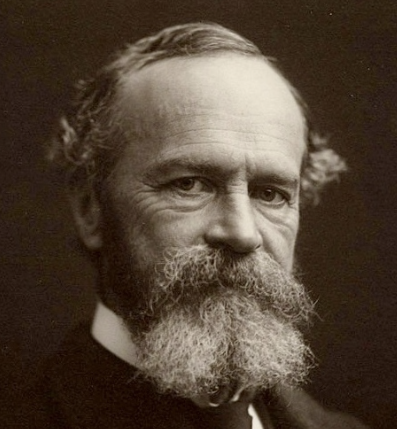
The concrete man has but one interest - to be right. That to him is the art of all arts, and all means are fair which help him to it.
2 weeks 2 days ago
Now, apparently, many men are again feeling homesick for the herd. They devote themselves passionately to whatever there is left in them of the sheep. They want to march through life together, along the collective path, shoulder to shoulder, wool rubbing wool, and the head down. This is the reason why so many European peoples are looking for a shepherd and a sheep dog.
▼
Source
source
p. 170

1 week 1 day ago
In conclusion, I wish to say that my attitude to the whole tragic question is not dictated by my Jewish antecedents. It is motivated by my abhorrence of injustice, and man's inhumanity to man. It is because of this that I have fought all my life for anarchism which alone will do away with the horrors of the capitalist régime and place all races and peoples, including the Jews, on a free and equal basis. Until then I consider it highly inconsistent for socialists and anarchists to discriminate in any shape or form against the Jews.
1 week 1 day ago
The terrible struggle of the thinking man and woman against political, social and moral conventions owes its origin to the family, where the child is ever compelled to battle against the internal and external use of force. The categorical imperatives: You shall! you must! this is right! that is wrong! this is true! that is false! shower like a violent rain upon the unsophisticated head of the young being and impress upon its sensibilities that it has to bow before the long established and hard notions of thoughts and emotions.
1 month 3 weeks ago
I am against a League war in present circumstances, because the anti-League powers are strong. The analogy is not King v. Barons, but the War of the Roses. If the League were strong enough I should favour sanctions, because the effect would suffice, or the war would be short and small. The whole question is quantitative.
▼
Source
source
Letter to Kingsley Martin shortly before the Italo-Abyssinian War (7 August 1935), quoted in Kingsley Martin, Editor: A Second Volume of Autobiography, 1931-45 (1968), p. 207
1 month 3 weeks ago
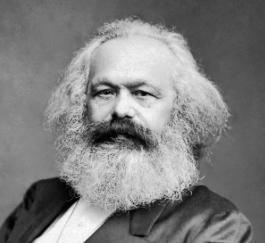
But simultaneously with the development of capitalist production the credit system also develops. The money-capital which the capitalist cannot as yet employ in his own business is employed by others, who pay him interest for its use.
▼
Source
source
Vol. II, Ch. XVII, p. 325.

1 month 4 weeks ago
In our reasonings concerning matter of fact, there are all imaginable degrees of assurance, from the highest certainty to the lowest species of moral evidence. A wise man, therefore, proportions his belief to the evidence.
▼
Source
source
Section X: Of Miracles; Part I. 87
1 week 5 days ago
Religion is better described than defined and better felt than described. But if there is any one definition that latterly has obtained acceptance, it is that of Schleiermacher, to the effect that religion consists in the simple feeling of a relationship of dependence upon something above us and a desire to establish relations with this mysterious power.
1 month 3 weeks ago
Pretend what we may, the whole man within us is at work when we form our philosophical opinions. Intellect, will, taste, and passion co-operate just as they do in practical affairs; and lucky it is if the passion be not something as petty as a love of personal conquest over the philosopher across the way.

2 months 3 weeks ago
If someone were to expound that godliness is to belong to childhood in the temporal sense and thus dwindle and die with the years as childhood does, is to be a happy frame of mind that cannot be preserved but only recollected; if someone were to expound that repentance as a weakness of old age accompanies the decline of one's powers, when the senses are dulled, when sleep no longer strengthens but increases lethargy-this would be ungodliness and foolishness.
2 weeks 3 days ago
Everything is what it is: liberty is liberty, not equality or fairness or justice or culture, or human happiness or a quiet conscience.
1 month 3 weeks ago
He thought human life a poor thing at best, after the freshness of youth and of unsatisfied curiosity had gone by. This was a topic on which he did not often speak, especially, it may be supposed, in the presence of young persons: but when he did, it was with an air of settled and profound conviction. He would sometimes say, that if life were made what it might be, by good government and good education, it would be worth having: but he never spoke with anything like enthusiasm even of that possibility.
▼
Source
source
(p. 48)

1 month 3 weeks ago
[Mortals] say of some temporal suffering, "No future bliss can make up for it," not knowing Heaven, once attained, will work backwards and turn even that agony into a glory. And of some sinful pleasure they say "Let me have but this and I'll take the consequences": little dreaming how damnation will spread back and back into their past and contaminate the pleasure of the sin. Both processes begin even before death.
▼
Source
source
Ch. 9

1 month ago
Nothing is quite so wretchedly corrupt as an aristocracy which has lost its power but kept its wealth and which still has endless leisure to devote to nothing but banal enjoyments. All its great thoughts and passionate energy are things of the past, and nothing but a host of petty, gnawing vices now cling to it like worms to a corpse.
▼
Source
source
Book Three, Chapter XI.
3 weeks 2 days ago
If our Bodily Life is a burning, our Spiritual Life is a being burnt, a Combustion (or, is precisely the inverse the case?); Death, therefore, perhaps a Change of Capacity.
2 weeks 3 days ago
The determination of the mot juste, of the right incident in the right place, of exquisiteness of proportion, of the precise tone, hue, and shade that helps unify the whole while it defines a part, is accomplished by emotion. Not every emotion, however, can do this work, but only one informed by material that is grasped and gathered. Emotion is informed and carried forward when it is spent indirectly in search for material and in giving it order, not when it is directly expended.
▼
Source
source
p. 73

1 month 1 week ago
Anger begins in folly, and ends in repentance.
▼
Source
source
As quoted in Treasury of Thought: Forming an Encyclopædia of Quotations from Ancient and Modern Authors (1894) by Maturin Murray Ballou
1 month 3 weeks ago
A bureaucracy always tends to become a pedantocracy.
▼
Source
source
Ch. VI: Of the Infirmities and Dangers to Which Representative Government Is Liable (p. 234)

1 month 2 weeks ago
This legible lesson, this ritual recording, must be repeated as often as possible; the punishments must be a school rather than a festival; an ever-open book rather than a ceremony. The duration that makes the punishment effective for the guilty is also useful for the spectators. They must be able to consult at each moment the permanent lexicon of crime and punishment. A secret punishment is a punishment half wasted. Children should be allowed to come to the places where the penalty is being carried out; there they will attend their classes in civics. And grown men will periodically relearn the laws. Let us conceive of places of punishment as a Garden of the Laws that families would visit on Sundays.
▼
Source
source
Chapter Three, The Gentle Way in Punishment
2 months 2 weeks ago
The superior man honors his virtuous nature, and maintains constant inquiry and study, seeking to carry it out to its breadth and greatness, so as to omit none of the more exquisite and minute points which it embraces, and to raise it to its greatest height and brilliancy, so as to pursue the course of the Mean. He cherishes his old knowledge, and is continually acquiring new. He exerts an honest, generous earnestness, in the esteem and practice of all propriety. Thus, when occupying a high situation he is not proud, and in a low situation he is not insubordinate. When the kingdom is well governed, he is sure by his words to rise; and when it is ill governed, he is sure by his silence to command forbearance to himself.
2 months 4 days ago
Animals destitute of reason live with their own kind in a state of social amity. Elephants herd together; sheep and swine feed in flocks; cranes and crows take their flight in troops; storks have their public meetings to consult previously to their emigration, and feed their parents when unable to feed themselves; dolphins defend each other by mutual assistance; and everybody knows, that both ants and bees have respectively established by general agreement, a little friendly community.
2 weeks 2 days ago
The form most contradictory to human life that can appear among the human species is the "self-satisfied man."
▼
Source
source
Chapter XI: The Self-Satisfied Age

1 week 5 days ago
Once the needs of hunger are satisfied - and they are soon satisfied - the vanity, the necessity - for it is a necessity - arises of imposing ourselves upon and surviving in others. Man habitually sacrifices his life to his purse, but he sacrifices his purse to his vanity. He boasts even of his weakness and his misfortunes, for want of anything better to boast of, and is like a child who, in order to attract attention, struts about with a bandaged finger.
1 week 4 days ago
Philosophy ... must not bargain away anything of the emphatic concept of truth.
▼
Source
source
p. 7
1 month 3 weeks ago
When they have really learned to love their neighbours as themselves, they will be allowed to love themselves as their neighbours.
▼
Source
source
Letter XIV
1 month 3 weeks ago
I remember the very place in Hyde Park where, in my fourteenth year, on the eve of leaving my father's house for a long absence, he told me that I should find, as I got acquainted with new people, that I had been taught many things which youths of my age did not commonly know; and that many persons would be disposed to talk to me of this, and to compliment me upon it. What other things he said on this topic I remember very imperfectly; but he wound up by saying, that whatever I knew more than others, could not be ascribed to any merit in me, but to the very unusual advantage which had fallen to my lot.
▼
Source
source
(p. 34)

2 months 3 weeks ago
The true discovery of America by mankind came when those first hunting bands crossed over from Siberia 25,000 years ago. This, however, never seems to count. When people speak of the "discovery of America" they invariably mean its discovery by Europeans.

2 months 3 days ago
We are born to inquire after truth; it belongs to a greater power to possess it. It is not, as Democritus said, hid in the bottom of the deeps, but rather elevated to an infinite height in the divine knowledge.
▼
Source
source
Book III, Ch. 8. Of the Art of Conversation

2 weeks 4 days ago
Such abstraction which refuses to accept the given universe of facts as the final context of validation, such "transcending" analysis of the facts in the light of their arrested and denied possibilities, pertains to the very structure of social theory.
▼
Source
source
p. xliii

1 month 3 weeks ago
How just, how suitable to our crime is the punishment with which Providence threatens us? We have enslaved multitudes, and shed much innocent blood in doing it; and now are threatened with the same. And while other evils are confessed, and bewailed, why not this especially, and publicly; than which no other vice, if all others, has brought so much guilt on the land?
1 month 3 weeks ago
He came in sight of a pass guarded by armed men. 'you cannot pass ... Do you not know that all this country belongs to the Spirit of the Age? ... Here Enlightenment, take this fugitive to our Master.'
▼
Source
source
Pilgrim's Regress 44-45
1 week 1 day ago
America had declared war with Spain.... It did not require much political wisdom to see that America's concern was a matter of sugar and had nothing to do with humanitarian feelings. Of course there were plenty of credulous people, not only in the country at large, but even in liberal ranks, who believed in America's claim. I could not join them. I was sure that no one, be it individual or government, engaged in enslaving and exploiting at home, could have the integrity or the desire to free people in other lands.
▼
Source
source
(p. 226)
1 month 3 weeks ago
Long hours of labour seem to be the secret of the rational and healthful processes, which are to raise the condition of the labourer by an improvement of his mental and moral powers and to make a rational consumer out of him.
▼
Source
source
Vol. II, Ch. XXI, p. 520.

2 months 3 weeks ago
It is impossible for motion to subsist without place, and void, and time.
CivilSimian.com created by AxiomaticPanic, CivilSimian, Kalokagathia