

3 weeks 5 days ago
If not reason, then the devil.
1 month 3 weeks ago
Slavery is disheartening; but Nature is not so helpless but it can rid itself of every last wrong. But the spasms of nature are centuries and ages and will tax the faith of short-lived men. Slowly, slowly the Avenger comes, but comes surely. The proverbs of the nations affirm these delays, but affirm the arrival. They say, "God may consent, but not forever." The delay of the Divine Justice - this was the meaning and soul of the Greek Tragedy, - this was the soul of their religion.
▼
Source
source
The Fugitive Slave Law, a lecture in NYC, March 7, 1854

1 month ago
There is no moral precept that does not have something inconvenient about it.
▼
Source
source
As quoted in Dictionary of Foreign Quotations (1980) by Mary Collison, Robert L. Collison, p. 235
1 month 3 weeks ago
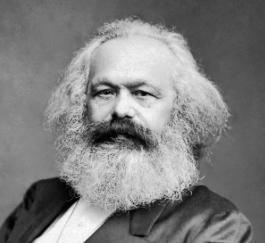
It is our interest and our task to make the revolution permanent until all the more or less propertied classes have been driven from their ruling positions, until the proletariat has conquered state power and until the association of the proletarians has progressed sufficiently far - not only in one country but in all the leading countries of the world - that competition between the proletarians of these countries ceases and at least the decisive forces of production are concentrated in the hands of the workers. Our concern cannot simply be to modify private property, but to abolish it, not to hush up class antagonisms but to abolish classes, not to improve the existing society but to found a new one.
▼
Source
source
Address of the Central Committee to the Communist League in London, March 1850
1 month 3 weeks ago
The Sabbath is not simply a time to rest, to recuperate. We should look at our work from the outside, not just from within.
▼
Source
source
p. 91e
3 weeks 5 days ago
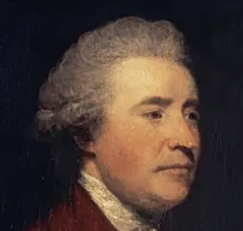
Good order is the foundation of all good things.
2 months 3 days ago
The only good histories are those that have been written by the persons themselves who commanded in the affairs whereof they write.
▼
Source
source
Book II, Ch. 10. Of Books
1 month 4 weeks ago
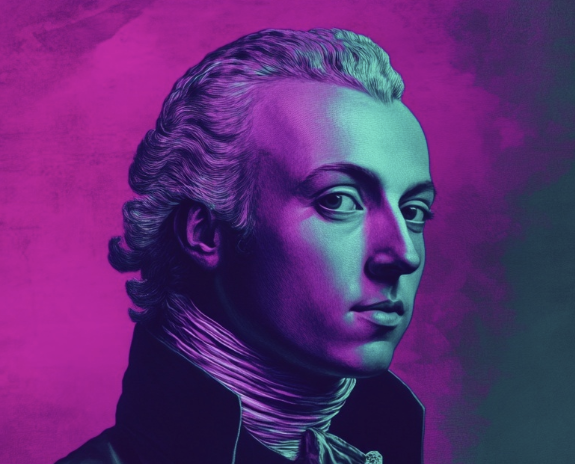
Thus our duties to animals are indirectly duties to humanity.
▼
Source
source
Part II, p. 213

1 week 1 day ago
The emptiness of Zen Buddhism... creates a neighborly nearness between things.
3 weeks ago
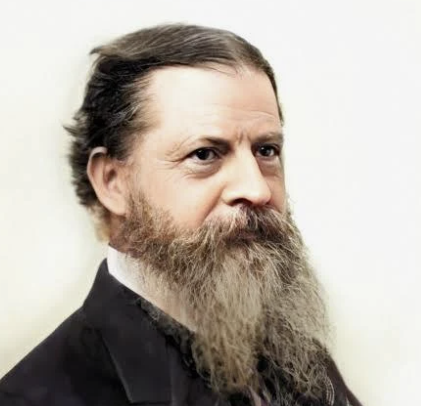
I have taken pains to make my distinction of icons, indices, and tokens clear, in order to enunciate this proposition: in a perfect system of logical notation signs of these several kinds must all be employed. Without tokens there would be no generality in the statements, for they are the only general signs; and generality is essential to reasoning. ... But tokens alone do not state what is the subject of discourse ; and this can, in fact, not be described in general terms ; it can only be indicated. The actual world cannot be distinguished from a world of imagination by any description. Hence the need of pronoun and indices, and the more complicated the subject the greater the need of them.
1 week 4 days ago
The word 'definition' has come to have a dangerously reassuring sound, owing no doubt to its frequent occurrence in logical and mathematical writings.
▼
Source
source
"Two dogmas of Empiricism", p. 26

1 month 2 days ago
The Divine light is always in man, presenting itself to the senses and to the comprehension, but man rejects it.
▼
Source
source
As quoted in Life and Teachings of Giordano Bruno : Philosopher, Martyr, Mystic 1548 - 1600 (1913) by Coulson Turnbull
1 month 3 weeks ago
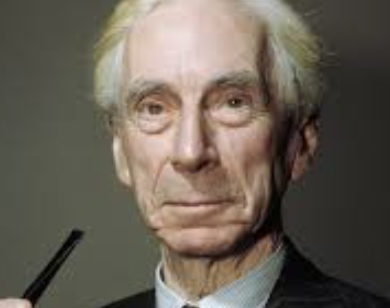
Belief in God and a future life makes it possible to go through life with less of stoic courage than is needed by skeptics. A great many young people lose faith in these dogmas at an age at which despair is easy, and thus have to face a much more intense unhappiness than that which falls to the lot of those who have never had a religious upbringing. Christianity offers reasons for not fearing death or the universe, and in so doing it fails to teach adequately the virtue of courage. The craving for religious faith being largely an outcome of fear, the advocates of faith tend to think that certain kinds of fear are not to be deprecated. In this, to my mind, they are gravely mistaken. To allow oneself to entertain pleasant beliefs as a means of avoiding fear is not to live in the best way. In so far as religion makes its appeal to fear, it is lowering to human dignity.
▼
Source
source
p. 107
3 weeks ago
I don't need any support, advice, or compassion, because even if I am the most ruinous man, I still feel so powerful, so strong and fierce. For I am the only one that lives without hope.

1 month ago
In democratic ages men rarely sacrifice themselves for another, but they show a general compassion for all the human race. One never sees them inflict pointless suffering, and they are glad to relieve the sorrows of others when they can do so without much trouble to themselves. They are not disinterested, but they are gentle.
▼
Source
source
Book Three, Chapter I.

2 weeks 4 days ago
Bourgeois political economy ... never gets to see man who is its real subject. It disregards the essence of man and his history and is thus in the profoundest sense not a 'science of people' but of non-people and of an inhuman world of objects and commodities.
▼
Source
source
"The Foundations of Historical Materialism," Studies in Critical Philosophy (1972), p. 9
1 month 3 weeks ago
A scheme is unjust when the higher expectations, one or more of them, are excessive. If these expectations were decreased, the situation of the less favored would be improved.
▼
Source
source
Chapter II, Section 13, pg. 79
1 month 4 weeks ago
Through laziness and cowardice a large part of mankind, even after nature has freed them from alien guidance, gladly remain immature. It is because of laziness and cowardice that it is so easy for others to usurp the role of guardians. It is so comfortable to be a minor!
1 month 3 weeks ago
What strength belongs to every plant and animal in nature. The tree or the brook has no duplicity, no pretentiousness, no show. It is, with all its might and main, what it is, and makes one and the same impression and effect at all times. All the thoughts of a turtle are turtles, and of a rabbit, rabbits. But a man is broken and dissipated by the giddiness of his will; he does not throw himself into his judgments; his genius leads him one way but 't is likely his trade or politics in quite another.
▼
Source
source
"The Natural History of Intellect", p. 46
1 month 3 weeks ago
Abjection is a methodological conversion, like Cartesian doubt and Husserlian epoche: it establishes the world as a closed system which consciousness regards from without, in the manner of divine understanding.
▼
Source
source
p. 141
3 weeks ago
I know of nothing more terrible than the poor creatures who have learned too much. Instead of the sound powerful judgement which would probably have grown up if they had learned nothing, their thoughts creep timidly and hypnotically after words, principles and formulae, constantly by the same paths. What they have acquired is a spider's web of thoughts too weak to furnish sure supports, but complicated enough to provide confusion.
▼
Source
source
On the Relative Educational Value of the Classics and the Mathematico-Physical Sciences in Colleges and High Schools, an address in (16 April 1886)
1 month 3 weeks ago
Yes, if you happen to be interested in philosophy and good at it, but not otherwise - but so does bricklaying. Anything you're good at contributes to happiness. When asked "Does philosophy contribute to happiness?"
▼
Source
source
(SHM 76), as quoted in The quotable Bertrand Russell (1993), p. 149
2 weeks 4 days ago
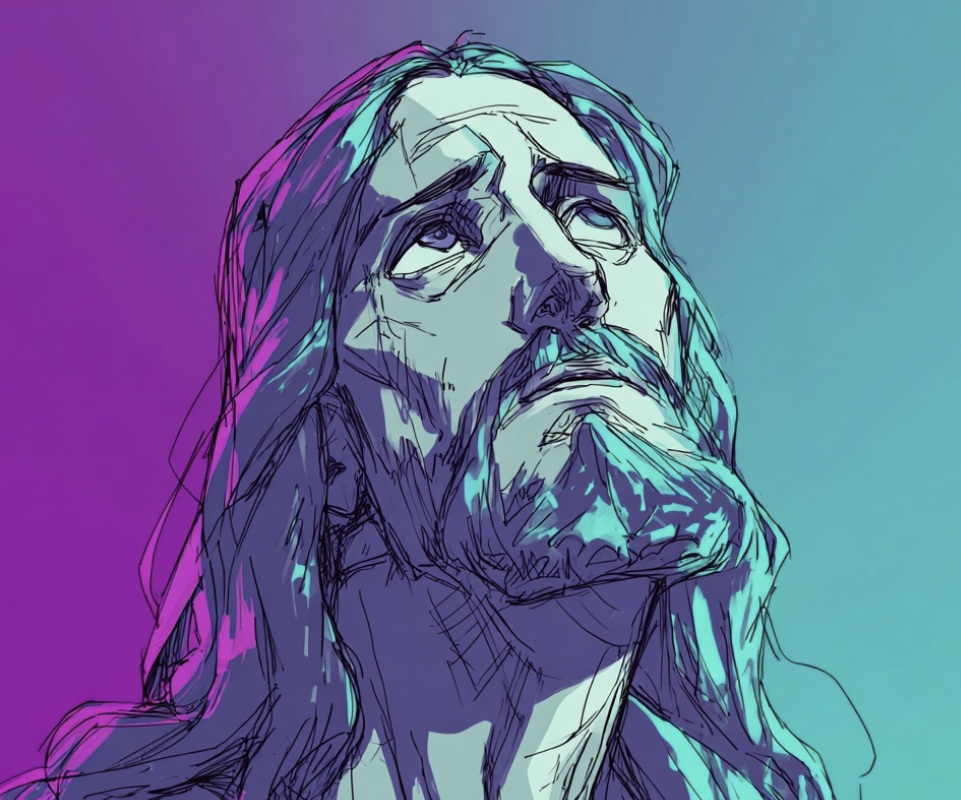
In that very hour he became overjoyed in the holy spirit and said: “I publicly praise you, Father, Lord of heaven and earth, because you have carefully hidden these things from wise and intellectual ones and have revealed them to young children. Yes, O Father, because this is the way you approved.
▼
Source
source
Luke 10:21, New World Translation of the Holy Scriptures
2 months 3 days ago
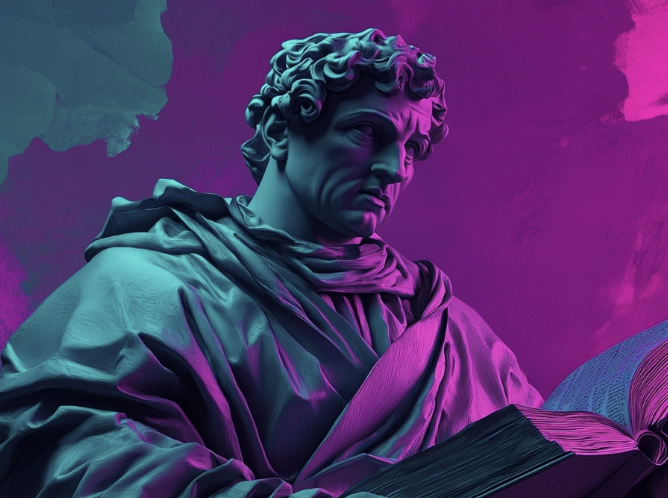
Furthermore, how will you endure [the Romanists'] terrible idolatries? It was not enough that they venerated the saints and praised God in them, but they actually made them into gods. They put that noble child, the mother Mary, right into the place of Christ. They fashioned Christ into a judge and thus devised a tyrant for anguished consciences, so that all comfort and confidence was transferred from Christ to Mary, and then everyone turned from Christ to his particular saint. Can anyone deny this? Is it not true?
▼
Source
source
Luther's Works, 47:45; cf. also Anderson, Stafford & Burgess (1992), p. 29
1 week 1 day ago
Thinking is more erotic than calculating.
1 week 3 days ago
The art of progress is to preserve order amid change, and to preserve change amid order.
1 month 1 week ago
The utility of a science which enables men to take cognizance of the travellers on the mind's highway, and excludes those disorderly interlopers, verbal fallacies, needs but small attestation. Its searching penetration by definition alone, before which even mathematical precision fails, would especially commend it to those whom the abstruseness of the study does not terrify, and who recognise the valuable results which must attend discipline of mind. Like a medicine, though not a panacea for every ill, it has the health of the mind for its aim, but requires the determination of a powerful will to imbibe its nauseating yet wholesome influence: it is no wonder therefore that puny intellects, like weak stomachs, abhor and reject it.
▼
Source
source
Introduction to Aristotle's Organon, as translated by Octavius Freire Owen (1853), p. v
3 weeks 4 days ago
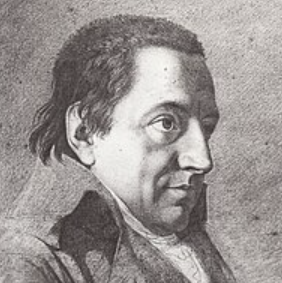
The purpose of the State is, as we have already shown in our last lecture, no other than that of the Human Race itself:-to order all its relations according to the Laws of Reason. It is only after the Age of Reason as Science shall have been traversed, and we shall have arrived at the Age of Reason as Art, that the State can reflect upon this purpose with clear consciousness. Till then it constantly promotes this purpose, but without its own knowledge, or free pre meditated design; prompted thereto by the natural law of the development of our Race, even while it has a totally different purpose in view;-with which purpose of its own, Nature has indissolubly bound up the purpose of the whole Race.
▼
Source
source
p. 168
2 weeks 4 days ago
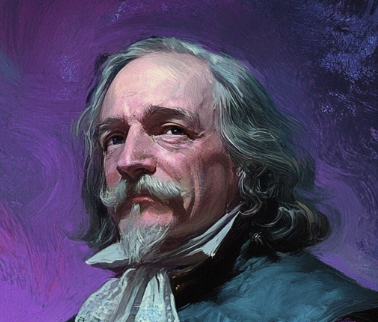
For Warre, consisteth not in Battell onely, or the act of fighting; but in a tract of time, wherein the Will to contend by Battell is sufficiently known: and therefore the notion of Time, is to be considered in the nature of Warre; as it is in the nature of Weather.
▼
Source
source
The First Part, Chapter 13, p. 62

1 month 2 weeks ago
Truth is best (of all that is) good. As desired, what is being desired is truth for him who (represents) the best truth.
▼
Source
source
Ahunuvaiti Gatha; Yasna 27, 14.
1 month ago
Only a very bad theologian would confuse the certainty that follows revelation with the truths that are revealed. They are entirely different things.
▼
Source
source
Apology for the Abbé de Prades
1 month 3 weeks ago
Each the herald is who wrote His rank, and quartered his own coat. There is no king nor sovereign state That can fix a hero's rate.
▼
Source
source
Astræa
1 month 4 weeks ago
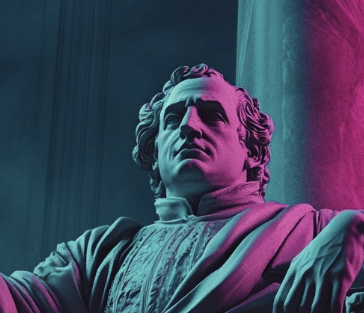
Nature has pointed out a mixed kind of life as most suitable to the human race, and secretly admonished them to allow none of these biases to draw too much, so as to incapacitate them for other occupations and entertainments. Indulge your passion for science, says she, but let your science be human, and such as may have a direct reference to action and society. Abstruse thought and profound researches I prohibit, and will severely punish, by the pensive melancholy which they introduce, by the endless uncertainty in which they involve you, and by the cold reception which your pretended discoveries shall meet with, when communicated. Be a philosopher; but, amidst all your philosophy, be still a man.
▼
Source
source
Section 1 : Of The Different Species of Philosophy

1 month 2 weeks ago
Let hopes and sorrows, fears and angers be, and think each day that dawns the last you'll see; For so the hour that greets you unforeseen, will bring with it enjoyment twice as keen.
▼
Source
source
Book I, epistle iv, line 12 (translated by John Conington)
1 week 4 days ago
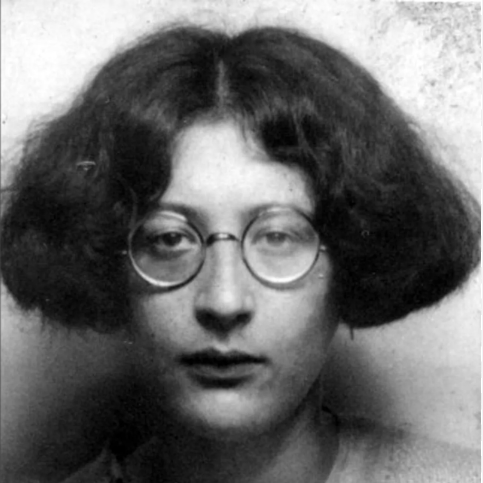
One could count on one's fingers the number of scientists in the entire world who have a general idea of the history and development of their own particular science; there is not one who is really competent as regards sciences other than his own. As science forms an indivisible whole, one may say that there are no longer, strictly speaking, any scientists, but only drudges doing scientific work. . . .
▼
Source
source
p. 13 (as quoted in On Science, Necessity, and the Love of God (1968), p.1)
1 week 1 day ago
Rather, power is most powerful, most stable, where it creates a feeling of freedom and where it does not need to resort to violence.
2 months 3 weeks ago
It is well said, then, that it is by doing just acts that the just man is produced, and by doing temperate acts the temperate man; without doing these no one would have even a prospect of becoming good. But most people do not do these, but take refuge in theory and think they are being philosophers and will become good in this way, behaving somewhat like patients who listen attentively to their doctors, but do none of the things they are ordered to do.
1 month 3 weeks ago
You shall have joy, or you shall have power, said God; you shall not have both.
▼
Source
source
October 1842
2 weeks 4 days ago
Not everyone who says to Me, 'Lord, Lord,' shall enter the kingdom of heaven, but he who does the will of My Father in heaven. Many will say to Me in that day, 'Lord, Lord, have we not prophesied in Your name, cast out demons in Your name, and done many wonders in Your name?' And then I will declare to them, 'I never knew you; depart from Me, you who practice lawlessness!'
▼
Source
source
Matthew 7:21-23 (NKJV) (Also Luke 6:24; 13:26, 27)
2 months 1 week ago
Anger is a weed; hate is the tree.
▼
Source
source
58 Alternate versions: Anger is a stem, hate is a trunk. Anger is the mote, hate is the beam.
1 month 3 weeks ago
First of all, principles should be general. That is, it must be possible to formulate them without use of what would be intuitively recognized as proper names, or rigged definite descriptions.
▼
Source
source
Chapter III, Section 23, pg. 131

2 months 3 weeks ago
The Sophist demonstrates that everything is true and nothing is true.
1 month 3 weeks ago
The man who comes back through the Door in the Wall will never be quite the same as the man who went out. He will be wiser but less sure, happier but less self-satisfied, humbler in acknowledging his ignorance yet better equipped to understand the relationship of words to things, of systematic reasoning to the unfathomable mystery which it tries, forever vainly, to comprehend.
1 month 3 weeks ago
Even serious students are misled by the myth of the subject.
1 month 3 weeks ago
Freedom comes only to those who no longer ask of life that it shall yield them any of those personal goods that are subject to the mutations of time.

1 month 3 weeks ago
But you must see that if two things are alike, then it is a further question whether the first is copied from the second, or the second from the first, or both from a third.''What would the third be?''Some have thought that all these loves were copies of our love for the Landlord.'
▼
Source
source
Pilgrim's Regress 59

1 month 2 weeks ago
Good means not [merely] not to do wrong, but rather not to desire to do wrong.

1 week 1 day ago
"Why do you not say how things will be operated under Anarchism?" is a question I have had to meet thousands of times. Because I believe that Anarchism can not consistently impose an iron-clad program or method on the future. The things every new generation has to fight, and which it can least overcome, are the burdens of the past, which holds us all as in a net. Anarchism, at least as I understand it, leaves posterity free to develop its own particular systems, in harmony with its needs. Our most vivid imagination can not foresee the potentialities of a race set free from external restraints. How, then, can any one assume to map out a line of conduct for those to come? We, who pay dearly for every breath of pure, fresh air, must guard against the tendency to fetter the future. If we succeed in clearing the soil from the rubbish of the past and present, we will leave to posterity the greatest and safest heritage of all ages.
1 month 2 weeks ago
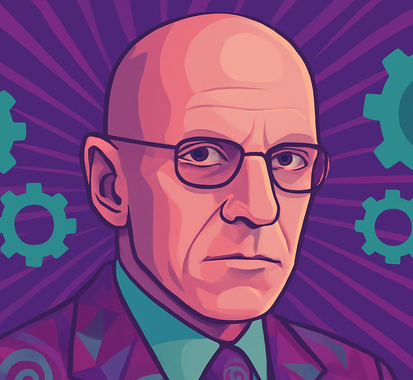
The public execution, then, has a juridico-political function. It is a ceremonial by which a momentarily injured sovereignty is reconstituted. It restores that sovereignty by manifesting it at its most spectacular. The public execution, however hasty and everyday, belongs to a whole series of great rituals in which power is eclipsed and restored (coronation, entry of the king into a conquered city, the submission of rebellious subjects); over and above the crime that has placed the sovereign in contempt, it deploys before all eyes an invincible force. Its aim is not so much to re-establish a balance as to bring into play, as its extreme point, the dissymmetry between the subject who has dared to violate the law and the all-powerful sovereign who displays his strength.
▼
Source
source
Chapter One, The Spectacle of the Scaffold
CivilSimian.com created by AxiomaticPanic, CivilSimian, Kalokagathia