

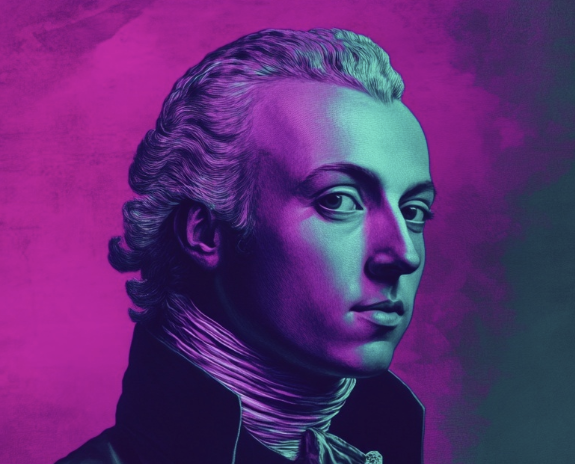
1 month 4 weeks ago
In man (as the only rational creature on earth) those natural capacities which are directed to the use of his reason are to be fully developed only in the race, not in the individual.
▼
Source
source
Second Thesis
1 week 4 days ago
I do not think discursively. It is not so much that I arrive at truth as that I take my start from it.
▼
Source
source
Introduction
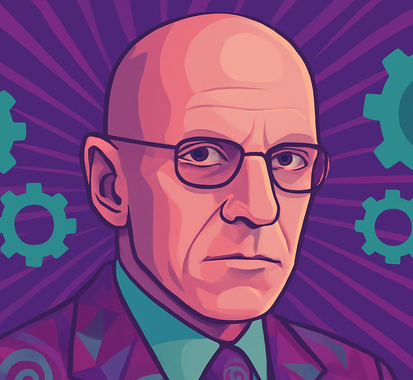
1 month 2 weeks ago
There has been an inversion in the hierarchy of the two principles of antiquity, "Take care of yourself" and "Know yourself." In Greco-Roman culture, knowledge of oneself appeared as the consequence of the care of the self. In the modern world, knowledge of oneself constitutes the fundamental principle.
▼
Source
source
"Technologies of the Self," Ethics, Subjectivity and Truth (1994), p. 228
2 weeks 4 days ago
Philosophers are as jealous as women. Each wants a monopoly of praise.
▼
Source
source
P. 30

2 months 3 weeks ago
"I conclude that all is well," says Oedipus, and that remark is sacred. It echoes in the wild and limited universe of man. It teaches that all is not, has not been, exhausted. It drives out of this world a god who had come into it with dissatisfaction and a preference for futile suffering. It makes of fate a human matter, which must be settled among men.

2 months 1 week ago
It is on account neither of God's weakness nor ignorance that evil comes into the world, but rather it is due to the order of his wisdom and the greatness of his goodness that diverse grades of goodness occur in things, many of which would be lacking if no evil were permitted. Indeed, the good of patience would not exist without the evil of persecution; nor the good of preservation of life in a lion if not for the evil of the destruction of the animals on which it lives.
▼
Source
source
q. 3, art. 6, ad 4
1 month 2 weeks ago
Do not ask who I am and do not ask me to remain the same: leave it to our bureaucrats and our police to see that our papers are in order. At least spare us their morality when we write.
▼
Source
source
The Archaeology of Knowledge (1972), tr. A. M. Sheridan Smith (New York: Pantheon)
2 weeks 2 days ago
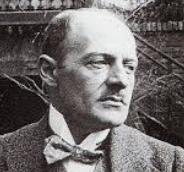
At one time in his life the apostate radically changes his political, religious or philosophical convictions by taking up all possible means of argumentation against that which he formerly held to be true, and lives now for the sake of its negation. His new ideas and opinions consist in continuous acts of revenge on his spiritual past.
▼
Source
source
Manfred Frings, Max Scheler (1996), p. 60
1 month 2 weeks ago
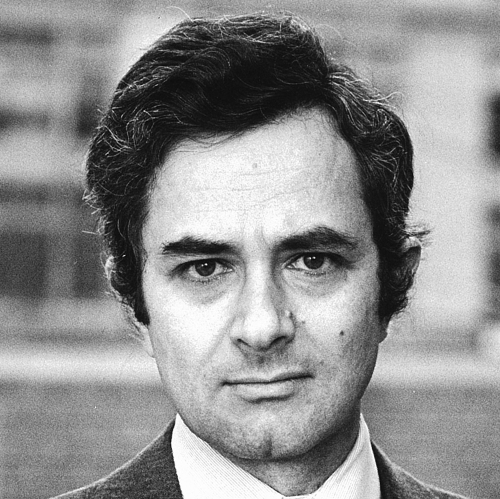
Consciousness is what makes the mind-body problem really intractable.
▼
Source
source
p. 165.
2 months 3 weeks ago
Fate is not in man but around him.
1 month 3 weeks ago
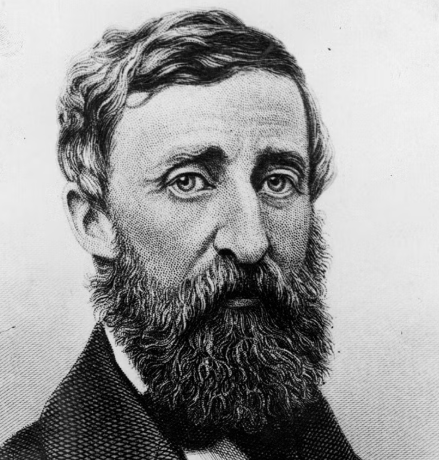
Merely to come into the world the heir of a fortune is not to be born, but to be still-born, rather. To be supported by the charity of friends, or a government-pension, - provided you continue to breathe, - by whatever fine synonymes you describe these relations, is to go into the almshouse.
▼
Source
source
p. 487
1 week 4 days ago
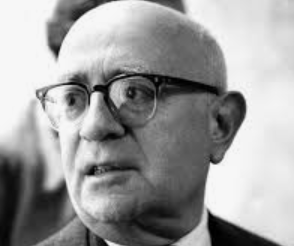
Jazz is the false liquidation of art - instead of utopia becoming reality it disappears from the picture.
▼
Source
source
Perennial fashion - Jazz, as quoted in The Sociology of Rock (1978) by Simon Frith
1 month 3 weeks ago
Gold is now money with reference to all other commodities only because it was previously, with reference to them, a simple commodity.
▼
Source
source
Vol. I, Ch. 1, Section 3, pg. 81.
1 month 2 weeks ago
Discipline 'makes' individuals; it is the specific technique of a power that regards individuals both as objects and as instruments of its exercise. It is not a triumphant power...it is a modest, suspicious power, which functions as a calculated, but permanent economy.
5 days ago
There is no more important rule of conduct in the world than this: attach yourself as much as you can to people who are abler than you and yet not so very different that you cannot understand them.
▼
Source
source
F 81

2 months 4 days ago
When you wander, as you often delight to do, you wander indeed, and give never such satisfaction as the curious time requires. This is not caused by any natural defect, but first for want of election, when you, having a large and fruitful mind, should not so much labour what to speak as to find what to leave unspoken. Rich soils are often to be weeded.
▼
Source
source
Letter of Expostulation to Coke, reported in Bartlett's Familiar Quotations, 10th ed.
2 weeks 3 days ago
Interest only becomes one-sided and morbid only when it ceases to be frank, and becomes sly and furtive.
▼
Source
source
p. 197
1 month 3 weeks ago
An unlearned carpenter of my acquaintance once said in my hearing: "There is very little difference between one man and another; but what little there is, is very important." This distinction seems to me to go to the root of the matter.
▼
Source
source
"The Importance of Individuals"
1 month 2 weeks ago
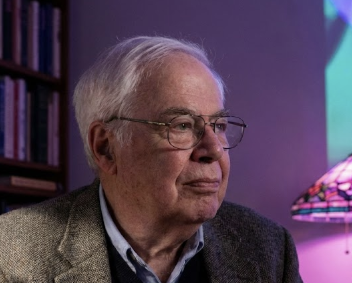
From Richard McKeon and Robert Brumsbaugh I learned to view the history of philosophy as a series, not of alternative solutions to the same problems, but of quite different sets of problems. From Rudolph Carnap and Carl Hempel I learned how pseudo-problems could be revealed as such by restarting them in the formal mode of speech. From Charles Hartshorne and Paul Weiss I learned how they could be so revealed by being translated into Whiteheadian or Hegelian terms.
▼
Source
source
Preface
1 month 3 weeks ago
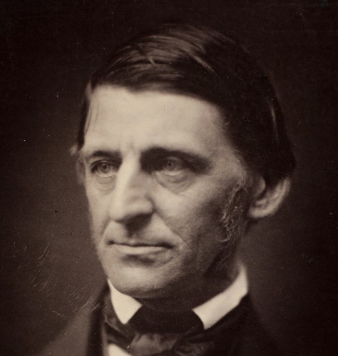
None shall rule but the humble, And none but Toil shall have.
▼
Source
source
Boston Hymn
2 months 3 weeks ago
The least initial deviation from the truth is multiplied later a thousandfold.
1 month 3 weeks ago
It is remarkable that, notwithstanding the universal favor with which the New Testament is outwardly received, and even the bigotry with which it is defended, there is no hospitality shown to, there is no appreciation of, the order of truth with which it deals.
3 weeks 4 days ago
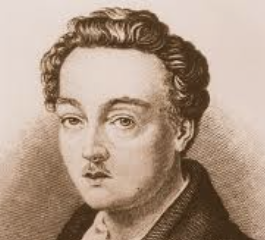
People like us are unhappy in this world and in the next, I guess if we made it to heaven, we'd have to help make it thunder.
▼
Source
source
Scene VI.
1 month 3 weeks ago
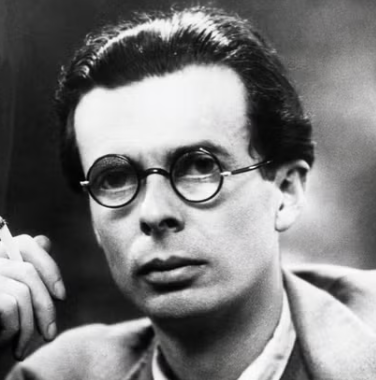
An unexciting truth may be eclipsed by a thrilling falsehood.
▼
Source
source
Chapter 11 (p. 104)
3 weeks ago
To found a family. I think it would have been easier for me to found an empire.
2 months 3 days ago
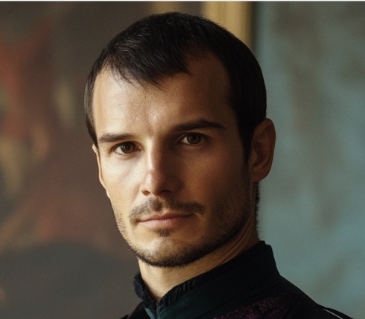
When evening comes, I return home and enter my study; on the threshold I take off my workday clothes, covered with mud and dirt, and put on the garments of court and palace. Fitted out appropriately, I step inside the venerable courts of the ancients, where, solicitously received by them, I nourish myself on that food that alone is mine and for which I was born; where I am unashamed to converse with them and to question them about the motives for their actions, and they, out of their human kindness, answer me. And for four hours at a time I feel no boredom, I forget all my troubles, I do not dread poverty, and I am not terrified by death. I absorb myself into them completely.
▼
Source
source
Letter to Francesco Vettori (10 December 1513), as translated by James Atkinson, in Prince Machiavelli (1976), p. 19
3 weeks ago
His power to adore is responsible for all his crimes: a man who loves a god unduly forces other men to love his god, eager to exterminate them if they refuse.
2 weeks 4 days ago
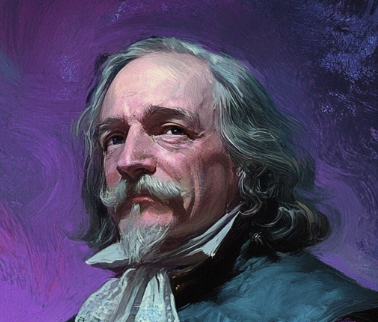
And the Science of them, is the true and onely Moral Philosophy. For Moral Philosophy is nothing else but the Science of what is Good, and Evill, in the conversation, and Society of mankind. Good, and Evill, are names that signify our Appetites, and Aversions; which in different tempers, customes, and doctrines of men, are different.
▼
Source
source
The First Part, Chapter 15, p. 79

2 months 3 weeks ago
To stand on one leg and prove God's existence is a very different thing from going on one's knees and thanking Him.

1 month 3 weeks ago
My dear Wormwood, I note what you say about guiding your patient's reading and taking care that he sees a good deal of his materialist friend. But are you not being a trifle naive? It sounds as if you suppose that argument was the way to keep him out of the enemy's clutches. That might have been so if he had lived a few centuries earlier.
▼
Source
source
Letter I
2 weeks 3 days ago
Perhaps misguided moral passion is better than confused indifference.
▼
Source
source
The Book and the Brotherhood (1987) p. 248.

2 months 3 weeks ago
There is no one who ever acts honestly in the administration of states, nor any helper who will save any one who maintains the cause of the just.
1 week 5 days ago
Ether is, in effect, a merely hypothetical entity, valuable only in so far as it explains that which by means of it we endeavor to explain - light, electricity, or universal gravitation - and only so far as these facts cannot be explained in any other way. In like manner the idea of God is also an hypothesis, valuable only in so far as it enables us to explain that which by means of it we endeavor to explain - the essence and existence of the Universe - and only so long as these cannot be explained in any other way. And since in reality we explain the Universe neither better nor worse with this idea than without it, the idea of God, the supreme petitio principii, is valueless.

2 months 1 week ago
Those who deny the first principle should be flogged or burned until they admit that it is not the same thing to be burned and not burned, or whipped and not whipped.
3 weeks 5 days ago
Men reject their prophets and slay them, but they love their martyrs and honor those they have slain.
1 month 2 weeks ago
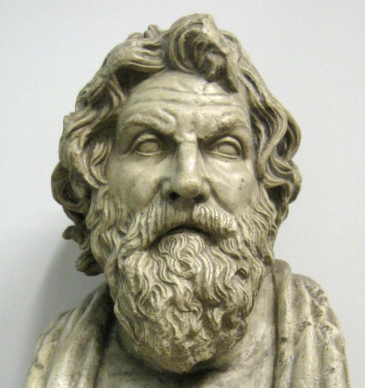
Antisthenes ... said once to a youth from Pontus who was on the point of coming to him to be his pupil, and was asking him what things he wanted, "You want a new book, and a new pen, and a new tablet;"
▼
Source
source
meaning a new mind. § 4
1 month 3 weeks ago
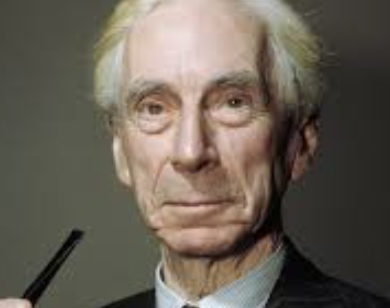
The pursuit of knowledge is, I think, mainly actuated by love of power. And so are all advances in scientific technique. In politics, also, a reformer may have just as strong a love of power as a despot. It would be a complete mistake to decry love of power altogether as a motive. Whether you will be led by this motive to actions which are useful, or to actions which are pernicious, depends upon the social system, and upon your capacities.

2 weeks 4 days ago
The soul contains few secrets and longings which cannot be sensibly discussed, analyzed, and polled. Solitude, the very condition which sustained the individual against and beyond his society, has become technically impossible. Logical and linguistic analysis demonstrate that the old metaphysical problems are illusory problems; the quest for the "meaning" of things can be reformulated as the quest for the meaning of words, and the established universe of discourse and behavior can provide perfectly adequate criteria for the answer.
▼
Source
source
p. 71
2 months 3 weeks ago
Martyrs must choose between being forgotten, mocked, or made use of. As for being understood, never!
3 weeks 5 days ago
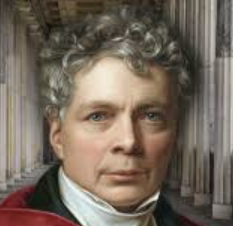
On its pass through finitude, the being-for-itself of the counter-image expresses itself most potently as ""I-ness", as self-identical individuality. Just as a planet in its orbit no sooner reaches its farthest distance from the center than it returns to its closest proximity, so the point of the farthest distance from God, the I-ness, is also the moment of its return to the Absolute, of the re-absorption into the ideal.
▼
Source
source
P. 30
1 week 4 days ago
Marriage as a community of interests unfailingly means the degradation of the interested parties, and it is the perfidy of the world's arrangements that no one, even if aware of it, can escape such degradation. The idea might therefore be entertained that marriage without ignominy is a possibility reserved for those spared the pursuit of interests, for the rich. But the possibility is purely formal, for the privileged are precisely those in whom the pursuit of interests has become second-nature-they would not otherwise uphold privilege.
▼
Source
source
E. Jephcott, trans. (1974), § 10
1 month 3 weeks ago
It appears then, that capitalist production comprises conditions independent of good or bad will, conditions which permit the working-class to enjoy that relative prosperity only momentarily, and at that always only as the harbinger of a coming crisis.
▼
Source
source
Vol. II, Ch. XX, p. 415.
2 months 3 weeks ago
Out of love, God becomes man. He says: Here you see what it is to be a human being; but he adds: Take care, for I am also God - blessed is he who takes no offense at me.
▼
Source
source
As translated by Howard V. Hong and EdnaH. Hong (1980) Variant translation; Out of love, God becomes man. He says: "See, here is what it is to be a human being."

1 month 2 weeks ago
Harvard now, I think, suffers from a kind of self-idolatry, that it needs to be critical of itself in order to grow. And again, if you can be in contact with the best of its past, then it's got a chance. But if it just remains well adjusted to the status quo, generating careerist and opportunist students rather than critically oriented students who have a heart and soul, concerned about suffering here and around the world - then Harvard has a chance. I'm not giving up on Harvard, but I am making my way to New York.
▼
Source
source
Speaking in Too Radical for Harvard? Cornel West on Failed Fight for Tenure, Biden's First 50 Days & More, Democracy Now!
2 months 2 weeks ago
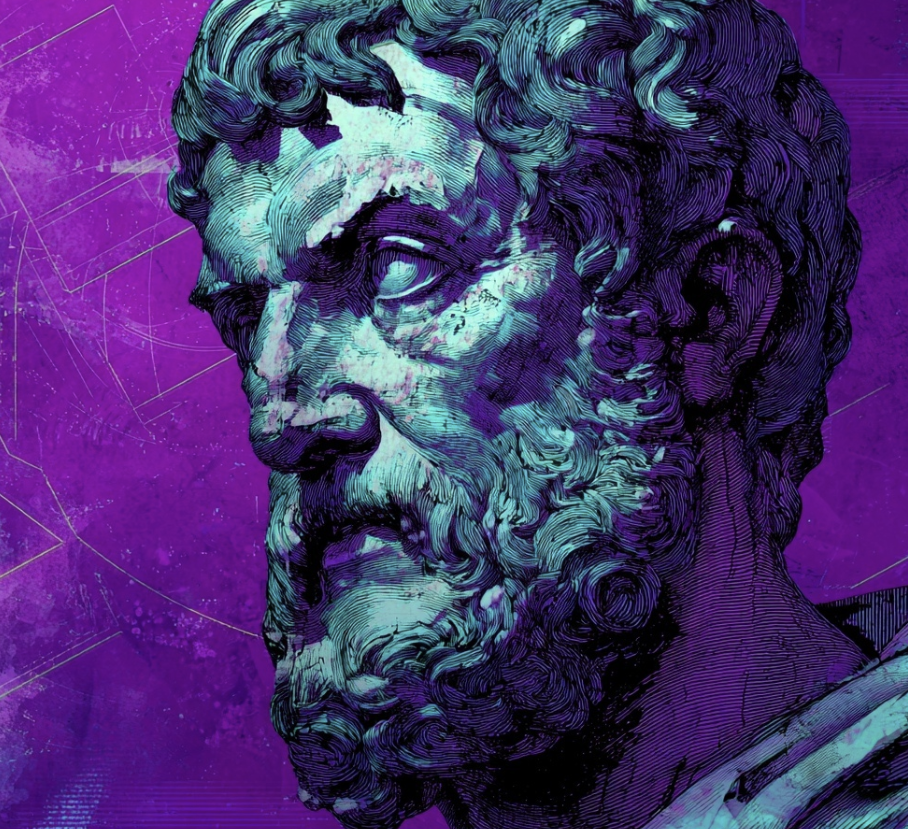
Of our desires some are natural and necessary, others are natural but not necessary; and others are neither natural nor necessary, but are due to groundless opinion.
2 weeks 4 days ago
All his life he [the American] jumps into the train after it has started and jumps out before it has stopped; and he never once gets left behind, or breaks a leg.
▼
Source
source
"Materialism and Idealism" p. 175 (Hathi Trust)
2 weeks 2 days ago
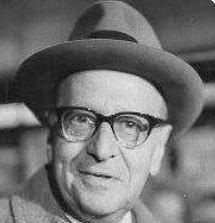
We cannot credit our enjoyment of a flower or of the atmosphere of a room to an autonomous esthetic instinct. Man's esthetic responsiveness relates in its prehistory to various forms of idolatry; his belief in the goodness or sacredness of a thing precedes his enjoyment of its beauty. The applies no less to such concepts as freedom and humanity.
▼
Source
source
p. 36.
2 weeks 4 days ago
Let a man once overcome his selfish terror at his own finitude, and his finitude is, in one sense, overcome.
1 month 3 weeks ago
There is but one unconditional commandment, which is that we should seek incessantly, with fear and trembling, so to vote and to act as to bring about the very largest total universe of good which we can see. Abstract rules indeed can help; but they help the less in proportion as our intuitions are more piercing, and our vocation is the stronger for the moral life. For every real dilemma is in literal strictness a unique situation; and the exact combination of ideals realized and ideals disappointed which each decision creates is always a universe without a precedent, and for which no adequate previous rule exists.
▼
Source
source
"The Moral Philosopher and the Moral Life", International Journal of Ethics, April 1891
3 weeks 4 days ago
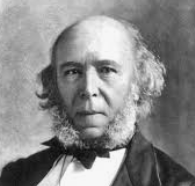
No one can be perfectly free till all are free; no one can be perfectly moral till all are moral; no one can be perfectly happy till all are happy.
▼
Source
source
Pt. IV, Ch. 30 : General Considerations
CivilSimian.com created by AxiomaticPanic, CivilSimian, Kalokagathia