

2 months 3 weeks ago
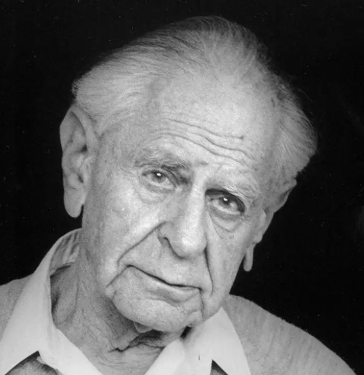
I appeal to the philosophers of all countries to unite and never again mention Heidegger or talk to another philosopher who defends Heidegger. This man was a devil. I mean, he behaved like a devil to his beloved teacher, and he has a devilish influence on Germany. ... One has to read Heidegger in the original to see what a swindler he was.
▼
Source
source
As quoted in "At 90, and Still Dynamic : Revisiting Sir Karl Popper and Attending His Birthday Party" by Eugene Yue-Ching Ho, in Intellectus 23
1 month 3 weeks ago
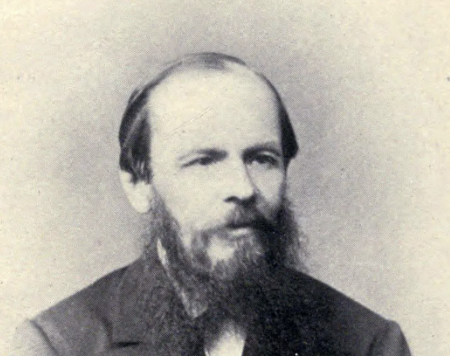
The formula 'two plus two equals five' is not without its attractions.
▼
Source
source
Part 1, Chapter 9 (tr. ?)
2 months 3 weeks ago
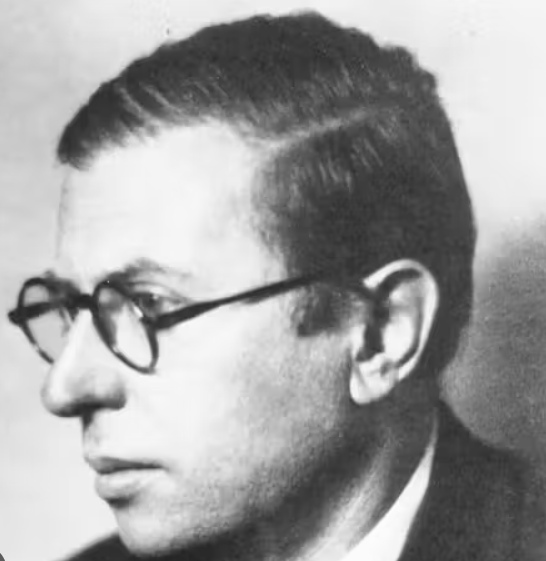
Quietism is the attitude of people who say, "let others do what I cannot do." The doctrine I am presenting before you is precisely the opposite of this, since it declares that there is no reality except in action. It goes further, indeed, and adds, "Man is nothing else but what he purposes, he exists only in so far as he realizes himself, he is therefore nothing else but the sum of his actions, nothing else but what his life is." Hence we can well understand why some people are horrified by our teaching.
▼
Source
source
p. 41
2 months 3 weeks ago
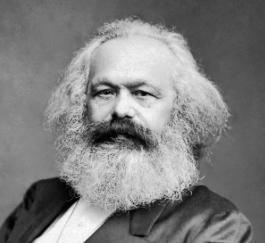
As a beast of toil an ox is fixed capital. If he is eaten, he no longer functions as an instrument of labour, nor as fixed capital either.
▼
Source
source
Vol. II, Ch. VIII, p. 163.

3 months 1 week ago
But if one should guide his life by true principles, man's greatest riches is to live on a little with contented mind; for a little is never lacking.
▼
Source
source
Book V, lines 1117-1119 (tr. Rouse)
2 months 3 weeks ago
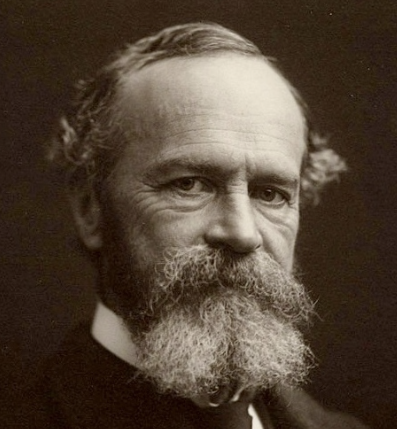
There are moments of sentimental and mystical experience. . . that carry an enormous sense of inner authority and illumination with them when they come. But they come seldom, and they do not come to everyone; and the rest of life makes either no connection with them, or tends to contradict them more than it confirms them. Some persons follow more the voice of the moment in these cases, some prefer to be guided by the average results. Hence the sad discordancy of so many of the spiritual judgments of human beings; a discordancy which will be brought home to us acutely enough before these lectures end.
▼
Source
source
Lecture I, "Religion and Neurology"

1 month 3 weeks ago
Without God, everything is nothingness; and with God? Supreme nothingness.

1 month 2 weeks ago
...whoever is not against us is for us.
▼
Source
source
9:40
2 months 2 weeks ago
Almost as soon as I began to study philosophy, I was impressed by the way in which philosophical problems appeared, disappeared, or changed shape, as a result of new assumptions or vocabularies.
▼
Source
source
Preface
1 month 1 week ago
The kind of relatedness to the world may be noble or trivial, but even being related to the basest kind of pattern is immensely preferable to being alone.
▼
Source
source
Ch. 1

3 months 3 weeks ago
If I were to imagine a girl deeply in love and some man who wanted to use all his reasoning powers and knowledge to ridicule her passion, well, there's surely no question of the enamoured girl having to choose between keeping her wealth and being ridiculed. No, but if some extremely cool and calculating man calmly told the young girl, "I will explain to you what love is," and the girl admitted that everything he told her was quite correct, I wonder if she wouldn't choose his miserable common sense rather than her wealth?
3 weeks 2 days ago
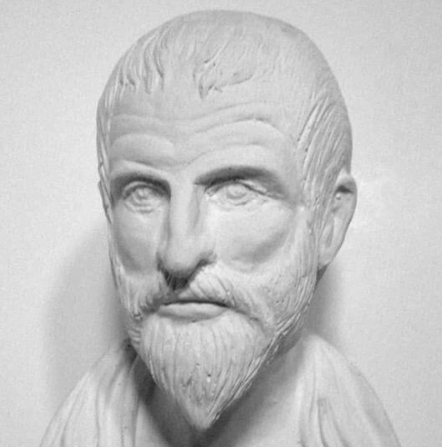
Art is anything you can get away with.
2 months 1 week ago
It is told that those who first brought out the irrationals from concealment into the open perished in shipwreck, to a man. For the unutterable and the formless must needs be concealed. And those who uncovered and touched this image of life were instantaneously destroyed and shall remain forever exposed to the play of the eternal waves.
▼
Source
source
As quoted by Tobias Dantzig, Number: The Language of Science (1930) also see Proclus, scholium to Book X of Euclid's Elements, vol. V.


3 months 2 days ago
We only labor to stuff the memory, and leave the conscience and the understanding unfurnished and void.
▼
Source
source
Book I, Ch. 25
1 month 3 weeks ago
But where is the antidote for lucid despair, perfectly articulated, proud, and sure? All of us are miserable, but how many know it? The consciousness of misery is too serious a disease to figure in an arithmetic of agonies or in the catalogues of the Incurable. It belittles the prestige of hell, and converts the slaughterhouses of time into idyls. What sin have you committed to be born, what crime to exist? Your suffering like your fate is without motive. To suffer, truly to suffer, is to accept the invasion of ills without the excuse of causality, as a favor of demented nature, as a negative miracle. . .

2 days ago
The idea of politics as a conservation in which the collision of opinions is moderated and accommodated, in which what is sought is not truth but peace, has been almost entirely lost, and supplanted by a legalist paradigm in which all political claims and conflicts are modelled in the jargon of rights.
▼
Source
source
'Oakeshott as a Liberal' (p.80)
3 months 3 weeks ago
In the New Testament sense, to be a Christian is, in an upward sense, as different from being a man as, in a downward sense, to be a man is different from being a beast. A Christian in the sense of the New Testament, although he stands suffering in the midst of life's reality, has yet become completely a stranger to this life; in the words of the Scripture and also of the Collects (which still are read-O bloody satire!-by the sort of priests we now have, and in the ears of the sort of Christians that now live) he is a stranger and a pilgrim-just think, for example of the late Bishop Mynster intoning, We are strangers and pilgrims in this world! A Christian in the New Testament sense is literally a stranger and a pilgrim, he feels himself a stranger, and everyone involuntarily feels that this man is a stranger to him.

3 months 1 week ago
Natural inclinations are present in things from God, who moves all things. So it is impossible for the natural inclinations of a species to be toward evil in itself. But there is in all perfect animals a natural inclination toward carnal union. Therefore it is impossible for carnal union to be evil in itself.
▼
Source
source
III, 126, 3

7 months ago
What is at stake here is precisely the problem of the fulfillment of desire: when we encounter in reality an object which has all the properties of the fantasized object of desire, we are nevertheless necessarily somewhat disappointed; we experience a certain this is not it; it becomes evident that the finally found real object is not the reference of desire even though it possesses all the required properties.
1 month 3 weeks ago
Self-conscious rejection of the absolute is the best way to resist God; thus illusion, the substance of life, is saved.

3 weeks 6 days ago
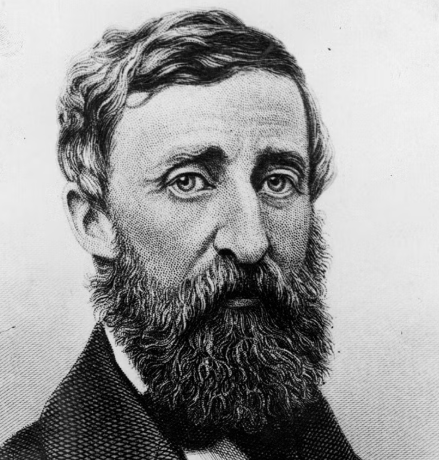
The ethical stand of nonviolence has to be linked to a commitment to radical equality. And more specifically, the practice of nonviolence requires an opposition to biopolitical forms of racism and war logics that regularly distinguish lives worth safeguarding from those that are not-populations conceived as collateral damage, or as obstructions to policy and military aims.
▼
Source
source
p. 62
2 months 3 weeks ago
There are other letters for the child to learn than those which Cadmus invented.

3 months 3 weeks ago
The military mind remains unparalleled as a vehicle of creative stupidity.
1 month 2 weeks ago
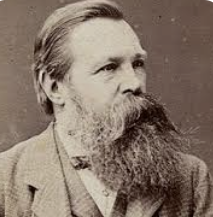
Wherever big industries displaced manufacture, the bourgeoisie developed in wealth and power to the utmost and made itself the first class of the country. The result was that wherever this happened, the bourgeoisie took political power into its own hands and displaced the hitherto ruling classes, the aristocracy, the guildmasters, and their representative, the absolute monarchy. The bourgeoisie annihilated the power of the aristocracy, the nobility, by abolishing the entailment of estates - in other words, by making landed property subject to purchase and sale, and by doing away with the special privileges of the nobility. It destroyed the power of the guildmasters by abolishing guilds and handicraft privileges. In their place, it put competition - that is, a state of society in which everyone has the right to enter into any branch of industry, the only obstacle being a lack of the necessary capital.
1 month 4 weeks ago
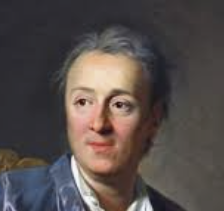
It has been said that love robs those who have it of their wit, and gives it to those who have none.
▼
Source
source
Paradoxe sur le Comédien
2 months 3 weeks ago
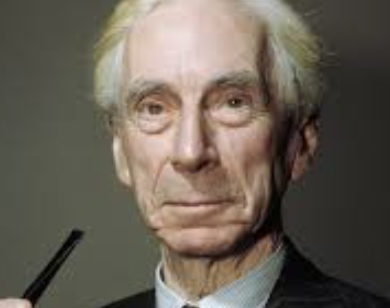
The average man's opinions are much less foolish than they would be if he thought for himself: in science, at least, his respect for authority is on the whole beneficial.
▼
Source
source
On Education, Especially in Early Childhood (1926), Ch. 2: The Aims of Education, p. 63

1 month 3 weeks ago
You can never plan the future by the past.
▼
Source
source
Letter to a Member of the National Assembly (1791), Volume IV, p. 55.
1 month 2 weeks ago
The lord of that servant will come in a day when he looketh not for him, and at an hour when he is not aware, and will cut him in sunder, and will appoint him his portion with the unbelievers.
▼
Source
source
Luke 12:46 (KJV)
1 month 1 week ago
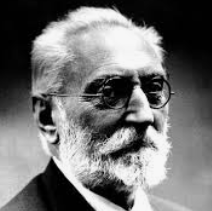
Proceeding from ourselves, from our own human consciousness, the only consciousness which we feel from within and in which feeling is identical with being, we attribute some sort of consciousness, more or less dim, to all living things, and even to the stones themselves, for they also live. And the evolution of organic beings is simply the struggle to realize fullness of consciousness through suffering, a continual aspiration to be others without ceasing to be themselves, to break and yet to preserve their proper limits.
2 months 3 weeks ago
No concrete test of what is really true has ever been agreed upon.
▼
Source
source
"The Will to Believe" p. 15
1 month 3 weeks ago
The writers against religion, whilst they oppose every system, are wisely careful never to set up any of their own.
▼
Source
source
Preface
1 month 4 days ago
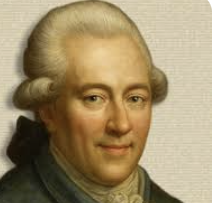
Affectation is a very good word when someone does not wish to confess to what he would none the less like to believe of himself.
▼
Source
source
F 149
3 months 1 week ago
For as children tremble and fear everything in the blind darkness, so we in the light sometimes fear what is no more to be feared than the things that children in the dark hold in terror and imagine will come true. This terror, therefore, and darkness of mind must be dispelled not by the rays of the sun and glittering shafts of daylight, but by the aspect and law of nature.
▼
Source
source
Book II, lines 55-61 (tr. Rouse)
1 month 3 weeks ago
Having always lived in fear of being surprised by the worst, I have tried in every circumstance to get a head start, flinging myself into misfortune long before it occurred.
1 month 3 weeks ago
Out of the shadow of the abstract man, who thinks for the pleasure of thinking, emerges the organic man, who thinks because of a vital imbalance, and who is beyond science and art.

2 months 4 weeks ago
There as here, passions are the motive of all action, but they are livelier, more ardent, or merely simpler and purer, thereby assuming a totally different character. All the first movements of nature are good and right.
▼
Source
source
First Dialogue; translated by Judith R. Bush, Christopher Kelly, Roger D. Masters
3 weeks 1 day ago
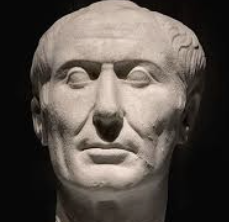
He is a despicable sage whose wisdom does not profit himself.
▼
Source
source
Maxim 629

3 months 2 weeks ago
The wealth required by nature is limited and is easy to procure; but the wealth required by vain ideals extends to infinity.
1 month 4 days ago
There is no more important rule of conduct in the world than this: attach yourself as much as you can to people who are abler than you and yet not so very different that you cannot understand them.
▼
Source
source
F 81
1 month 1 week ago
Man's biological weakness is the condition of human culture.
▼
Source
source
Ch. 2

3 months 1 week ago
And these were the dishes wherein to me, hunger-starven for thee, they served up the sun and the moon.
▼
Source
source
III, 6
1 month 3 weeks ago
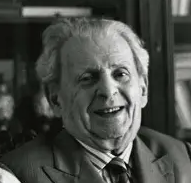
The mores I return to myself, the more I divest myself, under the traumatic effect of persecution , of my freedom as a constituted, wilful, imperialistic subject, the more I discover myself to be responsible' the more just I am, the more guilty I am. I am 'in myself' through others.
▼
Source
source
The Levinas reader by Levinas, Emmanuel p. 102

3 months 3 weeks ago
Nature flies from the infinite, for the infinite is unending or imperfect, and Nature ever seeks an end.
2 months 1 week ago
A transition, therefore, is not undeservedly made from sense to consideration, and from this to the nobler energies of intellect. Hence, as the certain knowledge of numbers received its origin among the Phœnicians, on account of merchandise and commerce, so geometry was found out among the Egyptians from the distribution of land. When Thales, therefore, first went into Egypt, he transferred this knowledge from thence into Greece: and he invented many things himself, and communicated to his successors the principles of many. Some of which were, indeed, more universal, but others extended to sensibles.
▼
Source
source
Chap. IV.

1 month 1 week ago
Power is not opposed to freedom. It is precisely freedom that distinguishes power from violence or coercion.
2 months 1 week ago
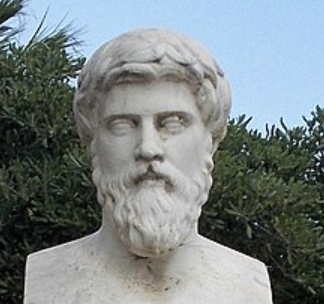
Once when Phocion had delivered an opinion which pleased the people,... he turned to his friend and said, "Have I not unawares spoken some mischievous thing or other?"
▼
Source
source
55 Phocion
2 months 4 weeks ago
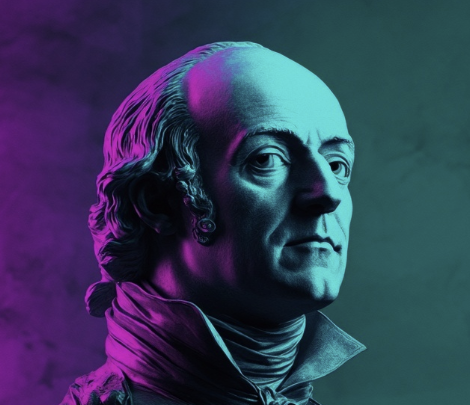
To found a great empire for the sole purpose of raising up a people of customers, may at first appear a project fit only for a nation of shopkeepers. It is however, a project altogether unfit for a nation of shopkeepers; but extremely fit for a nation whose government is influenced by shopkeepers.
▼
Source
source
Chapter VII, Part Third, p. 667.
1 month 3 weeks ago
I should not be surprized at seeing a French Army conveyed by a British Navy to an attack upon this Kingdom.
▼
Source
source
Letter to French Laurence (12 May 1797) after hearing of the mutinies in the Royal Navy, quoted in R. B. McDowell (ed.)
CivilSimian.com created by AxiomaticPanic, CivilSimian, Kalokagathia