


1 month 3 weeks ago
Affection requires a firmer foundation than sympathy, and few people have a principle of action sufficiently stable to produce rectitude of feeling; for in spite of all the arguments I have heard to justify deviations from duty, I am persuaded that even the most spontaneous sensations are more under the direction of principle than weak people are willing to allow.
▼
Source
source
Letter 17
2 months 3 weeks ago
No doubt, when modesty was made a virtue, it was a very advantageous thing for the fools, for everybody is expected to speak of himself as if he were one.
▼
Source
source
Vol. 1, Ch. 3, Section 2: Pride
1 month 3 days ago
Part of what makes moral philosophy an anachronistic field is that its practitioners continue to argue in this very traditional and aprioristic way even though they themselves do not claim that one can provide a systematic and indubitable 'foundation' for the subject. Most of them rely on what are supposed to be 'intuitions' without claiming that those intuitions deliver uncontroversial ethical premises, on the one hand, or that they have an ontological or epistemological explanation of the reliability of those intuitions, on the other.
▼
Source
source
How Not to Solve Ethical Problems
3 months 3 days ago
We can be knowledgeable with other men's knowledge, but we cannot be wise with other men's wisdom.
▼
Source
source
Book I, Ch. 25

1 month 3 weeks ago
To act is to anchor in the imminent future.

2 months 2 weeks ago
If our intention now is to reveal classical unreason on its own terms, outside of its ties with dreams and error, it must be understood not as a form of reason that is somehow diseased, lost or mad, but quite simply as reason dazzled.
▼
Source
source
Part Two: 2. The Transcendence of Delirium
1 week 1 day ago
Being a planetary citizen does not need space travel. It means being conscious that we are part of the universe and of the earth. The most fundamental law is to recognise that we share the planet with other beings, and that we have a duty to care for our common home.

2 months 3 weeks ago
If we take a survey of ages and of countries, we shall find the women, almost - without exception - at all times and in all places, adored and oppressed. Man, who has never neglected an opportunity of exerting his power, in paying homage to their beauty, has always availed himself of their weakness He has been at once their tyrant and their slave.
2 months 3 weeks ago
The alleged power to charm down insanity, or ferocity in beasts, is a power behind the eye.
▼
Source
source
Behavior
3 months 3 weeks ago
An unpleasant nest of nasty, materialistic and aggressive people, careless of the rights of others, imperfectly democratic at home though quick to see the minor slaveries of others, and greedy without end.
2 months 3 weeks ago
I was not the one to invent lies: they were created in a society divided by class and each of us inherited lies when we were born. It is not by refusing to lie that we will abolish lies: it is by eradicating class by any means necessary.
▼
Source
source
Act 5, sc. 3
1 month 2 weeks ago
It is not society's fault that most men seem to miss their vocation. Most men have no vocation.
▼
Source
source
Ch. IV: The Aristocratic Ideal
1 month 3 days ago
Much early alchemy seems to have been adventure. You heated and mixed and burnt and pounded and to see what would happen. An adventure might suggest an hypothesis that can subsequently be tested, but adventure is prior to theory.
▼
Source
source
Chapter 4, Evidence, p. 36.
3 months 3 days ago
Man is forming thousands of ridiculous relations between himself and God.
▼
Source
source
Ch. 12
2 months 3 weeks ago
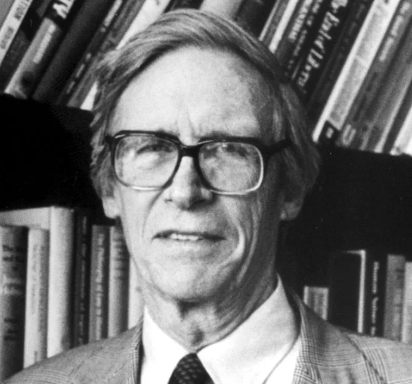
In all sectors of society there should be roughly equal prospects of culture and achievement for everyone similarly motivated and endowed. The expectations of those with the same abilities and aspirations should not be affected by their social class.
▼
Source
source
Chapter II, Section 12, pg. 73
3 weeks 4 days ago
Science may fall back on its stupid excuse that science works for science, and that when it has been developed by the scientists it will become accessible to the people also; but art, if it be art, should be accessible to all, and particularly to those for whom it is produced. And the position of our art strikingly arraigns the producers of art for not wishing, not knowing how, and being unable, to serve the people.

1 month 1 week ago
The first thing that we know about ourselves is our imperfection.
2 months 3 weeks ago
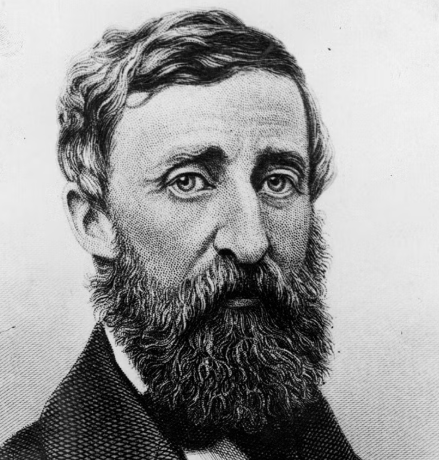
When the husk gets separated from the kernel, almost all men run after the husk and pay their respects to that. It is only the husk of Christianity that is so bruited and wide spread in this world; the kernel is still the very least and rarest of all things. There is not a single church founded on it.
2 months 3 weeks ago
Nor knowest thou what argument Thy life to thy neighbor's creed has lent: All are needed by each one, Nothing is fair or good alone.
▼
Source
source
Each and All, st. 1
4 weeks ago
So-called "realist" photography does not capture the "what is." Instead, it is preoccupied with what should not be, like the reality of suffering for example.
2 months 4 weeks ago
How selfish soever man may be supposed, there are evidently some principles in his nature, which interest him in the fortune of others, and render their happiness necessary to him, though he derives nothing from it except the pleasure of seeing it.
▼
Source
source
Section I, Chap. I

3 months 3 weeks ago
Science fiction offers its writers chances of embarrassment that no other form of fiction does.
1 month 3 weeks ago
...they who would make peace without a previous knowledge of the terms, make a surrender. They are conquered. They do not treat; they receive the law. Is this the disposition of the people of England? Then the people of England are contented to seek in the kindness of a foreign systematick enemy combined with a dangerous faction at home, a security which they cannot find in their own patriotism and their own courage. They are willing to trust to the sympathy of Regicides the guarantee of the British Monarchy. They are content to rest their religion on the piety of atheists by establishment. They are satisfied to seek in the clemency of practised murderers the security of their lives. They are pleased to confide their property to the safeguard of those who are robbers by inclination, interest, habit, and system. If this be our deliberate mind, truly we deserve to lose, what it is impossible we should long retain, the name of a nation.
▼
Source
source
p. 48

1 month 2 weeks ago
The distinction between true and false consciousness, real and immediate interest still is meaningful. But this distinction itself must be validated. Men must come to see it and to find their way from false to true consciousness, from their immediate to their real interest. They can do so only if they live in need of changing their way of life, of denying the positive, of refusing. It is precisely this need which the established society manages to repress to the degree to which it is capable of "delivering the goods" on an increasingly large scale, and using the scientific conquest of nature for the scientific conquest of man.
▼
Source
source
pp. xlv-xlvi

3 months 3 weeks ago
Perhaps we cannot prevent this world from being a world in which children are tortured. But we can reduce the number of tortured children. And if you don't help us, who else in the world can help us do this?
3 months 3 weeks ago
The male has more teeth than the female in mankind, and sheep, and goats, and swine. This has not been observed in other animals.
3 weeks 6 days ago
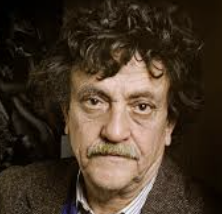
During the Vietnam War, which lasted longer than any war we've ever been in -- and which we lost -- every respectable artist in this country was against the war. It was like a laser beam. We were all aimed in the same direction. The power of this weapon turns out to be that of a custard pie dropped from a stepladder six feet high.
▼
Source
source
Vonnegut at 80 Interview with David Hoppe Alternet

2 months 3 weeks ago
Each of the parts of philosophy is a philosophical whole, a circle rounded and complete in itself. In each of these parts, however, the philosophical Idea is found in a particular specificality or medium. The single circle, because it is a real totality, bursts through the limits imposed by its special medium, and gives rise to a wider circle. The whole of philosophy in this way resembles a circle of circles. The Idea appears in each single circle, but, at the same time, the whole Idea is constituted by the system of these peculiar phases, and each is a necessary member of the organisation.
3 weeks 2 days ago
In Catch-22, the figure of the black market and the ground of war merge into a monster presided over by the syndicate. When war and market merge, all money transactions begin to drip blood.
▼
Source
source
(p. 211)
1 month 3 weeks ago
Volumes might be written upon the impiety of the pious.
▼
Source
source
Pt. I, The Unknowable; Ch. V, The Reconciliation
3 weeks 1 day ago
Whom Fortune wishes to destroy she first makes mad.
▼
Source
source
Maxim 911
1 month 2 weeks ago
Let him who seeks continue seeking until he finds. When he finds, he will become troubled. When he becomes troubled, he will be astonished, and he will rule over the All.
▼
Source
source
-2
1 month 2 weeks ago
Ideas are refined and multiplied in the commerce of minds. In their splendor, images effect a very simple communion of souls.
▼
Source
source
Introduction, sect. 4

2 months 2 weeks ago
The logical picture of the facts is the thought.
▼
Source
source
(3) Original German: Das logische Bild der Tatsachen ist der Gedanke.
1 month 1 week ago
I can assure you that no kingdom has ever had as many civil wars as the kingdom of Christ.
▼
Source
source
No. 29. (Rica writing to Ibben)
1 month 3 weeks ago
We have an enemy, to whose virtues we can owe nothing; but on this occasion we are infinitely obliged to one of his vices. We owe more to his insolence than to our own precaution.
▼
Source
source
p.3
2 months 3 weeks ago
Everyone who knows anything of history also knows that great social revolutions are impossible without the feminine ferment. Social progress may be measured precisely by the social position of the fair sex (plain ones included).
▼
Source
source
Letter to Ludwig Kugelmann, dated 12 December 1868.
2 months 3 weeks ago
They made me take cod liver oil: that is the height of luxury: a medicine to make you hungry while the others, in the street, would have sold themselves for a beefsteak. I saw them passing my window with their signs: "Give me bread".
▼
Source
source
Act 3, sc. 3
2 months 4 weeks ago
The concept of space is not abstracted from external sensations.

2 months 3 weeks ago
It is forbidden to kill; therefore all murderers are punished unless they kill in large numbers and to the sound of trumpets.
▼
Source
source
"Rights", 1771
2 months 4 weeks ago
As to the Approbation or Esteem of those Blockheads who call themselves the Public, & whom a Bookseller, a Lord, a Priest, or a Party can guide, I do most heartily despise it.
▼
Source
source
Letter 138, To Gilbert Elliot of Minto; August 9, 1757

3 months 3 weeks ago
Editor Preface In this book, originating in the year 1848, the requirement for being a Christian is forced up by the pseudonymous author to the supreme ideality. Yet the requirement should indeed be stated, presented, and heard. From the Christian point of view, there ought to be no scaling down of the requirement, nor suppression of it-instead of a personal admission and confession. The requirement should be heard-and I understand what is said as spoken to me alone-so that I might learn not only to resort to grace but to resort to it in relation to the use of grace.
2 months 3 weeks ago
We all remember how many religious wars were fought for a religion of love and gentleness; how many bodies were burned alive with the genuinely kind intention of saving souls from the eternal fire of hell. Only if we give up our authoritarian attitude in the realm of opinion, only if we establish the attitude of give and take, of readiness to learn from other people, can we hope to control acts of violence inspired by piety and duty.
3 months 3 weeks ago
"The real saint", Baudelaire pretends to think, "is he who flogs and kills people for their own good." His argument will be heard. A race of real saints is beginning to spread over the earth for the purposes of confirming these curious conclusions about rebellion.
3 months 3 weeks ago
A robot may not injure a human being, or, through inaction, allow a human being to come to harm.
2 months 3 weeks ago
The past alone is truly real: the present is but a painful, struggling birth into the immutable being of what is no longer. Only the dead exist fully. The lives of the living are fragmentary, doubtful, and subject to change; but the lives of the dead are complete, free from the sway of Time, the all but omnipotent lord of the world. Their failures and successes, their hopes and fears, their joys and pains, have become eternal-our efforts cannot now abate one jot of them. Sorrows long buried in the grave, tragedies of which only a fading memory remains, loves immortalized by Death's hallowing touch these have a power, a magic, an untroubled calm, to which no present can attain. ...On the banks of the river of Time, the sad procession of human generations is marching slowly to the grave; in the quiet country of the Past, the march is ended, the tired wanderers rest, and the weeping is hushed.
▼
Source
source
On History, 1904
2 months 4 weeks ago
The guardians who have kindly undertaken the supervision will see to it that by far the largest part of mankind, including the entire "beautiful sex," should consider the step into maturity, not only as difficult but as very dangerous. After having made their domestic animals dumb and having carefully prevented these quiet creatures from daring to take any step beyond the lead-strings to which they have fastened them, these guardians then show them the danger which threatens them, should they attempt to walk alone.
CivilSimian.com created by AxiomaticPanic, CivilSimian, Kalokagathia