

3 months 4 days ago
...it is the peculiar and perpetual error of the human understanding to be more moved and excited by affirmatives than by negatives...
▼
Source
source
Aphorism 46
2 months 3 weeks ago
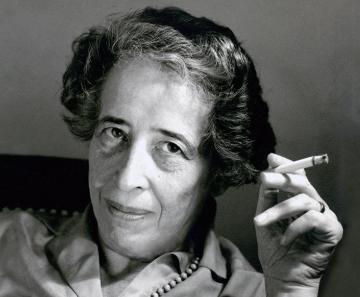
The essence of totalitarian government, and perhaps the nature of every bureaucracy, is to make functionaries and mere cogs in the administrative machinery out of men, and thus to dehumanise them.
▼
Source
source
As quoted in Ideas in literature: Ten things Hannah Arendt said that are eerily relevant in today's political times
3 months 3 days ago
Omnipotence and foreknowledge of God, I repeat, utterly destroy the doctrine of 'free-will' ... doubtless it gives the greatest possible offense to common sense or natural reason, that God, Who is proclaimed as being full of mercy and goodness, and so on, should of His own mere will abandon, harden and damn men, as though He delighted in the sins and great eternal torments of such poor wretches. It seems an iniquitous, cruel, intolerable thought to think of God; and it is this that has been such a stumbling block to so many great men down through the ages. And who would not stumble at it? I have stumbled at it myself more than once, down to the deepest pit of despair, so that I wished I had never been made a man.
▼
Source
source
(That was before I knew how health-giving that despair was, and how close to grace p. 217)
1 month 3 weeks ago
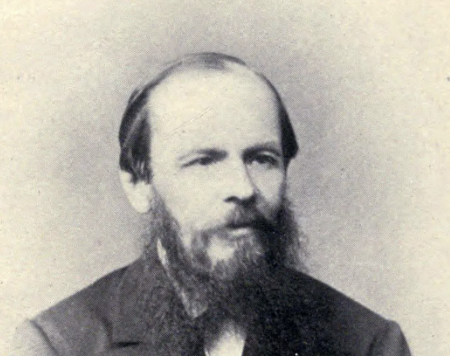
A gentleman, even if he loses everything he owns, must show no emotion. Money must be so far beneath a gentleman that it is hardly worth troubling about.
2 months 3 weeks ago
If everything must have a cause, then God must have a cause. If there can be anything without a cause, it may just as well be the world as God, so that there cannot be any validity in that argument. It is exactly of the same nature as the Hindu's view, that the world rested upon an elephant and the elephant rested upon a tortoise; and when they said, "How about the tortoise?" the Indian said, "Suppose we change the subject." The argument is really no better than that.
▼
Source
source
"The First-cause Argument"
2 months 1 week ago
For this, to draw a right line from every point, to every point, follows the definition, which says, that a line is the flux of a point, and a right line an indeclinable and inflexible flow.
▼
Source
source
Book III. Concerning Petitions and Axioms.
1 month 3 weeks ago
Politics and the pulpit are terms that have little agreement.
3 weeks 1 day ago
Treat your friend as if he might become an enemy.
▼
Source
source
Maxim 401
3 months 3 weeks ago
This was her finest role and the hardest one to play. Choosing between heaven and a ridiculous fidelity, preferring oneself to eternity or losing oneself in God is the age-old tragedy in which each must play his part.
1 month 3 weeks ago
A standing army, for instance, is incompatible with freedom; because subordination and rigour are the very sinews of military discipline; and despotism is necessary to give vigour to enterprise that one will directs. A spirit inspired by romantic notions of honour, a kind of morality founded on the fashion of the age, can only be felt by a few officers, whilst the main body must be moved by command, like the waves of the sea; for the strong wind of authority pushes the crowd of subalterns forward, they scarcely know or care why, with headlong fury.
▼
Source
source
Ch. 1
1 month 1 week ago
No human being escapes the necessity of conceiving some good outside himself towards which his thought turns in a movement of desire, supplication, and hope. consequently, the only choice is between worshipping the true God or an idol. Every atheist is an idolater - unless he is worshipping the true God in his impersonal aspect. The majority of the pious are idolaters.
▼
Source
source
Last Notebook (1942) p. 308
3 weeks 2 days ago
The city no longer exists except as a cultural ghost for tourists. Any highway eatery with its TV set, newspaper and magazine is as cosmopolitan as New York or Paris.
▼
Source
source
(p.12)
1 month 2 weeks ago
Culture is on the horns of this dilemma: if profound and noble, it must remain rare, if common, it must become mean.
▼
Source
source
Ch. IV: The Aristocratic Ideal
1 month 3 weeks ago
Personally, people know themselves very poorly.
▼
Source
source
Contributions to the analysis of the sensations (1897), translated by Cora May Williams, published by Open Court Publishing Company, p. 4
1 month 1 week ago
Perhaps there is nobody who would sacrifice his life for the sake of maintaining that the three angles of a triangle are together equal to two right angles, for such a truth does not demand the sacrifice of our life; but, on the other hand, there are many who have lost their lives for the sake of maintaining their religious faith. Indeed, it is truer to say that martyrs make faith than that faith makes martyrs. For faith is not the mere adherence of the intellect to an abstract principle; it is not the recognition of a theoretical truth, the process in which the will merely sets in motion our faculty of comprehension; faith is an act of the will - it is a movement of the soul towards a practical truth, towards a person, towards something that makes us not merely comprehend life, but that makes us live.
1 month 1 week ago
Barthes's discovery and articulation of the "new" liberatory category of perception and deciphering, semiotic-mythology, belongs to the praxis of his heroic mythologist, alone. This unfortunate theoretical strategy makes the articulation of a coalitional consciousness in social struggle impossible to imagine or enact. ... His terminologies appropriate the technologies of the oppressed for use by academic classes.
▼
Source
source
Chela Sandoval, Methodology of the Oppressed, p. 201
3 months 3 weeks ago
For it is the chief characteristic of the religion of science, that it works, and that such curses as that of Aporat's are really deadly.
1 month 1 week ago
I know that all this is dull reading, tiresome, perhaps tedious, but it is all necessary. And I must repeat once again that we have nothing to do with a transcendental police system or with the conversion of God into a great Judge or Policeman - that is to say, we are not concerned with heaven or hell considered as buttresses to shore up our poor earthly mortality, nor are we concerned with anything egoistic or personal. It is not I myself alone, it is the whole human race that is involved, it is the ultimate finality of all our civilization. I am but one, but all men are I's.
2 months 3 weeks ago
Nature magically suits the man to his fortunes, by making these the fruit of his character.
▼
Source
source
Fate
2 months 4 weeks ago
In vain, therefore, should we pretend to determine any single event, or infer any cause or effect, without the assistance of observation and experience.
▼
Source
source
§ 4.11
3 weeks 4 days ago
Pierre, who from the moment Prince Andrew entered the room had watched him with glad, affectionate eyes, now came up and took his arm. Before he looked round Prince Andrew frowned again, expressing his annoyance with whoever was touching his arm, but when he saw Pierre's beaming face he gave him an unexpectedly kind and pleasant smile. "There now!... So you, too, are in the great world?" said he to Pierre. "I knew you would be here," replied Pierre. "I will come to supper with you. May I?" he added in a low voice so as not to disturb the vicomte who was continuing his story. "No, impossible!" said Prince Andrew, laughing and pressing Pierre's hand to show that there was no need to ask the question. He wished to say something more, but at that moment Prince Vasíli and his daughter got up to go and the two young men rose to let them pass.
▼
Source
source
Bk. I, Ch. IV

1 month 3 weeks ago
A person who wakes up after a night of unbroken sleep has the illusion of beginning something new. When one instead remains awake the whole night long, nothing new begins.
3 months 3 weeks ago
The ancients, even though they believed in destiny, believed primarily in nature, in which they participated wholeheartedly. To rebel against nature amounted to rebelling against oneself.
1 month 2 weeks ago
Time, and Industry, produce everyday new knowledge.
▼
Source
source
The Second Part, Chapter 30, p. 176
3 months 3 weeks ago
But voice is a certain sound of that which is animated; for nothing inanimate emits a voice; but they are said to emit a voice from similitude, as a pipe, and a lyre, and such other inanimate things, have extension, modulation, and dialect; for thus it appears, because voice, also, has these.
1 month 3 weeks ago
Most observers of the French Revolution, especially the clever and noble ones, have explained it as a life-threatening and contagious illness. They have remained standing with the symptoms and have interpreted these in manifold and contrary ways. Some have regarded it as a merely local ill. The most ingenious opponents have pressed for castration. They well noticed that this alleged illness is nothing other than the crisis of beginning puberty.
▼
Source
source
Fragment No. 105
3 months 1 week ago
The propositions which are true and evident must of necessity be employed even by those who contradict them.
▼
Source
source
Book II, ch. 20, 1
3 months 3 days ago
We must not attach knowledge to the mind, we have to incorporate it there.
▼
Source
source
Ch. 25
1 month 3 weeks ago
You have dreamed of setting the world ablaze, and you have not even managed to communicate your fire to words, to light up a single one!
2 months 3 weeks ago
He who is in love is wise and is becoming wiser, sees newly every time he looks at the object beloved, drawing from it with his eyes and his mind those virtues which it possesses.
▼
Source
source
The Method of Nature, 1841
1 week 4 days ago
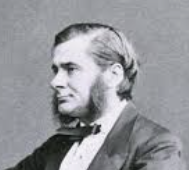
To a person uninstructed in natural history, his country or sea-side stroll is a walk through a gallery filled with wonderful works of art, nine-tenths of which have their faces turned to the wall.
▼
Source
source
On the Educational Value of the Natural History Sciences (1854) p. 29
1 month 2 weeks ago
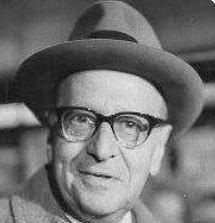
If by enlightenment and intellectual progress we mean the freeing of man from superstitious belief in evil forces, in demons and fairies, in blind fate-in short, emancipation of fear-then denunciation of what is currently called reason is the greatest service reason can render.
2 months 4 weeks ago
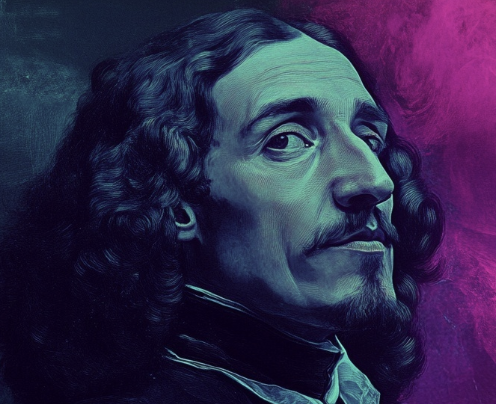
I make this chief distinction between religion and superstition, that the latter is founded on ignorance, the former on knowledge; this, I take it, is the reason why Christians are distinguished from the rest of the world, not by faith, nor by charity, nor by the other fruits of the Holy Spirit, but solely by their opinions, inasmuch as they defend their cause, like everyone else, by miracles, that is by ignorance, which is the source of all malice; thus they turn a faith, which may be true, into superstition.
▼
Source
source
Letter 21 (73) to Henry Oldenburg , November
2 months 3 weeks ago
Why? Surely they can find other men. Russell's reply when asked "if it wasn't unkind of him to love and leave so many women";
▼
Source
source
as quoted in My Father - Bertrand Russell (1975) by Katharine Tait, p. 106

2 months 3 weeks ago
When you have reached your own room, be kind to those who have chosen different doors and to those who are still in the hall. If they are wrong they need your prayers all the more; and if they are your enemies, then you are under orders to pray for them. That is one of the rules common to the whole house.
▼
Source
source
Preface
1 month 3 weeks ago
His power to adore is responsible for all his crimes: a man who loves a god unduly forces other men to love his god, eager to exterminate them if they refuse.
2 months 3 weeks ago
Every intrusion of the spirit that says, "I'm as good as you" into our personal and spiritual life is to be resisted just as jealously as every intrusion of bureaucracy or privilege into our politics. Hierarchy within can alone preserve egalitarianism without. Romantic attacks on democracy will come again. We shall never be safe unless we already understand in our hearts all that the anti-democrats can say, and have provided for it better than they. Human nature will not permanently endure flat equality if it is extended from its proper political field into the more real, more concrete fields within. Let us wear equality; but let us undress every night.
1 month 1 week ago
I have told you that... we know nothing save what we have first, in one way or another, desired; and it may even be added that we can know nothing well save what we love, save what we pity.
1 month 3 weeks ago
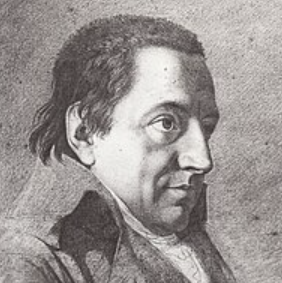
The will is the living principle of the rational soul, is indeed itself reason, when purely and simply apprehended. That reason is itself active, means, that the pure will, as such, rules and is effectual. The infinite reason alone lies immediately and entirely in the purely spiritual order. The finite being lives necessarily at the same time in a sensuous order; that is to say, in one which presents to him other objects than those of pure reason; a material object, to be advanced by instruments and powers, standing indeed under the immediate command of the will, but whose efficacy is conditional also on its own natural laws.
▼
Source
source
Jane Sinnett, trans 1846 p.104
3 weeks 2 days ago
The mask, like the side-show freak, is mainly participatory rather than pictorial in its sensory appeal.
▼
Source
source
(p. 352)
2 months 3 weeks ago
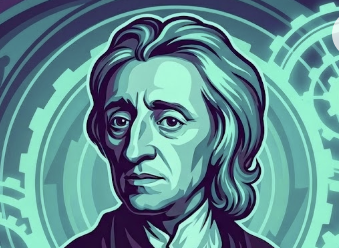
The three great things that govern mankind are reason, passion and superstition. The first governs a few, the two last share the bulk of mankind and possess them in their turns. But superstition most powerfully produces the greatest mischief.
▼
Source
source
Journal entry (16 May 1681), quoted in Maurice Cranston, John Locke: A Biography (1957; 1985), p. 200
2 months 3 weeks ago
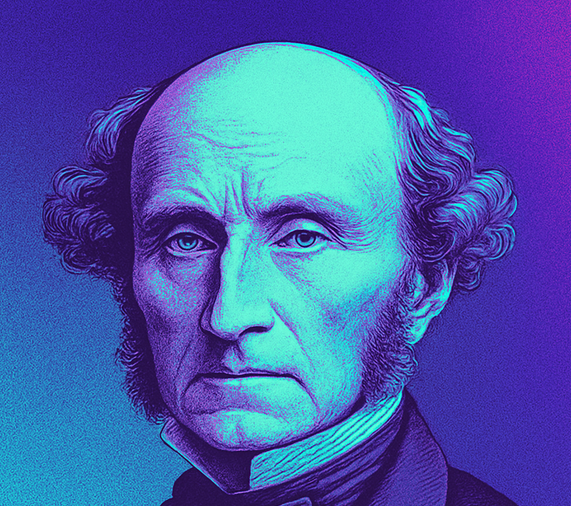
The art of music is good, for the reason, among others, that it produces pleasure; but what proof is it possible to give that pleasure is good? If, then, it is asserted that there is a comprehensive formula, including all things which are in themselves good, and that whatever else is good, is not so as an end, but as a mean, the formula may be accepted or rejected, but is not a subject of what is commonly understood by proof.
▼
Source
source
Ch. 1
1 month 3 weeks ago
When you know that every problem is only a false problem, you are dangerously close to salvation.
2 months 3 weeks ago
You can never do a kindness too soon, for you never know how soon it will be too late.
▼
Source
source
Culture
2 months 1 week ago
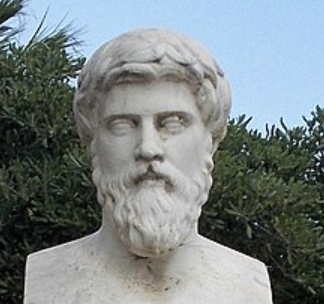
Antagoras the poet was boiling a conger, and Antigonus, coming behind him as he was stirring his skillet, said, "Do you think, Antagoras, that Homer boiled congers when he wrote the deeds of Agamemnon?" Antagoras replied, "Do you think, O king, that Agamemnon, when he did such exploits, was a peeping in his army to see who boiled congers?"
▼
Source
source
46 Antigonus I
3 months 1 week ago
Remember that it is not he who gives abuse or blows who affronts, but the view we take of these things as insulting. When, therefore, any one provokes you, be assured that it is your own opinion which provokes you.
▼
Source
source
(20).
1 month 3 weeks ago
God is what survives the evidence that nothing deserves to be thought.
1 month 1 week ago
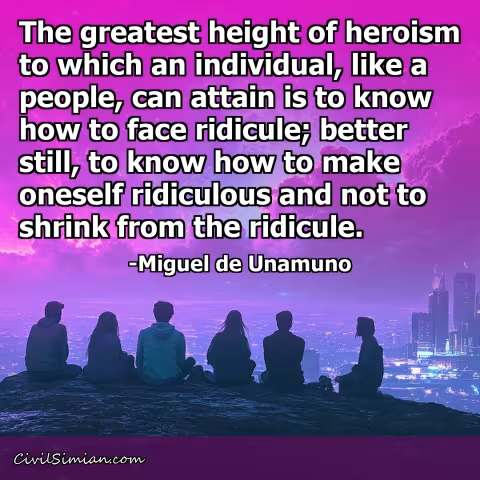
I do not understand these men who tell me that the prospect of the yonder side of death has never tormented them, that the thought of their own annihilation never disquiets them. For my part I do not wish to make peace between my heart and my head, between my faith and my reason - I wish rather that there should be war between them.
CivilSimian.com created by AxiomaticPanic, CivilSimian, Kalokagathia