

1 month 3 weeks ago
There are some simple maxims [...] which I think might be commanded to writers of expository prose. First: never use a long word if a short word will do. Second: if you want to make a statement with a great many qualifications, put some of the qualifications in separate sentences. Third: do not let the beginning of your sentence lead the reader to an expectation which is contradicted by the end.
▼
Source
source
"How I Write", The Writer, September 1954
1 month 3 weeks ago
The fundamental cause of the trouble is that in the modern world the stupid are cocksure while the intelligent are full of doubt.

2 months 2 weeks ago
A young man should serve his parents at home and be respectful to elders outside his home. He should be earnest and truthful, loving all, but become intimate with humaneness. After doing this, if he has energy to spare, he can study literature and the arts.

1 month ago
Two things in America are astonishing: the changeableness of most human behavior and the strange stability of certain principles. Men are constantly on the move, but the spirit of humanity seems almost unmoved.
▼
Source
source
Book Three, Chapter XXI.
2 weeks 4 days ago
To feel most beautifully alive means to be reading something beautiful, ready always to apprehend in the flow of language the sudden flash of poetry.
▼
Source
source
A Retrospective Glance at the Lifework of a Master of Books
3 weeks 5 days ago
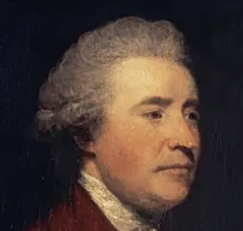
It is not calling the landed estates, possessed by old prescriptive rights, the 'accumulations of ignorance and superstition', that can support me in shaking that grand title, which supersedes all other title, and which all my studies of general jurisprudence have taught me to consider as one principal cause of the formation of states; I mean the ascertaining and securing prescription. But these are donations made in 'ages of ignorance and superstition'. Be it so. It proves that these donations were made long ago; and this is prescription; and this gives right and title.
▼
Source
source
Letter to Captain Thomas Mercer (26 February 1790), quoted in Alfred Cobban and Robert A. Smith (eds.), The Correspondence of Edmund Burke, Volume VI: July 1789-December 1791 (1967), p. 95
1 month 1 week ago
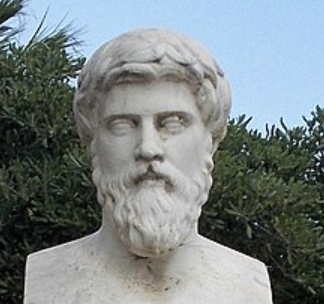
Cato the elder wondered how that city was preserved wherein a fish was sold for more than an ox.
▼
Source
source
Cato the Elder
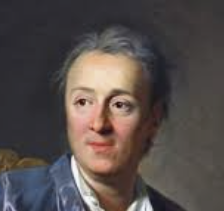
1 month ago
The most dangerous madmen are those created by religion, and ... people whose aim is to disrupt society always know how to make good use of them on occasion.
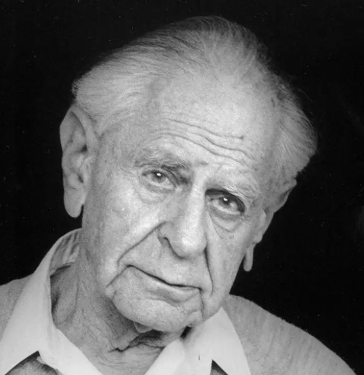
1 month 3 weeks ago
There is an almost universal tendency, perhaps an inborn tendency, to suspect the good faith of a man who holds opinions that differ from our own opinions. ... It obviously endangers the freedom and the objectivity of our discussion if we attack a person instead of attacking an opinion or, more precisely, a theory.
▼
Source
source
"The Importance of Critical Discussion" in On the Barricades: Religion and Free Inquiry in Conflict (1989) by Robert Basil
2 months 1 week ago
A few rules include all that is necessary for the perfection of the definitions, the axioms, and the demonstrations, and consequently of the entire method of the geometrical proofs of the art of persuading.
2 weeks 2 days ago
The would-be climber must be able to make himself liked ... please his superiors - avoid showing independence except in those matters wherein independence is expected of him by his chiefs... the winners in the race have qualities which disincline them to allow others to be their true selves. Hence the winners snub all those who aim at adequate self-expression, speaking of them as pretentious, eccentric, biased, unpractical, and measuring their achievements by insincere standards.
4 days ago
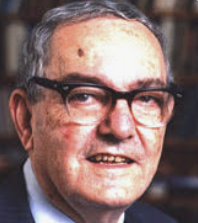
First, most producers are employees of firms, not owners. Viewed from the vantage point of classical economic theory, they have no reason to maximize the profits of firms, except to the extent that they can be controlled by owners. Moreover, profit-making firms, nonprofit organizations, and bureaucratic organizations all have exactly the same problem of inducing their employees to work toward organizational goals. There is no reason, a priori, why it should be easier (or harder) to produce this motivation in organizations aimed at maximizing profits than in organizations with different goals. If it is true in an organizational economy that organizations motivated by profits will be more efficient than other organizations, additional postulates will have to be introduced to account for it.
▼
Source
source
Simon (1991) "Organizations and Markets:" in: Journal of Economic Perspectives. 5 (2 Spring 1991): p. 28.

1 month 3 weeks ago
Tell them I've had a wonderful life.
▼
Source
source
Last words, to his doctor's wife (28 April 1951)-as quoted in Ludwig Wittgenstein : A Memoir (1966) by Norman Malcolm, p. 100
1 week 4 days ago
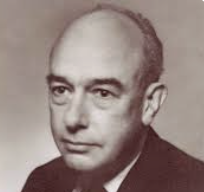
How are we to adjudicate among rival ontologies? Certainly the answer is not provided by the semantical formula "To be is to be the value of a variable"; this formula serves rather, conversely, in testing the conformity of a given remark or doctrine to a prior ontological standard.
▼
Source
source
"On What There Is"
1 month 3 weeks ago
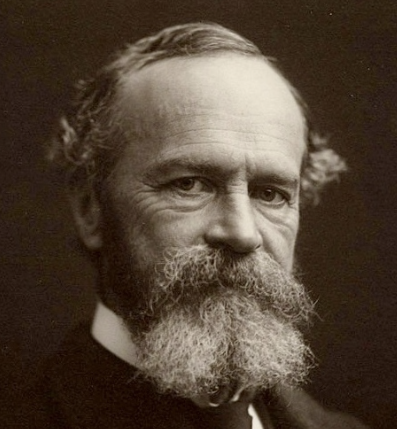
There is no more miserable human being than one in whom nothing is habitual but indecision.
▼
Source
source
Ch. 4

1 week 1 day ago
And this in turn makes it plain that the Right Man problem is a problem of highly dominant people. Dominance is a subject of enormous importance to biologists and zoologists because the percentage of dominant animals - or human beings - seems to be amazingly constant. Bernard Shaw once asked the explorer H. M. Stanley how many other men could take over leadership of the expedition if Stanley himself fell ill; Stanley replied promptly: "One in twenty." "Is that exact or approximate?" asked Shaw. "Exact." And biological studies have confirmed this as a fact. For some odd reason, precisely five per cent - one in twenty - of any animal group are dominant - have leadership qualities. During the Korean War, the Chinese made the interesting discovery that if they separated out the dominant five per cent of American prisoners of war, and kept them in separate compound, the remaining ninety-five per cent made no attempt to escape.
▼
Source
source
p. 216
1 month 3 weeks ago
Men fear thought as they fear nothing else on earth - more than ruin, more even than death. Thought is subversive and revolutionary, destructive and terrible; thought is merciless to privilege, established institutions, and comfortable habits; thought is anarchic and lawless, indifferent to authority, careless of the well-tried wisdom of the ages. Thought looks into the pit of hell and is not afraid. It sees man, a feeble speck, surrounded by unfathomable depths of silence; yet it bears itself proudly, as unmoved as if it were lord of the universe. Thought is great and swift and free, the light of the world, and the chief glory of man.
▼
Source
source
pp. 178-179

1 month 3 weeks ago
In different hours, a man represents each of several of his ancestors, as if there were seven or eight of us rolled up in each man's skin, - seven or eight ancestors at least, - and they constitute the variety of notes for that new piece of music which his life is.
▼
Source
source
Fate

1 week 1 day ago
When we subordinate rest to work, we ignore the divine.
3 weeks 1 day ago
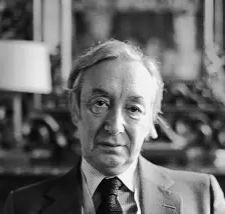
The principles of logic and mathematics are true simply because we never allow them to be anything else. And the reason for this is that we cannot abandon them without contradicting ourselves, without sinning against the rules which govern the use of language, and so making our utterances self-stultifying. In other words, the truths of logic and mathematics are analytic propositions or tautologies.
▼
Source
source
p. 77.
1 week ago
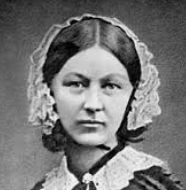
The great reformers of the world turn into the great misanthropists, if circumstances or organisation do not permit them to act. Christ, if He had been a woman, might have been nothing but a great complainer. Peace be with the misanthropists! They have made a step in progress; the next will make them great philanthropists; they are divided but by a line. The next Christ will perhaps be a female Christ. But do we see one woman who looks like a female Christ? or even like "the messenger before" her "face", to go before her and prepare the hearts and minds for her? To this will be answered that half the inmates of Bedlam begin in this way, by fancying that they are "the Christ." People talk about imitating Christ, and imitate Him in the little trifling formal things, such as washing the feet, saying His prayer, and so on; but if anyone attempts the real imitation of Him, there are no bounds to the outcry with which the presumption of that person is condemned.
1 month 3 weeks ago
All sources of energy upon which industry depends are wasted when they are employed; and industry is expending them at a continually increasing rate. Already coal has been largely replaced by oil, and oil is being used up so fast that East and West alike conceive it necessary to their own prosperity to destroy the industry of the other. And what is true of oil is equally true of other natural resources. Every day, many square miles of forest are turned into newspaper, but there is no known process by which newspaper can be turned into forest. You will say that this need not worry us, since newspapers will be replaced by radio, but radio requires electricity, electricity requires power, and power depends upon raw materials.
▼
Source
source
Part I: Man and Nature, Ch. 4: The Limits of Human Power, p. 30
1 month 3 weeks ago
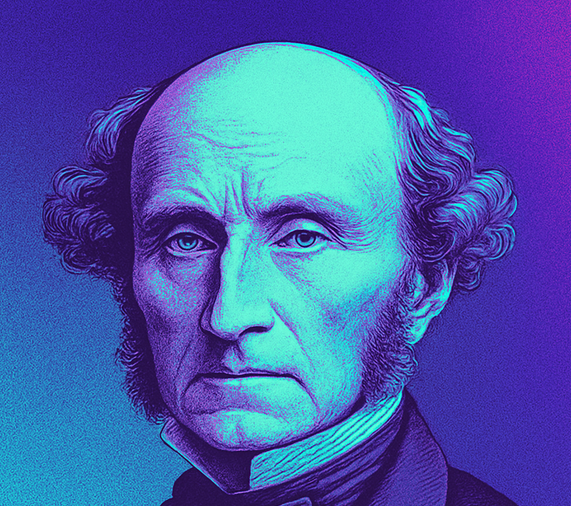
All honour to those who can abnegate for themselves the personal enjoyment of life, when by such renunciation they contribute worthily to increase the amount of happiness in the world; but he who does it, or professes to do it, for any other purpose, is no more deserving of admiration than the ascetic mounted on his pillar. He may be an inspiriting proof of what men can do, but assuredly not an example of what they should.
▼
Source
source
Ch. 2
1 month 3 weeks ago
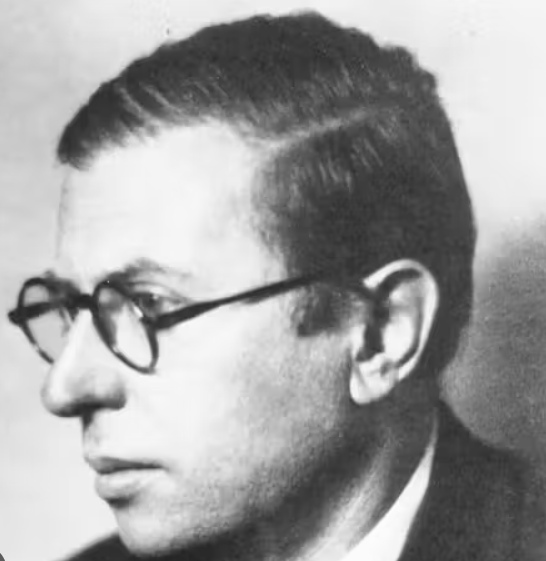
But your crime will be there, one hundred times denied, always there, dragging itself behind you. Then you will finally know that you have committed your life with one throw of the die, once and for all, and there is nothing you can do but tug our crime along until your death. Such is the law, just and unjust, of repentance. Then we will see what will become of your young pride.
▼
Source
source
Clytemnestra to her daughter Electra, Act 1
1 month 3 weeks ago
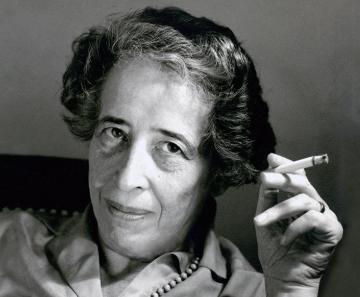
Kant [...] stated that he had "found it necessary to deny knowledge [...] to make room for faith," but all he had "denied" was knowledge of things that are unknowable, and he had not made room for faith but for thought.
▼
Source
source
p. 63

2 months 3 weeks ago
That which distinguishes the Christian narrow way from the common human narrow way is the voluntary. Christ was not someone who coveted earthly things but had to be satisfied with poverty, no, he chose poverty.
2 months 2 weeks ago
A scholar who loves comfort is not worthy of the name.
2 months 3 days ago
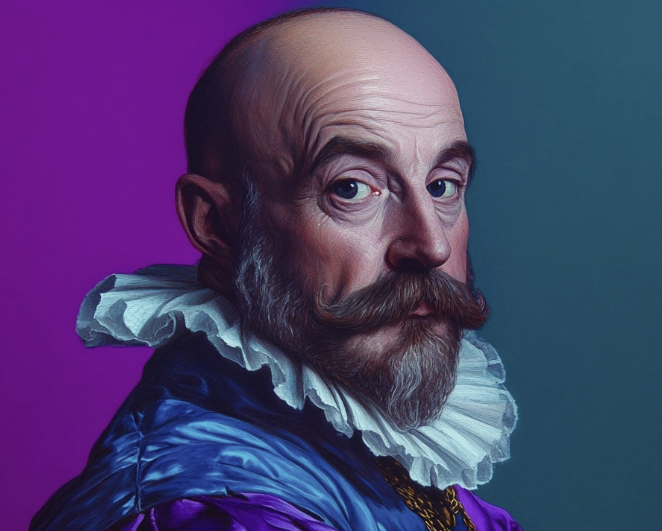
We can be knowledgeable with other men's knowledge, but we cannot be wise with other men's wisdom.
▼
Source
source
Book I, Ch. 25

1 month 2 weeks ago
The disappearance of public executions marks therefore the decline of the spectacle; but it also marks a slackening of the hold on the body.
▼
Source
source
Chapter One, The Spectacle of the Scaffold
3 weeks 5 days ago
[France is] a Country where the people, along with their political servitude, have thrown off the Yoke of Laws and morals.
▼
Source
source
Letter to William Windham (27 September 1789), quoted in Alfred Cobban and Robert A. Smith (eds.), The Correspondence of Edmund Burke, Volume VI: July 1789-December 1791 (1967), p. 25
1 month 3 weeks ago
Hitch your wagon to a star.
▼
Source
source
Civilization
1 week ago
The kind of relatedness to the world may be noble or trivial, but even being related to the basest kind of pattern is immensely preferable to being alone.
▼
Source
source
Ch. 1
3 weeks 5 days ago
You have the representatives of that [Christian] religion which says that their God is love, that the very vital spirit of their institution is charity,-a religion which so much hates oppression, that, when the God whom we adore appeared in human form, He did not appear in a form of greatness and majesty, but in sympathy with the lowest of the people, and thereby made it a firm and ruling principle that their welfare was the object of all government, since the Person who was the Master of Nature chose to appear Himself in a subordinate situation. These are the considerations which influence them, which animate them, and will animate them, against all oppression,-knowing that He who is called first among them, and first among us all, both of the flock that is fed and of those who feed it, made Himself "the servant of all."
▼
Source
source
Speech in opening the impeachment of Warren Hastings (19 February 1788), quoted in The Works of the Right Honourable Edmund Burke, Volume the Tenth (1899), p. 144

1 month 2 days ago
Your god is too small.
▼
Source
source
Attributed to Bruno in episode 1 of Cosmos: A Spacetime Odyssey (2014). Earliest use of this phrase appears to be in Your God is Too Small (1961) by English priest John Bertram Phillips.
1 week 4 days ago
Encratic language (the language produced and spread under the protection of power) is statutorily a language of repetition; all official institutions of language are repeating machines: schools, sports, advertising, popular songs, news, all continually repeat the same structure, the same meaning, often the same words.
▼
Source
source
The Pleasure of the Text
1 month 2 days ago
If all things are in common among friends, the most precious is Wisdom. What can Juno give which thou canst not receive from Wisdom? What mayest thou admire in Venus which thou mayest not also contemplate in Wisdom? Her beauty is not small, for the lord of all things taketh delight in her. Her I have loved and diligently sought from my youth up.
▼
Source
source
As quoted in Giordano Bruno : His Life and Thought (1950) by Dorothea Waley Singer
1 month 2 weeks ago
In the history of madness, two events signal this change with singular clarity: in 1657, the founding of the Hôpital Général, and the Great Confinement of the poor; and in 1794, the liberation of the mad in chains at Bicêtre. Between these two singular and symmetrical events, something happened, whose ambiguity has perplexed historians of medicine: blind repression in an absolutist regime, according to some, and, according to others, the progressive discovery, by science and philanthropy, of madness in its positive truth. In fact, beneath these reversible meanings, a structure was taking shape, which did not undo that ambiguity but was decisive for it. This structure explains the passage from the medieval and humanist experience of madness to the experience that is our own, which confines madness in mental illness.
▼
Source
source
Preface to 1961 edition

1 month 1 week ago
If thy fellows hurt thee in small things, suffer it! and be as bold with them!
3 weeks 1 day ago
The growth of the mind is the widening of the range of consciousness, and ... each step forward has been a most painful and laborious achievement.
▼
Source
source
p. 340
1 week 5 days ago
The only way to give finality to the world is to give it consciousness. For where there is no consciousness there is no finality, finality presupposing a purpose. And... faith in God is based simply upon the vital need of giving finality to existence, of making it answer to a purpose. We need God, not in order to understand the why, but in order to feel and sustain the ultimate wherefore, to give a meaning to the Universe.
1 month 3 weeks ago
Money is not required to buy one necessity of the soul.
▼
Source
source
p. 370

2 months 3 days ago
I say that man without the grace of God nonetheless remains the general omnipotence of God who effects, and moves and impels all things in a necessary, infallible course; but the effect of man's being carried along is nothing--that is, avails nothing in God's sight, nor is reckoned to be anything but sin.
▼
Source
source
p. 265

1 month 3 weeks ago
I die adoring God, loving my friends, not hating my enemies, and detesting superstition.
▼
Source
source
Déclaration de Voltaire, note to his secretary, Jean-Louis Wagnière, 28 February 1778


1 month 1 day ago
Who will not commend the wit of astrology? Venus, born out of the sea, hath her exaltation in Pisces.
▼
Source
source
Commonplace notebooks, Part I
1 month 3 weeks ago
Undoubtedly we have no questions to ask which are unanswerable. We must trust the perfection of the creation so far, as to believe that whatever curiosity the order of things has awakened in our minds, the order of things can satisfy. Every man's condition is a solution in hieroglyphic to those inquiries he would put. He acts it as life, before he apprehends it as truth.
▼
Source
source
Introduction
2 weeks 2 days ago
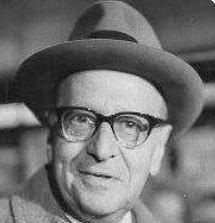
The disparagement of empirical evidence in favor of a metaphysical world of illusion has its origin in the conflict between the emancipated individual of bourgeois society and his fate within that society.
▼
Source
source
p. 138.
3 weeks 2 days ago
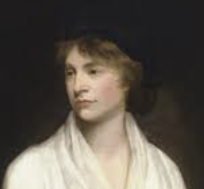
Independence I have long considered as the grand blessing of life, the basis of every virtue; and independence I will ever secure by contracting my wants, though I were to live on a barren heath.
▼
Source
source
Dedication
1 month 3 weeks ago
The concrete man has but one interest - to be right. That to him is the art of all arts, and all means are fair which help him to it.
CivilSimian.com created by AxiomaticPanic, CivilSimian, Kalokagathia