


1 month 2 weeks ago
Nihilism is not overcome by arguments or analyses; it is tamed by love and care. Any disease of the soul must be conquered by a turning of one's soul.
▼
Source
source
(p19)
3 weeks ago
The poor, by thinking unceasingly of money, reach the point of losing the spiritual advantages of non-possession, thereby sinking as low as the rich.
3 weeks ago
In every man sleeps a prophet, and when he wakes there is a little more evil in the world.
3 weeks ago
The assumption that the human psyche possesses layers that lie below consciousness is not likely to arouse serious opposition. But... there could just as well be layers lying above consciousness... The conscious mind can only claim a relatively central position and must put up with the fact that the unconscious psyche transcends and as it were surrounds it on all sides. Unconscious contents connect it backward with the physiological states on the one hand and archetypal data on the other. But it is extended forward by intuitions which are conditioned partly by archetypes and partly by subliminal perceptions depending on the relativity of time and space in the unconscious.
▼
Source
source
p. 132
1 month 2 weeks ago
Indulge in no wrathfulness, for a man when he indulges in wrath becomes then forgetful of his duty and good works . . . and sin and crime of every kind occur unto his mind, and until the subsiding of the wrath he is said to be just like Ahareman.
2 months 3 weeks ago
Of course, I had to own that he was right; I didn't feel much regret for what I'd done. Still, to my mind, he overdid it, and I'd have liked to have a chance of explaining to him, in a quite friendly, almost affectionate way, that I have never been able to really regret anything in all my life. I've always been far too much absorbed in the present moment, or the immediate future, to think back.
1 month 3 weeks ago
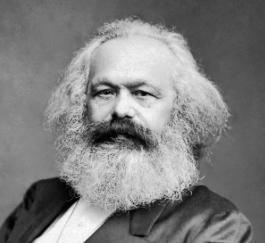
As for the commercial business, I can no longer make head or tail of it. At one moment crisis seems imminent and the City prostrated, the next everything is set fair. I know that none of this will have any impact on the catastrophe.
▼
Source
source
Letter to Friedrich Engels (4 February 1852), quoted in The Collected Works of Karl Marx and Friedrich Engels: Volume 39. Letters 1852-55 (2010), p. 32
2 weeks 3 days ago
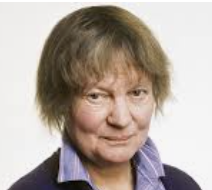
The cry of equality pulls everyone down.
▼
Source
source
Quoted in The Observer September 13, 1987.
1 week 5 days ago
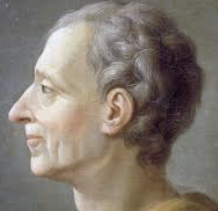
You have to study a great deal to know a little.
▼
Source
source
I
3 weeks 4 days ago
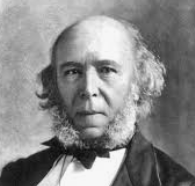
Ethical ideas and sentiments have to be considered as parts of the phenomena of life at large. We have to deal with man as a product of evolution, with society as a product of evolution, and with moral phenomena as products of evolution.
▼
Source
source
Ch. 1, Introductory
1 month 3 weeks ago
Freedom is only necessity understood.
▼
Source
source
The Dilemma of Determinism, 1884
1 month 1 week ago
For it is the same thing that can be thought and that can be.
▼
Source
source
Frag. B 3, quoted by Plotinus, Enneads V, i.8
1 month 4 weeks ago
If nature has been frugal in her gifts and endowments, there is the more need of art to supply her defects. If she has been generous and liberal, know that she still expects industry and application on our part, and revenges herself in proportion to our negligent ingratitude. The richest genius, like the most fertile soil, when uncultivated, shoots up into the rankest weeds; and instead of vines and olives for the pleasure and use of man, produces, to its slothful owner, the most abundant crop of poisons.
▼
Source
source
Part I, Essay 16: The Stoic
2 months 1 week ago
Do you suppose that you can do the things you do now, and yet be a philosopher? Do you suppose that you can eat in the same fashion, drink in the same fashion, give way to anger and to irritation, just as you do now?
▼
Source
source
Book III, ch. 15, 10 (= Enchiridion 29, 10).

1 month 3 weeks ago
"And yet, it was not, not now, she that really counted. Or if she counted (and, oh, gloriously she did) it was for another's sake. The earth and stars and sun, all that was or will be, existed for his sake. And he was coming. The most dreadful, the most beautiful, the only dread and beauty there is, was coming. The pillars on the far side of the pool flushed with his approach. I cast down my eyes."
▼
Source
source
Orual
1 week 4 days ago
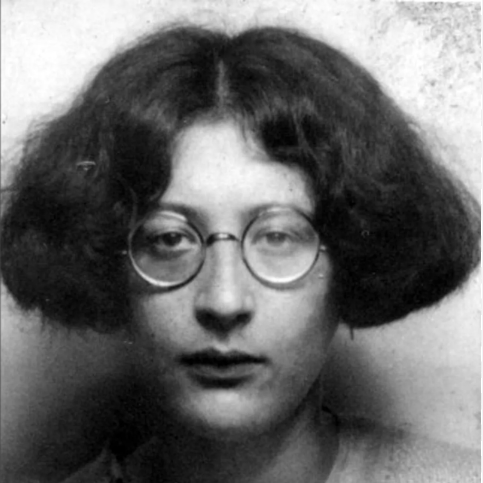
That is why St. John of the Cross calls faith a night. With those who have received a Christian education, the lower parts of the soul become attached to these mysteries when they have no right at all to do so. That is why such people need a purification of which St. John of the Cross describes the stages. Atheism and incredulity constitute an equivalent of such a purification.
▼
Source
source
Faiths of Meditation; Contemplation of the divine" as translated in The Simone Weil Reader (1957) edited by George A. Panichas, p. 418
2 months 1 week ago
Men are disturbed, not by things, but by the principles and notions which they form concerning things.
▼
Source
source
(5). (Enchiridion 5)

2 weeks 3 days ago
The total victimization of the individual that takes place is encouraged for the specific benefit of the industrial and political bureaucracy. It therefore cannot be justified on the ground of the individual's true interest. National Socialist ideology simply states that true human existence consists in unconditional sacrifice, that it is of the essence of the individual's life to abbey and to serve-'service which never comes to an end because service and life coincide.'
▼
Source
source
P. 416
3 weeks 5 days ago
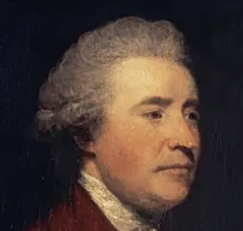
Religious persecution may shield itself under the guise of a mistaken and over-zealous piety.
▼
Source
source
Speech in opening the impeachment of Warren Hastings (18 February 1788), quoted in The Works of the Right Honourable Edmund Burke, Volume the Tenth (1899), pp. 7-8
4 weeks 1 day ago
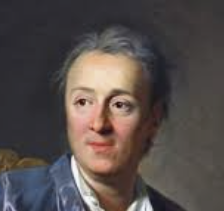
Do you see this egg? With this you can topple every theological theory, every church or temple in the world. What is it, this egg, before the seed is introduced into it? An insentient mass. And after the seed has been introduced to into it? What is it then? An insentient mass. For what is the seed itself other than a crude and inanimate fluid? How is this mass to make a transition to a different structure, to sentience, to life? Through heat. And what will produce that heat in it? Motion. "Conversation Between D'Alembert and Diderot", as quoted in Selected Writings (1966) edited by Lester G. Crocker, and The Enlightenment and the Intellectual Foundations of Modern Culture (2004) by Louis K Dupré, p. 30 Variant translation: See this egg. It is with this that all the schools of theology and all the temples of the earth are to be overturned.
▼
Source
source
As quoted in Diderot, Reason and Resonance (1982) by Élisabeth de Fontenay, p. 217
1 month 3 weeks ago
The reservedness and distance that fathers keep, often deprive their sons of that refuge which would be of more advantage to them than an hundred rebukes or chidings.
▼
Source
source
Sec. 96
3 weeks 4 days ago
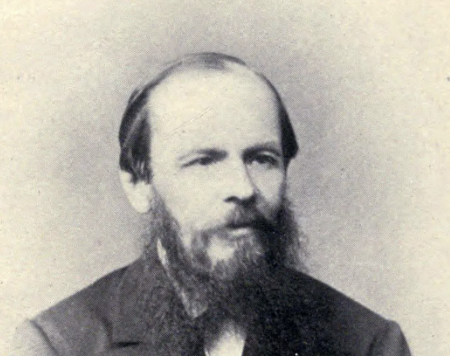
Nothing in the world is harder than speaking the truth and nothing easier than flattery. If there's the hundredth part of a false note in speaking the truth, it leads to a discord, and that leads to trouble. But if all, to the last note, is false in flattery, it is just as agreeable, and is heard not without satisfaction. It may be a coarse satisfaction, but still a satisfaction. And however coarse the flattery, at least half will be sure to seem true. That's so for all stages of development and classes of society.

2 months 4 weeks ago
Where there is happiness, there is found pleasure in nonsense. The transformation of experience into its opposite, of the suitable into the unsuitable, the obligatory into the optional (but in such a manner that this process produces no injury and is only imagined in jest), is a pleasure; ...
1 week 4 days ago
There is nothing that comes closer to true humility than the intelligence. It is impossible to feel pride in one's intelligence at the moment when one really and truly exercises it.
▼
Source
source
As quoted in the Introduction (by Siân Miles) p. 35
1 month 3 weeks ago
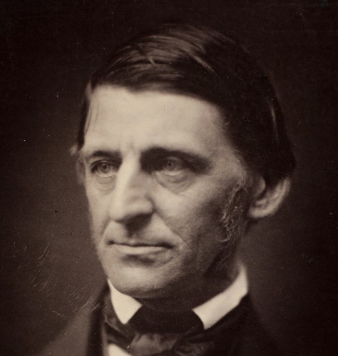
To different minds, the same world is a hell, and a heaven.
▼
Source
source
December 20, 1822
1 month 3 weeks ago
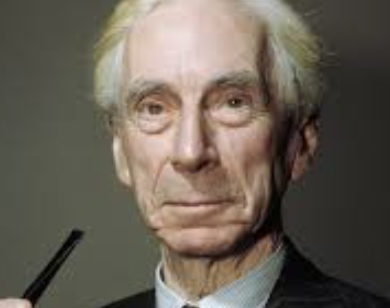
It seems to me that science has a much greater likelihood of being true in the main than any philosophy hitherto advanced (I do not, of course, except my own). In science there are many matters about which people are agreed; in philosophy there are none. Therefore, although each proposition in a science may be false, and it is practically certain that there are some that are false, yet we shall be wise to build our philosophy upon science, because the risk of error in philosophy is pretty sure to be greater than in science. If we could hope for certainty in philosophy, the matter would be otherwise, but so far as I can see such a hope would be chimerical.
▼
Source
source
Logical Atomism, 1924
3 weeks ago
Once we reject lyricism, to blacken a page becomes an ordeal: what's the use of writing in order to say exactly what we had to say?
1 month 3 weeks ago
Next to the originator of a good sentence is the first quoter of it.
▼
Source
source
Quotation and Originality
2 weeks 3 days ago
My atheism, like that of Spinoza, is true piety towards the universe and denies only gods fashioned by men in their own image, to be servants of their human interests.
▼
Source
source
"On My Friendly Critics"
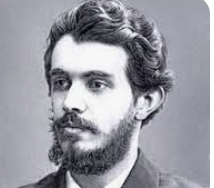
1 week 4 days ago
We used to pay too little attention to utopias, or even disregard them altogether, saying with regret they were impossible of realisation. Now indeed they seem to be able to be brought about far more easily than we supposed, and we are actually faced by an agonising problem of quite another kind: how can we prevent their final realisation? ... Utopias are more realisable than those 'realist politics' that are only the carefully calculated policies of office-holders, and towards utopias we are moving. But it is possible that a new age is already beginning, in which cultured and intelligent people will dream of ways to avoid ideal states and to get back to a society that is less 'perfect' and more free.
▼
Source
source
pp. 187-188. Aldous Huxley used this passage (in French translation) as the epigraph to Brave New World.
3 weeks ago
"Meeting, after several years, someone we used to know as a child, the first glance almost always suggests that some great disaster must have befallen him" Leopardi, quoted by cioran.
1 month 3 weeks ago
It seems that sin is geographical. From this conclusion, it is only a small step to the further conclusion that the notion of "sin" is illusory, and that the cruelty habitually practised in punishing it is unnecessary.
▼
Source
source
A Fresh Look at Empiricism: 1927-42 (1996), p. 283
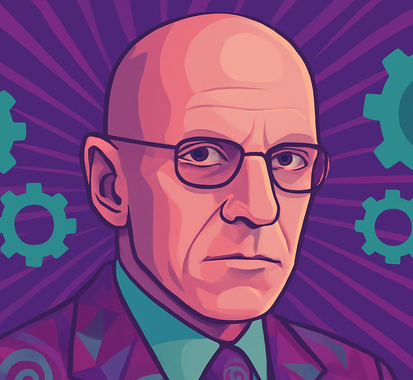
1 month 2 weeks ago
If torture was so strongly embedded in legal practice, it was because it revealed truth and showed the operation of power. It assured the articulation of the written on the oral, the secret on the public, the procedure of investigation on the operation of the confession; it made it possible to reproduce the crime on the visible body of the criminal.
▼
Source
source
Chapter One, pp.55
3 weeks ago
Life is not, and death is a dream. Suffering has invented them both as self-justification. Man alone is torn between an unreality and an illusion.
3 weeks 4 days ago
They showed me their trees, and I could not understand the intense love with which they looked at them; it was as though they were talking with creatures like themselves. And perhaps I shall not be mistaken if I say that they conversed with them. Yes, they had found their language, and I am convinced that the trees understood them. They looked at all Nature like that - at the animals who lived in peace with them and did not attack them, but loved them, conquered by their love. They pointed to the stars and told me something about them which I could not understand, but I am convinced that they were somehow in touch with the stars, not only in thought, but by some living channel.
1 month 3 weeks ago
At the present stage in the development of the art of war, there is only way of coping with them, and that is to keep out of war. In all the densely populated countries of Western Europe, it seems almost certain that, within a few days of the outbreak of war, panic will seize the surviving inhabitants of the capitals and the industrial areas, leading to anarchy, starvation, and paralysis of all warlike effort. The only sensible course, therefore, is to prevent war if possible, and to remain neutral if war occurs.
▼
Source
source
Letter to The New Statesman and Nation (10 August 1935)
2 weeks 3 days ago
For thought and speech are of a thinking and speaking subject, and if the life of the latter depends on the performance of a superimposed function, it depends on fulfilling the requirements of this function - thus it depends on those who control these requirements.
▼
Source
source
p. 128
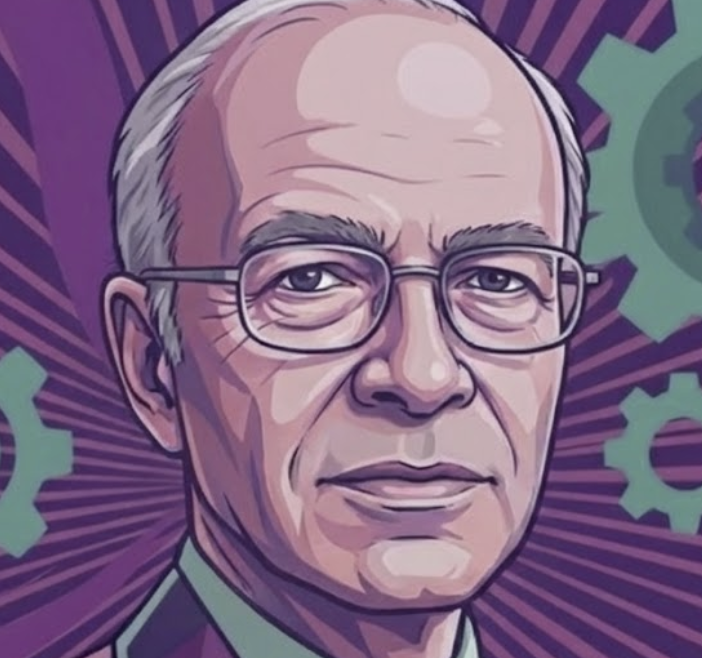
1 month 2 weeks ago
The goal of maximizing the welfare of all may be better achieved by an ethic that accepts our inclinations and harnesses them so that, taken as a whole, the system works to everyone's advantage.
▼
Source
source
Chapter 6, A New Understanding Of Ethics, p. 157
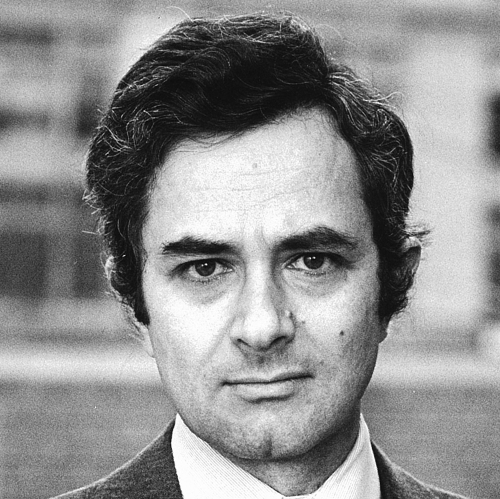
1 month 2 weeks ago
If we tried to rely entirely on reason, and pressed it hard, our lives and beliefs would collapse - a form of madness that may actually occur if the inertial force of taking the world and life for granted is somehow lost. If we lose our grip on that, reason will not give it back to us.
▼
Source
source
"The Absurd" (1971), p. 20.
1 week 4 days ago
Maurras, with perfect logic, is an atheist. The Cardinal [Richelieu], in postulating something whose whole reality is confined to this world as an absolute value, committed the sin of idolatry. ... The real sin of idolatry is always committed on behalf of something similar to the State.
▼
Source
source
p. 199

1 month ago
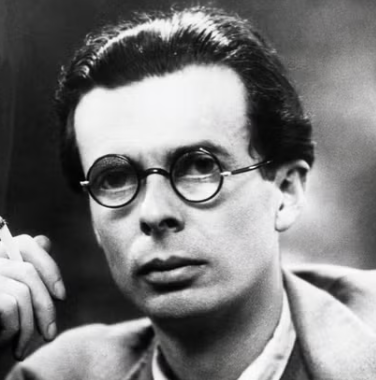
I look upon you as a gem of the old rock. Dedication
1 month 3 weeks ago
It is only by poets that the life of any epoch can be synthesized. Encyclopaedias and guides to knowledge cannot do it, for the good reason that they affect only the intellectual surface of a man's life. The lower layers, the core of his being, they leave untouched.
▼
Source
source
p. 4
1 month 3 weeks ago
Both in thought and in feeling, even though time be real, to realise the unimportance of time is the gate of wisdom.
▼
Source
source
p. 167
1 week 4 days ago
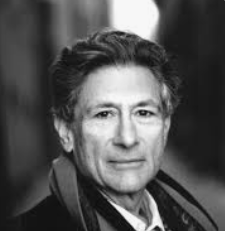
It appears that liberty is bound up with imperfection, with a right to imperfection. Socialism leads to the same type of authoritarian state as Theocracy. ... One must choose: either Socialism or liberty of spirit, the liberty of man's conscience. ... Socialism uses a "sacred" authority and establishes a "sacred" society in which there is no place for the "lay," for the free, for choice, for the unrestrained activity of human forces.
▼
Source
source
pp. 188-189
1 week 1 day ago
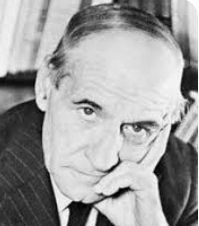
Every single empire in its official discourse has said that it is not like all the others, that its circumstances are special, that it has a mission to enlighten, civilize, bring order and democracy, and that it uses force only as a last resort. And, sadder still, there always is a chorus of willing intellectuals to say calming words about benign or altruistic empires, as if one shouldn't trust the evidence of one's eyes watching the destruction and the misery and death brought by the latest mission civilizatrice.
▼
Source
source
"Preface (2003)"
2 weeks 2 days ago
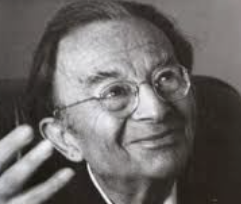
Hatred is a feeling which leads to the extinction of values.
▼
Source
source
Cited in the Oxford Dictionary of Quotations by Subject, ed. Susan Ratcliffe (2010), p. 223
1 week ago
Envy, jealousy, ambition, any kind of greed are passions; love is an action, the practice of human power, which can be practiced only in freedom and never as a result of compulsion. Love is an activity, not a passive affect; it is a "standing in," not a "falling for." In the most general way, the active character of love can be described by stating that love is primarily giving, not receiving.
1 month 3 weeks ago
We cannot overstate our debt to the Past, but the moment has the supreme claim. The Past is for us; but the sole terms on which it can become ours are its subordination to the Present. Only an inventor knows how to borrow, and every man is or should be an inventor. We must not tamper with the organic motion of the soul.
▼
Source
source
Quotation and Originality
1 month 3 weeks ago
The bourgeoisie has stripped of its halo every occupation hitherto honoured and looked up to with reverent awe. It has converted the physician, the lawyer, the priest, the poet, the man of science, into its paid wage labourers.
▼
Source
source
Section 1, paragraph 14.
1 month 3 weeks ago
When I was 4 years old ... I dreamt that I'd been eaten by a wolf, and to my great surprise I was in the wolf's stomach and not in heaven.
▼
Source
source
BBC interview on "Face to Face" (1959); The Listener, Vol. 61 (1959), p. 503
CivilSimian.com created by AxiomaticPanic, CivilSimian, Kalokagathia