

2 weeks 3 days ago
If, as I believe, the ends of men are many, and not all of them are in principle compatible with each other, then the possibility of conflict - and of tragedy - can never wholly be eliminated from human life, either personal or social. The necessity of choosing between absolute claims is then an inescapable characteristic of the human condition. This gives its value to freedom as Acton conceived of it - as an end in itself, and not as a temporary need, arising out of our confused notions and irrational and disordered lives, a predicament which a panacea could one day put right.
1 week 4 days ago
It appears that liberty is bound up with imperfection, with a right to imperfection. Socialism leads to the same type of authoritarian state as Theocracy. ... One must choose: either Socialism or liberty of spirit, the liberty of man's conscience. ... Socialism uses a "sacred" authority and establishes a "sacred" society in which there is no place for the "lay," for the free, for choice, for the unrestrained activity of human forces.
▼
Source
source
pp. 188-189
3 weeks ago
Your vision will become clear only when you can look into your own heart. Without, everything seems discordant; only within does it coalesce into unity. Who looks outside dreams; who looks inside awakes.
▼
Source
source
Letter to Fanny Bowditch, 22 October 1916

2 weeks 4 days ago
Non-operational ideas are non-behavioral and subversive. The movement of thought is stopped at barriers which appear as the limits of Reason itself.
▼
Source
source
p. 14
3 weeks ago
The traditional disputes of philosophers are, for the most part, as unwarranted as they are unfruitful. The surest way to end them is to establish beyond question what should be the purpose and method of a philosophical enquiry. And this is by no means so difficult a task as the history of philosophy would lead one to suppose. For if there are any questions which science leaves it to philosophy to answer, a straightforward process of elimination must lead to their discovery.
▼
Source
source
Ch. 1, first lines.
2 months 3 weeks ago
Evils draw men together.

2 months 1 week ago
The highest manifestation of life consists in this: that a being governs its own actions. A being that is always subject to the direction of another is somewhat of a dead thing. Variant translation: Now slavery has a certain likeness to death, hence it is also called civil death. For life is most evident in a thing's moving itself, while what can only be moved by another, seems to be as if dead. But it is manifest that a slave is not moved by himself, but only at his master's command.
▼
Source
source
Chapter 14
2 weeks 4 days ago
Woe unto you, lawyers! for ye have taken away the key of knowledge: ye entered not in yourselves, and them that were entering in ye hindered. And as he said these things unto them, the scribes and the Pharisees began to urge him vehemently, and to provoke him to speak of many things: Laying wait for him, and seeking to catch something out of his mouth, that they might accuse him.
▼
Source
source
11:52
1 month 2 weeks ago
Let us consider first the view that it is always wrong to take an innocent human life. We may call this the "sanctity of life" view. People who take this view oppose abortion and euthanasia. They do not usually, however, oppose the killing of nonhuman animals-so perhaps it would be more accurate to describe this view as the "sanctity of human life" view. The belief that human life, and only human life, is sacrosanct is a form of speciesism.
▼
Source
source
Ch. 1: All Animals Are Equal
2 months 3 days ago
Reason is the greatest enemy that faith has: it never comes to the aid of spiritual things, but--more frequently than not--struggles against the divine Word, treating with contempt all that emanates from God.
▼
Source
source
353
2 weeks 4 days ago
The philosopher ... subjects experience to his critical judgment, and this contains a value judgment - namely, that freedom from toil is preferable to toil, and an intelligent life is preferable to a stupid life. It so happened that philosophy was born with these values. Scientific thought had to break this union of value judgment and analysis, for it became increasingly clear that the philosophic values did not guide the organisation of society.
▼
Source
source
p. 126
1 month 3 weeks ago
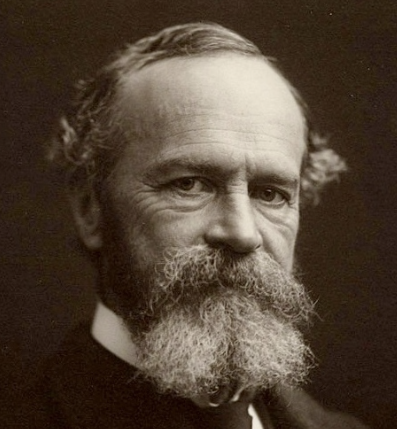
The last peculiarity of consciousness to which attention is to be drawn in this first rough description of its stream is that it is always interested more in one part of its object than in another, and welcomes and rejects, or chooses, all the while it thinks.
▼
Source
source
Ch. 9

2 months 3 weeks ago
Man is a synthesis of psyche and body, but he is also a synthesis of the temporal and the eternal. In the former, the two factors are psyche and body, and spirit is the third, yet in such a way that one can speak of a synthesis only when the spirit is posited. The latter synthesis has only two factors, the temporal and the eternal. Where is the third factor? And if there is no third factor, there really is no synthesis, for a synthesis that is a contradiction cannot be completed as a synthesis without a third factor, because the fact that the synthesis is a contradiction asserts that it is not. What, then, is the temporal?
3 weeks 4 days ago
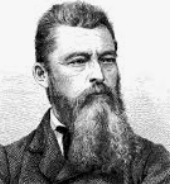
The power of thought is the light of knowledge, the power of will is the energy of character, the power of heart is love. Reason, love and power of will are perfections of man.
▼
Source
source
Introduction, Z. Hanfi, trans., in The Fiery Brook (1972), p. 99
1 month 3 weeks ago
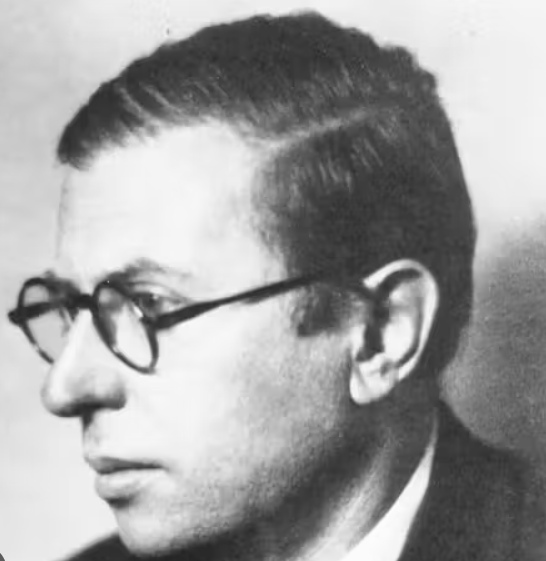
When you live alone you no longer know what it is to tell a story: the plausible disappears at the same time as the friends. You let events flow by too: you suddenly see people appear who speak and then go away; you plunge into stories of which you can't make head or tail: you'd make a terrible witness.
▼
Source
source
Diary entry of Tuesday, 30 January
1 month 3 weeks ago
When the rich make war, it's the poor that die.
2 months 3 weeks ago
If a man knows what it is right to do, he does not require a formal reason. And a person that has been thus trained, either possesses these first principles already, or can easily acquire them.

1 month 3 weeks ago
The best government is a benevolent tyranny tempered by an occasional assassination.
▼
Source
source
Attributed to Voltaire in Likharev, K.K. (2021). On Government and Politics. In: Likharev, K.K. (eds) Essential Quotes for Scientists and Engineers.
1 month 3 weeks ago
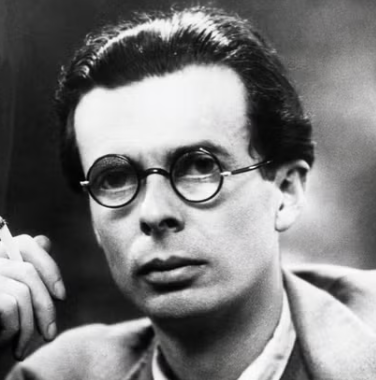
Those who believe that they are exclusively in the right are generally those who achieve something.
▼
Source
source
"Note on Dogma"
1 month 3 weeks ago
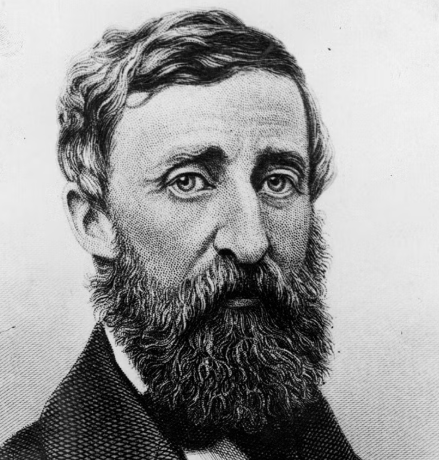
Most of the luxuries, and many of the so-called comforts of life, are not only not indispensable, but positive hindrances to the elevation of mankind.
▼
Source
source
p. 18
1 month 2 weeks ago
If a person tells me he has been to the worst places I have no reason to judge him; but if he tells me it was his superior wisdom that enabled him to go there, then I know he is a fraud.
▼
Source
source
Conversation of 1930
1 month 3 weeks ago
Religion, which should most distinguish us from the beasts, and ought most particularly elevate us, as rational creatures, above brutes, is that wherein men often appear most irrational, and more senseless than beasts.
▼
Source
source
Book IV, Ch. 18
1 week 2 days ago
A clash of doctrines is not a disaster - it is an opportunity.
▼
Source
source
Ch. 12: "Religion and Science", p. 259
3 weeks 2 days ago
Nothing, in fact, is as universal or as ancient as the iniquitous and absurd; truth and justice, on the contrary, are the least universal, the youngest features in the development of human society.
1 month ago
The errors of Communism must be rectified; but there is no necessity for giving up the name, which is a simple assertion of the paramount importance of Social Feeling. However, now that we have happily passed from monarchy to republicanism, the name of Communist is no longer indispensable; the word Republican expresses the meaning as well, and without the same danger. Positivism, then, has nothing to fear from Communism; on the contrary, it will probably be accepted by most Communists among the working classes, especially in France where abstractions have but little influence on minds thoroughly emancipated from theology. The people will gradually find that the solution of the great social problem which Positivism offers is better than the Communistic solution.
▼
Source
source
p. 169
2 weeks 4 days ago
The pint would call the quart a dualist, if you tried to pour the quart into him.
▼
Source
source
p. 60
2 months 3 days ago
The people resemble a wild beast, which, naturally fierce and accustomed to live in the woods, has been brought up, as it were, in a prison and in servitude, and having by accident got its liberty, not being accustomed to search for its food, and not knowing where to conceal itself, easily becomes the prey of the first who seeks to incarcerate it again.
▼
Source
source
Book 1, Ch. 16
1 week 5 days ago
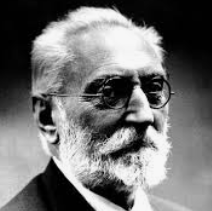
Not only are we unable to conceive of the full and living God as masculine simply, but we are unable to conceive of Him as individual simply, as the projection of a solitary I, an unsocial I, an I that is in reality an abstract I. My living I is an I that is really a We; my living personal I lives only in other, of other, and by other I's; I am sprung from a multitude of ancestors. I carry them within me in extract, and at the same time I carry within me, potentially, a multitude of descendants, and God, the projection of my I to the infinite - or rather I, the projection of God to the finite - must also be a multitude. Hence, in order to save the personality of God - that is to say, in order to save the living God - faith's need - the need of the feeling and the imagination - of conceiving Him and feeling Him as possessed of a certain internal multiplicity.
2 months 4 days ago
It is true that may hold in these things, which is the general root of superstition; namely, that men observe when things hit, and not when they miss; and commit to memory the one, and forget and pass over the other.
▼
Source
source
Sylva Sylvarum Century X, 1627
2 months 3 weeks ago
Man cannot do without beauty, and this is what our era pretends to want to disregard. It steels itself to attain the absolute and authority; it wants to transfigure the world before having exhausted it, to set it to rights before having understood it. Whatever it may say, our era is deserting this world.
1 month 3 weeks ago
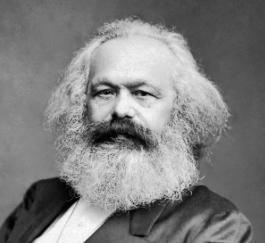
The South has conquered nothing - but a graveyard.

1 month 2 weeks ago
"To stamp becoming with the character of being-that is the supreme will to power." (WM 617) This suggests that becoming only is if it is grounded in being as being: "That everything recurs is the closest approximation of a world of becoming to one of being."
▼
Source
source
p. 19
1 month 4 weeks ago
That the sun will not rise to-morrow is no less intelligible a proposition, and implies no contradiction, than the affirmation, that it will rise.
▼
Source
source
§ 4.8
3 weeks 2 days ago
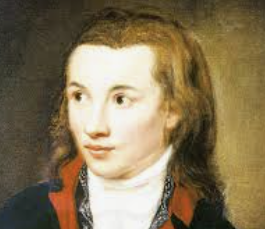
Someone arrived there - who lifted the veil of the goddess, at Sais. - But what did he see? He saw - wonder of wonders - himself. Novalis here alludes to Plutarch's account of the shrine of the goddess Minerva, identified with Isis, at Sais, which he reports had the inscription "I am all that hath been, and is, and shall be; and my veil no mortal has hitherto raised."
3 weeks ago
The need for novelty is the characteristic of an alienated gorilla.

1 month 3 weeks ago
He [God] lends us a little of His reasoning powers and that is how we think: He puts a little of His love into us and that is how we love one another. When you teach a child writing, you hold its hand while it forms the letters: that is, it forms the letters because you are forming them. We love and reason because God loves and reasons and holds our hand while we do it.
▼
Source
source
Book II, Chapter 4, "The Perfect Penitent"
2 weeks 4 days ago
The human race, in its intellectual life, is organized like the bees: the masculine soul is a worker, sexually atrophied, and essentially dedicated to impersonal and universal arts; the feminine is a queen, infinitely fertile, omnipresent in its brooding industry, but passive and abounding in intuitions without method and passions without justice.
3 weeks 5 days ago
The use of force alone is but temporary. It may subdue for a moment; but it does not remove the necessity of subduing again: and a nation is not governed, which is perpetually to be conquered.
2 months 3 days ago
To an atheist all writings tend to atheism: he corrupts the most innocent matter with his own venom.
▼
Source
source
Ch. 12
1 week 2 days ago
The fact of the religious vision, and its history of persistent expansion, is our one ground for optimism. Apart from it, human life is a flash of occasional enjoyments lighting up a mass of pain and misery, a bagatelle of transient experience.
▼
Source
source
Ch. 12: "Religion and Science", p. 268
1 week 1 day ago
I must confess that my estimate of Lovecraft would not have pleased his most ardent admirers. The view I expressed in that book was that, while Lovecraft was distinctly a creative genius in his own way, his pessimism should not be taken too seriously; that it was the pessimism of a sick recluse, and had about it an element of rassentiment, a kind of desire to take revenge on the world that rejected him. In short, Lovecraft was a 19th century romantic, born in the wrong time. Most men of genius dislike their own age, but the really great ones impose their own vision on the age. The weak ones turn away into a world of gloomy fantasy.
▼
Source
source
p. 2

1 month 3 weeks ago
There have been men before ... who got so interested in proving the existence of God that they came to care nothing for God himself... as if the good Lord had nothing to do but to exist. There have been some who were so preoccupied with spreading Christianity that they never gave a thought to Christ.
▼
Source
source
Ch. 9
2 weeks 2 days ago
All journeys have secret destinations of which the traveler is unaware.
▼
Source
source
The Legend of the Baal-Shem (1955),1995 edition, p. 36
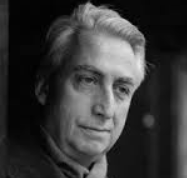
1 week 4 days ago
The politician being interviewed clearly takes a great deal of trouble to imagine an ending to his sentence: and if he stopped short? His entire policy would be jeopardized!
▼
Source
source
Sentence, in The Pleasure of the Text
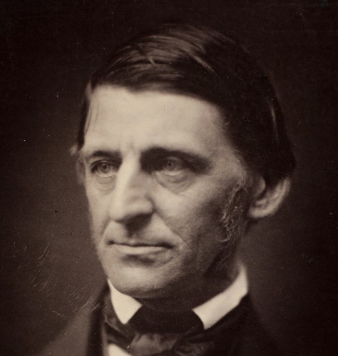
1 month 3 weeks ago
The Religion that is afraid of science dishonours God and commits suicide. It acknowledges that it is not equal to the whole of truth, that it legislates, tyrannizes over a village of God's empires but is not the immutable universal law. Every influx of atheism, of skepticism is thus made useful as a mercury pill assaulting and removing a diseased religion and making way for truth.
▼
Source
source
March 4, 1831
2 months 3 weeks ago
That body is heavier than another which, in an equal bulk, moves downward quicker.
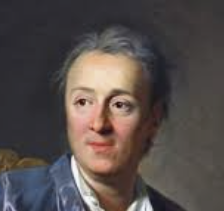
4 weeks 1 day ago
Patriotism is an ephemeral motive that scarcely ever outlasts the particular threat to society that aroused it.
1 week 2 days ago
There is nothing in the real world which is merely an inert fact. Every reality is there for feeling: it promotes feeling; and it is felt.
▼
Source
source
Chapter IV, p. 310.
1 month 4 weeks ago
It is a great mortification to the vanity of man, that his utmost art and industry can never equal the meanest of nature's productions, either for beauty or value. Art is only the under-workman, and is employed to give a few strokes of embellishment to those pieces, which come from the hand of the master.
▼
Source
source
Part I, Essay 15: The Epicurean
CivilSimian.com created by AxiomaticPanic, CivilSimian, Kalokagathia