


2 months 3 weeks ago
The beauty or uncomeliness of many things, in good and ill breeding, will be better learnt, and make deeper impressions on them, in the examples of others, than from any rules or instructions can be given about them.
▼
Source
source
Sec. 82
2 months 3 weeks ago
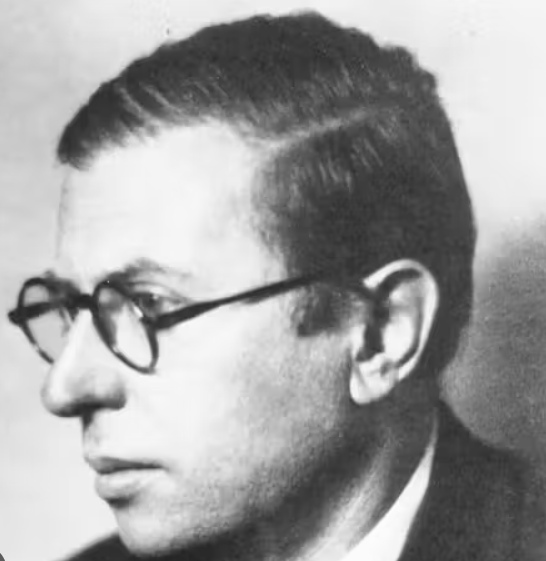
It is the same thing: killing, dying, it is the same thing: one is just as alone in each. He is lucky, he will only die once. As for me, for ten days I have been killing him at every minute. Hugo to Jessica, on his plans to kill.
▼
Source
source
Hoederer, Act 5, sc. 2
2 months 2 weeks ago
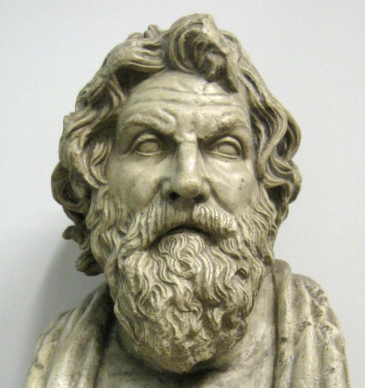
Ill repute is a good thing and much the same as pain.
▼
Source
source
§ 5
3 weeks 6 days ago
It is perhaps not a surprise that photography developed as a technological medium in the industrial age, when reality started to disappear. It is even perhaps the disappearance of reality that triggered this technical form. Reality found a way to mutate into an image.
2 months 3 weeks ago
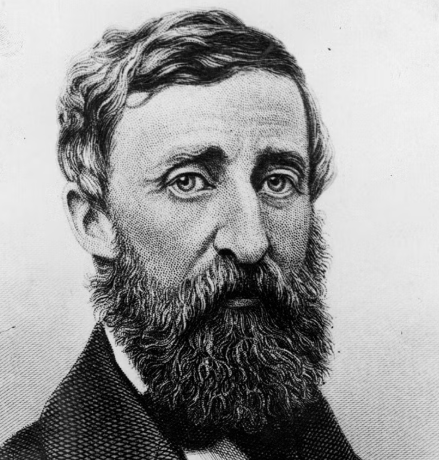
If a man walk in the woods for love of them half of each day, he is in danger of being regarded as a loafer; but if he spends his whole day as a speculator, shearing off those woods and making earth bald before her time, he is esteemed an industrious and enterprising citizen. As if a town had no interest in its forests but to cut them down!
▼
Source
source
p. 485
1 month 1 week ago
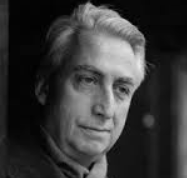
Barthes's discovery and articulation of the "new" liberatory category of perception and deciphering, semiotic-mythology, belongs to the praxis of his heroic mythologist, alone. This unfortunate theoretical strategy makes the articulation of a coalitional consciousness in social struggle impossible to imagine or enact. ... His terminologies appropriate the technologies of the oppressed for use by academic classes.
▼
Source
source
Chela Sandoval, Methodology of the Oppressed, p. 201

2 months 2 weeks ago
Kierkegaard was by far the most profound thinker of the last century. Kierkegaard was a saint.
▼
Source
source
As quoted in "Wittgenstein and Kierkegaard on the ethico-religious" by Roe Fremstedal in Ideas in History Vol. 1
1 month 2 weeks ago
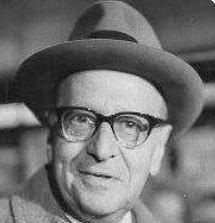
The blessing that the market does not ask about birth is paid for in the exchange society by the fact that the possibilities conferred by birth are molded to fit the production of goods that can be bought on the market.
▼
Source
source
E. Jephcott, trans., p. 9.

2 months 2 weeks ago
The authority of science ... promotes and encourages the activity of observing, comparing, measuring and ordering the physical characteristics of human bodies.... Cartesian epistemology and classical ideals produced forms of rationality, scientificity and objectivity that, though efficacious in the quest for truth and knowledge, prohibited the intelligibility and legitimacy of black equality.... In fact, to "think" such an idea was to be deemed irrational, barbaric or mad.
▼
Source
source
Prophesy Deliverance!

1 month 3 weeks ago
Life creates itself in delirium and is undone in ennui.
3 weeks 2 days ago
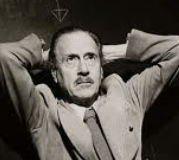
Literacy, in translating man out of the closed world of tribal depth and resonance, gave man an eye for an ear and ushered him into a visual open world of specialized and divided consciousness.

3 months 3 days ago
...God commanded in the law [Deut. 22:22-24] that adulterers be stoned . . . The temporal sword and government should therefore still put adulterers to death . . . Where the government is negligent and lax, however, and fails to inflict the death penalty, the adulterer may betake himself to a far country and there remarry if he is unable to remain continent. But it would be better to put him to death, lest a bad example be set . . .
2 months 3 weeks ago
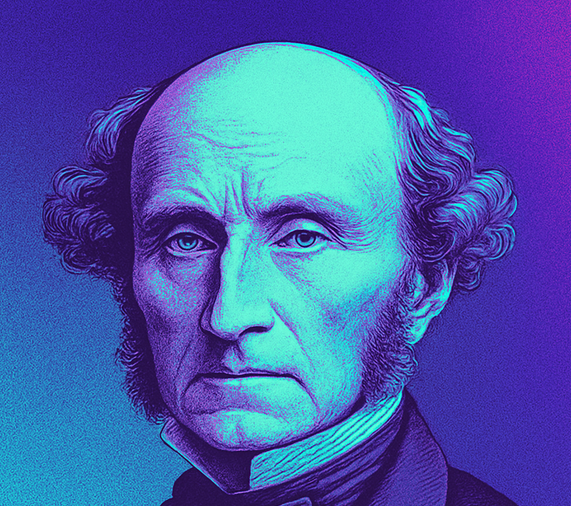
There is room in the world, no doubt, and even in old countries, for a great increase of population, supposing the arts of life to go on improving, and capital to increase. But even if innocuous, I confess I see very little reason for desiring it. The density of population necessary to enable mankind to obtain, in the greatest degree, all the advantages both of co-operation and of social intercourse, has, in all the most populous countries, been attained. If the earth must lose that great portion of its pleasantness which it owes to things that the unlimited increase of wealth and population would extirpate from it, for the mere purpose of enabling it to support a larger but not a better or a happier population, I sincerely hope, for the sake of posterity, that they will be content to be stationary, long before necessity compels them to it..
▼
Source
source
Book IV, Chapter VI, §3, p. 516
2 months 3 weeks ago
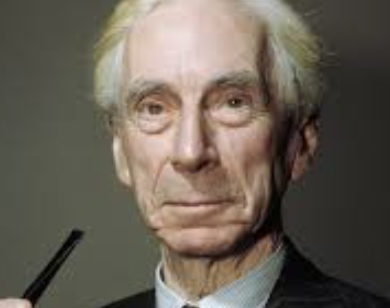
The infliction of cruelty with a good conscience is a delight to moralists. That is why they invented Hell.
▼
Source
source
Ch. 1: The Value of Scepticism
2 months 3 weeks ago
Choose your parents wisely.
▼
Source
source
On the recipe for longevity; Collected Papers of Bertrand Russell, Vol. 29, 2012
1 week 6 days ago
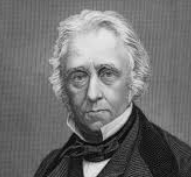
We know of no great revolution which might not have been prevented by compromise early and graciously made... [I]n all movements of the human mind which tend to great revolutions there is a crisis at which moderate concession may amend, conciliate, and preserve.
▼
Source
source
'Hallam', The Edinburgh Review (September 1828), quoted in T. B. Macaulay, Critical and Historical Essays Contributed to The Edinburgh Review, Vol. I (1843), p. 216
1 month 2 weeks ago
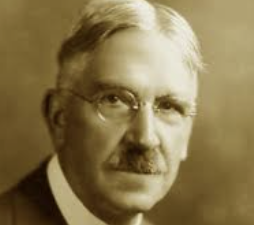
Every great advance in science has issued from a new audacity of imagination.
▼
Source
source
The Quest for Certainty (1929), Ch. XI
2 months 3 weeks ago
The typical Westerner wishes to be the cause of as many changes as possible in his environment; the typical Chinaman wishes to enjoy as much and as delicately as possible.
▼
Source
source
The Problem of China (1922), Ch. XII: The Chinese Character
2 weeks 4 days ago
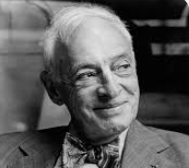
It's hard for writers to get on with their work if they are convinced that they owe a concrete debt to experience and cannot allow themselves the privilege of ranging freely through social classes and professional specialties. A certain pride in their own experience, perhaps a sense of the property rights of others in their experience, holds them back.
▼
Source
source
Facts That Put Fancy to Flight (1962), p. 68
3 weeks 3 days ago
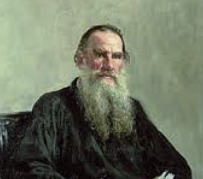
Wealth brings a heavy purse; poverty, a light spirit.
▼
Source
source
p. 88
1 month 3 weeks ago
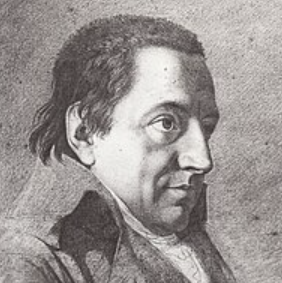
It was these Romans who reunited in one State the Culture which had now been produced by the intermixture of different races, and thereby completed the period of Ancient Time, and closed the simple course of Ancient Civilization. With respect to its influence on Universal History, this nation, more than any other, was the blind and unconscious instrument for the furtherance of a higher World-Plan; after having formed itself, by its internal des tiny indicated above, into a most fit and proper instrument for that purpose.
▼
Source
source
p. 192

2 months 4 weeks ago
The man who esteems himself as he ought, and no more than he ought, seldom fails to obtain from other people all the esteem that he himself thinks due. He desires no more than is due to him, and he rests upon it with complete satisfaction.
▼
Source
source
Section III.
2 months 3 weeks ago
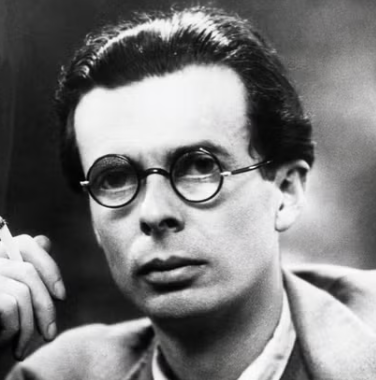
It is only by poets that the life of any epoch can be synthesized. Encyclopaedias and guides to knowledge cannot do it, for the good reason that they affect only the intellectual surface of a man's life. The lower layers, the core of his being, they leave untouched.
▼
Source
source
p. 4

1 month 3 weeks ago
How can a rational being be ennobled by anything that is not obtained by its own exertions?
▼
Source
source
Ch. 3
1 month 3 weeks ago
When I happen to be busy, I never give a moment's thought to the "meaning" of anything, particularly of whatever it is I am doing. A proof that the secret of everything is in action and not abstention, that fatal cause of consciousness.
3 weeks 2 days ago
The young are really the heirs to a generation of incompetence.
1 month 2 weeks ago
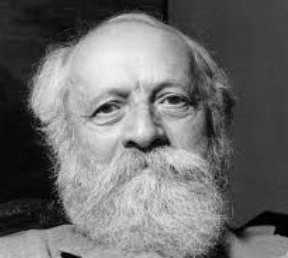
You do not attain to knowledge by remaining on the shore and watching the foaming waves, you must make the venture and cast yourself in, you must swim, alert and with all your force, even if a moment comes when you think you are losing consciousness; in this way, and in no other, do you reach anthropological insight.
▼
Source
source
p. 148
1 month 3 weeks ago
Philosophy's error is to be too endurable.
1 month 3 weeks ago
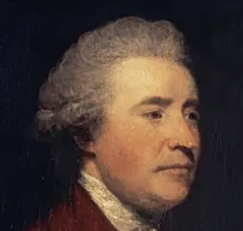
Neither the few nor the many have a right to act merely by their will, in any matter connected with duty, trust, engagement, or obligation.
▼
Source
source
p. 440
3 weeks 6 days ago
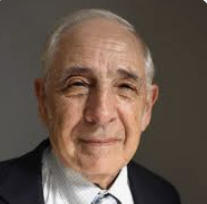
It seems to me obvious that infants and many animals that do not in any ordinary sense have a language or perform speech acts nonetheless have Intentional states. Only someone in the grip of a philosophical theory would deny that small babies can literally be said to want milk and that dogs want to be let out or believe that their master is at the door.
▼
Source
source
P. 5.
2 months 2 weeks ago
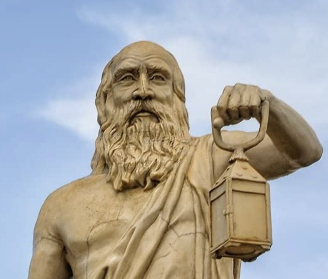
When some one reminded him that the people of Sinope had sentenced him to exile, he said, "And I sentenced them to stay at home."
▼
Source
source
Diogenes Laërtius, vi. 49
2 months 4 weeks ago
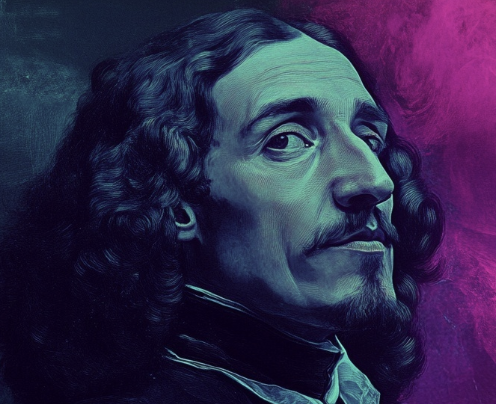
Speaking generally, he holds dominion, to whom are entrusted by common consent affairs of state - such as the laying down, interpretation, and abrogation of laws, the fortification of cities, deciding on war and peace, &c. But if this charge belong to a council, composed of the general multitude, then the dominion is called a democracy; if the council be composed of certain chosen persons, then it is an aristocracy ; and, if, lastly, the care of affairs of state, and, consequently, the dominion rest with one man, then it has the name of monarchy.
▼
Source
source
Ch. 2, Of Natural Right
2 months 3 weeks ago
There is darkness without and when I die there will be darkness within. There is no splendor, nor vastness anywhere; only triviality for a moment and then nothing.
▼
Source
source
Attributed to Russell in Ken Davis' Fire Up Your Life! (1995), p. 33
1 month 3 weeks ago
Love's great (and sole) originality is to make happiness indistinct from misery.
2 months 3 weeks ago
Though you give no countenance to the complaints of the querulous, yet take care to curb the insolence and ill nature of the injurious. When you observe it yourself, reprove it before the injur'd party: but if the complaint be of something really worth your notice, and prevention another time, then reprove the offender by himself alone, out of sight of him who complain'd and make him go and ask pardon, and make reparation; which ooming thus, as it were from himself, will be the more cheerfully performed, and more kindly receiv'd, the love strenghten'd between them, and a custom of civility grow familiar amongst your children.
▼
Source
source
Sec. 109
2 months 3 weeks ago
The second doctrine of the Perennial Philosophy - that it is possible to know the Divine Ground by a direct intuition higher than discursive reasoning - is to be found in all the great religions of the world. A philosopher who is content merely to know about the ultimate Reality - theoretically and by hearsay - is compared by Buddha to a herdsman of other men's cows. Mohammed uses an even homelier barnyard metaphor. For him the philosopher who has not realized his metaphysics is just an ass bearing a load of books. Christian, Hindu, Taoist teachers wrote no less emphatically about the absurd pretensions of mere learning and analytic reasoning.
1 month 1 week ago
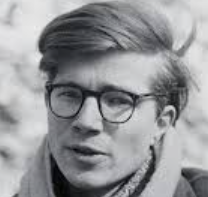
In most men, the conscious and the unconscious being hardly ever make contact; consequently the conscious aim is to make himself as comfortable as possible with as little effort as possible. But there are other men, whom we have been calling, for convenience, 'Outsiders', whose conscious and unconscious being keep in closer contact, and the conscious mind is forever aware of the urge to care about 'more abundant life', and care less about comfort and stability and the rest of the notions that are so dear to the bourgeois.
▼
Source
source
Chapter Nine, Breaking the Circuit
1 month 2 weeks ago
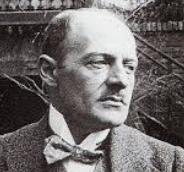
The precepts "Love your enemies, do good to them which hate you, bless them that curse you" ... are born from the Gospel's profound spirit of individualism, which refuses to let one's own actions and conduct depend in any way on somebody else's acts. The Christian refuses to let his acts be mere reactions-such conduct would lower him to the level of his enemy. The act is to grow organically from the person, "as the fruit from the tree." ... What the Gospel demands is not a reaction which is the reverse of the natural reaction, as if it said: "Because he strikes you on the cheek, tend the other"-but a rejection of all reactive activity, of any participation in common and average ways of acting and standards of judgment.
▼
Source
source
L. Coser, trans. (1961), pp. 99-100
1 month 3 weeks ago
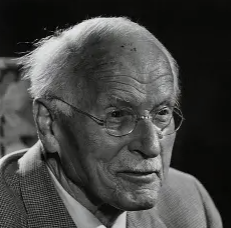
Nature must not win the game, but she cannot lose. And whenever the conscious mind clings to hard and fast concepts and gets caught in its own rules and regulations-as is unavoidable and of the essence of civilized consciousness-nature pops up with her inescapable demands.
▼
Source
source
Alchemical Studies

2 months 4 weeks ago
The universal and lasting establishment of peace constitutes not merely a part, but the whole final purpose and end of the science of right as viewed within the limits of reason.
1 month 3 weeks ago
Gentlemen, the melancholy event of yesterday reads to us an awful lesson against being too much troubled about any of the objects of ordinary ambition. The worthy gentleman, who has been snatched from us at the moment of the election, and in the middle of contest, whilst his desires were as warm, and his hopes as eager as ours, has feelingly told us, what shadows we are, and what shadows we pursue.
▼
Source
source
Speech at Bristol on declining the poll, referring to a Mr. Richard Coombe (9 September 1780), quoted in The Works of the Right Honourable Edmund Burke, Vol. II (1855), p. 171

2 months 3 weeks ago
My friend Professor Tolkien asked me the very simple question, "What class of men would you expect to be most preoccupied with, and most hostile to, the idea of escape?" and gave the obvious answer: jailers.
▼
Source
source
"On Science Fiction". Of Other Worlds: Essays and Stories. Houghton Mifflin Harcourt (2002). p. 67.
3 weeks 2 days ago
Without an understanding of causality there can be no theory of communication. What passes as information theory today is not communication at all, but merely transportation.
▼
Source
source
(p. 362)

1 month 4 weeks ago
Two things in America are astonishing: the changeableness of most human behavior and the strange stability of certain principles. Men are constantly on the move, but the spirit of humanity seems almost unmoved.
▼
Source
source
Book Three, Chapter XXI.
1 month 4 days ago
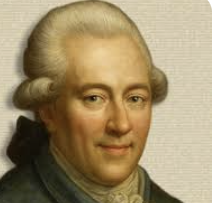
Body and soul: a horse harnessed beside an ox.
▼
Source
source
D 103

2 months 3 weeks ago
So nigh is grandeur to our dust, So near is God to man, When Duty whispers low, Thou must, The youth replies, I can.
▼
Source
source
Voluntaries, st. 3
2 months 3 weeks ago
Virtue is harder to be got than knowledge of the world; and, if lost in a young man, is seldom recovered.
▼
Source
source
Sec. 70

3 months 3 weeks ago
God creates out of nothing. Wonderful you say. Yes, to be sure, but He does what is still more wonderful: He makes saints out of sinners.
2 months 3 weeks ago
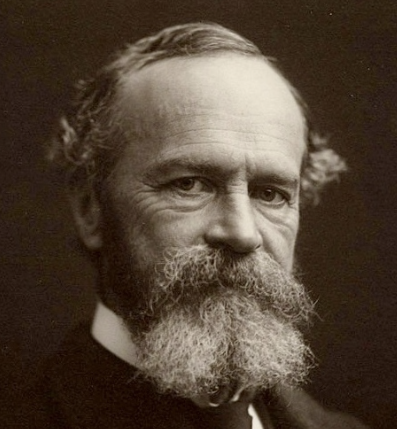
The "through-and-through" universe seems to suffocate me with its infallible impeccable all-pervasiveness. Its necessity, with no possibilities; its relations, with no subjects, make me feel as if I had entered into a contract with no reserved rights ... It seems too buttoned-up and white-chokered and clean-shaven a thing to speak for the vast slow-breathing unconscious Kosmos with its dread abysses and its unknown tides.
▼
Source
source
Essays in Radical Empiricism (1912), Ch. 12 : Absolutism and Empiricism
2 months 3 weeks ago
When our life ceases to be inward and private, conversation degenerates into mere gossip. We rarely meet a man who can tell us any news which he has not read in a newspaper, or been told by his neighbor; and, for the most part, the only difference between us and our fellow is, that he has seen the newspaper, or been out to tea, and we have not. In proportion as our inward life fails, we go more constantly and desperately to the post-office.
▼
Source
source
p. 491
CivilSimian.com created by AxiomaticPanic, CivilSimian, Kalokagathia