

1 month 2 weeks ago
Once, when he was applauded by rascals, he remarked, "I am horribly afraid I have done something wrong."
▼
Source
source
§ 5
1 month 4 weeks ago
What is prudence in the conduct of every private family, can scarce be folly in that of a great kingdom.
▼
Source
source
Chapter II, p. 490.
1 month 3 weeks ago
We have to learn to think in a new way. We have to learn to ask ourselves, not what steps can be taken to give military victory to whatever group we prefer, for there no longer are such steps; the question we have to ask ourselves is: what steps can be taken to prevent a military contest of which the issue must be disastrous to all parties?

2 weeks 6 days ago
By virtue of depression, we recall those misdeeds we buried in the depths of our memory. Depression exhumes our shames.
1 month 4 weeks ago
It may indeed be doubted, whether butcher's meat is any where a necessary of life. Grain and other vegetables, with the help of milk, cheese, and butter, or oil, where butter is not to be had, it is known from experience, can, without any butcher's meat, afford the most plentiful, the most wholesome, the most nourishing, and the most invigorating diet.
▼
Source
source
Chapter II, Part II, Appendix to Articles I and II.

2 months 3 weeks ago
Let us suppose that a man believes in eternal life on Christ's word. In that case he believes without any fuss about being profound and searching and philosophical and racking his brains.
1 month 3 weeks ago
We are speaking on this occasion, not as members of this or that nation, continent, or creed, but as human beings, members of the species Man, whose continued existence is in doubt.

2 months 2 days ago
Is Christ only to be adored? Or is the holy Mother of God rather not to be honoured? This is the woman who crushed the Serpent's head. Hear us. For your Son denies you nothing.
▼
Source
source
Weimar edition of Martin Luther's Works, English translation edited by J. Pelikan [Concordia: St. Louis], Vol. 51, 128-129
1 month 3 weeks ago
I do not think it possible to get anywhere if we start from scepticism. We must start from a broad acceptance of whatever seems to be knowledge and is not rejected for some specific reason.
▼
Source
source
p. 200
3 weeks 1 day ago
The man that does not know himself not to be at the mercy of other men, that does not feel that he is invulnerable to all the vicissitudes of fortune, is incapable of a constant and inflexible virtue.
▼
Source
source
Book V, "Of Education"
1 month 3 weeks ago
Of all evils of war the greatest is the purely spiritual evil: the hatred, the injustice, the repudiation of truth, the artificial conflict.
▼
Source
source
Justice in War-Time (1916), p. 27

1 month 3 weeks ago
But what of the poor Ghosts who never get into the omnibus at all?' 'Everyone who wishes it does. Never fear. There are only two kinds of people in the end: those who say to God, "Thy will be done," and those to whom God says, in the end, "Thy will be done." All that are in Hell, choose it. Without that self-choice there could be no Hell. No soul that seriously and constantly desires joy will ever miss it. Those who seek find. To those who knock it is opened.
▼
Source
source
Ch. 9, p. 72; part of this has also been rendered in a variant form, and quoted as:
1 month 3 weeks ago
In a field of ripening corn I came to a place which had been trampled down by some ruthless foot; and as I glanced amongst the countless stalks, every one of them alike, standing there so erect and bearing the full weight of the ear, I saw a multitude of different flowers, red and blue and violet. How pretty they looked as they grew there so naturally with their little foliage! But, thought I, they are quite useless; they bear no fruit; they are mere weeds, suffered to remain only because there is no getting rid of them. And yet, but for these flowers, there would be nothing to charm the eye in that wilderness of stalks. They are emblematic of poetry and art, which, in civic life-so severe, but still useful and not without its fruit-play the same part as flowers in the corn.
▼
Source
source
"Similes, Parables and Fables" Parerga and Paralipomena, vol. 2, § 380A
2 months 3 weeks ago
Once in his early youth a man allowed himself to be so far carried away in an overwrought irresponsible state as to visit a prostitute. It is all forgotten. Now he wants to get married. Then anxiety stirs. He is tortured day and night with the thought that he might possibly be a father, that somewhere in the world there could be a created being who owed his life to him. He cannot share his secret with anyone; he does not even have any reliable knowledge of the fact. –For this reason the incident must have involved a prostitute and taken place in the wantonness of youth; had it been a little infatuated or an actual seduction, it would be hard to imagine that he could know nothing about it, but now this this very ignorance is the basis of his agitated torment. On the other hand, precisely because of the rashness of the whole affair, his misgivings do not really start until he actually falls in love.
2 weeks 1 day ago
Were art to redeem man, it could do so only by saving him from the seriousness of life and restoring him to an unexpected boyishness. The symbol of art is seen again in the magic flute of the Great God Pan which makes the young goats frisk at the edge of the grove. All modern art begins to appear comprehensible and in a way great when it is interpreted as an attempt to instill youthfulness into an ancient world.
▼
Source
source
"Art a Thing of No Consequence"
3 days ago
In Administrative Behavior, bounded rationality is largely characterized as a residual category - rationality is bounded when it falls short of omniscience. And the failures of omniscience are largely failures of knowing all the alternatives, uncertainty about relevant exogenous events, and inability to calculate consequences. There was needed a more positive and formal characterization of the mechanisms of choice under conditions of bounded rationality... Two concepts are central to the characterization: search and satisficing.
▼
Source
source
p. 502; As cited in Barros (2010, p. 464-5).
1 month 3 weeks ago
The very cannibalism of the counterrevolution will convince the nations that there is only one way in which the murderous death agonies of the old society and the bloody birth throes of the new society can be shortened, simplified and concentrated, and that way is revolutionary terror.
▼
Source
source
"The Victory of the Counter-Revolution in Vienna," Neue Rheinische Zeitung, 7 November 1848.
1 month 4 weeks ago
The importation of gold and silver is not the principal, much less the sole benefit which a nation derives from its foreign trade.
▼
Source
source
Chapter I, p. 479.
2 weeks 6 days ago
To dream of an enterprise of demolition that would spare none of the traces of the original Big Bang.
2 months 2 weeks ago
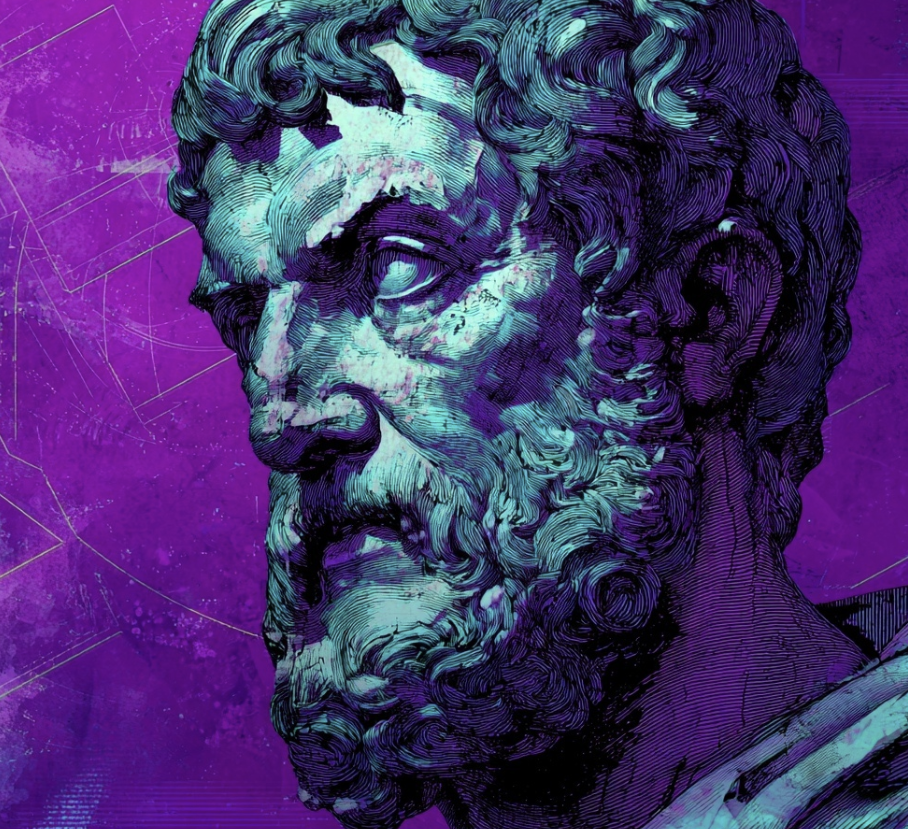
Where without any change in circumstances the things held to be just by law are seen not to correspond with the concept of justice in actual practice, such laws are not really just; but wherever the laws have ceased to be advantageous because of a change in circumstances, in that case the laws were for that time just when they were advantageous for the mutual dealings of the citizens, and subsequently ceased to be just when they were no longer advantageous.
3 weeks ago
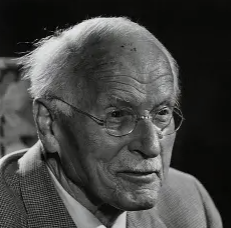
There is rarely a creative man who does not have to pay a high price for the divine spark of his greatest gifts...the human element is frequently bled for the benefit of the creative element and to such an extent that it even brings out the bad qualities, as for instance, ruthless, naive egoism (so-called "auto-eroticism"), vanity, all kinds of vices-and all this in order to bring to the human I at least some life-strength, since otherwise it would perish of sheer inanition.

1 week ago
Disciplinary society is still governed by no. Its negativity produces madmen and criminals. In contrast, achievement society creates depressives and losers.
▼
Source
source
Source: Page 8
1 month 4 weeks ago
The administration of the great system of the universe, however, the care of the universal happiness of all rational and sensible beings, is the business of God and not of man. To man is allotted a much humbler department, but one much more suitable to the weakness of his powers, and to the narrowness of his comprehension; the care of his own happiness, of that of his family, his friends, his country: that he is occupied in contemplating the more sublime, can never be an excuse for his neglecting the more humble department.
▼
Source
source
Section II, Chap. III.
2 weeks 3 days ago
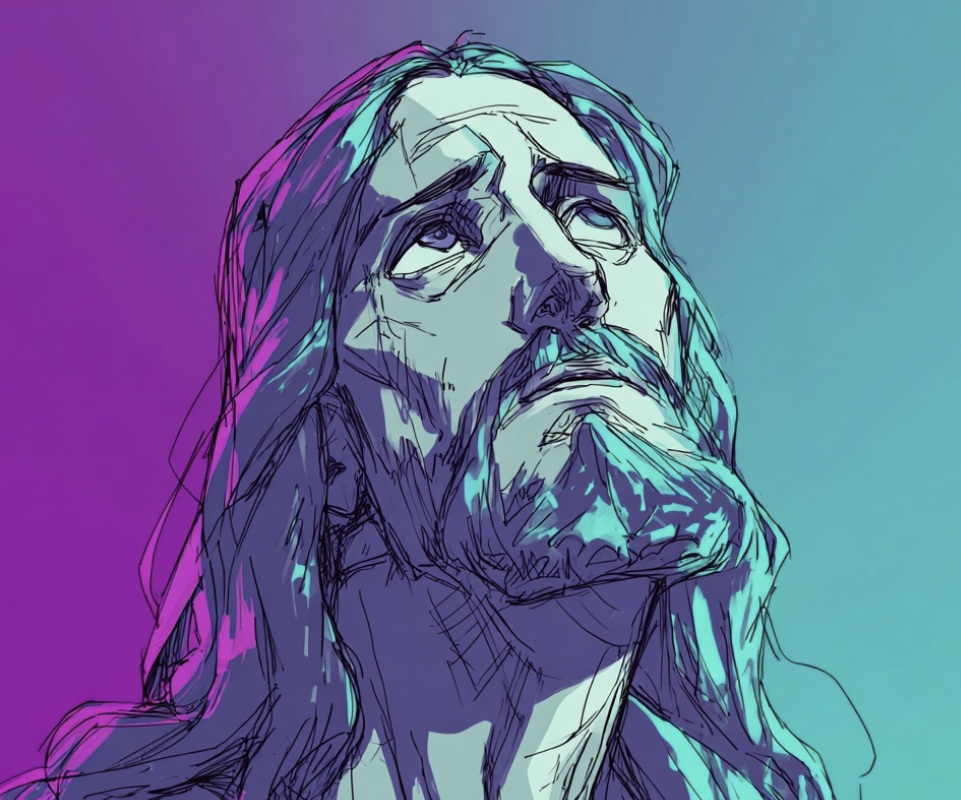
Not everyone who says to Me, 'Lord, Lord,' shall enter the kingdom of heaven, but he who does the will of My Father in heaven. Many will say to Me in that day, 'Lord, Lord, have we not prophesied in Your name, cast out demons in Your name, and done many wonders in Your name?' And then I will declare to them, 'I never knew you; depart from Me, you who practice lawlessness!'
▼
Source
source
Matthew 7:21-23 (NKJV) (Also Luke 6:24; 13:26, 27)
1 month 3 weeks ago
Without effort and change, human life cannot remain good. It is not a finished Utopia that we ought to desire, but a world where imagination and hope are alive and active.
2 months 2 weeks ago
A prudent man, in order to secure his tranquility, will consult his natural disposition in the choice of his plan of life. If, for example, he be persuaded that he should be happier in a state of marriage than in celibacy, he ought to marry; but if he be convinced that matrimony would be an impediment to his happiness, he ought to remain single.
2 months 3 weeks ago
Men seem to pursue honour in order that they may believe themselves to be good. Accordingly, they seek to be honoured by the wise, and by those who know them well, and on the score of virtue; it is clear, therefore, that in their opinion at any rate, virtue is superior to honour. Perhaps, then, one ought to say that virtue rather than honour is the end of the political life; yet even virtue is plainly too imperfect: for it seems that a man might have all the virtues and yet be asleep, or fail to achieve anything all his life; moreover, such a person may suffer the greatest evils and misfortunes. And no one, in this case, would call a man, who passed his life in this manner, happy, except for argument's sake.
2 months 2 days ago
I am firmly convinced, therefore, that to set up a republic which is to last a long time, the way to set about it is to constitute it as Sparta and Venice were constituted; to place it in a strong position, and so to fortify it that no one will dream of taking it by a sudden assault; and, on the other hand, not to make it so large as to appear formidable to its neighbors. It should in this way be able to enjoy its form of government for a long time. For war is made on a commonwealth for two reasons: to subjugate it, and for fear of being subjugated by it.
▼
Source
source
Book 1, Ch. 6 (as translated by LJ Walker and B Crick)
1 month 1 week ago
Authority and place demonstrate and try the tempers of men, by moving every passion and discovering every frailty.
▼
Source
source
Comparison of Demosthenes and Cicero 3 (Tr. Dryden and Clough)
1 month 4 weeks ago
Of all the things that are beyond my power, I value nothing more highly than to be allowed the honor of entering into bonds of friendship with people who sincerely love truth. For, of things beyond our power, I believe there is nothing in the world which we can love with tranquility except such men.
▼
Source
source
Spinoza, Correspondence, 146, Letter xix
4 days ago
The pleasures of the imagination are as it were only drawings and models which are played with by poor people who cannot afford the real thing.
▼
Source
source
C 38
1 month 3 weeks ago
Every true thinker for himself is so far like a monarch; he is absolute, and recognises nobody above him. His judgments, like the decrees of a monarch, spring from his own sovereign power and proceed directly from himself. He takes as little notice of authority as a monarch does of a command; nothing is valid unless he has himself authorised it. On the other hand, those of vulgar minds, who are swayed by all kinds of current opinions, authorities, and prejudices, are like the people which in silence obey the law and commands.
▼
Source
source
"Thinking for Oneself," H. Dirks, trans.

1 month 2 weeks ago
The most thought provoking thing in our thought provoking time is that we are still not thinking.
▼
Source
source
What is Called Thinking? (1951-1952), as translated by Fred D. Wieck and J. Glenn Gray

1 month 1 day ago
When we consider the being and substance of that universe in which we are immutably set, we shall discover that neither we ourselves nor any substance doth suffer death; for nothing is in fact diminished in its substance, but all things, wandering through infinite space, undergo change of aspect.
▼
Source
source
Introductory Epistle

1 month 3 weeks ago
Man is free at the instant he wants to be.
▼
Source
source
Source Brutus, act II, scene I, 1730

1 month 2 weeks ago
The soul is the prison of the body.
▼
Source
source
Discipline and Punish (1977) as translated by Alan Sheridan, p. 30
2 weeks 6 days ago
What are you waiting for in order to give up?

1 week 1 day ago
Popular escapist fiction enchants adult readers without challenging them to be educated for critical consciousness.
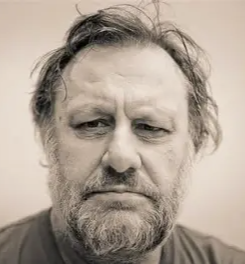
6 months ago
The age of philosophy in the sense again that we are confronted more and more often with philosophical problems at an everyday level. It is not that you withdraw from daily life into a world of philosophical contemplation. On the contrary, you cannot find your way around daily life itself without answering certain philosophical questions. It is a unique time when everyone is, in a way, forced to be some kind of philosopher.
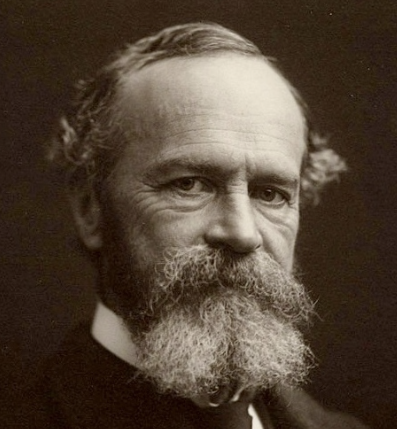
1 month 3 weeks ago
So long as antimilitarists propose no substitute for war's disciplinary function, no moral equivalent of war, analogous, as one might say, to the mechanical equivalent of heat, so long they fail to realize the full inwardness of the situation.
▼
Source
source
The Moral Equivalent of War
1 month 3 weeks ago
Consciousness, then, does not appear to itself chopped up in bits ... A 'river' or a 'stream' are the metaphors by which it is most naturally described. In talking of it hereafter, let us call it the stream of thought, of consciousness, or of subjective life.
▼
Source
source
Ch. 9
2 days ago
Opinion is the companion of probability within the medieval epistemology.
▼
Source
source
Chapter 3, Opinion, p. 28.
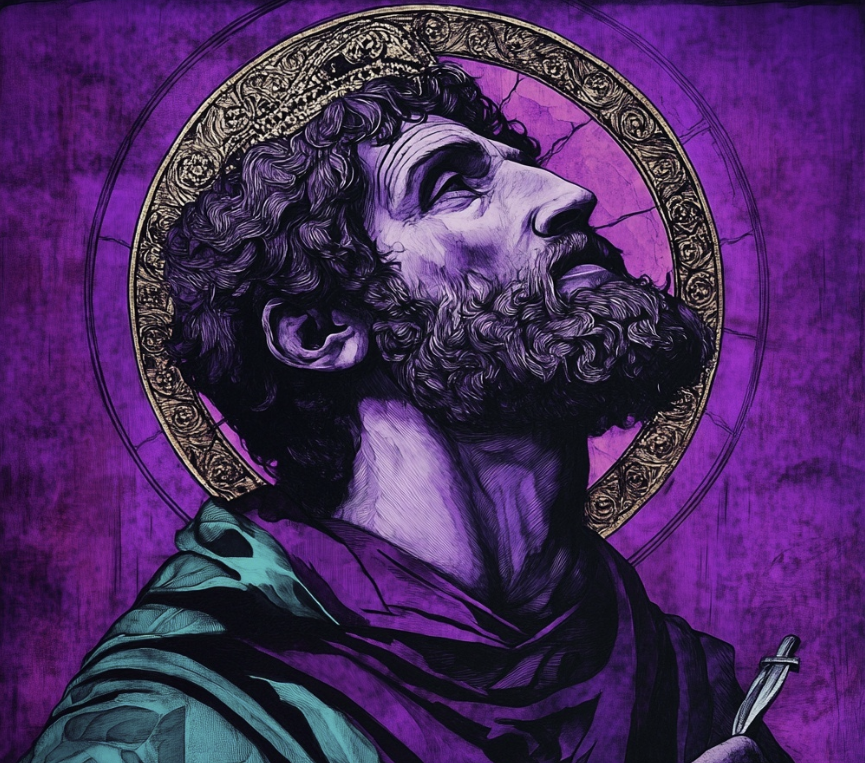
2 months 1 week ago
The light will not shame you, if it shows you your own ugliness, and that ugliness so offends you that you perceive the beauty of the light.
▼
Source
source
First Homily, as translated by John Burnaby (1955), p. 262
2 weeks 1 day ago
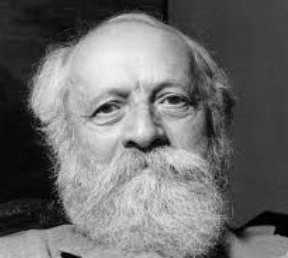
When we rise out of [the night] into the new life and there begin to receive the signs, what can we know of that which - of him who gives them to us? Only what we experience from time to time from the signs themselves. If we name the speaker of this speech God, then it is always the God of a moment, a moment God.
▼
Source
source
Between Man and Man (1965), p. 15
1 week 1 day ago
Another response to racism has been the establishment of unlearning racism workshops, which are often led by white women. These workshops are important, yet they tend to focus primarily on cathartic individual psychological personal prejudice without stressing the need for corresponding change in political commitment and action. A woman who attends an unlearning racism workshop and learns to acknowledge that she is racist is no less a threat than one who does not. Acknowledgment of racism is significant when it leads to transformation.
3 days ago
Most of the propositions that make up the body of administrative theory today share, unfortunately, this defect of proverbs. For almost every principle one can find an equally plausible and acceptable contradictory principle.
▼
Source
source
Simon, Herbert A. "The proverbs of administration." Public Administration Review 6.1 (1946): 53-67.
2 months 3 weeks ago
Knowledge of the fact differs from knowledge of the reason for the fact.
1 month 3 weeks ago
The word of man is the most durable of all material.
▼
Source
source
Vol. 2, Ch. 25, sect. 298
1 month 3 weeks ago
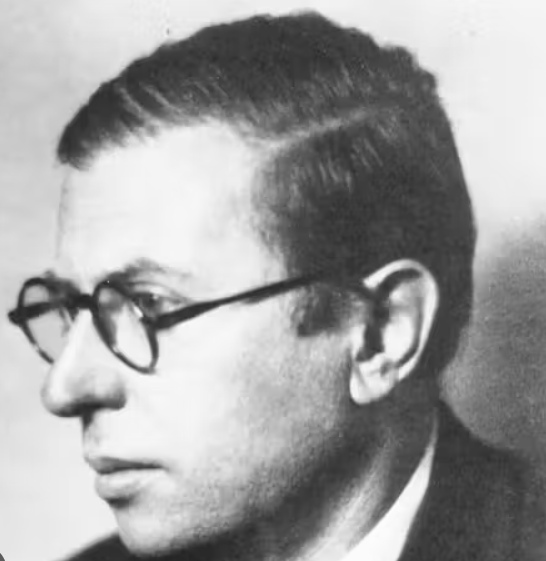
Existentialism is nothing else but an attempt to draw the full conclusions from a consistently atheistic position. Its intention is not in the least that of plunging men into despair. And if by despair one means as the Christians do - any attitude of unbelief, the despair of the existentialists is something different. Existentialism is not atheist in the sense that it would exhaust itself in demonstrations of the non-existence of God. It declares, rather, that even if God existed that would make no difference from its point of view. Not that we believe God does exist, but we think that the real problem is not that of His existence; what man needs is to find himself again and to understand that nothing can save him from himself, not even a valid proof of the existence of God. In this sense existentialism is optimistic. It is a doctrine of action, and it is only by self-deception, by confining their own despair with ours that Christians can describe us as without hope.
▼
Source
source
p. 56
CivilSimian.com created by AxiomaticPanic, CivilSimian, Kalokagathia