

2 weeks 1 day ago
In ordinary visual perception, we see by means of light; we distinguish by means of reflected and refracted colors. But in ordinary perception, this medium of color is mixed, adulterated. While we see, we also hear; we feel pressures, and heat and cold. In a painting, color renders the scene without these alloys and impurities. They are part of the dross that is squeezed out and left behind in an act of intensified expression. The medium becomes color alone, and since color alone must now carry the qualities of movement, touch, sound, etc., that are present physically on their own account in ordinary vision, the expressiveness and energy of color are enhanced.
▼
Source
source
p. 203
1 week 3 days ago
The philosophy of the soul of my people appears to me as an expression of an inward tragedy analogous to the tragedy of the soul of Don Quixote, as the expression of conflict between what the world is as scientific reason shows it to be and what we wish that it might be, as our religious faith affirms it to be. And in this philosophy is to be found the explanation of what is usually said about us - namely, that we are fundamentally irreducible to Kultur - or in other words, that we refuse to submit to it. No, Don Quixote does not resign himself either to the world, or to science or logic, or to art or esthetics, or to morality or ethics.
3 weeks 3 days ago
Humiliate the reason and distort the soul...
▼
Source
source
Part 2, Chapter ?
2 months 2 weeks ago
The essential is to cease being free and to obey, in repentance, a greater rogue than oneself. When we are all guilty, that will be democracy.
1 month 3 weeks ago
The collective name for the ripe fruits of religion in a character is Saintliness. The saintly character is the character for which spiritual emotions are the habitual centre of the personal energy; and there is a certain composite photograph of universal saintliness, the same in all religions, of which the features can easily be traced.
▼
Source
source
Lectures XI, XII, AND XIII : "Saintliness"
1 week ago
Racism has always been a divisive force separating black men and white men, and sexism has been a force that unites the two groups.
2 weeks 1 day ago
Philosophers are adults who persist in asking childish questions.
▼
Source
source
As quoted in The Listener
1 week 3 days ago
Suffering is a spiritual thing. It is the most immediate revelation of consciousness, and it may be that our body was given us simply in order that suffering might be enabled to manifest itself. A man who had never known suffering, either in greater or less degree, would scarcely possess consciousness of himself. The child first cries at birth when the air, entering into his lungs and limiting him, seems to say to him: You have to breathe me in order to live!
1 month 3 weeks ago
We can act as if there were a God; feel as if we were free; consider Nature as if she were full of special designs; lay plans as if we were to be immortal; and we find then that these words do make a genuine difference in our moral life.
▼
Source
source
Lecture III, "The Reality of the Unseen"
1 month 3 weeks ago
Eloquence, when at its highest pitch, leaves little room for reason or reflection; but addressing itself entirely to the fancy or the affections, captivates the willing hearers, and subdues their understanding. Happily, this pitch it seldom attains. But what a Tully or a Demosthenes could scarcely effect over a Roman or Athenian audience, every Capuchin, every itinerant or stationary teacher can perform over the generality of mankind, and in a higher degree, by touching such gross and vulgar passions.
▼
Source
source
Section 10 : Of Miracles Pt. 2

4 weeks 1 day ago
The created World is but a small Parenthesis in Eternity.
▼
Source
source
Part III, Section XXIX
2 months 1 week ago
Tentative efforts lead to tentative outcomes. Therefore, give yourself fully to your endeavors. Decide to construct your character through excellent actions, and determine to pay the price for a worthy goal. The trials you encounter will introduce you to your strengths. Remain steadfast... and one day you will build something that endures, something worthy of your potential.

1 month 1 week ago
And what he fears he cannot make attractive with his touch he abandons.
▼
Source
source
Line 149 (tr. H. R. Fairclough)
1 month 3 weeks ago
Ignorance is not a simple lack of knowledge but an active aversion to knowledge, the refusal to know, issuing from cowardice, pride or laziness of mind.
▼
Source
source
Principle attributed to Popper by Ryszard Kapiscinski in New York Times obituary, 1995.

2 months 3 weeks ago
Not one of these nobly equipped young men has escaped the restless, exhausting, confusing, debilitating crisis of education. ... He feels that he cannot guide himself, cannot help himself, and then he dives hopelessly into the world of everyday life and daily routine, he is immersed in the most trivial activity possible, and his limbs grow weak and weary.

1 month 2 weeks ago
Language is a part of our organism and no less complicated than it.
▼
Source
source
Journal entry (14 May 1915), p. 48
2 weeks 6 days ago
The surest means of not losing your mind on the spot: remembering that everything is unreal, and will remain so...
5 months 4 weeks ago
Ideology is not a dreamlike illusion that we build to escape insupportable; in its basic dimension, it is a fantasy-construction which serves as a support for our reality itself; an illusion which structures our effective, real social relations and thereby masks some insupportable, real, impossible kernel.
2 weeks 1 day ago
The discovery that mass changes with velocity, a discovery made when minute bodies came under consideration, finally forced surrender of the notion that mass is a fixed and inalienable possession of ultimate elements or individuals, so that time is now considered to be their fourth dimension.

2 months 2 weeks ago
Blessed are the hearts that can bend; they shall never be broken.
1 month 3 weeks ago
A pupil from whom nothing is ever demanded which he cannot do never does all he can.
▼
Source
source
(p. 32)
2 weeks 5 days ago
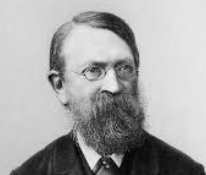
Some Machians were sufficiently impressed by Einstein's interpretations of Brownian movement to accept atomism. Mach himself brushed such objections aside, and also emphatically rejected Einstein's relativity theory.
▼
Source
source
W. W. Bartley III, "Philosophy of biology versus philosphy of physics" (2004) p. 412, Karl Popper: Critical Assessments of Leading Philosophers, Vol. III: Philosophy of Science 2.
1 week 3 days ago
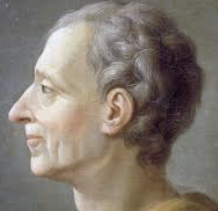
I have read descriptions of Paradise that would make any sensible person stop wanting to go there.
▼
Source
source
No. 125. (Usbek writing to Rhedi)
1 week 3 days ago
The Ottoman Empire whose sick body was not supported by a mild and regular diet, but by a powerful treatment, which continually exhausted it.
▼
Source
source
No. 19. (Usbek writing to Rustan)
1 month 3 weeks ago
What a monstrous thing that a University should teach journalism! I thought that was only done at Oxford. This respect for the filthy multitude is ruining civilisation.
▼
Source
source
Letter to Lucy Martin Donnely, July 6, 1902
1 month 3 weeks ago
It might otherwise appear paradoxical that money can be replaced by worthless paper; but that the slightest alloying of its metallic content depreciates it.
▼
Source
source
Notebook VII, The Chapter on Capital, p. 734.
2 weeks 2 days ago
Take, eat; this is my body. And he took the cup, and gave thanks, and gave it to them, saying, Drink ye all of it; For this is my blood of the new testament, which is shed for many for the remission of sins. But I say unto you, I will not drink henceforth of this fruit of the vine, until that day when I drink it new with you in my Father's kingdom.
▼
Source
source
26:26-29 (KJV)

2 months 3 days ago
We must learn how to imitate Cicero from Cicero himself. Let us imitate him as he imitated others.
▼
Source
source
in The Erasmus Reader (1990), p. 130.
1 month 3 weeks ago
What the rest of us see only under the influence of mescalin, the artist is congenitally equipped to see all the time. His perception is not limited to what is biologically or socially useful.
▼
Source
source
Page 168
2 weeks 2 days ago
Oblivious of Democritus, the unwilling materialists of our day have generally been awkwardly intellectual and quite incapable of laughter. If they have felt anything, they have felt melancholy. Their allegiance and affection were still fixed on those mythical sentimental worlds which they saw to be illusory. The mechanical world they believed in could not please them, in spite of its extent and fertility. Giving rhetorical vent to their spleen and prejudice, they exaggerated nature's meagreness and mathematical dryness. When their imagination was chilled they spoke of nature, most unwarrantably, as dead, and when their judgment was heated they took the next step and called it unreal.
▼
Source
source
Ch. 3 "Mechanism"
2 months 2 weeks ago
The opposite of an idealist is too often a man without love.
2 weeks 5 days ago
The class of big capitalists, who, in all civilized countries, are already in almost exclusive possession of all the means of subsistance and of the instruments (machines, factories) and materials necessary for the production of the means of subsistence. This is the bourgeois class, or the bourgeoisie.
1 week ago
Today, tattoos lack symbolic power. All they do is point toward the uniqueness of the bearer. The body is neither a ritual stage nor a surface of projection; rather, it is an advertising space.
2 weeks 1 day ago
Freedom of thought and of expression are not mere rights to be claimed. They have their roots deep in the existence of individuals as developing careers in time. Their denial and abrogation is an abdication of individuality and a virtual rejection of time as opportunity.
1 month 3 weeks ago
Both in thought and in feeling, even though time be real, to realise the unimportance of time is the gate of wisdom.
▼
Source
source
p. 167
2 weeks 5 days ago
By creating the world market, big industry has already brought all the peoples of the Earth, and especially the civilized peoples, into such close relation with one another that none is independent of what happens to the others. Further, it has co-ordinated the social development of the civilized countries to such an extent that, in all of them, bourgeoisie and proletariat have become the decisive classes, and the struggle between them the great struggle of the day. It follows that the communist revolution will not merely be a national phenomenon but must take place simultaneously in all civilized countries.
2 weeks 2 days ago
But Aversion wee have for things, not only which we know have hurt us; but also that we do not know whether they will hurt us, or not.
▼
Source
source
The First Part, Chapter 6, p. 24
2 months 1 week ago
Yet God hath not only granted these faculties, by which we may bear every event without being depressed or broken by it, but like a good prince and a true father, hath placed their exercise above restraint, compulsion, or hindrance, and wholly within our own control.
▼
Source
source
Book I, ch. 6, 40.

2 months 1 week ago
We know, that of all living beings man is the best formed, and, as the gods belong to this number, they must have a human form. ... I do not mean to say that the gods have body and blood in them; but I say that they seem as if they had bodies with blood in them. . . , Epicurus, for whom hidden things were as tangible as if he had touched them with his finger, teaches us that gods are not generally visible, but that they are intelligible; that they are not bodies having a certain solidity . . . but that we can recognize them by their passing images; that as there are atoms enough in the infinite space to produce such images, these are produced before us . . . and make us realize what are these happy, immortal beings.
▼
Source
source
Book I, Section 18
1 month 3 weeks ago
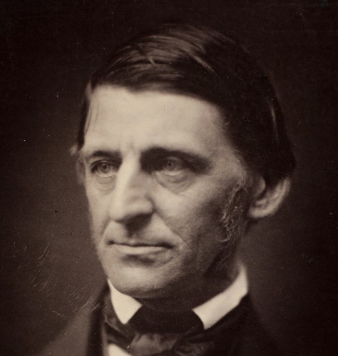
He thought it happier to be dead, To die for Beauty, than live for bread.
▼
Source
source
Beauty
1 month 3 weeks ago
Give me health and a day, and I will make the pomp of emperors ridiculous.
▼
Source
source
Beauty

2 months 1 day ago
One ought to fast, watch, and labor to the extent that such activities are needed to harness the body's desires and longings; however, those who presume that they are justified by works pay no attention to the need for self-discipline but see the works themselves as the way to righteousness. They believe that if they do a great number of impressive works all will be well and righteousness will be the result. Sometimes this is pursued with such zeal that they become mentally unstable and their bodies are sapped of all strength. Such disastrous consequences demonstrate that the belief that we are justified and saved by works without faith is extremely foolish.
▼
Source
source
p. 73
2 weeks 6 days ago
It's not worth the bother of killing yourself, since you always kill yourself too late.
1 month 3 weeks ago
Opinion is like a pendulum and obeys the same law. If it goes past the centre of gravity on one side, it must go a like distance on the other; and it is only after a certain time that it finds the true point at which it can remain at rest.
▼
Source
source
Vol. 2 "Further Psychological Observations" as translated in Essays and Aphorisms (1970), as translated by R. J. Hollingdale
2 weeks 5 days ago
Big industry, competition and generally the individualistic organization of production have become a fetter which it must and will shatter.
1 month 3 weeks ago
There are those who blame the Press, but in this I think they are mistaken. The Press is such as the public demands, and the public demands bad newspapers because it has been badly educated.
▼
Source
source
p. 133
5 days ago
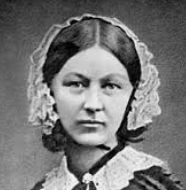
We set the treatment of bodies so high above the treatment of souls, that the physician occupies a higher place in society than the school-master. The governess is to have every one of God's gifts; she is to do that which the mother herself is incapable of doing; but our son must not degrade himself by marrying the governess, nor our daughter the tutor, though she might marry the medical man.
2 weeks ago
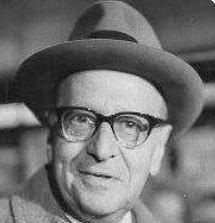
Reason has never really directed social reality, but now reason has been so thoroughly purged of any specific trend or preference that it has finally renounced even the task of passing judgment on man's actions and way of life. Reason has turned them over for ultimate sanction to the conflicting interests to which our world actually seems abandoned.
▼
Source
source
p. 9.
6 days ago
Psychoanalysis is essentially a theory of unconscious strivings, of resistance, of falsification of reality according to one's subjective needs and expectations.
▼
Source
source
p. 109
CivilSimian.com created by AxiomaticPanic, CivilSimian, Kalokagathia