

1 month 2 weeks ago
All affected can accept the consequences and the side effects that [the norm's] general observance can be anticipated to have for the satisfaction of everyone's interests, and the consequences are preferred to those of known alternative possibilities for regulation.
▼
Source
source
p. 65
3 weeks 2 days ago
I would rather be a devil in alliance with truth, than an angel in alliance with falsehood.

3 weeks 3 days ago
There was a time when religion was kept secret from popular belief within the mystery cults like a holy fire, sharing a common sanctuary with philosophy. The legends of antiquity name the earliest philosophers as the originators of these mystery cults, from which the most enlightened among the later philosophers, notably Plato, liked to educe their divine teachings. At that time philosophers still had the courage and the right to discuss the singly great themes, the only ones worthy of philosophizing and rising above common knowledge.
▼
Source
source
P. 7
1 month 3 weeks ago
The imitator dooms himself to hopeless mediocrity. The inventor did it because it was natural to him, and so in him it has a charm. In the imitator something else is natural, and he bereaves himself of his own beauty, to come short of another man's.
▼
Source
source
p. 26
3 weeks 3 days ago
What is Europe really but a sterile trunk which owes everything to oriental grafts?
▼
Source
source
Letter of 18 December 1806 to Windischmann, quoted by Rene Gerard, L'Orient et la pensée romantique allemande, Paris 1963,, p. 213. quoted in Poliakov, L. (1974).
3 weeks 3 days ago
I: My consciousness of the object is only a yet unrecognised consciousness of my production of the representation of an object. Of this production I know no more than that it is I who produce, and thus is all consciousness no more than a consciousness of myself, and so far perfectly comprehensible. Am I in the right? Spirit. Perfectly so ; but whence then is derived the necessity and universality thou hast ascribed to these propositions, to that of causality for instance?
▼
Source
source
Jane Sinnett, trans 1846 p. 47
1 month 3 weeks ago
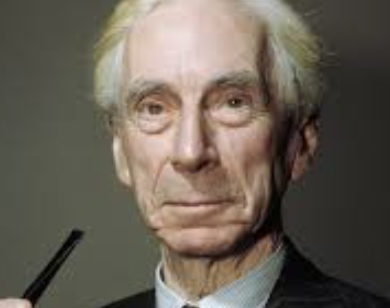
There is no logical impossibility in the hypothesis that the world sprang into being five minutes ago, exactly as it then was, with a population that "remembered" a wholly unreal past. There is no logically necessary connection between events at different times; therefore nothing that is happening now or will happen in the future can disprove the hypothesis that the world began five minutes ago.
▼
Source
source
The Analysis of Mind (1921), Lecture IX: Memory, p. 159
6 days ago
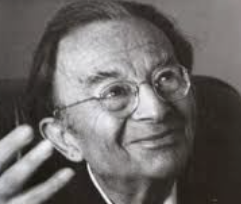
The kind of relatedness to the world may be noble or trivial, but even being related to the basest kind of pattern is immensely preferable to being alone.
▼
Source
source
Ch. 1

1 month 2 weeks ago
From whence are these "rights of individuals" derived, and why should we care? Unless we presume the existence of some greater power that determines what is good, isn't it arbitrary to posit that human survival is more important than private property rights, an equally artificially construed concept? Isn't it arbitrary to assume that some sort of equality is preferable to a system where, say, the poor are assumed to have bad karma? If these 'rights of individuals' are derived only from shared humanity, then do 'individuals' (a thoroughly meaningless term, by the way), begin to lose them when they act inhumanely? And isn't it totally arbitrary to grant rights to humans rather than other creatures anyway?
▼
Source
source
Lecture in New Haven, On Constructed Rights

2 weeks 6 days ago
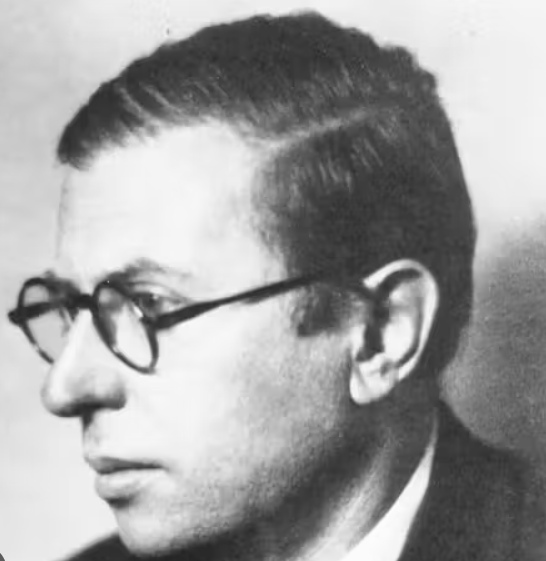
Having destroyed all my connections, burned my bridges, I should feel a certain freedom, and in fact I do. One so intense I am afraid to rejoice in it.
1 month 3 weeks ago
You take souls for vegetables.... The gardener can decide what will become of his carrots but no one can choose the good of others for them.
▼
Source
source
Heinrich, Act 5, sc. 3
3 weeks 3 days ago
Ethical ideas and sentiments have to be considered as parts of the phenomena of life at large. We have to deal with man as a product of evolution, with society as a product of evolution, and with moral phenomena as products of evolution.
▼
Source
source
Ch. 1, Introductory

2 months 2 weeks ago
Yes, there was an element of abstraction and unreality in misfortune. But when an abstraction starts to kill you, you have to get to work on it.
1 month 4 weeks ago
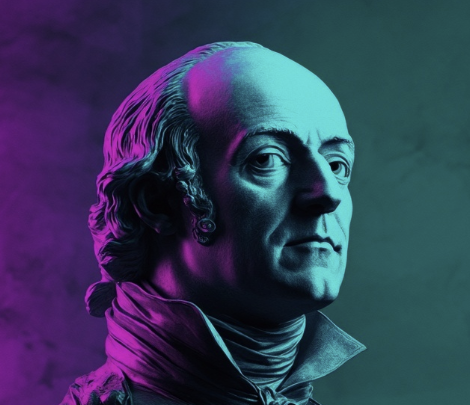
No society can surely be flourishing and happy, of which the greater part of the members are poor and miserable. It is but equity, besides, that they who feed, cloath and lodge the whole body of the people, should have such a share of the produce of their own labour as to be themselves tolerably well fed, clothed, and lodged.
▼
Source
source
Chapter VIII, p. 94.
1 month 3 weeks ago
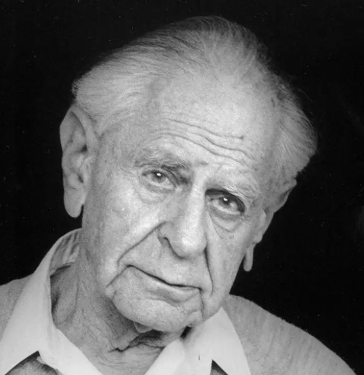
Science is not a system of certain, or well established, statements; nor is it a statement which steadily advances towards state of finality. Our science is not knowledge (epistēmē): it can newer claim to have attained truth, or even substitute for it, such as probability. . . . We do not know; we can only guess.
▼
Source
source
Ch. 10 "Corroboration, or How a Theory Stands up to Tests", section 85: The Path of Science, p. 278.

1 week ago
Considered as a whole, Hesse's achievement can hardly be matched in modern literature; it is the continually rising trajectory of an idea, the fundamentally religious idea of how to 'live more abundantly'. Hesse has little imagination in the sense that Shakespeare or Tolstoy can be said to have imagination, but his ideas have a vitality that more than makes up for it. Before all, he is a novelist who used the novel to explore the problem: What should we do with our lives? The man who is interested to know how he should live instead of merely taking life as it comes, is automatically an Outsider.
▼
Source
source
p. 77
2 weeks 6 days ago
My interests drew me in different directions. On the one hand I was powerfully attracted by science, with its truths based on facts; on the other hand I was fascinated by everything to do with comparative religion. [...] In science I missed the factor of meaning; and in religion, that of empiricism.
▼
Source
source
p. 72
2 months 2 weeks ago
Time will prolong time, and life will serve life. In this field that is both limited and bulging with possibilities, everything to himself, except his lucidity, seems unforeseeable to him. What rule, then, could emanate from that unreasonable order? The only truth that might seem instructive to him is not formal: it comes to life and unfolds in men. The absurd mind cannot so much expect ethical rules at the end of its reasoning as, rather, illustrations and the breath of human lives.
2 weeks 2 days ago
Let a man once overcome his selfish terror at his own finitude, and his finitude is, in one sense, overcome.
3 weeks 3 days ago
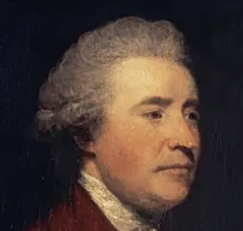
I am aware that the age is not what we all wish. But I am sure, that the only means of checking its precipitate degeneracy, is heartily to concur with whatever is the best in our time; and to have some more correct standard of judging what that best is, than the transient and uncertain favour of a court. If once we are able to find, and can prevail on ourselves to strengthen an union of such men, whatever accidentally becomes indisposed to ill-exercised power, even by the ordinary operation of human passions, must join with that society, and cannot long be joined, without in some degree assimilating to it. Virtue will catch as well as vice by contact; and the public stock of honest manly principle will daily accumulate. We are not too nicely to scrutinize motives as long as action is irreproachable. It is enough, (and for a worthy man perhaps too much,) to deal out its infamy to convicted guilt and declared apostacy.

1 month 2 weeks ago
This dysfunction of power was related to a central excess: what might be called the monarchical 'super-power', which identified the right to punish with the personal power of the sovereign.
▼
Source
source
Chapter Two, pp.80
1 month 3 weeks ago
It is time to be old, To take in sail: - The god of bounds, Who sets to seas a shore, Came to me in his fatal rounds, And said: 'No more!
▼
Source
source
Terminus
2 days ago
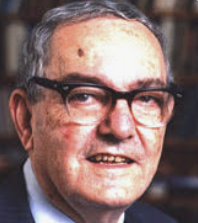
The principle of bounded rationality [is] the capacity of the human mind for formulating and solving complex problems is very small compared with the size of the problems whose solution is required for objectively rational behavior in the real world - or even for a reasonable approximation to such objective rationality.
▼
Source
source
p. 198.

2 months 2 days ago
Justice is a temporary thing that must at last come to an end; but the conscience is eternal and will never die.
▼
Source
source
On Marriage
1 month 3 weeks ago
If you die, I will lie down beside you and I will stay there until the end, without eating or drinking, you will rot in my arms and I will love you as carcass: for you love nothing if you do not love everything.
▼
Source
source
Act 10, sc. 2
2 months 1 day ago
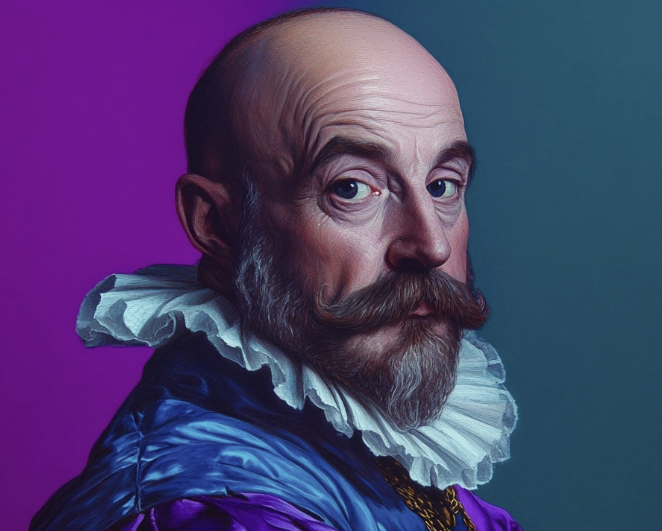
No matter that we may mount on stilts, we still must walk on our own legs. And on the highest throne in the world, we still sit only on our own bottom.
▼
Source
source
Ch. 13
5 months 4 weeks ago
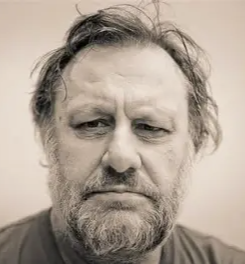
I found there, on the central square (Václavské náměstí), a café that miraculously worked through this emergency. I remember they had wonderful strawberry cakes, and I was sitting there eating strawberry cakes and watching Russian tanks against demonstrators. It was perfect.
1 month 4 weeks ago
There is no art which one government sooner learns of another than that of draining money from the pockets of the people.
▼
Source
source
Chapter II, Part II, Appendix to Articles I and II.
1 month 3 weeks ago
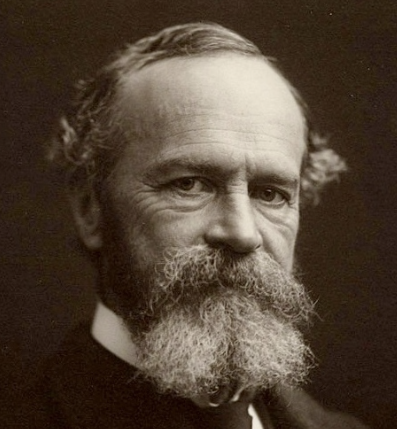
"What is meant by saying that my choice of which way to walk home after the lecture is ambiguous and matter of chance?...It means that both Divinity Avenue and Oxford Street are called but only one, and that one either one, shall be chosen.
▼
Source
source
The Dilemma of Determinism (1884) p.155
1 week 4 days ago
Of all kind of authors there are none I despise more than compilers, who search every where for shreds of other men's works, which they join to their own, like so many pieces of green turf in a garden: they are not at all superior to compositors in a printing house, who range the types, which, collected together, make a book, towards which they contribute nothing but the labours of the hand. I would have original writers respected, and it seems to me a kind of profanation to take those pieces from the sanctuary in which they reside, and to expose them to a contempt they do not deserve. When a man hath nothing new to say, why does not he hold his tongue? What business have we with this double employment?"
▼
Source
source
No. 66.
1 month 3 weeks ago
There are always two parties, the party of the Past and the party of the Future: the Establishment and the Movement. At times the resistance is reanimated, the schism runs under the world and appears in Literature, Philosophy, Church, State and social customs.
▼
Source
source
p. 529, col. 1
2 months 2 weeks ago
This heart within me I can feel, and I judge that it exists. This world I can touch, and I likewise judge that it exists. There ends all my knowledge, and the rest is construction. For if I try to seize this self of which I feel sure, if I try to define and to summarize it, it is nothing but water slipping through my fingers. I can sketch one by one all the aspects it is able to assume, all those likewise that have been attributed to it, this upbringing, this origin, this ardor or these silences, this nobility or this vileness. But aspects cannot be added up. This very heart which is mine will forever remain indefinable to me. Between the certainty I have of my existence and the content I try to give to that assurance, the gap will never be filled. Forever I shall be a stranger to myself.
1 month 2 weeks ago
But a punishment like forced labour or even imprisonment - mere loss of liberty - has never functioned without a certain additional element of punishment that certainly concerns the body itself: rationing of food, sexual deprivation, corporal punishment, solitary confinement ... There remains, therefore, a trace of 'torture' in the modern mechanisms of criminal justice - a trace that has not been entirely overcome, but which is enveloped, increasingly, by the non-corporal nature of the penal system
1 week 3 days ago
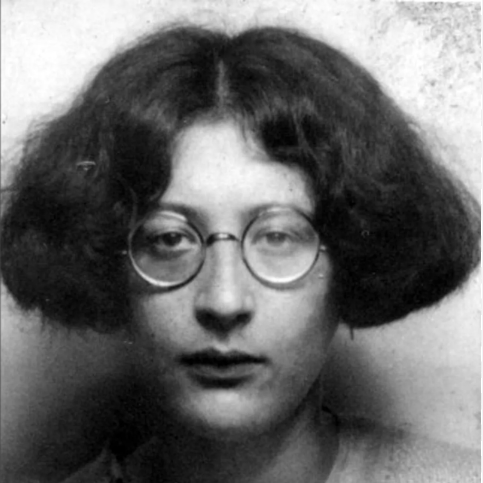
The capacity to give one's attention to a sufferer is a very rare and difficult thing; it is almost a miracle; it is a miracle. Nearly all those who think they have this capacity do not possess it. Warmth of heart, impulsiveness, pity are not enough.
1 week ago
The effects of mescalin or LSD can be, in some respects, far more satisfying than those of alcohol. To begin with, they last longer; they also leave behind no hangover, and leave the mental faculties clear and unimpaired. They stimulate the faculties and produce the ideal ground for a peak experience.
▼
Source
source
p. 88
1 month 3 weeks ago
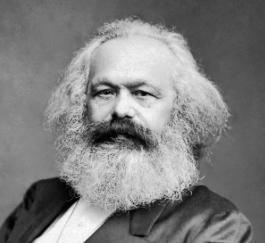
Accumulate, accumulate! That is Moses and the prophets!
▼
Source
source
Vol. I, Ch. 24, Section 3, pg. 652.

1 month 3 weeks ago
Let us cultivate our garden.
1 week 4 days ago
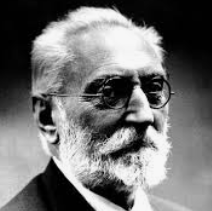
Warmth, warmth, more warmth! for we are dying of cold and not of darkness. It is not the night that kills, but the frost.
3 weeks 2 days ago
Hegel ... proceeds abstractly from the pre-existence of the intellect. ... He does not appeal to the intellect within us.
▼
Source
source
Z. Hanfi, trans., in The Fiery Brook (1972), p. 68
2 weeks 2 days ago
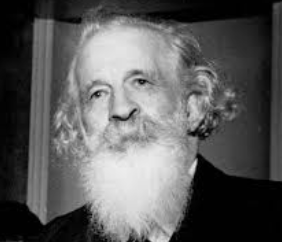
Man is a creation of desire, not a creation of need.
▼
Source
source
The Psychoanalysis of Fire, ch. 2, "Fire and Reverie"

2 months 3 weeks ago
What is asked of a man that he may be able to pray for his enemies? To pray for one's enemies is the hardest thing of all. That is why it exasperates us so much in our present day situation.
3 weeks 3 days ago
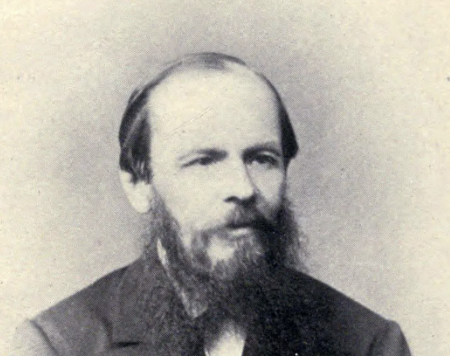
Fathers and teachers, I ponder, "What is hell?" I maintain that it is the suffering of being unable to love.
▼
Source
source
Book VI, Chapter 3 (trans. Constance Garnett)

1 month 3 weeks ago
The man who renounces himself, comes to himself.
▼
Source
source
p. 6
3 weeks 3 days ago
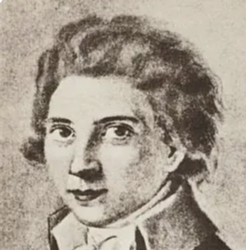
The mind understands something only insofar as it absorbs it like a seed into itself, nurtures it, and lets it grow into blossom and fruit. Therefore scatter holy seeds into the soil of the spirit.
▼
Source
source
"Ideas," Lucinde and the Fragments, P. Firchow, trans. (1991), § 5

1 month 2 weeks ago
With a malicious man carry on no conflict, and do not molest him in any way whatever.
1 month 3 weeks ago
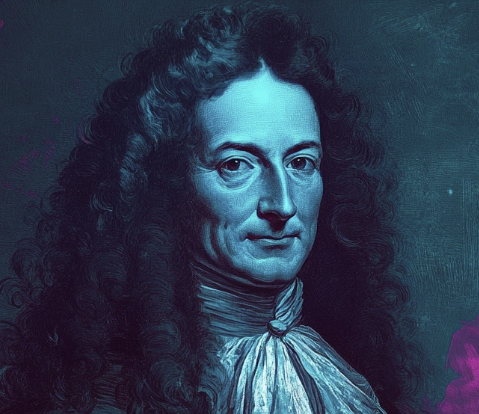
Only geometry can hand us the thread [which will lead us through] the labyrinth of the continuum's composition, the maximum and the minimum, the infinitesimal and the infinite; and no one will arrive at a truly solid metaphysic except he who has passed through this [labyrinth].
▼
Source
source
Spring 1676

1 month 3 weeks ago
Separate an individual from society, and give him an island or a continent to possess, and he cannot acquire personal property. He cannot be rich. So inseparably are the means connected with the end, in all cases, that where the former do not exist the latter cannot be obtained. All accumulation, therefore, of personal property, beyond what a man's own hands produce, is derived to him by living in society; and he owes on every principle of justice, of gratitude, and of civilization, a part of that accumulation back again to society from whence the whole came.
▼
Source
source
Means by Which the Fund Is to Be Created
1 month 3 weeks ago
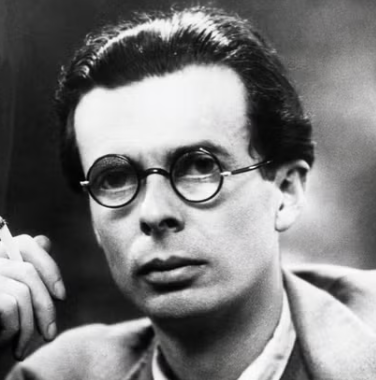
We live together, we act on, and react to, one another; but always and in all circumstances we are by ourselves. The martyrs go hand in hand into the arena; they are crucified alone. Embraced, the lovers desperately try to fuse their insulated ecstasies into a single self-transcendence; in vain. By its very nature every embodied spirit is doomed to suffer and enjoy in solitude. Sensations, feelings, insights, fancies - all these are private and, except through symbols and at second hand, incommunicable. We can pool information about experiences, but never the experiences themselves. From family to nation, every human group is a society of island universes.
2 weeks 2 days ago
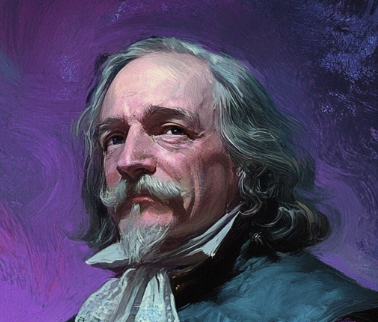
The same, without such opinion, DESPAIRE.
▼
Source
source
The First Part, Chapter 6, p. 25
CivilSimian.com created by AxiomaticPanic, CivilSimian, Kalokagathia