

1 month 3 weeks ago
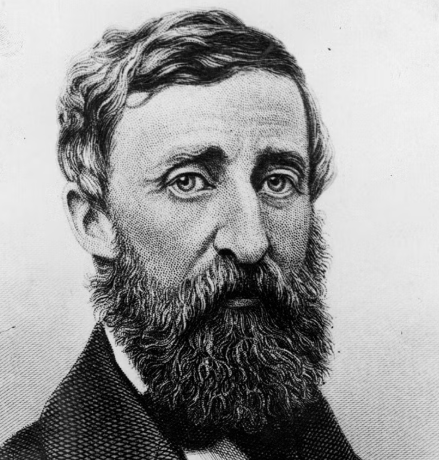
They who know of no purer sources of truth, who have traced up its stream no higher, stand, and wisely stand, by the Bible and the Constitution, and drink at it there with reverence and humility; but they who behold where it comes trickling into this lake or that pool, gird up their loins once more, and continue their pilgrimage toward its fountain-head.
1 month 3 weeks ago
The Vedas contain a sensible account of God." "The veneration in which the Vedas are held is itself a remarkable feat. Their code embraced the whole moral life of the Hindus and in such a case there is no other truth than sincerity. Truth is such by reference to the heart of man within, not to any standard without.
▼
Source
source
A Tribute to Hinduism, 2008
2 weeks ago
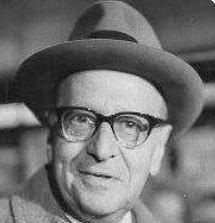
The new order contradicts reason so fundamentally that reason does not dare to doubt it. Even the consciousness of oppression fades. The more incommensurate become the concentration of power and the helplessness of the individual, the more difficult for him to penetrate the human origin of his misery.
▼
Source
source
p. 44.
1 month 3 weeks ago
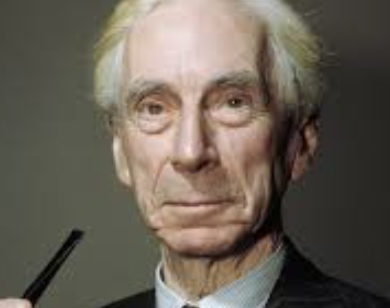
Even when the experts all agree, they may well be mistaken.
▼
Source
source
A Fresh Look at Empiricism: 1927-42 (1996), p. 281
2 months 1 day ago
If you only notice human proceedings, you may observe that all who attain great power and riches, make use of either force or fraud; and what they have acquired either by deceit or violence, in order to conceal the disgraceful methods of attainment, they endeavor to sanctify with the false title of honest gains. Those who either from imprudence or want of sagacity avoid doing so, are always overwhelmed with servitude and poverty; for faithful servants are always servants, and honest men are always poor; nor do any ever escape from servitude but the bold and faithless, or from poverty, but the rapacious and fraudulent. God and nature have thrown all human fortunes into the midst of mankind; and they are thus attainable rather by rapine than by industry, by wicked actions rather than by good. Hence it is that men feed upon each other, and those who cannot defend themselves must be worried.
▼
Source
source
Book III, Chapter 13
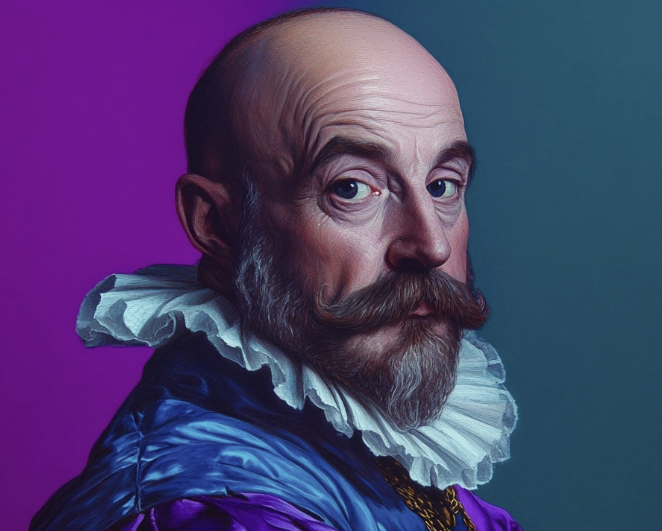
2 months 2 days ago
My appetite comes to me while eating.
▼
Source
source
Book III, Ch. 9. Of Vanity


1 week 3 days ago
Hegel ... destroyed the illusion of the subject's being-in-itself and showed that the subject is itself an aspect of social objectivity. ... However, ... we must ask this question: is this objectivity which we have shown to be a necessary condition and which subsumes abstract subjectivity in fact the higher factor? Does it not rather remain precisely what Hegel reproached it with being in his youth, namely pure externality, the coercive collective? Does not the retreat to this supposedly higher authority signify the regression of the subject, which had earlier won its freedom only with the greatest efforts, with infinite pains?
▼
Source
source
p. 16
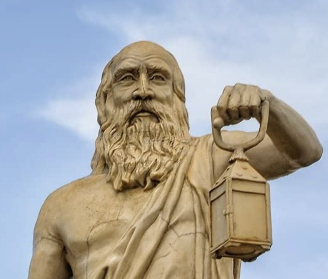
1 month 2 weeks ago
To the question what wine he found pleasant to drink, he replied, "That for which other people pay."
▼
Source
source
Diogenes Laërtius, vi. 54
6 months ago
The age of philosophy in the sense again that we are confronted more and more often with philosophical problems at an everyday level. It is not that you withdraw from daily life into a world of philosophical contemplation. On the contrary, you cannot find your way around daily life itself without answering certain philosophical questions. It is a unique time when everyone is, in a way, forced to be some kind of philosopher.
1 month 3 weeks ago
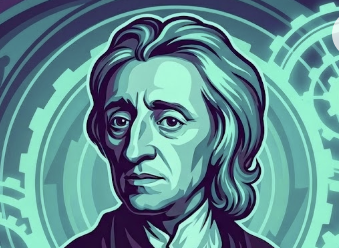
If man in the state of nature be so free, as has been said; if he be absolute lord of his own person and possessions, equal to the greatest, and subject to no body, why will he part with his freedom, this empire, and subject himself to the dominion and control of any other power?
▼
Source
source
Second Treatise of Government, Ch. IX, sec. 123

2 weeks 6 days ago
The more intense a spiritual leader's appetite for power, the more he is concerned to limit it to others.
1 month 3 weeks ago
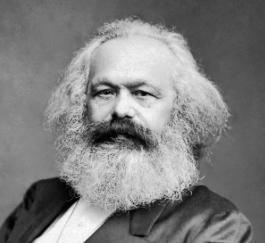
If production be capitalistic in form, so, too, will be reproduction.
▼
Source
source
Vol. I, Ch. 23, pg. 620.
2 weeks 6 days ago
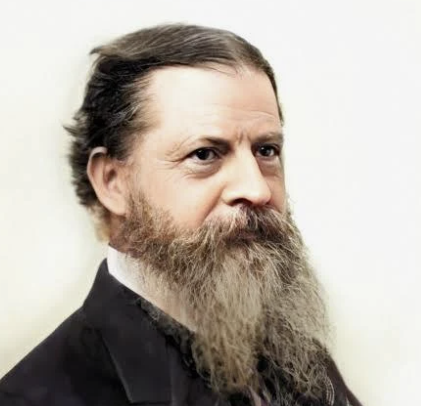
The old dualistic notion of mind and matter, so prominent in Cartesianism, as two radically different kinds of substance, will hardly find defenders to-day. Rejecting this, we are driven to some form of hylopathy, otherwise called monism.
2 months 3 weeks ago
As for the life of money-making, it is one of constraint, and wealth is manifestly not the good of which we are in search, for it is only useful as a means to something else, and for this reason there is less to be said for it than for the ends mentioned before, which are, at any rate, desired for their own sakes.
1 month 4 weeks ago
When the happiness or misery of others depends in any respect upon our conduct, we dare not, as self-love might suggest to us, prefer the interest of one to that of many. The man within immediately calls to us, that we value ourselves too much and other people too little, and that, by doing so, we render ourselves the proper object of the contempt and indignation of our brethren. Neither is this sentiment confined to men of extraordinary magnanimity and virtue. It is deeply impressed upon every tolerably good soldier, who feels that he would become the scorn of his companions, if he could be supposed capable of shrinking from danger, or of hesitating, either to expose or to throw away his life, when the good of the service required it.
▼
Source
source
Chap. III.
4 days ago
The "second sight" possessed by the Highlanders in Scotland is actually a foreknowledge of future events. I believe they possess this gift because they don't wear trousers... That is also why in all countries women are more prone to utter prophecies.
▼
Source
source
L 26
1 month 3 weeks ago
We are speaking on this occasion, not as members of this or that nation, continent, or creed, but as human beings, members of the species Man, whose continued existence is in doubt.
2 months 1 day ago
Men never do good unless necessity drives them to it; but when they are free to choose and can do just as they please, confusion and disorder become rampant.
▼
Source
source
Book 1, Ch. 3 (as translated by LJ Walker and B Crick)

2 months 3 weeks ago
My hearers, this discourse has not wandered out into the world to look for conflict, it has not tried to get the better of anybody, it has not even tried to uphold anybody, as though there was battle without. It has spoken to you; not by way of explaining anything to you, but trying to speak secretly with you about your relationship to that secret wisdom mentioned in our text. Oh that nothing may upset you in respect to this, “neither life nor death nor things present nor things to come nor any other creature” (Romans 8:38) –not this discourse, which, though it may have profited you nothing, yet has striven for what after all is the first and the last, to help you have what the Scripture calls “faith in yourself before God.
1 month 3 weeks ago
For those who want 'to change life", 'to reinvent love,' God is nothing but a hindrance.
▼
Source
source
p. 500
1 month 3 weeks ago
Man's chief difference from the brutes lies in the exuberant excess of his subjective propensities - his preeminence over them simply and solely in the number and in the fantastic and unnecessary character of his wants, physical, moral, aesthetic, and intellectual. Had his whole life not been a quest for the superfluous, he would never have established himself as inexpugnably as he has done in the necessary.
▼
Source
source
"Reflex Action and Theism"

1 month 2 weeks ago
In France at least, the history of science and thought gives pride of place sciences, sciences of the necessary, all close to philosophy: one can observe in their history the almost uninterrupted emergence of truth and pure reason. The other disciplines, however - those, for example, that concern living beings, languages, or economic facts - are considered too tinged with empirical thought, too exposed to the vagaries of chance or imagery to age old traditions and external events, for it to be supposed that their history could be anything other irregular. At most, they are expected to provide evidence of a state of mind, an intellectual fashion, a mixture of archaism and bold conjecture, of intuition and blindness. But what if empirical knowledge, at a given time and in a given culture, did possess a well defined regularity.
▼
Source
source
Foreword to the English edition
3 weeks 4 days ago
Nor is prescription of government formed upon blind unmeaning prejudices-for man is a most unwise, and a most wise, being. The individual is foolish. The multitude, for the moment, is foolish, when they act without deliberation; but the species is wise, and when time is given to it, as a species it almost always acts right.
▼
Source
source
Speech in the House of Commons against William Pitt's motion for parliamentary reform (7 May 1782)
1 month 3 weeks ago
Most people live, whether physically, intellectually or morally, in a very restricted circle of their potential being. They make use of a very small portion of their possible consciousness, and of their soul's resources in general, much like a man who, out of his whole bodily organism, should get into a habit of using and moving only his little finger. Great emergencies and crises show us how much greater our vital resources are than we had supposed.
▼
Source
source
To W. Lutoslawski, 5/6/1906
2 weeks 6 days ago
Born in a prison, with burdens on our shoulders and our thoughts, we could not reach the end of a single day if the possibilities of ending it all did not incite us to begin the next day all over again.
1 month 3 weeks ago
So long as antimilitarists propose no substitute for war's disciplinary function, no moral equivalent of war, analogous, as one might say, to the mechanical equivalent of heat, so long they fail to realize the full inwardness of the situation.
▼
Source
source
The Moral Equivalent of War

2 months 3 weeks ago
We have seen how it is originally language which works on the construction of concepts, a labor taken over in later ages by science. Just as the bee simultaneously constructs cells and fills them with honey, so science works unceasingly on this great columbarium of concepts, the graveyard of perceptions.

1 month 2 weeks ago
It is not how things are in the world that is mystical, but that it exists.
▼
Source
source
(6.44) Variant translation: The mystical is not how the world is, but that it is. Original German: Nicht wie die Welt ist, ist das Mystische, sondern dass sie ist.
2 weeks 6 days ago
We must now turn to the question of how the existence of archetypes can be proved. Since archetypes are supposed to produce certain psychic forms, we must discuss how and where one can get hold of the material demonstrating these forms. The main source, then, is dreams, which have the advantage of being involuntary, spontaneous products of nature not falsified by any conscious purpose. By questioning the individual one can ascertain which of the motifs appearing in the dream are known to him... Consequently, we must look for motifs which could not possibly be known to the dreamer and yet behave functionally of the archetype known from historical sources.
▼
Source
source
p. 48
2 months 1 week ago
I would have written a shorter letter, but I did not have the time.
▼
Source
source
Provincial Letters: Letter XVI (4 December 1656)

1 month 6 days ago
The best and greatest winning is a true friend; and the greatest loss is the loss of time.
2 weeks 6 days ago
After all, why should ordinary people want to contemplate the End, especially when we see the condition of those who do?
2 weeks 6 days ago
To make more plans than an explorer or a crook, yet to be infected at the will's very root.
2 months 3 weeks ago
The essential nature (concerning the soul) cannot be corporeal, yet it is also clear that this soul is present in a particular bodily part, and this one of the parts having control over the rest (heart).

2 months 3 weeks ago
Scientific theories can always be improved and are improved. That is one of the glories of science. It is the authoritarian view of the Universe that is frozen in stone and cannot be changed, so that once it is wrong, it is wrong forever.
2 weeks 6 days ago
Thus far, gentlemen, I have been insisting very strenuously upon what the most vulgar common sense has every disposition to assent to and only ingenious philosophers have been able to deceive themselves about. But now I come to a category which only a more refined form of common sense is prepared willingly to allow, the category which of the three is the chief burden of Hegel's song, a category toward which the studies of the new logico-mathematicians, Georg Cantor and the like, are steadily pointing, but to which no modern writer of any stripe, unless it be some obscure student like myself, has ever done anything approaching to justice.
▼
Source
source
Lecture II : The Universal Categories, §3. Laws: Nominalism, CP 5.59

1 month 3 weeks ago
Reality is harsh to the feet of shadows.
▼
Source
source
Ch. 5
2 months 2 days ago
We are, I know not how, double in ourselves, which is the cause that what we believe we do not believe, and cannot disengage ourselves from what we condemn.
▼
Source
source
Ch. 16. Of Glory, tr. Cotton, rev. W. Carew Hazlitt, 1877
4 weeks ago
If there is one realm in which it is essential to be sublime, it is in wickedness. You spit on a petty thief, but you can't deny a kind of respect for the great criminal.
1 week 1 day ago
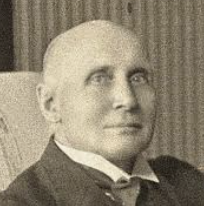
The science of pure mathematics, in its modern developments, may claim to be the most original creation of the human spirit.
▼
Source
source
Ch. 2: "Mathematics as an Element in the History of Thought", p. 28
3 weeks 4 days ago
I cannot conceive how any man can have brought himself to that pitch of presumption, to consider his country as nothing but carte blanche, upon which he may scribble whatever he pleases.
▼
Source
source
Volume iii, p. 231
1 month 2 weeks ago
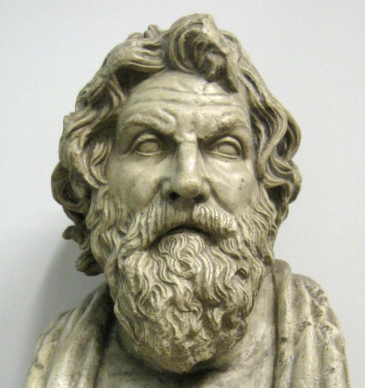
It is better to fall in with crows than with flatterers; for in the one case you are devoured when dead, in the other case while alive.
▼
Source
source
§ 4
1 month 3 weeks ago
None but a coward dares to boast that he has never known fear.
▼
Source
source
Attributed to Russell in M. Kumar Dictionary of Quotations, p. 76, but actually said by Marshal Lannes, according to The London Literary Gazette and Journal of Belles Lettres, Arts, Sciences (1824), p. 664
1 month 3 weeks ago
The most dangerous thing you can do is to take any one impulse of your own nature and set it up as the thing you ought to follow at all costs. There is not one of them which will not make us into devils if we set it up as an absolute guide. You might think love of humanity in general was safe, but it is not. If you leave out justice you will find yourself breaking agreements and faking evidence in trials "for the sake of humanity", and become in the end a cruel and treacherous man.
▼
Source
source
Book I, Chapter 2, "Some Objections"
2 weeks 2 days ago
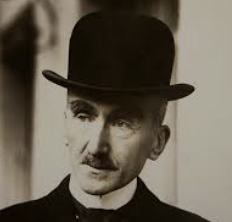
The eyes see only what the mind is prepared to comprehend.
▼
Source
source
Robertson Davies as quoted in The White Bedouin (2007) by George Potter, p. 241
1 month 3 weeks ago
I like mathematics because it is not human and has nothing particular to do with this planet or with the whole accidental universe - because, like Spinoza's God, it won't love us in return.
▼
Source
source
Letter to Lady Ottoline Morrell, March, 1912, as quoted in Gaither's Dictionary of Scientific Quotations (2012), p. 1318
2 weeks 1 day ago
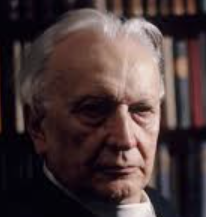
The teacher of love teaches struggle. The teacher of lifeless isolation from the world teaches peace.
1 month 2 weeks ago
"Fare well!" "A whole world of pain is contained in these words." How can it be contained in them? - It is bound up in them. The words are like an acorn from which an oak tree can grow.
▼
Source
source
p. 52e
2 weeks 1 day ago
When we come to inanimate elements, the prevailing view has been that time and sequential change are entirely foreign to their nature. According to this view they do not have careers; they simply change their relations is space. We have only to think of the classic conception of atoms. The Newtonian atom, for example, moved and was moved, thus changing its position in space, but it was unchangeable in its own being. ... In itself it was like a God, the same yesterday, today, and forever.
CivilSimian.com created by AxiomaticPanic, CivilSimian, Kalokagathia