

1 month 3 weeks ago
The reservedness and distance that fathers keep, often deprive their sons of that refuge which would be of more advantage to them than an hundred rebukes or chidings.
▼
Source
source
Sec. 96

2 months 1 week ago
For when every judgement is the act of hym that judgeth, it behoveth that every man performe hys worke and purpose, not by any forayne or straunge power or facultie, but by his owne proper power, and strength.

2 weeks 2 days ago
Poetry is one of the destinies of speech.... One would say that the poetic image, in its newness, opens a future to language.
▼
Source
source
Introduction, sect. 2
1 month 3 weeks ago
The heavens are as deep as our aspirations are high.
▼
Source
source
Quoted in Maturin M. Ballou (ed.) Pearls of Thought (Boston: Houghton, Mifflin and Co., 1881) p. 21
3 weeks 3 days ago
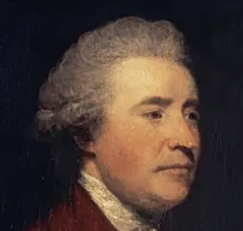
No passion so effectually robs the mind of all its powers of acting and reasoning as fear.
▼
Source
source
Part II Section II

1 month 3 weeks ago
A command can express no more than an ought or a shall, because it is a universal, but it does not express an 'is'; and this at once makes plain its deficiency. Against such commands Jesus sets virtue, i.e., a loving disposition, which makes the content of the command superfluous and destroys its form as a command, because that form implies an opposition between a commander and something resisting the command.

2 months 3 weeks ago
We can hope that the ways of peace will attract the Arabic nations, for their territory and opportunities are broad enough for immeasurable advance, if the energies vented in spleen, are turned instead to a modernisation of the technology, a restoration of the soil, and a renovation of the economic, social, and political structure of those great and venerable lands.
1 week 2 days ago
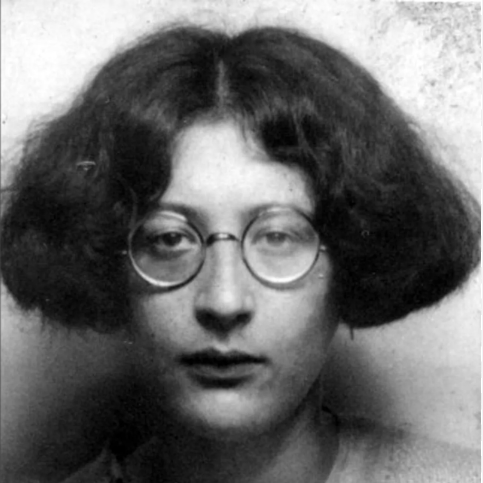
Concern for the symbol has completely disappeared from our science. And yet, if one were to give oneself the trouble, one could easily find, in certain parts at least of contemporary mathematics... symbols as clear, as beautiful, and as full of spiritual meaning as that of the circle and mediation. From modern thought to ancient wisdom the path would be short and direct, if one cared to take it.
▼
Source
source
The Need for Roots (1949), p. 292

1 month 3 weeks ago
The foundations on which several duties are built, and the foundations of right and wrong from which they spring, are not perhaps easily to be let into the minds of grown men, not us'd to abstract their thoughts from common received opinions. Much less are children capable of reasonings from remote principles. They cannot conceive the force of long deductions. The reasons that move them must be obvious, and level to their thoughts, and such as may be felt and touched. But yet, if their age, temper, and inclination be consider'd, they will never want such motives as may be sufficient to convince them.
▼
Source
source
Sec. 81
1 month 3 weeks ago
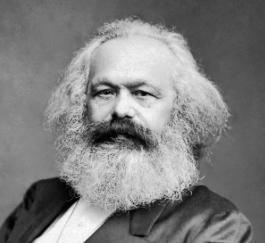
The national debt has given rise to joint stock companies, to dealings in negotiable effects of all kinds, and to agiotage, in a word to stock-exchange gambling and the modern bankocracy.
▼
Source
source
Vol. I, Ch. 31, pg. 827.
1 month 3 weeks ago
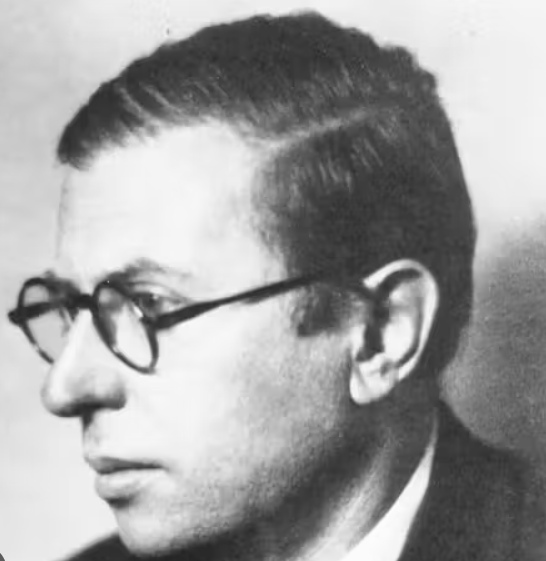
I can be twenty women, one hundred, if that's what you want, all women. Ride with me behind you, I weigh nothing, your horse will not feel me. I want to be your whorehouse!
▼
Source
source
Act 3, sc. 4

6 days ago
Eros conquers depression.

2 months 1 week ago
Times are bad. Children no longer obey their parents, and everyone is writing a book.
▼
Source
source
As quoted in InfoWorld, Vol. 23, No. 16, 16 April 2001, p. 49. This had been attributed previously to many other sources from 1908 on, according to this analysis by Quote Investigator.
1 month 3 weeks ago
How shall we define a god? Expressed in psychological terms (which are primary-there is no getting behind them) a god is something that gives us the peculiar kind of feeling which Professor Otto has called "numinous". Numinous feelings are the original god-stuff from which the theory-making mind extracts the individualised gods of the pantheon.
▼
Source
source
"Meditation on the Moon"

2 months 3 weeks ago
Most men pursue pleasure with such breathless haste that they hurry past it.

1 month 2 weeks ago
L'important, c'est que le sexe n'ait pas été seulement affaire de sensation et de plaisir, de loi ou d'interdiction, mais aussi de vrai et de faux. What is important is that sex was not only a question of sensation and pleasure, of law and interdiction, but also of the true and the false.
▼
Source
source
Vol. I, p. 76
2 weeks ago
The most immediate result of this unbalanced specialisation has been that to-day, when there are more "scientists" than ever, there are much less "cultured" men than, for example, about 1750. And the worst is that with these turnspits of science not even the real progress of science itself is assured. For science needs from time to time, as a necessary regulator of its own advance, a labour of reconstitution, and, as I have said, this demands an effort towards unification, which grows more and more difficult, involving, as it does, ever-vaster regions of the world of knowledge. Newton was able to found his system of physics without knowing much philosophy, but Einstein needed to saturate himself with Kant and Mach before he could reach his own keen synthesis. Kant and Mach - the names are mere symbols of the enormous mass of philosophic and psychological thought which has influenced Einstein.
▼
Source
source
Chapter XII: The Barbarism Of "Specialisation"
2 weeks 5 days ago
Scaffolds, dungeons, jails flourish only in the shadow of a faith - of that need to believe which has infested the mind forever. The devil pales beside the man who owns a truth, his truth. We are unfair to a Nero, a Tiberius: it was not they who invented the concept heretic: they were only degenerate dreamers who happened to be entertained by massacres. The real criminals are men who establish an orthodoxy on the religious or political level, men who distinguish between the faithful and the schismatic.
1 month 2 weeks ago
The distance between oneself and other persons and other species can fall anywhere on a continuum. Even for other persons the understanding of what it is like to be them is only partial, and when one moves to species very different from oneself, a lesser degree of partial understanding may still be available. The imagination is remarkably flexible. My point, however, is not that we cannot know what it is like to be a bat. I am not raising that epistemological problem. My point is rather that even to form a conception of what it is like to be a bat and a fortiori to know what it is like to be a bat, one must take up the bat's point of view.
▼
Source
source
p. 172, note 8.

4 weeks ago
If it be of the highest importance to man, as an individual, that his religion should be true, the case of society is not the same. Society has no future life to hope for or to fear; and provided the citizens profess a religion, the peculiar tenets of that religion are of very little importance to its interests. Variant translation: Though it is very important for man as an individual that his religion should be true, that is not the case for society. Society has nothing to fear or hope from another life; what is most important for it is not that all citizens profess the true religion but that they should profess religion.
▼
Source
source
Chapter XVII.
2 weeks ago
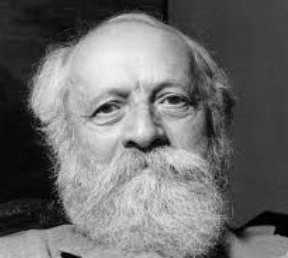
Before his death, Rabbi Zusya said, "In the coming world, they will not ask me: 'Why were you not Moses?' They will ask me: 'Why were you not Zusya?'"
▼
Source
source
Tales of the Hasidim (1947), 1991 Ebook edition, p.251, as quoted in Jewish Currents.
3 weeks 3 days ago
The first and the simplest emotion which we discover in the human mind is Curiosity.
▼
Source
source
Part I Section I
1 month 1 week ago
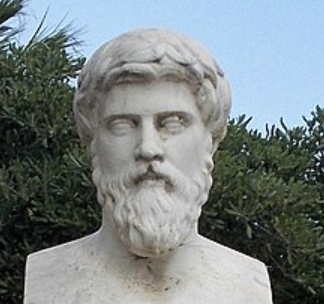
There are two sentences inscribed upon the Delphic oracle, hugely accommodated to the usages of man's life: "Know thyself," and "Nothing too much;" and upon these all other precepts depend.
1 month 3 weeks ago
Most books belong to the house and streets only, and in the fields their leaves feel very thin.
2 weeks 5 days ago
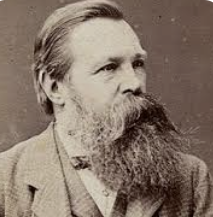
Democratic socialists are either proletarians who are not yet sufficiently clear about the conditions of the liberation of their class, or they are representatives of the petty bourgeoisie, a class which, prior to the achievement of democracy and the socialist measures to which it gives rise, has many interests in common with the proletariat. It follows that, in moments of action, the communists will have to come to an understanding with these democratic socialists, and in general to follow as far as possible a common policy with them - provided that these socialists do not enter into the service of the ruling bourgeoisie and attack the communists. It is clear that this form of co-operation in action does not exclude the discussion of differences.
1 month 3 weeks ago
The most violent, mean and malignant passions of the human breast, the Furies of private interest.
▼
Source
source
Author's prefaces to the First Edition.
1 month 3 weeks ago
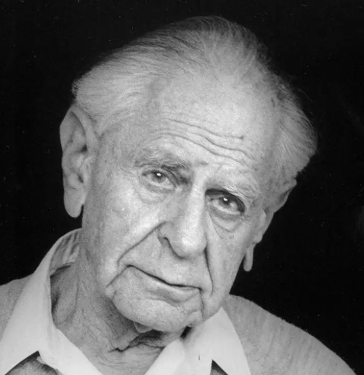
It is wrong to think that belief in freedom always leads to victory; we must always be prepared for it to lead to defeat. If we choose freedom, then we must be prepared to perish along with it. Poland fought for freedom as no other country did. The Czech nation was prepared to fight for its freedom in 1938; it was not lack of courage that sealed its fate. The Hungarian Revolution of 1956 - the work of young people with nothing to lose but their chains - triumphed and then ended in failure. ... Democracy and freedom do not guarantee the millennium. No, we do not choose political freedom because it promises us this or that. We choose it because it makes possible the only dignified form of human coexistence, the only form in which we can be fully responsible for ourselves. Whether we realize its possibilities depends on all kinds of things - and above all on ourselves.
1 month 3 weeks ago
A process which led from the amœba to man appeared to the philosophers to be obviously a progress - though whether the amœba would agree with this opinion is not known.
▼
Source
source
Ch. 1: Mysticism and Logic
1 month 3 weeks ago
For the trouble with lying and deceiving is that their efficiency depends entirely upon a clear notion of the truth that the liar and deceiver wishes to hide. In this sense, truth, even if it does not prevail in public, possesses an ineradicable primacy over all falsehoods.
▼
Source
source
"Lying in Politics"
2 months 1 week ago
The superior man, when resting in safety, does not forget that danger may come. When in a state of security he does not forget the possibility of ruin. When all is orderly, he does not forget that disorder may come. Thus his person is not endangered, and his States and all their clans are preserved.
1 month 3 weeks ago
Lincoln is not the product of a popular revolution. This plebeian, who worked his way up from stone-breaker to Senator in Illinois, without intellectual brilliance, without a particularly outstanding character, without exceptional importance-an average person of good will, was placed at the top by the interplay of the forces of universal suffrage unaware of the great issues at stake. The new world has never achieved a greater triumph than by this demonstration that, given its political and social organisation, ordinary people of good will can accomplish feats which only heroes could accomplish in the old world!
2 months 1 week ago
Whatever you would make habitual, practice it; and if you would not make a thing habitual, do not practice it, but accustom yourself to something else.
▼
Source
source
Book II, ch. 18, 4.
1 month 3 weeks ago
I will not talk about people a thousand miles off, but come as near home as I can. As the time is short, I will leave out all the flattery, and retain all the criticism. Let us consider the way in which we spend our lives.
▼
Source
source
p. 484
1 month 3 weeks ago
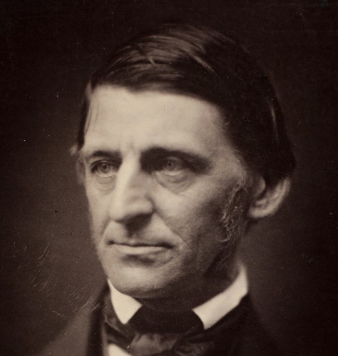
Tis very certain that each man carries in his eye the exact indication of his rank in the immense scale of men, and we are always learning to read it. A complete man should need no auxiliaries to his personal presence.
▼
Source
source
Behavior

2 months 1 day ago
He who is not sure of his memory, should not undertake the trade of lying.
▼
Source
source
Book I, Ch. 9

4 weeks 1 day ago
For the world, I count it not an Inn, but a Hospital, and a place, not to live, but to die in.
▼
Source
source
Section 11
2 months 1 week ago
Reviewing what you have learned and learning anew, you are fit to be a teacher.
2 weeks 5 days ago
Great joys, why do they bring us sadness? Because there remains from these excesses only a feeling of irrevocable loss and desertion which reaches a high degree of negative intensity. At such moments, instead of a gain, one keenly feels loss. sadness accompanies all those events in which life expends itself. its intensity is equal to its loss. Thus death causes the greatest sadness.

1 month 3 weeks ago
"No, no no," she said. "You don't understand. Not that kind of longing. It was when I was happiest that I longed most. It was on happy days when we were up there on the hills, the three of us, with the wind and the sunshine ... where you couldn't see Glome or the palace. Do you remember? The colour and the smell, and looking at the Grey Mountain in the distance? And because it was so beautiful, it set me longing, always longing. Somewhere else there must be more of it. Everything seemed to be saying, Psyche come! But I couldn't (not yet) come and I didn't know where I was to come to. It almost hurt me. I felt like a bird in a cage when the other birds of its kind are flying home."
▼
Source
source
Psyche
1 month 3 weeks ago
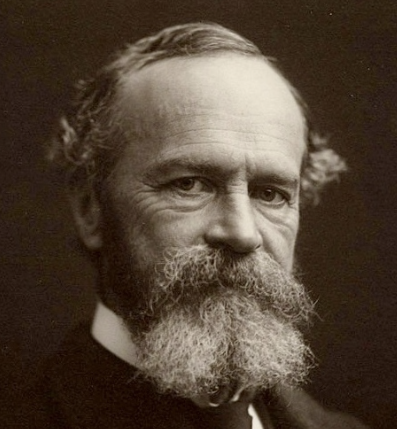
Need and struggle are what excite and inspire us; our hour of triumph is what brings the void. Not the Jews of the captivity, but those of the days of Solomon's glory are those from whom the pessimistic utterances in our Bible come.
▼
Source
source
"Is Life Worth Living?"
2 months 1 day ago
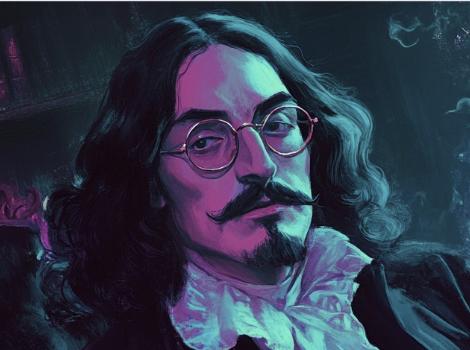
M. Desargues puts me under obligations on account of the pains that it has pleased him to have in me, in that he shows that he is sorry that I do not wish to study more in geometry, but I have resolved to quit only abstract geometry, that is to say, the consideration of questions which serve only to exercise the mind, and this, in order to study another kind of geometry, which has for its object the explanation of the phenomena of nature... You know that all my physics is nothing else than geometry.
▼
Source
source
Letter to Marin Mersenne (July 27, 1638) as quoted by Florian Cajori, A History of Mathematics (1893) letter dated in The Philosophical Writings of Descartes Vol. 3, The Correspondence (1991) ed. John Cottingham, Robert Stoothoff, Dugald Murdoch
1 month 3 weeks ago
Either the USSR was not the country of socialism, in which case socialism didn't exist anywhere and doubtless, wasn't possible: or else, socialism was that, this abominable monster, this police state, the power of beasts of prey.
▼
Source
source
p. 184

2 weeks 2 days ago
With men this is impossible; but with God all things are possible.
▼
Source
source
19:26 (KJV)
1 month 3 weeks ago
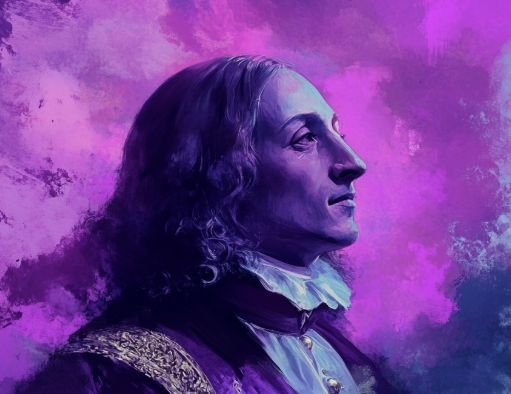
No particular results then, so far, but only an attitude of orientation, is what the pragmatic method means. The attitude of looking away from first things, principles, 'categories,' supposed necessities; and of looking towards last things, fruits, consequences, facts.
▼
Source
source
Lecture II, What Pragmatism Means
2 months 6 days ago
There are hardly any truths upon which we always remain agreed, and still fewer objects of pleasure which we do not change every hour, I do not know whether there is a means of giving fixed rules for adapting discourse to the inconstancy of our caprices.
2 months 1 day ago
There are some defeats more triumphant than victories.
▼
Source
source
Ch. 30. Of Cannibals, tr. Cotton, rev. W. Hazlitt, 1842
2 months 1 week ago
The Master said, "Hard is it to deal with him, who will stuff himself with food the whole day, without applying his mind to anything good! Are there not gamesters and chess players? To be one of these would still be better than doing nothing at all.

1 month 1 week ago
Often must you turn your pencil to erase, if you hope to write something worth a second reading.
▼
Source
source
Book I, satire i, lines 72-3,
CivilSimian.com created by AxiomaticPanic, CivilSimian, Kalokagathia