

1 day ago
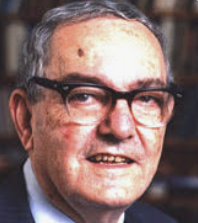
Broadly stated, the task is to replace the global rationality of economic man with a kind of rational behavior that is compatible with the access to information and the computational capacities that are actually possessed by organisms, including man, in the kinds of environments in which such organisms exist.
▼
Source
source
Simon (1955) "A behavioral model of rational choice", The Quarterly Journal of Economics, Vol. 69 (1); As cited in: Gustavo Barros (2010, p. 462).

1 month 1 week ago
Do not be arrogant because of your knowledge, but confer with the ignorant man as with the learned. For knowledge has no limits, and none has yet achieved perfection in it. Good speech is more hidden than malachite, yet it is found in the possession of women slaves at the millstones.
▼
Source
source
Maxim no. 1.
3 weeks 2 days ago
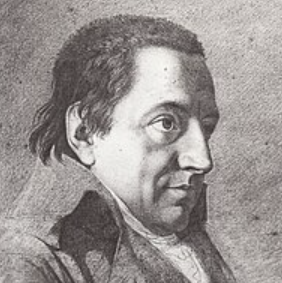
Each citizen of a state promises, in the original compact, that he will promote, as far as lies in his power, all the conditions of the possibility of the state ; hence, also, the condition just mentioned. This he can best do by educating children who may grow up to realize various ends of reason. The state has the right to make this education of children a condition of the state-compact, and thus education becomes an external, legal obligation, which the parents owe to the state.
▼
Source
source
P. 459
3 weeks 2 days ago
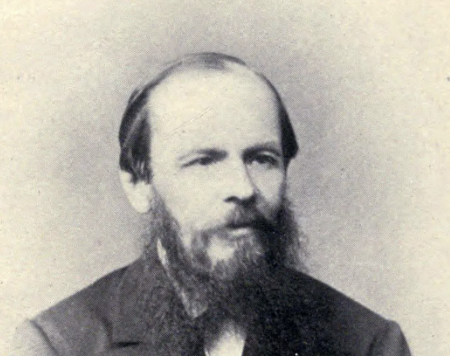
The second half of a man's life is made up of nothing but the habits he has acquired during the first half.
▼
Source
source
As quoted in Peter's Quotations: Ideas for Our Time (1979) by Laurence J. Peter, p. 299

1 month 3 weeks ago
As image and apprehension are in an organic unity, so, for a Christian, are human body and human soul.
▼
Source
source
"Priestesses in the Church?" (1948), p. 237

1 month 3 weeks ago
In the "fulfillment" of both the laws and duty, ... the moral disposition ceases to be the universal, opposed to inclination, and inclination ceases to be particular, opposed to the law.

2 weeks 5 days ago
My mission is to suffer for all those who suffer without knowing it. I must pay for them, expiate their unconsciousness, their luck to be ignorant of how unhappy they are.

2 months 3 weeks ago
Wit is cultured insolence.

2 months 3 weeks ago
Above all do not forget your duty to love yourself; do not permit the fact that you have been set apart from life in a way, been prevented from participating actively in it, and that you are superflous in the obtruse eyes of a busy world, above all, do not permit this to deprive you of your idea of yourself, as if your life, if lived in inwardness, did not have just as much meaning and worth as that of any human being in the eyes of all-wise Governance, and considerably more than the busy, busiest haste of busy-ness - busy with wasting life and losing itself.
3 weeks 2 days ago
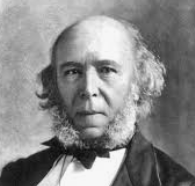
Morality knows nothing of geographical boundaries, or distinctions of race.
▼
Source
source
Pt. IV, Ch. 30 : General Considerations
3 weeks 2 days ago
The End of the Life of Mankind on Earth is this,-that in this Life they may order all their relations with FREEDOM according to REASON.
▼
Source
source
p. 5

6 days ago
Without narration, life is purely additive.
1 month 3 weeks ago
Science, ever since the time of the Arabs, has had two functions: (1) to enable us to know things, and (2) to enable us to do things.
1 month 1 week ago
Soul, indeed, is a certain medium between an impartible essence, and an essence which is divisible about bodies. But intellect is an impartible essence alone. And qualities and material forms are divisible about bodies. Not everything which acts on another, effects that which it does effect by approximation and contact; but those natures which effect any thing by approximation and contact, use approximation accidentally.
2 days ago
We accumulate our opinions at an age when our understanding is at its weakest.
▼
Source
source
H 4
2 weeks 1 day ago
Happiness is a matter of one's most ordinary everyday mode of consciousness being busy and lively and unconcerned with self. To be damned is for one's ordinary everyday mode of consciousness to be unremitting agonising preoccupation with self.
▼
Source
source
The Nice and the Good (1968), ch. 22.

2 months 1 week ago
Yet God hath not only granted these faculties, by which we may bear every event without being depressed or broken by it, but like a good prince and a true father, hath placed their exercise above restraint, compulsion, or hindrance, and wholly within our own control.
▼
Source
source
Book I, ch. 6, 40.


1 month 3 weeks ago
It is freedom, it is particularity, it is solitude that we are aiming at, and not Evil for its own sake.
▼
Source
source
p. 179
2 weeks 5 days ago
The same feeling of not belonging, of futility, wherever I go: I pretend interest in what matters nothing to me, I bestir myself mechanically or out of charity, without ever being caught up, without ever being somewhere. What attracts me is elsewhere, and I don't know where that elsewhere is.
1 week ago
There is something between the gross specialised values of the mere practical man, and the thin specialised values of the mere scholar. Both types have missed something; and if you add together the two sets of values, you do not obtain the missing elements.
▼
Source
source
Ch. 13: "Requisites for Social Progress", p. 279
1 month 3 weeks ago
It is so hard to forget what it is worse than useless to remember! If I am to be a thoroughfare, I prefer that it be of the mountain-brooks, the Parnassian streams, and not the town-sewers. There is inspiration, that gossip which comes to the ear of the attentive mind from the courts of heaven. There is the profane and stale revelation of the bar-room and the police court. The same ear is fitted to receive both communications. Only the character of the hearer determines to which it shall be open, and to which closed. I believe that the mind can be permanently profaned by the habit of attending to trivial things, so that all our thoughts shall be tinged with triviality.
▼
Source
source
p. 492
1 week 6 days ago
You do not attain to knowledge by remaining on the shore and watching the foaming waves, you must make the venture and cast yourself in, you must swim, alert and with all your force, even if a moment comes when you think you are losing consciousness; in this way, and in no other, do you reach anthropological insight.
▼
Source
source
p. 148
1 week 6 days ago
If the awareness of our limitations begins to limit or to dim our value consciousness as well-as happens, for instance, in old age with regard to the values of youth-then we have already started the movement of devaluation which will end with the defamation of the world and all its values. Only a timely act of resignation can deliver us from this tendency toward self-delusion.
▼
Source
source
L. Coser, trans. (1973), p. 59

6 days ago
I began to practice 'meditation', sitting cross-legged for hours, staring straight in front of me. The result was a sudden and total transformation of my inner-being. There was a sense of freedom from my personality -- from the being called Colin Wilson who was born in Leicester in 1931. I felt that 'he' was a series of responses and reactions, of ambitions and frustrations. But after half an hour of staring straight in front of me, of concentrating my attention 'at the root of my eyebrows', I felt in control of his responses and frustrations. This control brought such a sense of exhilaration and satisfaction that I often sneaked away from other people to spend just five minutes sitting cross-legged; when I was working as a labourer on a building site, I would find a quiet spot and, while the others were having a smoke, would sit in a position that could quickly be changed to an ordinary sitting posture if someone came by . . .
▼
Source
source
p. 87

2 months 1 week ago
"For I am holy." When I hear these words I recognize the voice of the Saviour. But shall I take away my own? Certainly when He speaks thus He speaks in inseparable union with His body. But can I say, "I am holy"? If I mean a holiness that I have not received, I should be proud and a liar; but if I mean a holiness that I have received - as it is written: "Be ye holy because I the Lord your God am holy" (Lev. 19:2) - then let the body of Christ say these words. And let this one man, who cries from the ends of the earth, say with his Head and united with his Head: "I am holy." … That is not foolish pride, but an expression of gratitude. If you were to say that you are holy of yourselves, that would be pride; but if, as one of Christ's faithful and as a member of Christ, you say that you are not holy, you are ungrateful.
▼
Source
source
p.428
1 month 3 weeks ago
The principle of utility judges any action to be right by the tendency it appears to have to augment or diminish the happiness of the party whose interests are in question... if that party be the community the happiness of the community, if a particular individual, the happiness of that individual.
▼
Source
source
Introduction, 1789 edition
1 day ago
First, most producers are employees of firms, not owners. Viewed from the vantage point of classical economic theory, they have no reason to maximize the profits of firms, except to the extent that they can be controlled by owners. Moreover, profit-making firms, nonprofit organizations, and bureaucratic organizations all have exactly the same problem of inducing their employees to work toward organizational goals. There is no reason, a priori, why it should be easier (or harder) to produce this motivation in organizations aimed at maximizing profits than in organizations with different goals. If it is true in an organizational economy that organizations motivated by profits will be more efficient than other organizations, additional postulates will have to be introduced to account for it.
▼
Source
source
Simon (1991) "Organizations and Markets:" in: Journal of Economic Perspectives. 5 (2 Spring 1991): p. 28.

1 month 3 weeks ago
Mercy to the guilty is cruelty to the innocent.
▼
Source
source
Section II, Chap. III.
2 weeks 1 day ago
The spectacle of what religions have been in the past, of what certain religions still are to-day, is indeed humiliating for human intelligence. What a farrago of error and folly!'
▼
Source
source
Chapter II : Static Religion
1 month 3 weeks ago
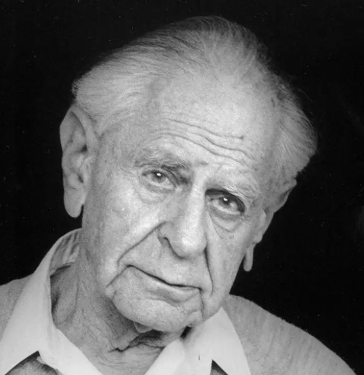
Science is not a system of certain, or well established, statements; nor is it a statement which steadily advances towards state of finality. Our science is not knowledge (epistēmē): it can newer claim to have attained truth, or even substitute for it, such as probability. . . . We do not know; we can only guess.
▼
Source
source
Ch. 10 "Corroboration, or How a Theory Stands up to Tests", section 85: The Path of Science, p. 278.

1 month 3 weeks ago
Whatever concept one may hold, from a metaphysical point of view, concerning the freedom of the will, certainly its appearances, which are human actions, like every other natural event are determined by universal laws. However obscure their causes, history, which is concerned with narrating these appearances, permits us to hope that if we attend to the play of freedom of the human will in the large, we may be able to discern a regular movement in it, and that what seems complex and chaotic in the single individual may be seen from the standpoint of the human race as a whole to be a steady and progressive though slow evolution of its original endowment.
▼
Source
source
Introduction
1 month 3 weeks ago
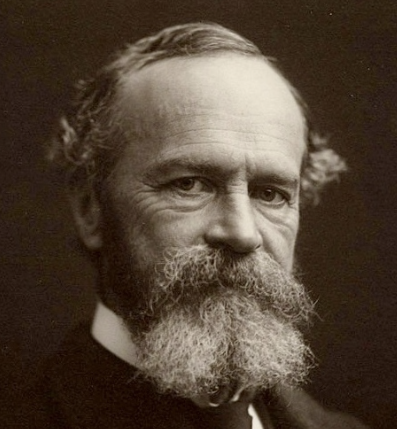
The normal process of life contains moments as bad as any of those which insane melancholy is filled with, moments in which radical evil gets its innings and takes its solid turn. The lunatic's visions of horror are all drawn from the material of daily fact. Our civilization is founded on the shambles, and every individual existence goes out in a lonely spasm of helpless agony. If you protest, my friend, wait till you arrive there yourself! ... Here on our very hearths and in our gardens the infernal cat plays with the panting mouse, or holds the hot bird fluttering in her jaws. Crocodiles and rattlesnakes and pythons are at this moment vessels of life as real as we are; their loathsome existence fills every minute of every day that drags its length along; and whenever they or other wild beasts clutch their living prey, the deadly horror which an agitated melancholiac feels is the literally right reaction on the situation.
▼
Source
source
Lectures VI and VII, "The Sick Soul"

2 weeks 5 days ago
What to think of other people? I ask myself this question each time I make a new acquaintance. So strange does it seem to me that we exist, and that we consent to exist.

2 weeks 1 day ago
Sociology does not 'negate' philosophy, in the sense of taking over the hidden content of philosophy and carrying it into social theory and practice, but sets itself up as a realm apart from philosophy, with a province and truth of its own. Comte is rightly held to be the inaugurator of this separation between philosophy and sociology.
▼
Source
source
P. 375
1 month 3 weeks ago
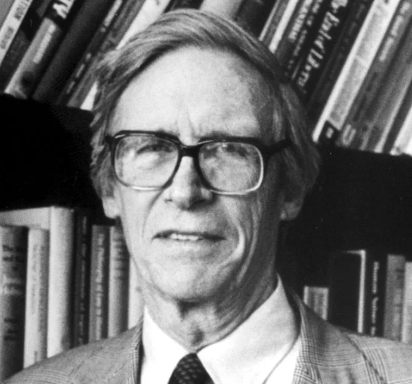
In all sectors of society there should be roughly equal prospects of culture and achievement for everyone similarly motivated and endowed. The expectations of those with the same abilities and aspirations should not be affected by their social class.
▼
Source
source
Chapter II, Section 12, pg. 73

1 month 2 weeks ago
I cannot get from the nature of the proposition to the individual logical operations!!! That is, I cannot bring out how far the proposition is the picture of the situation. I am almost inclined to give up all my efforts.
▼
Source
source
Journal entries (12 March 1915 and 15 March 1915) p. 41

1 month ago
It is then unnecessary to investigate whether there be beyond the heaven Space, Void or Time. For there is a single general space, a single vast immensity which we may freely call Void; in it are innumerable globes like this one on which we live and grow. This space we declare to be infinite, since neither reason, convenience, possibility, sense-perception nor nature assign to it a limit. In it are an infinity of worlds of the same kind as our own.

5 days ago
It is thought pretty to say that "Women have no passion." If passion is excitement in the daily social intercourse with men, women think about marriage much more than men do; it is the only event of their lives. It ought to be a sacred event, but surely not the only event of a woman's life, as it is now. Many women spend their lives in asking men to marry them, in a refined way. Yet it is true that women are seldom in love. How can they be?
3 weeks 2 days ago
The determination to print them (his lectures), and to communicate them to the General Public, must also speak for itself; and should it not do so, any other recommendation of them would be thrown away. Thus, with respect to the appearance of this work, I have nothing further to say to the Public, than that I have nothing to say.
▼
Source
source
Preface
1 month 1 week ago
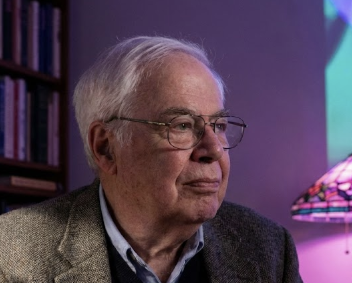
Rather, we heirs of Enlightenment think of enemies of liberal democracy like Nietzsche or Loyola as, to use Rawls's word, "mad." We do so because there is no way to see them as fellow citizens of our constitutional democracy, people whose life plans might, given ingenuity and good will, be fitted in with those of other citizens. They are crazy because the limits of sanity are set by what we can take seriously. This, in turn, is determined by our upbringing, our historical situation.
2 days ago
A clever child brought up with a foolish one can itself become foolish. Man is so perfectable and corruptible he can become a fool through good sense.
▼
Source
source
F 69
2 days ago
Sickness is mankind's greatest defect.
▼
Source
source
F 100
2 weeks 5 days ago
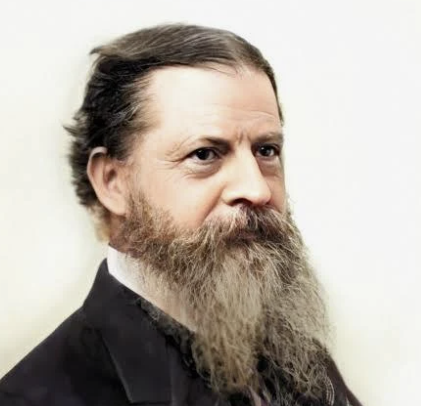
Few persons care to study logic, because everybody conceives himself to be proficient enough in the art of reasoning already. But I observe that this satisfaction is limited to one's own ratiocination and does not extend to that of other men. We come to the full possession of our power of drawing inferences the last of all our faculties, for it is not so much a natural gift as a long and difficult art.
▼
Source
source
Illustrations of the Logic of Science First Paper - The Fixation of Belief", in Popular Science Monthly, Vol. 12
3 weeks 2 days ago
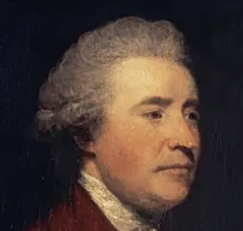
I am attached to Christianity at large; much from conviction; more from affection.
▼
Source
source
Letter to an unknown correspondent (26 January 1791), quoted in Alfred Cobban and Robert A. Smith (eds.), The Correspondence of Edmund Burke, Volume VI: July 1789-December 1791 (1967), p. 215
2 weeks 1 day ago
The judgment that human life is worth living, or rather can and ought to be made worth living, ... underlies all intellectual effort; it is the a priori of social theory, and its rejection (which is perfectly logical) rejects theory itself.
▼
Source
source
p. xliii
1 month 3 weeks ago
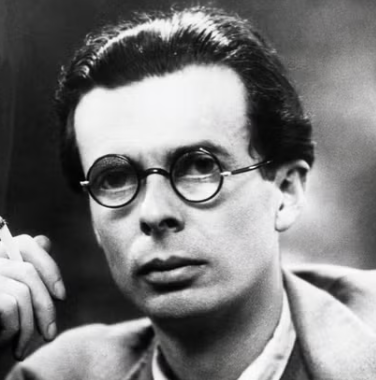
The unitive knowledge of the Divine Ground has, as its necessary condition, self-abnegation and charity. Only by means of self-abnegation and charity can we clear away the evil, folly and ignorance which constitute the thing we call our personality and prevent us from becoming aware of the spark of divinity illuminating the inner man.
2 weeks 5 days ago
Understand me well. My appeal is to observation - observation that each of you must make for himself.
▼
Source
source
Lecture II : The Universal Categories, § 2 : Struggle, CP 5.53
CivilSimian.com created by AxiomaticPanic, CivilSimian, Kalokagathia