

2 weeks 5 days ago
Do not block the way of inquiry.
▼
Source
source
Vol. I, par. 135
2 days ago
To do the opposite of something is also a form of imitation, namely an imitation of its opposite.
▼
Source
source
D 96 Variant translation: To do just the opposite is also a form of imitation.
1 week 1 day ago
"A man thinks he is dying for his country," said Anatole France, "but he is dying for a few industrialists." But even that is saying too much. What one dies for is not even so substantial and tangible as an industrialist.
▼
Source
source
p. 224
1 month 3 weeks ago
The finest workers in stone are not copper or steel tools, but the gentle touches of air and water working at their leisure with a liberal allowance of time.
3 weeks 2 days ago
The more cunning a man is, the less he suspects that he will be caught in a simple thing. The more cunning a man is, the simpler the trap he must be caught in.
1 month 3 weeks ago
Absurd, irreducible; nothing - not even a profound and secret delirium of nature - could explain it. Obviously I did not know everything, I had not seen the seeds sprout, or the tree grow. But faced with this great wrinkled paw, neither ignorance nor knowledge was important: the world of explanations and reasons is not the world of existence. A circle is not absurd, it is clearly explained by the rotation of a straight segment around one of its extremities. But neither does a circle exist. This root, on the other hand, existed in such a way that I could not explain it. Reflections on a chestnut tree root.
1 month 3 weeks ago
I have no need for good souls: an accomplice is what I wanted.
▼
Source
source
Electra to her brother Orestes, Act 2
1 week 1 day ago
The word 'definition' has come to have a dangerously reassuring sound, owing no doubt to its frequent occurrence in logical and mathematical writings.
▼
Source
source
"Two dogmas of Empiricism", p. 26
5 days ago
The God idea is growing more impersonal and nebulous in proportion as the human mind is learning to understand natural phenomena and in the degree that science progressively correlates human and social events.
3 weeks 2 days ago
I cannot conceive how any man can have brought himself to that pitch of presumption, to consider his country as nothing but carte blanche, upon which he may scribble whatever he pleases.
▼
Source
source
Volume iii, p. 231
1 month 3 weeks ago
If a man walk in the woods for love of them half of each day, he is in danger of being regarded as a loafer; but if he spends his whole day as a speculator, shearing off those woods and making earth bald before her time, he is esteemed an industrious and enterprising citizen. As if a town had no interest in its forests but to cut them down!
▼
Source
source
p. 485
1 month 3 weeks ago
That which has no existence cannot be destroyed - that which cannot be destroyed cannot require anything to preserve it from destruction. Natural rights is simple nonsense: natural and imprescriptible rights, rhetorical nonsense - nonsense upon stilts. But this rhetorical nonsense ends in the old strain of mischievous nonsense for immediately a list of these pretended natural rights is given, and those are so expressed as to present to view legal rights. And of these rights, whatever they are, there is not, it seems, any one of which any government can, upon any occasion whatever, abrogate the smallest particle. The often-quoted phrase 'nonsense upon stilts' is often modernised to 'nonsense on stilts'.
4 days ago
By narcissism is meant ceasing to have an authentic interest in the outside world but instead an intense attachment to oneself, to one's own group, clan, religion, nation, race, etc. - with consequent serious distortions of rational judgment. In general, the need for narcissistic satisfaction derives from the necessity to compensate for material and cultural poverty.
1 month 3 weeks ago
You shall have joy, or you shall have power, said God; you shall not have both.
▼
Source
source
October 1842
3 weeks 2 days ago
Whenever our neighbour's house is on fire, it cannot be amiss for the engines to play a little on our own.
1 month 3 weeks ago
You will hear every day the maxims of a low prudence. You will hear, that the first duty is to get land and money, place and name. "What is this Truth you seek? What is this Beauty?" men will ask, with derision. If, nevertheless, God have called any of you to explore truth and beauty, be bold, be firm, be true. When you shall say, "As others do, so will I. I renounce, I am sorry for it, my early visions; I must eat the good of the land, and let learning and romantic expectations go, until a more convenient season." - then dies the man in you; then once more perish the buds of art, and poetry, and science, as they have died already in a thousand thousand men. The hour of that choice is the crisis of your history; and see that you hold yourself fast by the intellect. ... Bend to the persuasion which is flowing to you from every object in Nature, to be its tongue to the heart of man, and to show the besotted world how passing fair is wisdom.
6 days ago
Haikus allow the whole world to appear within things.
3 weeks 1 day ago
The supervision of the state extends to the lock upon the door, and there begins mine own. The lock is the boundary line between the power of the government and my own private power. It is the intention of locks to make possible self-protection. In my own house my person is sacred and inviolable even to the government. In civil cases government has no right to attack me in my house, but must wait till I am upon public ground.
▼
Source
source
P. 324

1 month 3 weeks ago
When they have really learned to love their neighbours as themselves, they will be allowed to love themselves as their neighbours.
▼
Source
source
Letter XIV
1 week 2 days ago
The intellectual world is divided into two classes - dilettantes, on the one hand, and pedants, on the other.
1 month 3 weeks ago
Good nature is, of all moral qualities, the one that the world needs most, and good nature is the result of ease and security, not of a life of arduous struggle. Modern methods of production have given us the possibility of ease and security for all; we have chosen, instead, to have overwork for some and starvation for the others. Hitherto we have continued to be as energetic as we were before there were machines; in this we have been foolish, but there is no reason to go on being foolish for ever.
▼
Source
source
Ch. 1: In Praise of Idleness

1 month 2 weeks ago
In situations of sparse resources along with degraded self-images and depoliticized sensibilities, one avenue for poor people is in existential rebellion and anarchic expression. The capacity to produce social chaos is the last resort of desperate people.
▼
Source
source
The Role of Law in Progressive Politics in Keeping Faith: Philosophy and Race in America

2 weeks 1 day ago
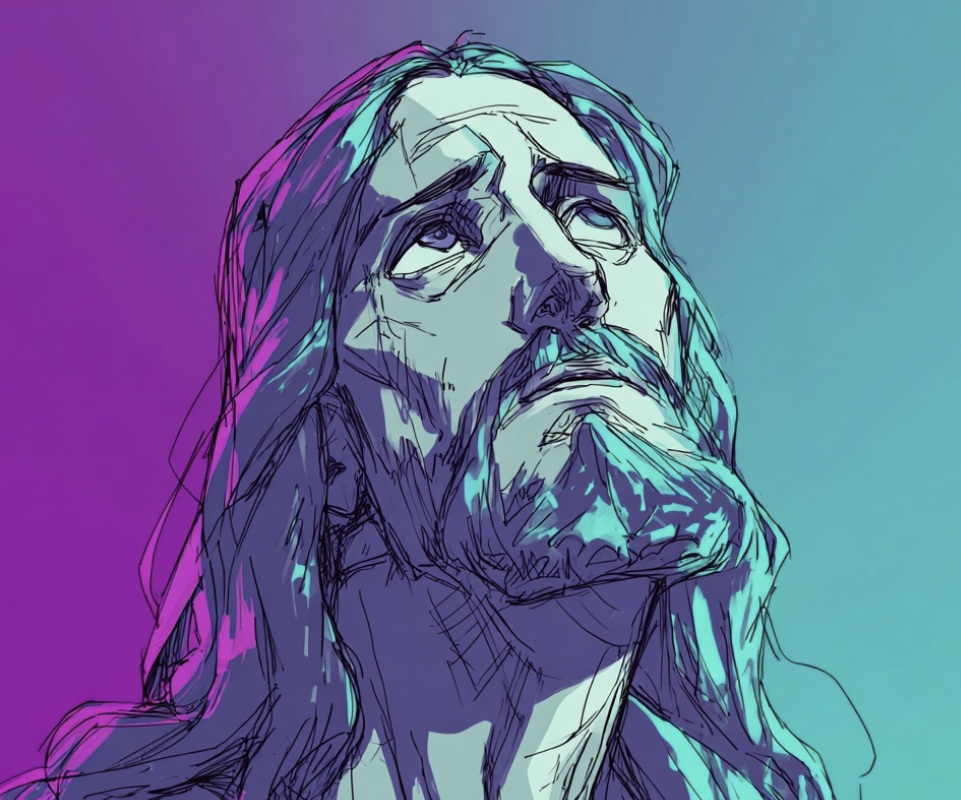
Ye know not what manner of spirit ye are of. For the Son of man is not come to destroy men's lives, but to save them. (KJV) 9:55-56 Rebuking James and John for asking if he would command fire to come down from heaven, to consume a village of Samaritans for not receiving them, because they seemed to be headed for Jerusalem.
▼
Source
source
Jesus on usury from the Sermon on the Mount, Luke 6:34-35
1 month 3 weeks ago
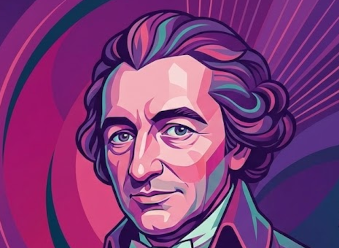
Our Traders in Men (an unnatural commodity!) must know the wickedness of that Slave-Trade, if they attend to reasoning, or the dictates of their own hearts; and such as shun and stiffle all these, wilfully sacrifice Conscience, and the character of integrity to that golden Idol.
2 weeks 1 day ago
They [the wise spirits of antiquity in the first circle of Dante's Inferno] are condemned, Dante tells us, to no other penalty than to live in desire without hope, a fate appropriate to noble souls with a clear vision of life.
▼
Source
source
Obiter Scripta
2 weeks 6 days ago
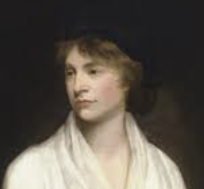
It is impossible for any man, when the most favourable circumstances concur, to acquire sufficient knowledge and strength of mind to discharge the duties of a king, entrusted with uncontrolled power; how then must they be violated when his very elevation is an insuperable bar to the attainment of either wisdom or virtue; when all the feelings of a man are stifled by flattery, and reflection shut out by pleasure! Surely it is madness to make the fate of thousands depend on the caprice of a weak fellow creature, whose very station sinks him NECESSARILY below the meanest of his subjects! But one power should not be thrown down to exalt another--for all power intoxicates weak man; and its abuse proves, that the more equality there is established among men, the more virtue and happiness will reign in society.
▼
Source
source
Ch. 1
2 weeks 1 day ago
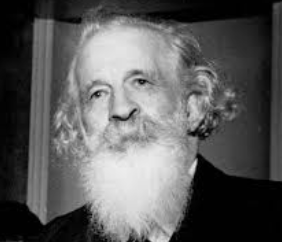
The subconscious is ceaselessly murmuring, and it is by listening to these murmurs that one hears the truth.
▼
Source
source
Ch. 2, sect. 2
1 week 6 days ago
It is questionable whether there does not exist in man an obscure and blind will to make war; an impulse towards change, towards emergence from the familiarities of everyday life and from the stabilities of well-known conditions - something like a will to death as a will to annihilation and self-sacrifice, a vague enthusiasm for the upbuilding of a new world.
2 weeks 1 day ago
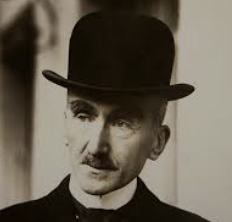
The present contains nothing more than the past, and what is found in the effect was already in the cause.
▼
Source
source
Creative Evolution (1907), Chapter I, as translated by Arthur Mitchell (1911), p. 14.; italicized in the original.

2 months 1 week ago
The inclination to seek the truth is safer than the presumption which regards unknown things as known.
▼
Source
source
(Cambridge: 2002), Book 9, Chapter 1, p. 24
2 weeks 4 days ago
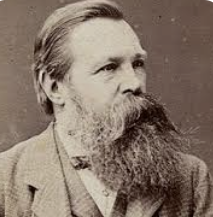
How is it possible that the poorer classes can remain healthy and have a reasonable expectation of life under such conditions? What can one expect but that they should suffer from continual outbreaks of epidemics and an excessively low expectation of life? The physical condition of the workers shows a progressive deterioration.
2 weeks 1 day ago
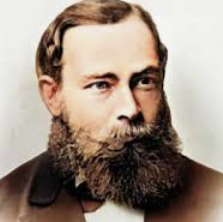
Is it always permissible to speak of the extension of a concept, of a class? And if not, how do we recognize the exceptional cases? Can we always infer from the extension of one concept's coinciding with that of a second, that every object which falls under the first concept also falls under the second?
▼
Source
source
Vol. 2, p. 127. Replying to Bertrand Russell's letter about Russell's Paradox; quoted in The Stanford Encyclopedia of Philosophy
2 months 3 weeks ago
Liars ... when they speak the truth they are not believed.
2 months 1 week ago
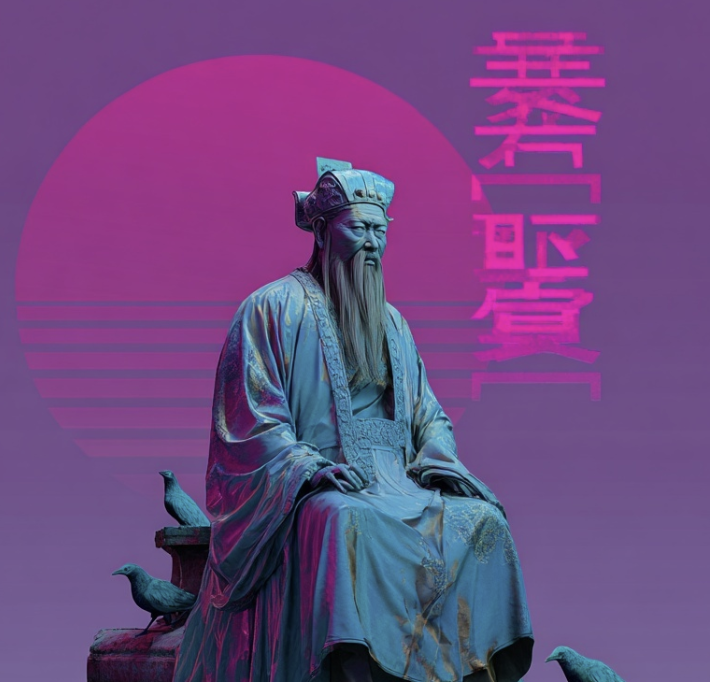
When the Superior Man (Junzi) eats he does not try to stuff himself; at rest he does not seek perfect comfort; he is diligent in his work and careful in speech. He avails himself to people of the Tao and thereby corrects himself. This is the kind of person of whom you can say, "he loves learning."
1 week 6 days ago
The teacher of love teaches struggle. The teacher of lifeless isolation from the world teaches peace.
2 months 1 week ago
For it still seemed to me that it is not we who sin, but some other nature sinned in us. And it gratified my pride to be beyond blame, and when I did anything wrong not to have to confess that I had done wrong. I loved to excuse my soul and to accuse something else inside me (I knew not what) but which was not I. But, assuredly, it was I, and it was my impiety that had divided me against myself. That sin then was all the more incurable because I did not deem myself a sinner.
▼
Source
source
A. Outler, trans. (Dover: 2002), Book 5, Chapter 10, p. 77
2 months 1 week ago
If there is something more excellent than the truth, then that is God; if not, then truth itself is God.
2 weeks ago
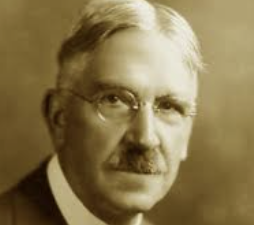
Just because emotion is essential to that act of expression which produces a work of art, it is easy for inaccurate analysis to misconceive its mode of operation and conclude that the work of art has emotion for its significant content. One may cry out with joy or even weep upon seeing a friend from whom one has been long separated. The outcome is not an expressive object -- save to the onlooker. But if the emotion leads one to gather material that is affiliated to the mood which is aroused, a poem may result. In the direct outburst, an objective situation is the stimulus, the cause, of the emotion. In the poem, objective material becomes the content and matter of the emotion, not just its evocative occasion.
▼
Source
source
pp. 71-72
2 months 3 weeks ago
Nature flies from the infinite, for the infinite is unending or imperfect, and Nature ever seeks an end.
4 days ago
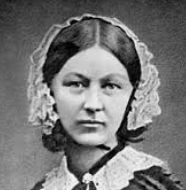
The "dreams of youth" have become a proverb. That organisations, early rich, fall far short of their promise has been repeated to satiety. But is it extraordinary that it should be so? For do we ever utilise this heroism? Look how it lives upon itself and perishes for lack of food. We do not know what to do with it. We had rather that it should not be there. Often we laugh at it. Always we find it troublesome. Look at the poverty of our life! Can we expect anything else but poor creatures to come out of it?
1 month 3 weeks ago
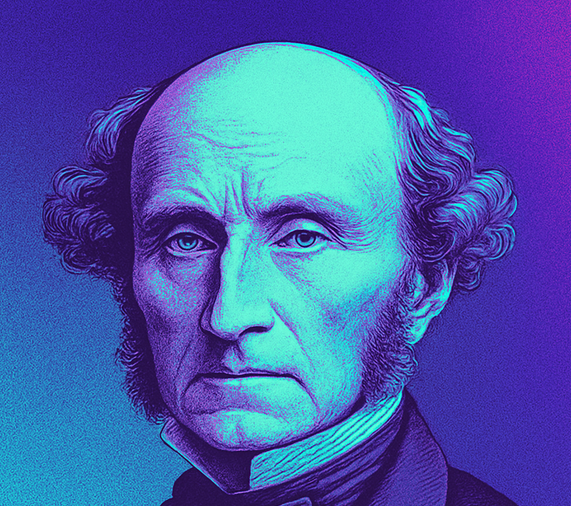
..Whenever it ceases to be true that mankind, as a rule, prefer themselves to others, and those nearest to them to those more remote, from that moment Communism is not only practicable, but the only defensible form of society...
Just now
From any vocabulary of ideas we can build other ideas by formal combinations of signs. But not any set of ideas will be instructive. One must have the right ideas.
▼
Source
source
Chapter 15, Inductive Logic, p. 139.
1 month 3 weeks ago
There is no art which one government sooner learns of another than that of draining money from the pockets of the people.
▼
Source
source
Chapter II, Part II, Appendix to Articles I and II.
3 weeks 2 days ago
The stupider one is, the closer one is to reality. The stupider one is, the clearer one is. Stupidity is brief and artless, while intelligence wriggles and hides itself. Intelligence is a knave, but stupidity is honest and straightforward.

4 weeks ago
I could be content that we might procreate like trees, without conjunction, or that there were any way to perpetuate the world without this trivial and vulgar act of coition; It is the foolishest act a wise man commits in all his life, nor is there anything that will more deject his cooled imagination, when he shall consider what an odd and unworthy piece of folly he hath committed.
▼
Source
source
Section 9
5 days ago
The contention that a standing army and navy is the best security of peace is about as logical as the claim that the most peaceful citizen is he who goes about heavily armed. The experience of every-day life fully proves that the armed individual is invariably anxious to try his strength. The same is historically true of governments. Really peaceful countries do not waste life and energy in war preparations, with the result that peace is maintained.
1 week 2 days ago
Conduct, practice, is the proof of doctrine, theory. "If any man will do His will - the will of Him that sent me," said Jesus, "he shall know of the doctrine, whether it be of God or whether I speak of myself" (John vii. 17); and there is a well known saying of Pascal: "Begin by taking holy water and you will end by becoming a believer." And pursuing a similar train of thought, Johann Jakob Moser, the pietist, was of the opinion that no atheist or naturalist had the right to regard the Christian religion as void of truth so long as he had not put it to the proof by keeping its precepts and commandments.
▼
Source
source
(Ritschl, Geschichte des Pietismus, book viii., 43)

2 months 3 weeks ago
For whoever has what he has from the God himself clearly has it at first hand; and he who does not have it from the God himself is not a disciple. Let us assume that it is otherwise, that the contemporary generation of disciples had received the condition from the God, and that the subsequent generations were to receive it from these contemporaries, what would follow?
2 months 1 week ago
If you would be a good reader, read; if a writer, write.
▼
Source
source
Book II, ch. 18, 1.
CivilSimian.com created by AxiomaticPanic, CivilSimian, Kalokagathia