

1 month 3 weeks ago
Life is a business that does not cover the costs.
▼
Source
source
Vol II "On the Vanity and Suffering of Life"
1 month 3 weeks ago
We have been given free will, in order that we may will our self-will out of existence and so come to live continuously in a 'state of grace.' All our actions must be directed, in the last analysis, to making ourselves passive in relation to the activity and the being of divine reality. We are, as it were, aeolian harps, endowed with the power either to expose themselves to the wind of the Spirit or to shut themselves away from it.

5 days ago
The period of the actual revolution, the so-called transitory stage, must be the introduction, the prelude to the new social conditions. It is the threshold to the NEW LIFE, the new HOUSE OF MAN AND HUMANITY. As such it must be of the spirit of the new life, harmonious with the construction of the new edifice.
2 weeks 5 days ago
Since space is continuous, it follows that there must be an immediate community of feeling between parts of mind infinitesimally close together. Without this, I believe it would have been impossible for any co-ordination to be established in the action of the nerve-matter of one brain.
1 week 1 day ago
The concept of positivity in itself, in abstracto, has become part and parcel of the ideology today. ... Critique has started to become suspect, regardless of its content.
▼
Source
source
p. 23
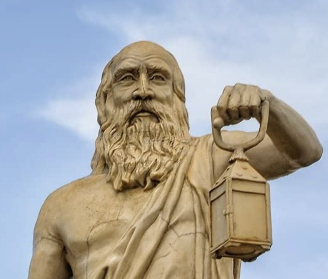
1 month 1 week ago
He was breakfasting in the marketplace, and the bystanders gathered round him with cries of "dog." "It is you who are dogs," cried he, "when you stand round and watch me at my breakfast."
▼
Source
source
Diogenes Laërtius, vi. 61
2 weeks 1 day ago
And, being assembled together with them, commanded them that they should not depart from Jerusalem, but wait for the promise of the Father, which, saith he, ye have heard of me. For John truly baptized with water; but ye shall be baptized with the Holy Ghost not many days hence.
▼
Source
source
1:4-5 (KJV)
2 weeks ago
A philosophy has no private store of knowledge or methods for attaining truth, so it has no private access to good. As it accepts knowledge and principles from those competent in science and inquiry, it accepts the goods that are diffused in human experience. It has no Mosaic or Pauline authority of revelation entrusted to it. But it has the authority of intelligence, of criticism of these common and natural goods.
1 month 3 weeks ago
There is much pleasure to be gained from useless knowledge.
▼
Source
source
Ch. 2: 'Useless' Knowledge
2 weeks ago
It is no accident that all democracies have put a high estimate upon education; that schooling has been their first care and enduring charge. Only through education can equality of opportunity be anything more than a phrase. Accidental inequalities of birth, wealth, and learning are always tending to restrict the opportunities of some as compared with those of others. Only free and continued education can counteract those forces which are always at work to restore, in however changed a form, feudal oligarchy. Democracy has to be born anew every generation, and education is its midwife.
▼
Source
source
"The Need of an Industrial Education in an Industrial Democracy," Manual Training and Vocational Education17 (1916); also Middle Works 10: 137-143.

4 weeks ago
Pursue Virtue virtuously.
▼
Source
source
These words also appear in Christian Morals, Part I, Section I
2 weeks 1 day ago
Woe unto thee, Chorazin! woe unto thee, Bethsaida! for if the mighty works, which were done in you, had been done in Tyre and Sidon, they would have repented long ago in sackcloth and ashes. But I say unto you, It shall be more tolerable for Tyre and Sidon at the day of judgment, than for you. And thou, Capernaum, which art exalted unto heaven, shalt be brought down to hell: for if the mighty works, which have been done in thee, had been done in Sodom, it would have remained until this day. But I say unto you, That it shall be more tolerable for the land of Sodom in the day of judgment, than for thee.
▼
Source
source
11:21-24 (KJV)

1 month 2 weeks ago
But let there be no misunderstanding: it is not that a real man, the object of knowledge, philosophical reflection or technological intervention, has been substituted for the soul, the illusion of theologians. The man described for us, whom we are invited to free, is already in himself the effect of a subjection more profound than himself. A 'soul' inhabits him and brings him to existence, which is itself a factor in the mastery that power exercises over the body. The soul is the effect and instrument of a political anatomy; the soul is the prison of the body.

2 months 3 weeks ago
Perhaps no philosopher is more correct than the cynic. The happiness of the animal, that thorough cynic, is the living proof of cynicism.
1 month 3 weeks ago
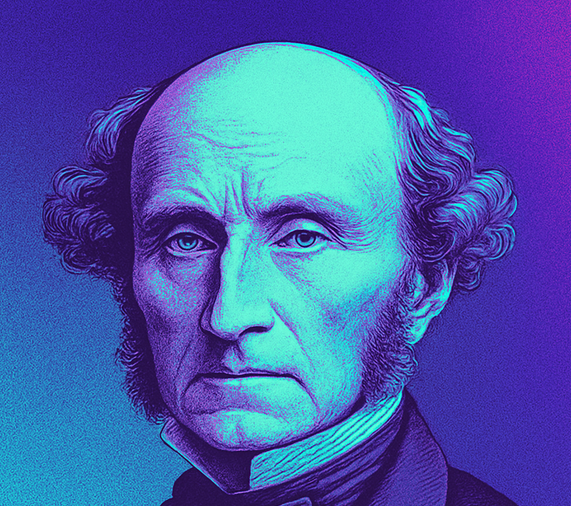
The possession and the exercise of political, and among others of electoral, rights, is one of the chief instruments both of moral and of intellectual training for the popular mind; and all governments must be regarded as extremely imperfect, until every one who is required to obey the laws, has a voice, or the prospect of a voice, in their enactment and administration.
▼
Source
source
Thoughts on Parliamentary Reform (1859), p. 22
1 week 2 days ago
And here, facing this supreme religious sacrifice, we reach the summit of the tragedy, the very heart of it - the sacrifice of our own individual consciousness upon the alter of the perfected Human Consciousness, of the Divine Consciousness. But is there really a tragedy? ...if we could succeed in understanding and feeling that we were going to enrich Christ, should we hesitate for a moment in surrendering ourselves to Him? Would the stream that flows into the sea, and feels in the freshness of its waters the bitterness of the salt of the ocean, wish to flow back to its source? would it wish to return to the cloud which drew it life from the sea? is it not joy to feel itself absorbed?

3 weeks 6 days ago
The people reign over the American political world as God rules over the universe. It is the cause and the end of all things; everything rises out of it and is absorbed back into it.
▼
Source
source
Chapter IV, Part I.
6 days ago
I've always believed that a writer has got to remain an outsider. If I was offered anything like the Nobel Prize for Literature, I'd find it an extremely difficult conflict because I'd be basically disinclined to accept.
▼
Source
source
Interview with Paul Newman in Abraxas Unbound #7
2 months 1 week ago
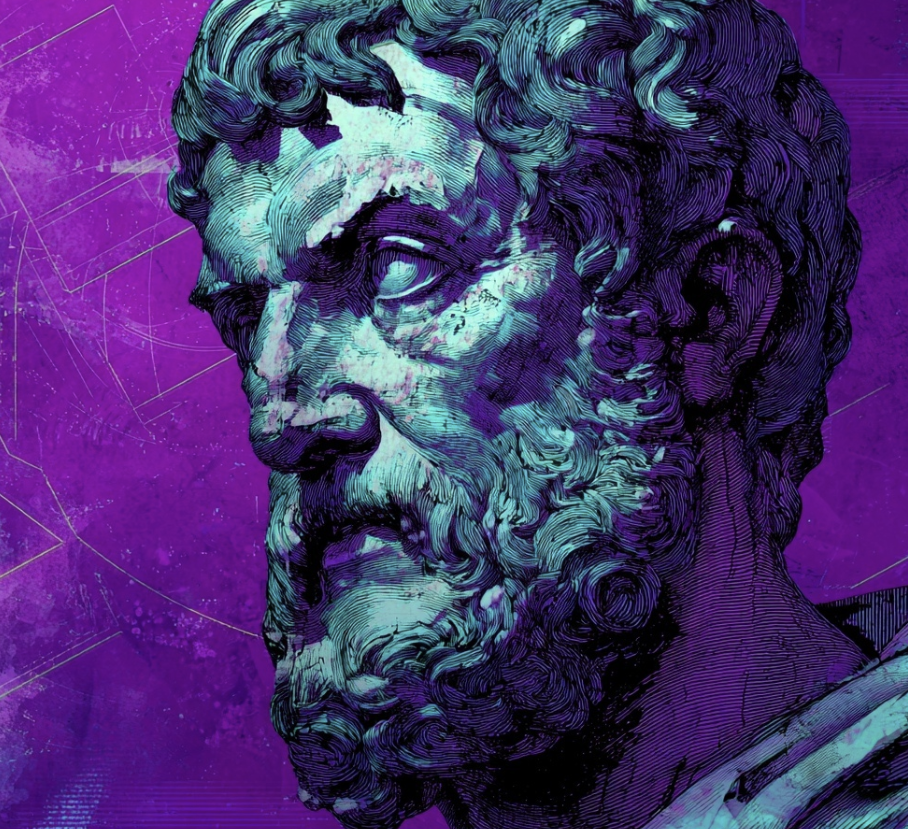
A prudent man, in order to secure his tranquility, will consult his natural disposition in the choice of his plan of life. If, for example, he be persuaded that he should be happier in a state of marriage than in celibacy, he ought to marry; but if he be convinced that matrimony would be an impediment to his happiness, he ought to remain single.

2 weeks 1 day ago
German idealism rescued philosophy from the attack of British empiricism, and the struggle between the two became not merely a clash of different philosophical school, but a struggle for philosophy as such.
▼
Source
source
P. 16
2 months 1 week ago
The wise is one only. It is unwilling and willing to be called by the name of Zeus.

1 month 4 days ago
Holding fast to these things, you will know the worlds of gods and mortals which permeates and governs everything. And you will know, as is right, nature similar in all respects, so that you will neither entertain unreasonable hopes nor be neglectful of anything.
▼
Source
source
As quoted in Divine Harmony: The Life and Teachings of Pythagoras by John Strohmeier and Peter Westbrook.
1 month 3 weeks ago
Landlords... grow richer, as it were in their sleep, without working, risking, or economizing.
▼
Source
source
Book V, Chapter 1, Section 5

1 month 2 weeks ago
What cannot be imagined cannot even be talked about.
▼
Source
source
Journal entry (12 October 1916), p. 84e
1 week 1 day ago
The dressing up and puffing up of the individual erases the lineaments of protest.
▼
Source
source
p. 283
5 days ago
It repudiates, as something vile and sinful, our deepest feelings; but being absolutely ignorant as to the real functions of human emotions, Puritanism is itself the creator of the most unspeakable vices.
2 months 1 week ago
To no one but the Son of Heaven does it belong to order ceremonies, to fix the measures, and to determine the written characters.
1 month 3 weeks ago
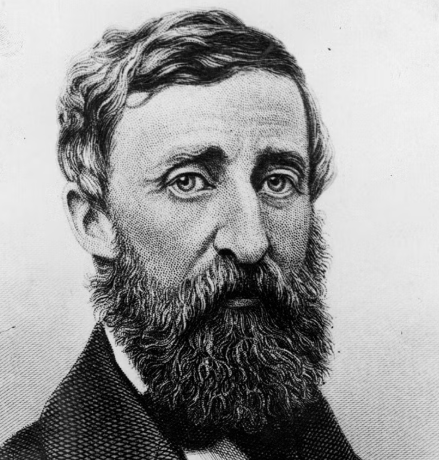
It is not enough to be industrious; so are the ants. What are you industrious about?
▼
Source
source
Letter to Harrison Blake, November 16, 1857
1 month 2 weeks ago
Worte sind Taten. Words are deeds.
▼
Source
source
p. 50e
3 weeks 6 days ago
I think that democratic communities have a natural taste for freedom: left to themselves, they will seek it, cherish it, and view any privation of it with regret. But for equality, their passion is ardent, insatiable, incessant, invincible: they call for equality in freedom; and if they cannot obtain that, they still call for equality in slavery.
▼
Source
source
Book Two, Chapter I.
1 month 3 weeks ago
The sneaking arts of underling tradesmen are thus erected into political maxims for the conduct of a great empire; for it is the most underling tradesmen only who make it a rule to employ chiefly their own customers. A great trader purchases his good always where they are cheapest and best, without regard to any little interest of this kind.
▼
Source
source
Chapter III, Part II, p. 530.
3 weeks 6 days ago
"The will of the nation" is one of those expressions which have been most profusely abused by the wily and the despotic of every age.
▼
Source
source
Chapter IV.
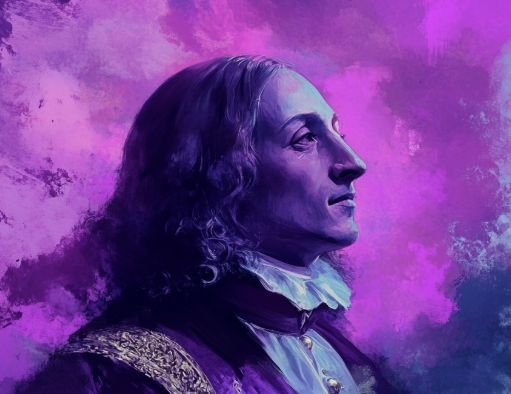
2 months 5 days ago
People almost invariably arrive at their beliefs not on the basis of proof but on the basis of what they find attractive.
▼
Source
source
De l'Art de persuader ["On the Art of Persuasion"], written 1658; published posthumously.
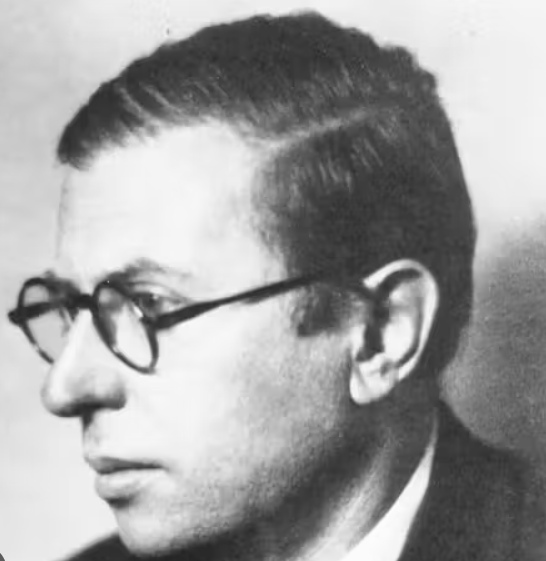
1 month 3 weeks ago
Jupiter: I committed the first crime by creating men as mortals. After that, what more could you do, you the murderers?
Aegisteus: Come on; they already had death in them: at most you simply hastened things a little.
▼
Source
source
Act 2

1 month 4 days ago
A bad feeling is a commotion of the mind repugnant to reason, and against nature.
▼
Source
source
As quoted in Tusculanae Quaestiones by Cicero, iv. 6.
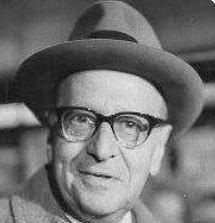
1 week 6 days ago
No criticism can be brought against a branch of technical science from outside; no thought fitted out with the knowledge of a period and setting its course by definite historical aims could have anything to say to the specialist. Such thought and the critical, dialectical element it communicates to the process of cognition, thereby maintaining conscious connection between that process and historical life, do not exist for empiricism; nor do the associated categories, such as the distinction between essence and appearance, identity in change, and rationality of ends, indeed, the concept of man, of personality, even of society and class taken in the sense that presupposes specific viewpoints and directions of interest.
▼
Source
source
p. 145.
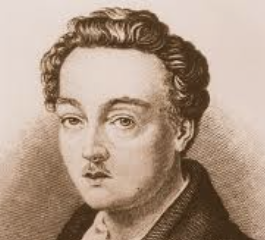
3 weeks 2 days ago
Peace to the shacks! War on the palaces!
2 weeks 6 days ago
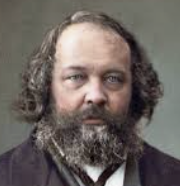
Not official revolutionary commissars in any sort of sashes, but rather revolutionary propagandists are to be dispatched into all the provinces and communes and particularly among the peasants who cannot be revolutionised by principles, nor by the decrees of any dictatorship, but only by the act of revolution itself, that is to say, by the consequences that will inevitably ensure in every commune from complete cessation of the legal and official existence of the state.
Just now
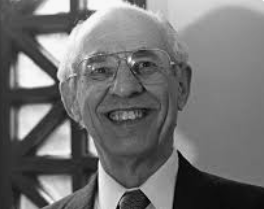
Philosophy was never just ontotheology, and even when philosophers were concerned with ontotheology, they were concerned with much more than that. That is the first reason that the idea of a fundamental "crisis" in philosophy and of the "end of philosophy" is deeply mistaken. And if the questions of philosophy are indeed "unsettleable," in the sense that they will always be with us, that is a wonderful thing, not something to be regretted.
▼
Source
source
Science and Philosophy

1 month 3 weeks ago
No rules, however wise, are a substitute for affection and tact.
▼
Source
source
Ch. 12: Education and Discipline
2 weeks 1 day ago
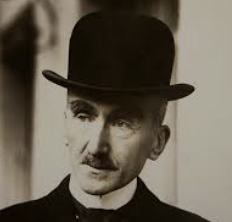
People talk, indeed, of a "primitive mentality", as, for example, to-day that of the inferior races, and in days gone by that of humanity in general, at whose door the responsibility for superstition should be laid.
▼
Source
source
Chapter II : Static Religion
6 days ago
I found Randi likable and plausible; the only thing that bothered me was the sweeping and intense nature of his skepticism. He was obviously working from the premise that all paranormal phenomena, without exception, are fakes or delusions. He seemed to take to take it for granted that all of us - there were also two women present - shared his opinions, and he made jovial, disparaging remarks about psychics and other such weirdos. I began to get the uncomfortable feeling of a Jew who has accidentally walked into a Nazi meeting, or a Jehovah's Witness at a convention of militant atheists. As a supposedly scientific psychic investigator, Randi struck me as being oddly fixed in his opinions.
▼
Source
source
pp. 39-40
1 month 2 weeks ago
What is troubling us is the tendency to believe that the mind is like a little man within.
▼
Source
source
Remarks to John Wisdom, quoted in Zen and the Work of WIttgenstein by Paul Weinpaul in The Chicago Review Vol. 12, (1958), p. 70
2 weeks 5 days ago
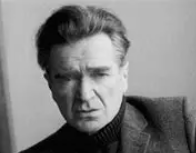
To found a family. I think it would have been easier for me to found an empire.
1 month 3 weeks ago
It is the necessary, though very slow and gradual, consequence of a certain propensity in human nature which has in view no such extensive utility; the propensity to truck, barter, and exchange one thing for another.
▼
Source
source
Chapter II
3 weeks 1 day ago
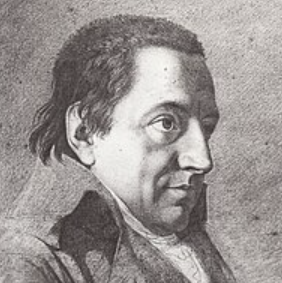
If you want to influence him at all, you must do more than merely talk to him ; you must fashion him, and fashion him in such a way that he simply cannot will otherwise than you wish him to will.
▼
Source
source
Addresses to the German Nation (1807), Second Address : "The General Nature of the New Education". Chicago and London, The Open Court Publishing Company, 1922, p. 21
3 weeks 1 day ago
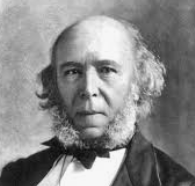
The fact disclosed by a survey of the past that majorities have usually been wrong, must not blind us to the complementary fact that majorities have usually not been entirely wrong.
▼
Source
source
Pt. I, The Unknowable; Ch. I, Religion and Science
3 weeks 6 days ago
Americans of all ages, all stations of life, and all types of disposition are forever forming associations... In democratic countries knowledge of how to combine is the mother of all other forms of knowledge; on its progress depends that of all the others.
▼
Source
source
Book Two, Chapter V.

6 days ago
Happiness is the proof that time can accommodate eternity.
CivilSimian.com created by AxiomaticPanic, CivilSimian, Kalokagathia