

1 month 3 weeks ago
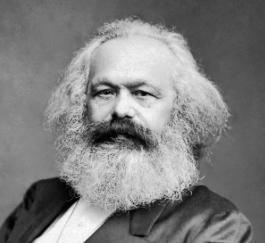
The monopoly of capital becomes a fetter upon the mode of production, which has sprung up and flourished along with, and under it. Centralisation of the means of production and socialisation of labour at last reach a point where they become incompatible with their capitalist integument. This integument is burst asunder. The knell of capitalist private property sounds. The expropriators are expropriated.
▼
Source
source
Vol. I, Ch. 32, p. 837.
2 months 1 week ago
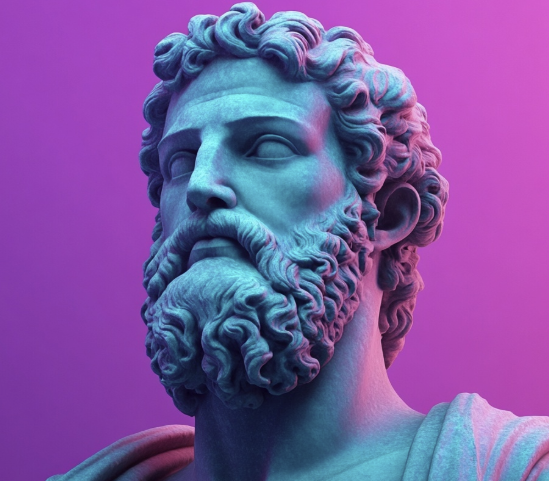
Appearances to the mind are of four kinds. Things either are what they appear to be; or they neither are, nor appear to be; or they are, and do not appear to be; or they are not, and yet appear to be. Rightly to aim in all these cases is the wise man's task.
▼
Source
source
Book I, ch. 27, § 1.
1 month 3 weeks ago
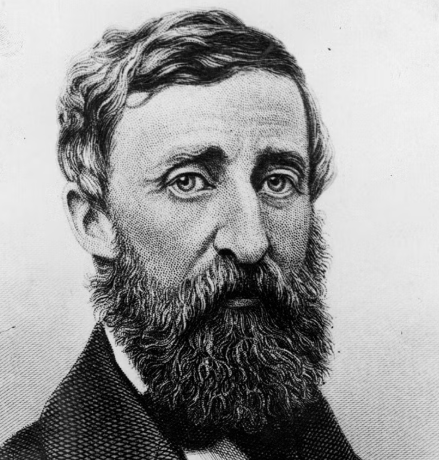
Under a government which imprisons any unjustly, the true place for a just man is also a prison... the only house in a slave State in which a free man can abide with honor.
2 months 1 week ago
If what the philosophers say be true,—that all men's actions proceed from one source; that as they assent from a persuasion that a thing is so, and dissent from a persuasion that it is not, and suspend their judgment from a persuasion that it is uncertain, so likewise they seek a thing from a persuasion that it is for their advantage.
▼
Source
source
Book I, ch. 18, 1.

1 month 2 weeks ago
I am showing my pupils details of an immense landscape which they cannot possibly know their way around.
▼
Source
source
p. 56e
3 weeks 2 days ago
Life is writing. The sole purpose of mankind is to engrave the thoughts of divinity onto the tablets of nature.
▼
Source
source
"On Philosophy: To Dorothea," in Theory as Practice (1997), p. 420
2 weeks 4 days ago
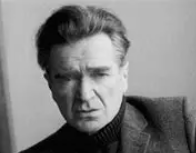
As incompetent in life as in death, I loathe myself and in this loathing I dream of another life, another death. And for having sought to be a sage such as never was, I am only a madman among the mad.
5 days ago
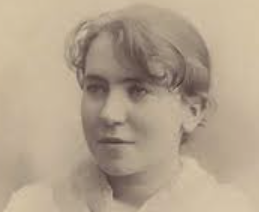
Needless to say, I am not opposed to woman suffrage on the conventional ground that she is not equal to it. I see neither physical, psychological, nor mental reasons why woman should not have the equal right to vote with man. But that can not possibly blind me to the absurd notion that woman will accomplish that wherein man has failed. If she would not make things worse, she certainly could not make them better. To assume, therefore, that she would succeed in purifying something which is not susceptible of purification, is to credit her with supernatural powers. Since woman's greatest misfortune has been that she was looked upon as either angel or devil, her true salvation lies in being placed on earth; namely, in being considered human, and therefore subject to all human follies and mistakes. Are we, then, to believe that two errors will make a right? Are we to assume that the poison already inherent in politics will be decreased, if women were to enter the political arena?
1 week 1 day ago
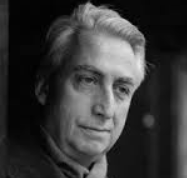
Bourgeois norms are experienced as the evident laws of a natural order-the further the bourgeois class propagates its representations, the more naturalized they become.
▼
Source
source
p. 140
Just now
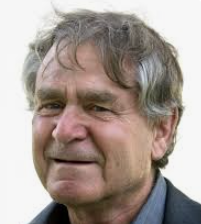
Many modern philosophers claim that probability is relation between an hypothesis and the evidence for it.
▼
Source
source
Chapter 4, Evidence, p. 31.
2 weeks 4 days ago
In a republic, that paradise of debility, the politician is a petty tyrant who obeys the laws.
1 month 2 weeks ago
Does man think because he has found that thinking pays? Does he bring his children up because he has found it pays?
▼
Source
source
§ 467
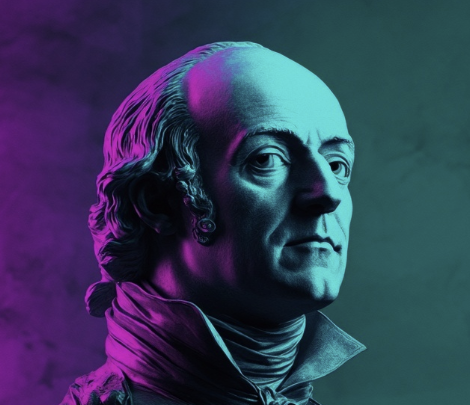
1 month 3 weeks ago
Avarice and injustice are always shortsighted, and they did not foresee how much this regulation must obstruct improvement, and thereby hurt in the long-run the real interest of the landlord.
▼
Source
source
Chapter II, p. 426-427.

1 month 2 weeks ago
The particularity (Jeweiligkeit) of the places and their manifoldness are grounded in space, and the particularity of the time points is grounded in time. That basic characteristic of the thing, that essential determination of the thingness of the thing to be this one (je dieses), is grounded in the essence of space and time. Our question "What is a thing?" includes, therefore, the questions "What is space?" and "What is time?" It is customary The particularity (Jeweiligkeit) os the places.
▼
Source
source
p. 16
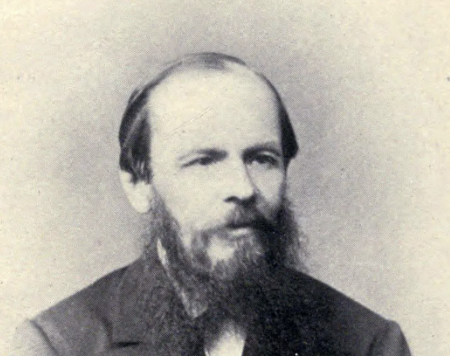
3 weeks 2 days ago
And what is it in us that is mellowed by civilization? All it does, I'd say, is to develop in man a capacity to feel a greater variety of sensations. And nothing, absolutely nothing else. And through this development, man will yet learn how to enjoy bloodshed. Why, it has already happened....Civilization has made man, if not always more bloodthirsty, at least more viciously, more horribly bloodthirsty.
▼
Source
source
Part 1, Chapter 7

1 month 2 weeks ago
Justice is what love looks like in public.
▼
Source
source
Brother West (2009), p. 232
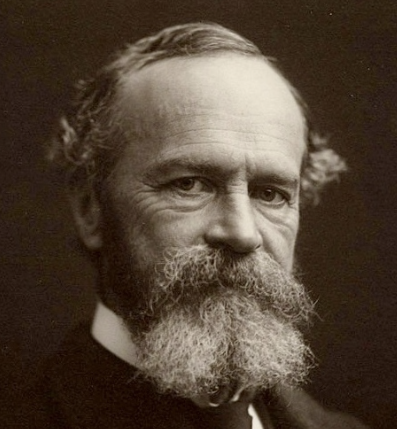
1 month 3 weeks ago
The baby, assailed by eyes, ears, nose, skin, and entrails at once, feels it all as one great blooming, buzzing confusion; and to the very end of life, our location of all things in one space is due to the fact that the original extents or bignesses of all the sensations which came to our notice at once, coalesced together into one and the same space.
▼
Source
source
Ch. 13
1 month 3 weeks ago
Perhaps I am more than usually jealous with respect to my freedom. I feel that my connection with and obligation to society are still very slight and transient. Those slight labors which afford me a livelihood, and by which it is allowed that I am to some extent serviceable to my contemporaries, are as yet commonly a pleasure to me, and I am not often reminded that they are a necessity. So far I am successful. But I foresee, that, if my wants should be much increased, the labor required to supply them would become a drudgery. If I should sell both my forenoons and afternoons to society, as most appear to do, I am sure, that, for me, there would be nothing left worth living for. I trust that I shall never thus sell my birthright for a mess of pottage.
▼
Source
source
p. 486
2 weeks 6 days ago
In the present state of society it appears necessary to go back to first principles in search of the most simple truths, and to dispute with some prevailing prejudice every inch of ground. To clear my way, I must be allowed to ask some plain questions, and the answers will probably appear as unequivocal as the axioms on which reasoning is built; though, when entangled with various motives of action, they are formally contradicted either by the words or conduct of men.
▼
Source
source
Ch. 1, opening
1 month 3 weeks ago
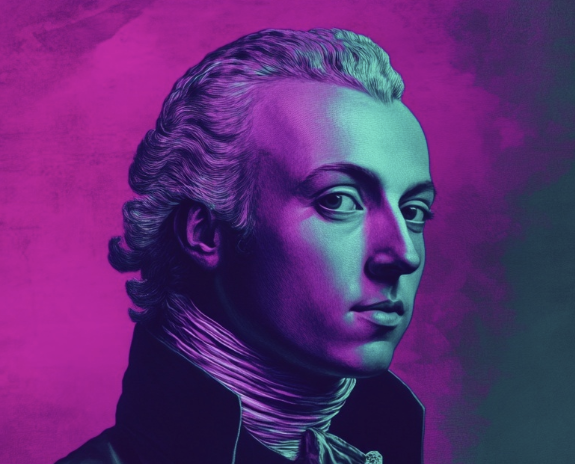
The woman wants to dominate, the man wants to be dominated.
▼
Source
source
Kant, Immanuel (1996), page 220
1 month 3 weeks ago
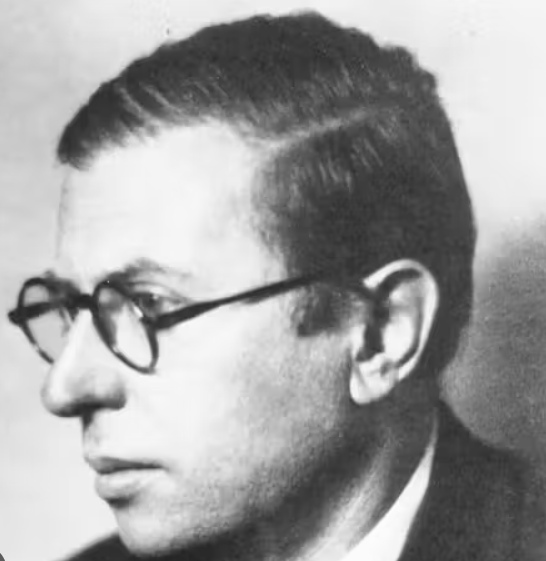
The world is sacred because it gives an inkling of a meaning that escapes us.
▼
Source
source
p. 280
1 month 3 weeks ago
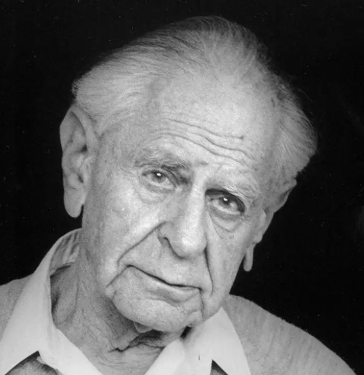
We may become the makers of our fate when we have ceased to pose as its prophets.
▼
Source
source
Introduction
1 month 3 weeks ago
Quietism is the attitude of people who say, "let others do what I cannot do." The doctrine I am presenting before you is precisely the opposite of this, since it declares that there is no reality except in action. It goes further, indeed, and adds, "Man is nothing else but what he purposes, he exists only in so far as he realizes himself, he is therefore nothing else but the sum of his actions, nothing else but what his life is." Hence we can well understand why some people are horrified by our teaching.
▼
Source
source
p. 41
1 week 1 day ago
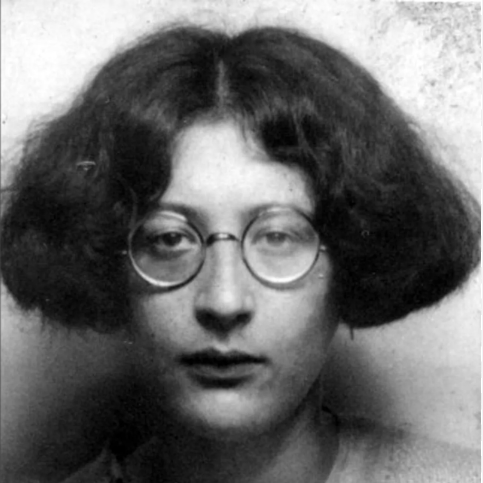
Respectable scientists like de Broglie himself accept wave mechanics because it confers coherence and unity upon the experimental findings of contemporary science, and in spite of the astonishing changes it implies in connection with ideas of causality, time, and space, but it is because of these changes that it wins favor with the public. The great popular success of Einstein was the same thing. The public drinks in and swallows eagerly everything that tends to dispossess the intelligence in favor of some technique; it can hardly wait to abdicate from intelligence and reason and from everything that makes man responsible for his destiny.
▼
Source
source
"Wave Mechanics," p. 75

2 weeks 1 day ago
I disclose my mysteries to those who are worthy of my mysteries.
1 month 3 weeks ago
Nothing is rich but the inexhaustible wealth of Nature. She shows us only surfaces, but she is million fathoms deep.
▼
Source
source
p. 183
2 months 3 weeks ago
Liars ... when they speak the truth they are not believed.
1 month 3 weeks ago
Private property has made us so stupid and one-sided that an object is only ours when we have it - when it exists for us as capital, or when it is directly possessed, eaten, drunk, worn, inhabited, etc., - in short, when it is used by us. Although private property itself again conceives all these direct realizations of possession as means of life, and the life which they serve as means is the life of private property - labour and conversion into capital. In place of all these physical and mental senses there has therefore come the sheer estrangement of all these senses - the sense of having. The human being had to be reduced to this absolute poverty in order that he might yield his inner wealth to the outer world.
▼
Source
source
p. 87, The Marx-Engels Reader
2 weeks ago
The application of scientific formulations of the principle of probability statistically determined is thus a logical corollary of the principle already stated, that the subject matter of scientific findings is relational, not individual. It is for this reason that it is safe to predict the ultimate triumph of the statistical doctrine.
2 weeks 1 day ago
Go and shew John again those things which ye do hear and see: The blind receive their sight, and the lame walk, the lepers are cleansed, and the deaf hear, the dead are raised up, and the poor have the gospel preached to them. And blessed is he, whosoever shall not be offended in me.
▼
Source
source
11:4-6 (KJV)
2 weeks 4 days ago
Some words shall herein be capitalised when used, not as vernacular, but as terms defined. Thus an "idea" is the substance of an actual unitary thought or fancy; but "Idea," nearer Plato's idea of ἰδέα, denotes anything whose Being consists in its mere capacity for getting fully represented, regardless of any person's faculty or impotence to represent it.
▼
Source
source
I
1 month 6 days ago
Every good thing is gentle and consistent, progressing in good order and not going beyond what is right.
▼
Source
source
2, 39, 4
3 weeks 2 days ago
I have in general no very exalted opinion of the virtue of paper government.
2 weeks 1 day ago
Blessed is the lion which becomes man when consumed by man; and cursed is the man whom the lion consumes, and the lion becomes man. (7) This saying has been interpreted by some as referring to such anger as consumes a man…(rather than is consumed by him, through his reason and love), 'til that man is the lion of Anger. Other more mystical interpretations might also be found or devised that have merit.
5 days ago
Anarchism, more than any other social theory, values human life above things.
1 month 3 weeks ago
That of beaver skins, of beaver wool, and of gum Senega, has been subjected to higher duties; Great Britain, by the conquest of Canada and Senegal, having got almost the monopoly of those commodities.
▼
Source
source
Chapter II, Part II, Article IV, p. 954-955.
1 week 6 days ago
The surrealist thinks he has outstripped the whole of literary history when he has written (here a word that there is no need to write) where others have written "jasmines, swans and fauns." But what he has really done has been simply to bring to light another form of rhetoric which hitherto lay hidden in the latrines.
▼
Source
source
Chapter XI: The Self-Satisfied Age

2 weeks 1 day ago
Saint-Simon, like Hegel, begins with the assertion that the social order engendered by the French Revolution proved that mankind has reached the adult state. In contrast to Hegel, however, he described this stage primarily in terms of its economy; the industrial process was the sole integrating factor in the new social order.
▼
Source
source
P. 330

1 month 1 week ago
What odds does it make to the man who lives within Nature's bounds, whether he ploughs a hundred acres or a thousand?
▼
Source
source
Book I, satire i, line 48

3 weeks 6 days ago
I can look a whole day with delight upon a handsome picture, though it be but of a horse. It is my temper, & I like it the better, to affect all harmony, and sure there is music even in the beauty, and the silent note which Cupid strikes, far sweeter than the sound of an instrument. For there is a music wherever there is a harmony, order or proportion; and thus far we may maintain the music of the spheres.
▼
Source
source
Section 9
2 weeks 1 day ago
For I came to cause division, with a man against his father, and a daughter against her mother, and a daughter-in-law against her mother-in-law. 36 Indeed, a man's enemies will be those of his own household.
▼
Source
source
10:35,36, New World Translation
3 weeks 6 days ago
Pursue Virtue virtuously.
▼
Source
source
These words also appear in Christian Morals, Part I, Section I
1 month 2 weeks ago
If you want to go down deep you do not need to travel far; indeed, you don't have to leave your most immediate and familiar surroundings.
▼
Source
source
p. 50e
2 weeks 4 days ago
Mathematical and physiological researches have shown that the space of experience is simply an actual case of many conceivable cases, about whose peculiar properties experience alone can instruct us.
▼
Source
source
p. 205; On the space of experience.
1 month 1 week ago
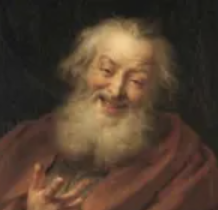
Throw moderation to the winds, and the greatest pleasures bring the greatest pains.
3 weeks 6 days ago
I could be content that we might procreate like trees, without conjunction, or that there were any way to perpetuate the world without this trivial and vulgar act of coition; It is the foolishest act a wise man commits in all his life, nor is there anything that will more deject his cooled imagination, when he shall consider what an odd and unworthy piece of folly he hath committed.
▼
Source
source
Section 9

3 weeks 3 days ago
Companies increasingly profit not from creating value but from controlling access to necessities. Patents on life-saving medicine, copyrights extending decades, monopolies on infrastructure - rent-seeking extracts wealth through ownership rather than production. Parasitic capitalism where controllers profit while producers struggle.
1 month 3 weeks ago
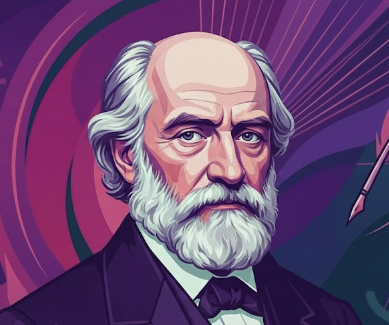
That books do not take the place of experience, and that learning is no substitute for genius, are two kindred phenomena; their common ground is that the abstract can never take the place of the perceptive.
▼
Source
source
E. Payne, trans., Vol. II, Ch. 7, p. 74
1 month 3 weeks ago
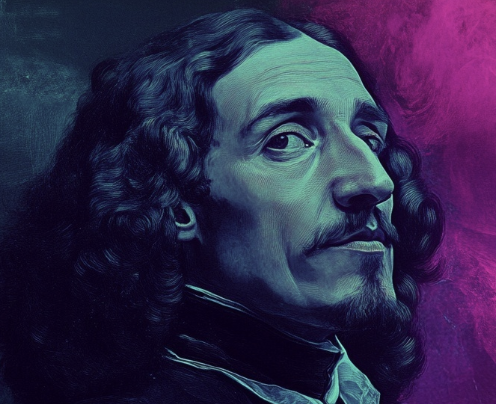
We feel and know that we are eternal.
▼
Source
source
Part V, Prop. XXIII, Scholium
1 week 1 day ago
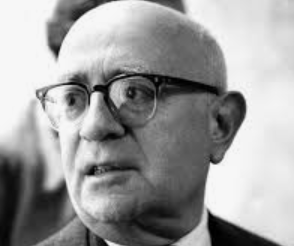
In the general tendency toward specialization, philosophy too has established itself as a specialized discipline, one purified of all specific content. In so doing, philosophy has denied its own constitutive concept: the intellectual freedom that does not obey the dictates of specialized knowledge.
▼
Source
source
p. 6
CivilSimian.com created by AxiomaticPanic, CivilSimian, Kalokagathia