

1 month 3 weeks ago
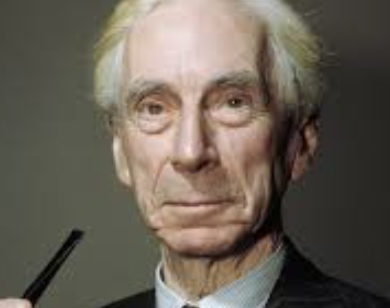
Belief in eternal hell fire was an essential item of Christian belief until pretty recent times. In this country, as you know, it ceased to be an essential item because of a decision of the Privy Council, and from that decision the Archbishop of Canterbury and the Archbishop of York dissented; but in this country our religion is settled by Act of Parliament, and therefore the Privy Council was able to override Their Graces and hell was no longer necessary to a Christian. Consequently I shall not insist that a Christian must believe in hell. What is a Christian?
▼
Source
source
1927

1 month 2 weeks ago
So we do sometimes think because it has been found to pay.
▼
Source
source
§ 470
1 month 3 weeks ago
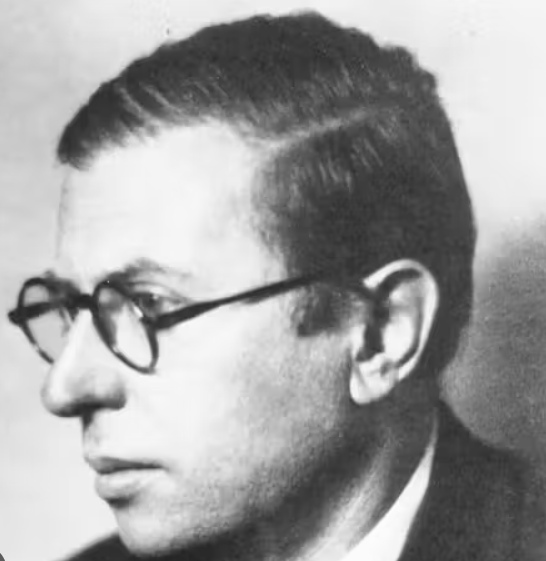
It is freedom, it is particularity, it is solitude that we are aiming at, and not Evil for its own sake.
▼
Source
source
p. 179

1 month 3 weeks ago
The universe is the bible of a true Theophilanthropist. It is there that he reads of God. It is there that the proofs of his existence are to be sought and to be found. As to written or printed books, by whatever name they are called, they are the works of man's hands, and carry no evidence in themselves that God is the author of any of them. It must be in something that man could not make, that we must seek evidence for our belief, and that something is the universe; the true bible; the inimitable word, of God.
▼
Source
source
A Discourse, &c. &c.
1 month 1 week ago
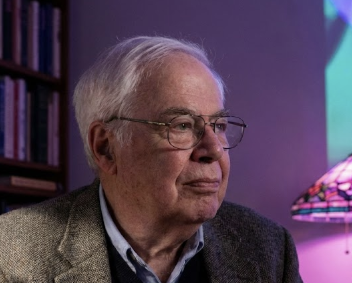
On James's view, "true" resembles "good" or "rational" in being a normative notion, a compliment paid to sentences that seem to be paying their way and that fit with other sentences which are doing so.
▼
Source
source
Introduction to Consequences of Pragmatism

2 weeks 4 days ago
Good health is the best weapon against religion. Healthy bodies and healthy minds have never been shaken by religious fears.
2 weeks 1 day ago
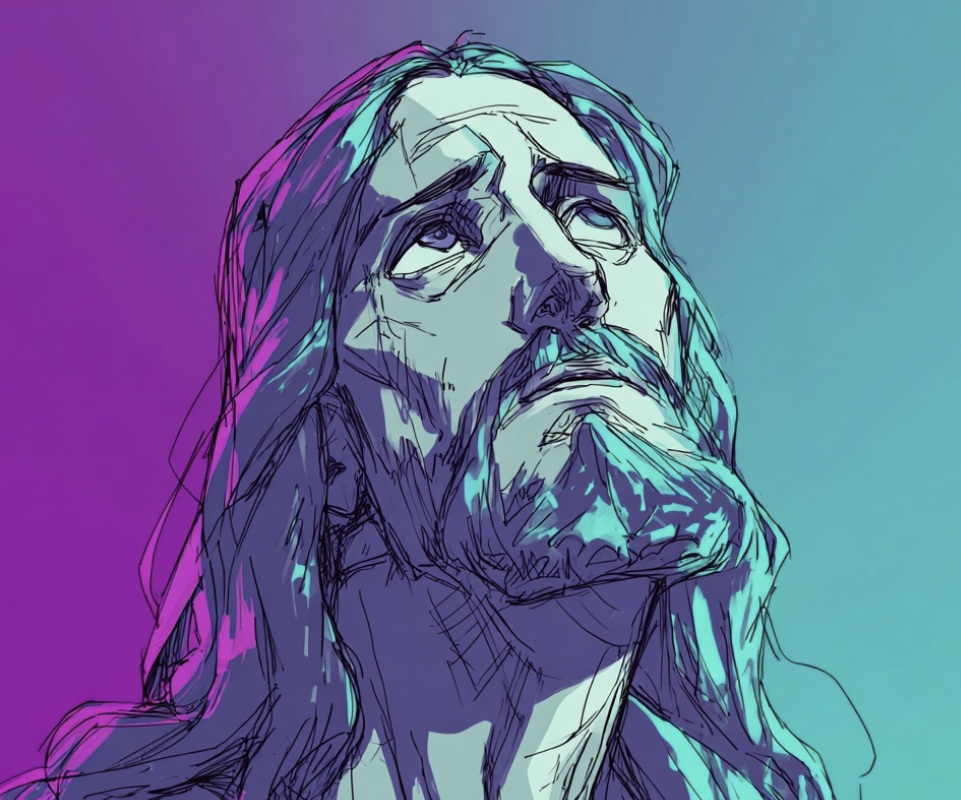
What, could ye not watch with me one hour? Watch and pray, that ye enter not into temptation: the spirit indeed is willing, but the flesh is weak.
▼
Source
source
26:40-41 (KJV)

1 month 2 weeks ago
The perfect disciplinary apparatus would make it possible for a single haze to see everything constantly. A central point would be both the source of light illuminating everything, and a locus of convergence for everything that must be known: a perfect eye that nothing would escape and a centre towards which all gazes would be turned.
▼
Source
source
Part Three, The Means of Correct Training
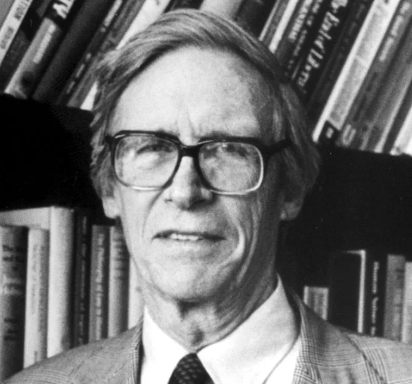
1 month 3 weeks ago
Many conservative writers have contended that the tendency to equality in modern social movements is the expression of envy. In this way they seek to discredit this trend, attributing it to collectively harmful impulses.
▼
Source
source
Chapter IX, Section 82, p. 538

2 months 2 weeks ago
It was the addition of status that brought the little things: a more comfortable seat here, a better cut of meat there, a shorter wait in line at the other place. To the philosophical mind, these items might seem scarcely worth any great trouble to acquire.Yet no one, however philosophical, could give up those privileges, once acquired, without a pang. That was the point.
2 weeks 4 days ago
It is an understatement to say that in this society injustices abound: in truth, it is itself the quintessence of injustice.

2 months 2 weeks ago
By such reflections and by the continuance in them of a divine nature, the qualities which we have described grew and increased among them; but when the divine portion began to fade away, and became diluted too often and too much with the mortal admixture, and the human nature got the upper hand, they then, being unable to bear their fortune, behaved unseemly, and to him who had an eye to see grew visibly debased, for they were losing the fairest of their precious gifts; but to those who had no eye to see the true happiness, they appeared glorious and blessed at the very time when they were full of avarice and unrighteous power.
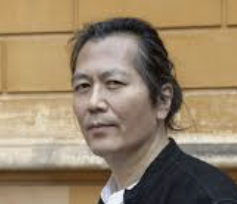
5 days ago
...Zen Buddhism, this religion of immanence.
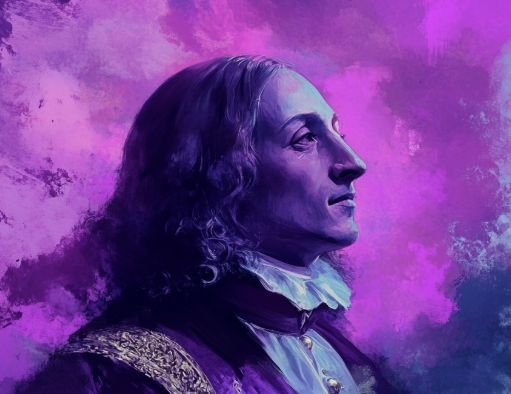
2 months 5 days ago
All the excesses, all the violence, and all the vanity of great men, come from the fact that they know not what they are: it being difficult for those who regard themselves at heart as equal with all men... For this it is necessary for one to forget himself, and to believe that he has some real excellence above them, in which consists this illusion that I am endeavoring to discover to you.
4 days ago
Just as modern mass production requires the standardization of commodities, so the social process requires standardization of man, and this standardization is called equality.
▼
Source
source
Ch. 2
1 week 6 days ago
All journeys have secret destinations of which the traveler is unaware.
▼
Source
source
The Legend of the Baal-Shem (1955),1995 edition, p. 36
2 months ago
Men never do good unless necessity drives them to it; but when they are free to choose and can do just as they please, confusion and disorder become rampant.
▼
Source
source
Book 1, Ch. 3 (as translated by LJ Walker and B Crick)
1 month 3 weeks ago
The most perfect philosophy of the natural kind only staves off our ignorance a little longer: as perhaps the most perfect philosophy of the moral or metaphysical kind serves only to discover larger portions of it. Thus the observation of human blindness and weakness is the result of all philosophy, and meets us at every turn, in spite of our endeavours to elude or avoid it.
▼
Source
source
Section 4 : Sceptical Doubts Concerning The Operations of The Understanding
2 months 5 days ago
They [men] have corrupted this [God's supernatural] order by making profane things what they should make of holy things, because in fact, we believe scarcely any thing except which pleases us.
1 month 3 weeks ago
Though experience be our only guide in reasoning concerning matters of fact; it must be acknowledged, that this guide is not altogether infallible, but in some cases is apt to lead us into errors.
▼
Source
source
Section 10 : Of Miracles Pt. 1
2 weeks 4 days ago
The ego involved in responsibility is me and no one else, me with whom one whould have liked to pair up a sister soul, from whom one would have substitution and sacrifice.
▼
Source
source
The Levinas reader by Levinas, Emmanuel p. 116

1 month 3 weeks ago
Every time you make a choice you are turning the central part of you, the part of you that chooses, into something a little different from what it was before. And taking your life as a whole, with all your innumerable choices, all your life long you are slowly turning this central thing either into a heavenly creature or into a hellish creature: either into a creature that is in harmony with God, and with other creatures, and with itself, or else into one that is in a state of war and hatred with God, and with its fellow-creatures, and with itself. To be the one kind of creature is heaven: that is, it is joy and peace and knowledge and power. To be the other means madness, horror, idiocy, rage, impotence, and eternal loneliness. Each of us at each moment is progressing to the one state or the other.
▼
Source
source
Book III, Chapter 4, "Morality and Psychoanalysis"
1 week ago
Heaven knows what seeming nonsense may not to-morrow be demonstrated truth.
▼
Source
source
Ch. 7: "Relativity", p. 161
2 weeks 4 days ago
Of all calumnies the worst is the one which attacks our indolence, which contests its authenticity.
5 days ago
Perhaps power is never free from a feeling of lack.
1 month 3 weeks ago
Most people live, whether physically, intellectually or morally, in a very restricted circle of their potential being. They make use of a very small portion of their possible consciousness, and of their soul's resources in general, much like a man who, out of his whole bodily organism, should get into a habit of using and moving only his little finger. Great emergencies and crises show us how much greater our vital resources are than we had supposed.
▼
Source
source
To W. Lutoslawski, 5/6/1906
1 month 3 weeks ago
The fundamental criterion for judging any procedure is the justice of its likely results.
▼
Source
source
Chapter IV, Section 37, p. 230
2 weeks 4 days ago
In fact, this infinitesimally spread-out consciousness is a direct feeling of its contents as spread out. In an infinitesimal interval we directly perceive the temporal sequence of its beginning, middle, and end... Now upon this interval follows another, whose beginning is the middle of the former, and whose middle is the end of the former. Here we have an immediate perception of the temporal sequence of its beginning, middle and end, or say, of the second, third, and fourth instants.
3 weeks 6 days ago
A common monetary standard will be established, with the consent of the various governments, by which industrial transactions will be greatly facilitated. Three spheres made respectively of gold, silver, and platinum, and each weighing fifty grammes, would differ sufficiently in value for the purpose. The sphere should have a small flattened base, and on the great circle parallel to it the Positivist motto would be inscribed. At the pole would be the image of the immortal Charlemagne, the founder of the Western Republic, and round the image his name would be engraved, in its Latin form, Carolus; that name, respected as it is by all nations of Europe alike, would be the common appellation of the universal monetary standard.
▼
Source
source
p. 430
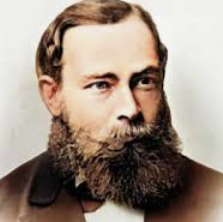
2 weeks 1 day ago
Facts, facts, facts,' cries the scientist if he wants to emphasize the necessity of a firm foundation for science. What is a fact? A fact is a thought that is true. But the scientist will surely not recognize something which depends on men's varying states of mind to be the firm foundation of science.
▼
Source
source
Gottlob Frege (1956). "The thought: A logical inquiry" in: Peter Ludlow (1997) Readings in the Philosophy of Language. p. 27
1 month 2 weeks ago
A sovereign shows himself to be a tyrant if he disregards his honest advisors, or punishes them for what they have said.
2 months 2 weeks ago
It would be better for me that multitudes of men should disagree with me rather than that I, being one, should be out of harmony with myself.
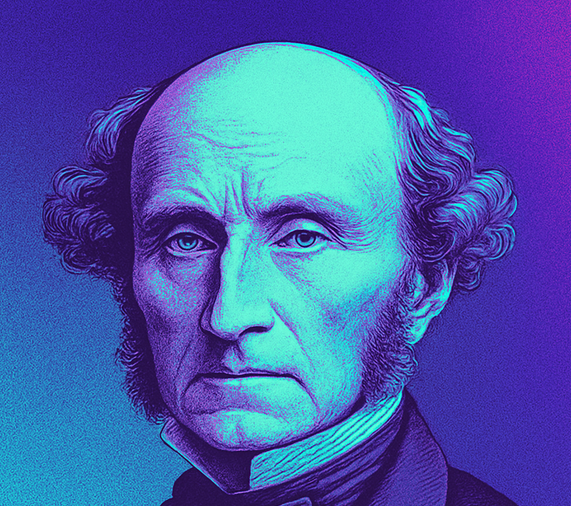
1 month 3 weeks ago
The speaker with whom I was most struck, though I dissented from nearly every word he said, was Thirlwall, the historian, since Bishop of St. David's, then a Chancery barrister, unknown except by a high reputation for eloquence acquired at the Cambridge Union before the era of Austin and Macaulay. His speech was in answer to one of mine. Before he had uttered ten sentences, I set him down as the best speaker I had ever heard, and I have never since heard any one whom I placed above him.
▼
Source
source
(p. 125)

3 weeks 6 days ago
The whole life of an American is passed like a game of chance, a revolutionary crisis, or a battle.
▼
Source
source
Chapter XVIII.
1 week 2 days ago
I hope, reader, that some time while our tragedy is still playing, in some interval between acts, we shall meet again. And we shall recognize one another. And forgive me if I have troubled you more than was needful and inevitable, more than I intended to do when I took up my pen proposing to distract you from your distractions. And may God deny you peace, but give you glory!
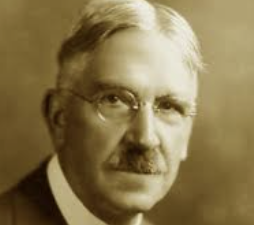
2 weeks ago
Just because emotion is essential to that act of expression which produces a work of art, it is easy for inaccurate analysis to misconceive its mode of operation and conclude that the work of art has emotion for its significant content. One may cry out with joy or even weep upon seeing a friend from whom one has been long separated. The outcome is not an expressive object -- save to the onlooker. But if the emotion leads one to gather material that is affiliated to the mood which is aroused, a poem may result. In the direct outburst, an objective situation is the stimulus, the cause, of the emotion. In the poem, objective material becomes the content and matter of the emotion, not just its evocative occasion.
▼
Source
source
pp. 71-72
3 weeks 2 days ago
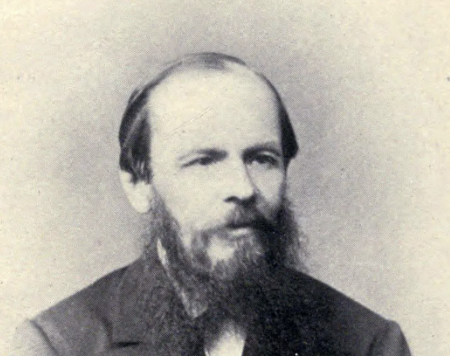
I consider you the most honest and truthful of men, more honest and truthful than anyone; and if they say that your mind...that is, that you're sometimes afflicted in your mind, it's unjust. I made up my mind about that, and disputed with others, because, though you really are mentally afflicted (you won't be angry with that, of course; I'm speaking from a higher point of view), yet the mind that matters is better in you than in any of them. It's something, in fact, they have never dreamed of. For there are two sorts of mind: one that matters, and one that doesn't matter.
▼
Source
source
Part 3, Chapter 8

1 month 3 weeks ago
The necessities of the time have accorded to the petty interests of every day life such overwhelming attention : the deep interests of actuality and the strife respecting these have engrossed all the powers and the forces of the mind - as also the necessary means - to so great an extent, that no place has been left to the higher inward life, the intellectual operations of a purer sort; and the better natures have thus been stunted in their growth, and in great measure sacrificed.
▼
Source
source
p. x Inaugural Address, delivered at Heidelberg on the 28th October(1816), Lectures on the history of philosophy, translated from German by E. S. Haldane in Three Volumes (1892-96) full text.
1 week 2 days ago
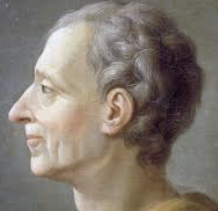
History is full of religious wars; but, we must take care to observe, it was not the multiplicity of religions that produced these wars, it was the intolerating spirit which animated that one which thought she had the power of governing.
▼
Source
source
No. 65. (Usbek writing to his wives)
1 month 3 weeks ago
We later learned that all the nineteen passengers in the non-smoking compartment had been killed. When the plane had hit the water a hole had been made in the plane and the water had rushed in. I had told a friend at Oslo who was finding me a place that he must find me a place where I could smoke, remarking jocularly, 'If I cannot smoke, I shall die'. Unexpectedly, this turned out to be true.
2 weeks 4 days ago
In the torments of the intellect, there is a certain bearing which is to be sought in vain among those of the heart. Skepticism is the elegance of anxiety.
2 weeks 4 days ago
The mores I return to myself, the more I divest myself, under the traumatic effect of persecution , of my freedom as a constituted, wilful, imperialistic subject, the more I discover myself to be responsible' the more just I am, the more guilty I am. I am 'in myself' through others.
▼
Source
source
The Levinas reader by Levinas, Emmanuel p. 102

2 months 6 days ago
So clearly will truths kindle light for truths.
▼
Source
source
Book I, line 1117 (tr. W. H. D. Rouse and M. F. Smith)
1 month 3 weeks ago
If all mankind minus one, were of one opinion, and only one person were of the contrary opinion, mankind would be no more justified in silencing that one person, than he, if he had the power, would be justified in silencing mankind.
▼
Source
source
Ch. II: Of the Liberty of Thought and Discussion
2 months 6 days ago
We are all sprung from a heavenly seed.
▼
Source
source
Book II, line 991 (tr. Munro)
1 month 3 weeks ago
Mr. Neo-Angular - I am doing my duty. My ethics are based on dogma, not on feeling. Vertue - I know that a rule is to be obeyed because it is a rule and not because it appeals to my feelings at the moment.
▼
Source
source
Pilgrim's Regress 90
2 weeks 6 days ago
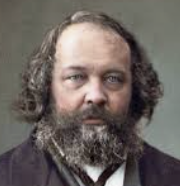
The people should never be deceived, under any pretext or for any purpose. It would not only be criminal but detrimental to the revolutionary cause, for deception of any kind, by its very nature, is shortsighted, petty, narrow, always sewn with rotten threads, so that it inevitably tears and is exposed.
▼
Source
source
"Appendix A"

1 month 3 weeks ago
Every book is a quotation; and every house is a quotation out of all forests and mines and stone-quarries; and every man is a quotation from all his ancestors.
▼
Source
source
Quotation and Originality
1 month 2 weeks ago
You could attach prices to ideas. Some cost a lot some little. ... And how do you pay for ideas? I believe: with courage.
▼
Source
source
p. 60e
2 weeks 6 days ago
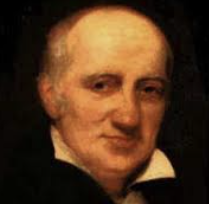
Government in reality, as has abundantly appeared, is a question of force, and not of consent. It is desirable that a government should be made as agreeable as possible to the ideas and inclinations of its subjects and that they should be consulted, as extensively as may be, respecting its construction and regulations. But, at last, the best constituted government that can be formed particularly for a large community, will contain many provisions that, far from having obtained the consent of all its members, encounter even in their outset a strenuous, thought ineffectual opposition.
▼
Source
source
Book III, "Of Obedience"
CivilSimian.com created by AxiomaticPanic, CivilSimian, Kalokagathia