

3 weeks 1 day ago
Pain and suffering are always inevitable for a large intelligence and a deep heart. The really great men must, I think, have great sadness on Earth.
2 weeks 3 days ago
The comprehension of God taken as a participation in his sacred life, an allegedly direct comprehension, is impossible, because participation is a denial of the divine, and because nothing is more direct than the face to face, which is straightforwardness itself.
▼
Source
source
Totality and Infinity
1 month 3 weeks ago
We have to learn to think in a new way. We have to learn to ask ourselves, not what steps can be taken to give military victory to whatever group we prefer, for there no longer are such steps; the question we have to ask ourselves is: what steps can be taken to prevent a military contest of which the issue must be disastrous to all parties?

4 days ago
The natural impulse of the primitive man to strike back, to avenge a wrong, is out of date. Instead, the civilized man, stripped of courage and daring, has delegated to an organized machinery the duty of avenging his wrongs, in the foolish belief that the State is justified in doing what he no longer has the manhood or consistency to do.

5 months 3 weeks ago
I think that the task of philosophy is not to provide answers, but to show how the way we perceive a problem can be itself part of a problem.
2 weeks ago
To covet truth is a very distinguished passion.
▼
Source
source
p. 48
1 month 3 weeks ago
Whenever I have read any part of the Vedas, I have felt that some unearthly and unknown light illuminated me. In the great teaching of the Vedas, there is no touch of sectarianism. It is of all ages, climes and nationalities and is the royal road for the attainment of the Great Knowledge. When I am at it, I feel that I am under the spangled heavens of a summer night.
▼
Source
source
Quoted in Bansi Pandit, The Hindu Mind (B & V Enterprises, 1996) p. 307
2 months 6 days ago
The propositions which are true and evident must of necessity be employed even by those who contradict them.
▼
Source
source
Book II, ch. 20, 1
3 weeks 1 day ago
If not reason, then the devil.
1 week 1 day ago
I am the center of my universe, the center of the universe, and in my supreme anguish I cry with Michelet, "Mon moi, ils m'arrachent mon moi!" What is a man profited if he shall gain the world and lose his own soul? (Matt. xvi. 26).

1 month 3 weeks ago
Virtue supposes liberty, as the carrying of a burden supposes active force. Under coercion there is no virtue, and without virtue there is no religion. Make a slave of me, and I shall be no better for it. Even the sovereign has no right to use coercion to lead men to religion, which by its nature supposes choice and liberty. My thought is no more subject to authority than is sickness or health.
▼
Source
source
"Canon Law: Ecclesiastical Ministry", 1771

1 month 1 week ago
Do you count your birthdays with gratitude?
▼
Source
source
Book II, epistle ii, line 210

2 weeks 3 days ago
Every act of courage is the work of an unbalanced man. Animals, normal by definition, are always cowardly except when they know themselves to be stronger, which is cowardice itself.

2 months 3 weeks ago
In the New Testament sense, to be a Christian is, in an upward sense, as different from being a man as, in a downward sense, to be a man is different from being a beast. A Christian in the sense of the New Testament, although he stands suffering in the midst of life's reality, has yet become completely a stranger to this life; in the words of the Scripture and also of the Collects (which still are read-O bloody satire!-by the sort of priests we now have, and in the ears of the sort of Christians that now live) he is a stranger and a pilgrim-just think, for example of the late Bishop Mynster intoning, We are strangers and pilgrims in this world! A Christian in the New Testament sense is literally a stranger and a pilgrim, he feels himself a stranger, and everyone involuntarily feels that this man is a stranger to him.

2 months ago
The most disadvantageous peace is better than the most just war.
▼
Source
source
Adagia, 1508
1 week ago
It suffices to remember how many sorrows he is spared who no longer thinks too many thoughts, how much more "in accordance with reality" a person behaves when he affirms that the real is the right, how much more capacity to use the machinery falls to the person who integrates himself with it uncomplainingly.
▼
Source
source
p. 286

1 month 2 weeks ago
This is the moment when it becomes clear that the images of madness are nothing but dream and error, and that if the unfortunate sufferer who is blinded by them invokes them, it is the better to disappear with them into the annihilation for which they are destined.
▼
Source
source
Part Two: 2. The Transcendence of Delirium
1 month 3 weeks ago
To acquire immunity to eloquence is of the utmost importance to the citizens of a democracy.
▼
Source
source
Ch. 18: The Taming of Power
1 month 3 weeks ago
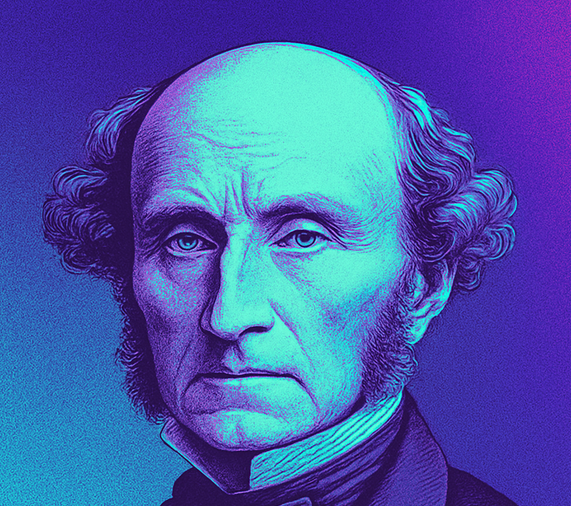
If I had been by nature extremely quick of apprehension, or had possessed a very accurate and retentive memory or were of a remarkably active and energetic character, the trial would not be conclusive; but in all these natural gifts I am rather below than above par; what I could do, could assuredly be done by any boy or girl of average capacity and healthy physical constitution: and if I have accomplished anything, I owe it, among other fortunate circumstances, to the fact that through the early training bestowed on me by my father, I started, I may fairly say, with an advantage of a quarter of a century over my contemporaries.
▼
Source
source
(pp. 30-31)
3 weeks 1 day ago
A very great part of the mischiefs that vex the world arises from words.
▼
Source
source
Letter to Richard Burke post 19 February 1792 (1792), in R. B. McDowell and William B. Todd (eds), The Writings and Speeches of Edmund Burke, Vol. 9: I: The Revolutionary War, 1794-1797; II: Ireland. p. 647
2 weeks 3 days ago
Illusion begets and sustains the world; we do not destroy one without destroying the other. Which is what I do every day. An apparently ineffectual operation, since I must begin all over again the next day.
3 weeks 1 day ago
I consider you the most honest and truthful of men, more honest and truthful than anyone; and if they say that your mind...that is, that you're sometimes afflicted in your mind, it's unjust. I made up my mind about that, and disputed with others, because, though you really are mentally afflicted (you won't be angry with that, of course; I'm speaking from a higher point of view), yet the mind that matters is better in you than in any of them. It's something, in fact, they have never dreamed of. For there are two sorts of mind: one that matters, and one that doesn't matter.
▼
Source
source
Part 3, Chapter 8

2 months ago
Hope is a good breakfast, but it is a bad supper.
▼
Source
source
No. 36
1 month 3 weeks ago
Never give children a chance of imagining that anything exists in isolation. Make it plain from the very beginning that all living is relationship. Show them relationships in the woods, in the fields, in the ponds and streams, in the village and in the country around it. Rub it in.
1 month 1 week ago
Seek after the good, and with much toil shall ye find it; the evil turns up of itself without your seeking it.
2 months 3 weeks ago
What is the essence of life? To serve others and to do good. Often given as a saying of Aristotle with no reference.
1 week 5 days ago
As the oil is in the olive, so is the teshuvah, repentance, hidden within sin.
▼
Source
source
p. 44
1 month 3 weeks ago
Freedom comes only to those who no longer ask of life that it shall yield them any of those personal goods that are subject to the mutations of time.
1 month 3 weeks ago
The original scriptures of most religions are poetical and unsystematic. Theology, which generally takes the form of a reasoned commentary on the parables and aphorisms of the scriptures, tends to make its appearance at a later stage of religious history. The Bhagavad-Gita occupies an intermediate position between scripture and theology; for it combines the poetical qualities of the first with the clear-cut methodicalness of the second... one of the clearest and most comprehensive summaries of the Perennial Philosophy ever to have been made. Hence its enduring value, not only for Indians, but for all mankind.
3 weeks 1 day ago
Lack of originality, everywhere, all over the world, from time immemorial, has always been considered the foremost quality and the recommendation of the active, efficient and practical man...
▼
Source
source
Part 3, Chapter ?
2 months 4 days ago
The principles of pleasure are not firm and stable. They are different in all mankind, and variable in every particular with such a diversity that there is no man more different from another than from himself at different times.
3 weeks 1 day ago
The divine origin of man, as taught by Vedanta, IS continually inculcated, to stimulate his efforts to return, to animate him in the struggle, and incite him to consider a reunion and reincorporation with Divinity as the one primary object of every action and reaction. Even the loftiest philosophy of the European, the idealism of reason as it is set forth by the Greek philosophers, appears in comparison with the abundant light and vigor of Oriental idealism like a feeble Promethean spark in the full flood of heavenly glory of the noonday sun, faltering and feeble and ever ready to be extinguished.
▼
Source
source
quoted in Londhe, S. (2008). A tribute to Hinduism: Thoughts and wisdom spanning continents and time about India and her culture. New Delhi: Pragun Publication.
6 days ago
Our habitual experience is a complex of failure and success in the enterprise of interpretation. If we desire a record of uninterpreted experience, we must ask a stone to record its autobiography.
▼
Source
source
Pt. I, ch. 1, sec. 6.

2 months 2 weeks ago
One does not discover the absurd without being tempted to write a manual of happiness. "What! — by such narrow ways — ?" There is but one world, however. Happiness and the absurd are two sons of the same earth. They are inseparable. It would be a mistake to say that happiness necessarily springs from the absurd discovery. It happens as well that the feeling of the absurd springs from happiness.

3 weeks 5 days ago
The greatness of America lies not in being more enlightened than any other nation, but rather in her ability to repair her faults.
▼
Source
source
Chapter XIII.
1 month 3 weeks ago
In a logically perfect language, there will be one word and no more for every simple object, and everything that is not simple will be expressed by a combination of words, by a combination derived, of course, from the words for the simple things that enter in, one word for each simple component.

4 days ago
In fact, we had a number of extreme leftists and trade unionists among us, and they seemed to take it for granted that we all agreed that the rich must somehow be forced to surrender their ill-gotten gains. Yet there was an air of good humor about their idealism that made me feel they would not be too offended if I admitted that I regard socialists as well-meaning but muddle-headed brigands.
▼
Source
source
p. 30
1 month 1 week ago
If any one hearken with understanding to these sayings of mine many a deed worthy of a good man shall he perform and many a foolish deed be spared.
1 week 1 day ago
May we not say, perhaps, that the evil man is annihilated because he wished to be annihilated, or that he did not wish strongly enough to eternalize himself because he was evil? May we say that it is not believing in the other life which causes a man to be good, but rather that being good causes him believe in it? And what is being good and being evil? These states belong to the sphere of ethics, not of religion; or rather, does not the doing good though being evil pertain to ethics, and the being good [forgivable] though doing evil, to religion?
1 month 3 weeks ago
Those services which the community will most readily pay for it is most disagreeable to render. You are paid for being something less than a man.
▼
Source
source
p. 486

3 weeks 6 days ago
Burden not the back of Aries, Leo, or Taurus, with thy faults, nor make Saturn, Mars, or Venus, guilty of thy Follies.
▼
Source
source
Part III, Section VII
1 week 5 days ago
He [the "specialist"] is one who, out of all that has to be known in order to be a man of judgment, is only acquainted with one science, and even of that one only knows the small corner in which he is an active investigator. He even proclaims it as a virtue that he takes no cognisance of what lies outside the narrow territory specially cultivated by himself, and gives the name of "dilettantism" to any curiosity for the general scheme of knowledge.
▼
Source
source
Chapter XII: The Barbarism Of "Specialisation"

1 month 2 weeks ago
I believe Buddhism to be a simplification of Hinduism and Islam to be a simplification of Xianity.
▼
Source
source
Letter to Sheldon Vanauken (14 December 1950), quoted in Sleuthing C. S. Lewis (2001) by Kathryn Ann Lindskoog, p. 393

1 month 3 weeks ago
The Few assume to be the deputies, but they are often only the despoilers of the Many.
▼
Source
source
Pt. IV, sec. 3, ch. 3

2 weeks ago
Bourgeois political economy ... never gets to see man who is its real subject. It disregards the essence of man and his history and is thus in the profoundest sense not a 'science of people' but of non-people and of an inhuman world of objects and commodities.
▼
Source
source
"The Foundations of Historical Materialism," Studies in Critical Philosophy (1972), p. 9
2 weeks ago
And whereas many men, by accident unevitable, become unable to maintain themselves by their labour; they ought not to be left to the Charity of private persons; but to be provided for, (as far-forth as the necessities of Nature require,) by the Lawes of the Common-wealth. For as it is Unchariablenesse in any man, to neglect the impotent; so it is in the Soveraign of a Common-wealth, to expose them to the hazard of such uncertain Charity.
▼
Source
source
The Second Part, Chapter 30, p. 181

1 month 2 weeks ago
The small are always dependent on the great; they are "small" precisely because they think they are independent. The great thinker is one who can hear what is greatest in the work of other "greats" and who can transform it in an original manner.
▼
Source
source
p. 35
3 weeks 6 days ago
In the deep discovery of the Subterranean world, a shallow part would satisfy some enquirers.
▼
Source
source
Chapter I
6 days ago
The science of pure mathematics, in its modern developments, may claim to be the most original creation of the human spirit.
▼
Source
source
Ch. 2: "Mathematics as an Element in the History of Thought", p. 28
1 month 3 weeks ago
Too little liberty brings stagnation, and too much brings chaos.
▼
Source
source
Authority and the Individual (1949), p. 37
CivilSimian.com created by AxiomaticPanic, CivilSimian, Kalokagathia