

1 month 2 weeks ago
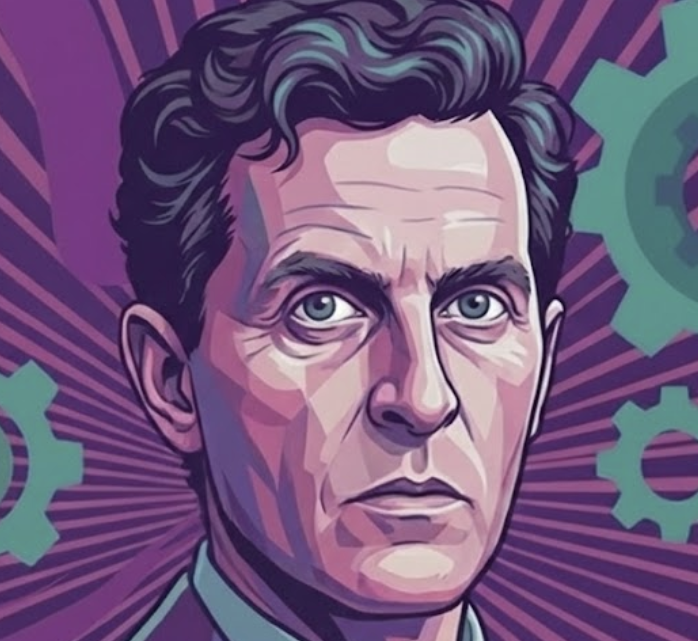
Does man think because he has found that thinking pays? Does he bring his children up because he has found it pays?
▼
Source
source
§ 467
1 month 3 weeks ago
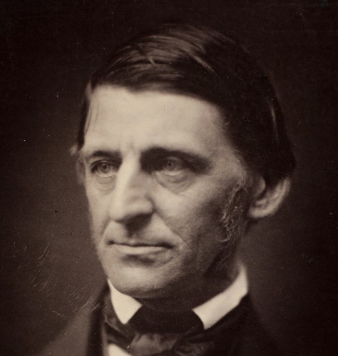
If the single man plant himself indomitably on his instincts, and there abide, the huge world will come round to him. 6. Nature, Addresses and Lectures.
▼
Source
source
The American Scholar

1 month 1 week ago
Nor word for word too faithfully translate.
▼
Source
source
Line 133 (tr. John Dryden)
2 weeks 3 days ago
The world begins and ends with us. Only our consciousness exists, it is everything, and this everything vanishes with it. Dying, we leave nothing. Then why so much fuss around an event that is no such thing?
1 month 2 weeks ago
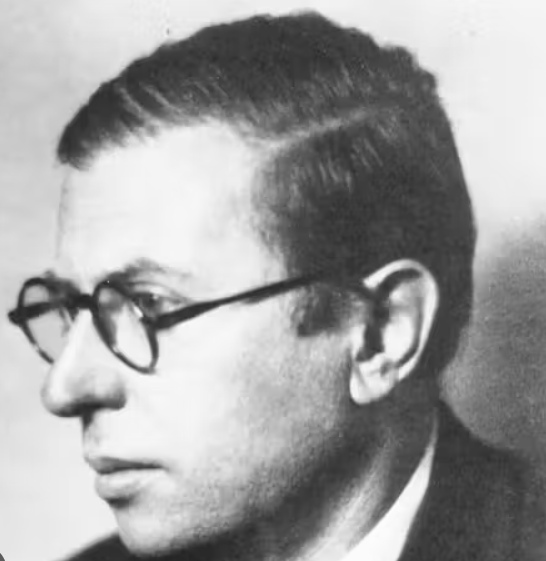
We will freedom for freedom's sake, in and through particular circumstances. And in thus willing freedom, we discover that it depends entirely upon the freedom of others and that the freedom of others depends upon our own. Obviously, freedom as the definition of a man does not depend upon others, but as soon as there is a commitment, I am obliged to will the liberty of others at the same time as my own. I cannot make liberty my aim unless I make that of others equally my aim.
▼
Source
source
p. 52

2 months 3 weeks ago
Woe to the thinker who is not the gardener but only the soil of the plants that grow in him!
2 weeks 4 days ago
I find that all my thoughts circle around God like the planets around the sun, and are as irresistibly attracted by Him. I would feel it to be the grossest sin if I were to oppose any resistance to this force.
▼
Source
source
Sources: David John Tacey (2007)

1 month 3 weeks ago
Manufacture was all the time sheltered by protective duties in the hoe market, by monopolies in the colonial market, and broad as much as possible by differential duties.
▼
Source
source
ibid, pp. 183
2 weeks ago
Verily I say unto thee, That this night, before the cock crow, thou shalt deny me thrice.
▼
Source
source
26:34 (KJV) Said to Peter.
1 month 3 weeks ago
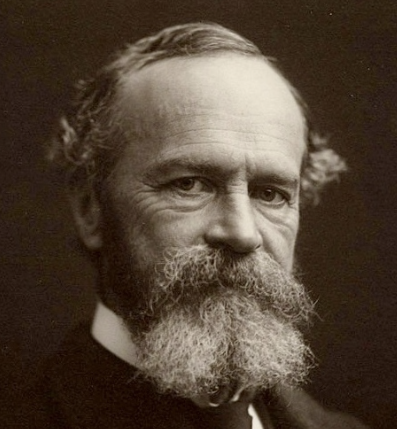
No particular results then, so far, but only an attitude of orientation, is what the pragmatic method means. The attitude of looking away from first things, principles, 'categories,' supposed necessities; and of looking towards last things, fruits, consequences, facts.
▼
Source
source
Lecture II, What Pragmatism Means
2 months 1 week ago
Speaking with sense we must fortify ourselves in the common sense of all, as a city is fortified by its law, and even more forcefully. For all human laws are nourished by the one divine law. For it prevails as far as it will and suffices for all and is superabundant.

2 months 1 week ago
Force overcome by force.
▼
Source
source
Pro Milone, Chapter XI, section 30 Variant translation: Violence conquered by violence.
1 month 1 week ago
We are but dust and shadow.
▼
Source
source
Book IV, ode vii, line 16
1 week 5 days ago
... Nietzsche's ideas and plans: for example, the idea of giving up the whole wretched academic world to form a secular monastic community.
1 month 2 weeks ago
...and if you are common, you can dress up as a woman, show you behind or write poems: there's nothing offensive about a naked behind if it's everybody's; each person will be mirrored in it.
▼
Source
source
p. 463

1 month 2 weeks ago
"No, no no," she said. "You don't understand. Not that kind of longing. It was when I was happiest that I longed most. It was on happy days when we were up there on the hills, the three of us, with the wind and the sunshine ... where you couldn't see Glome or the palace. Do you remember? The colour and the smell, and looking at the Grey Mountain in the distance? And because it was so beautiful, it set me longing, always longing. Somewhere else there must be more of it. Everything seemed to be saying, Psyche come! But I couldn't (not yet) come and I didn't know where I was to come to. It almost hurt me. I felt like a bird in a cage when the other birds of its kind are flying home."
▼
Source
source
Psyche
3 weeks 1 day ago
Good order is the foundation of all good things.
1 month 1 week ago
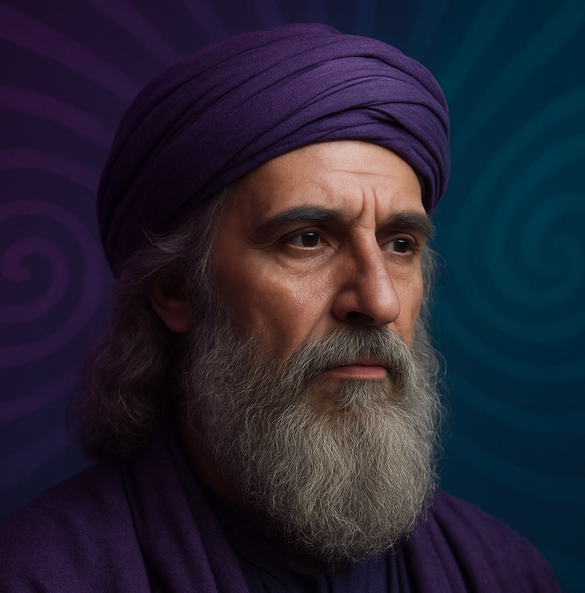
He who abhors and shuns the light of the Sun, He who refuses to behold with respect the living creation of God, He who leads the good to wickedness, He who makes the meadows waterless and the pastures desolate, He who lets fly his weapon against the innocent, An enemy of my faith, a destroyer of Thy principles is he, O Lord!
▼
Source
source
Ahunuvaiti Gatha; Yasna 32, 10.
2 months 2 weeks ago
"In the light, the earth remains our first and our last love. Our brothers are breathing under the same sky as we; justice is a living thing. Now is born that strange joy which helps one live and die, and which we shall never again postpone to a later time."
1 month 3 weeks ago
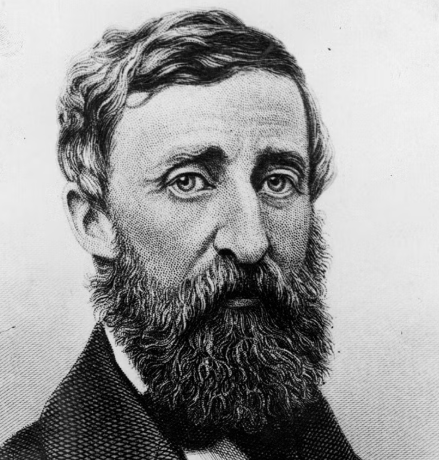
The Vedas contain a sensible account of God." "The veneration in which the Vedas are held is itself a remarkable feat. Their code embraced the whole moral life of the Hindus and in such a case there is no other truth than sincerity. Truth is such by reference to the heart of man within, not to any standard without.
▼
Source
source
A Tribute to Hinduism, 2008
1 month 2 weeks ago
Everything is a subject on which there is not much to be said.
▼
Source
source
Studies in Words (1960), ch. 2
1 week ago
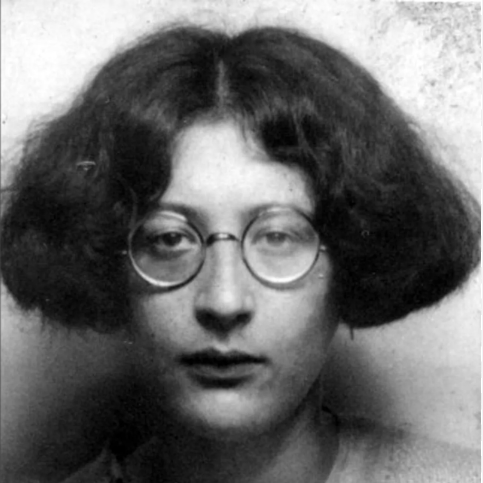
Whenever one tries to suppress doubt, there is tyranny.
▼
Source
source
Lectures in philosophy [Leçons de philosophie] (1959) as translated by Hugh Price p. 103
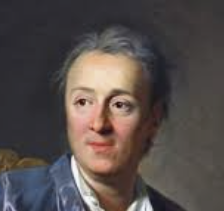
3 weeks 5 days ago
The most dangerous madmen are those created by religion, and ... people whose aim is to disrupt society always know how to make good use of them on occasion.
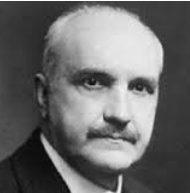
2 weeks ago
O world, thou choosest not the better part! It is not wisdom to be only wise, And on the inward vision close the eyes, But it is wisdom to believe the heart. Columbus found a world, and had no chart, Save one that faith deciphered in the skies; To trust the soul's invincible surmise Was all his science and his only art.
▼
Source
source
O World, Thou Choosest Not
3 weeks 1 day ago
Flattery corrupts both the receiver and the giver.
1 month 2 weeks ago
"Ah, Psyche," I said, "have I made you so little happy as that?"
▼
Source
source
Orual

2 months 3 weeks ago
And how does the God's existence emerge from the proof? Does it follow straightway, without any breach of continuity? Or have we not here an analogy to the behavior of the little Cartesian dolls? As soon as I let go of the doll it stands on its head. As soon as I let it go, I must therefore let it go. So also with the proof. As long as I keep my hold on the proof, i.e., continue to demonstrate, the existence does not come out, if for no other reason than that I am engaged in proving it; but when I let the proof go, the existence is there. But this act of letting go is surely also something; it is indeed a contribution of mine. Must not this also be taken into the account, this little moment, brief as it may be – it need not be long, for it is a leap. However brief this moment, if only an instantaneous now, this "now" must be included in the reckoning.
3 weeks 1 day ago
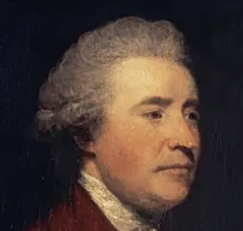
There never was a bad man that had ability for good service.
▼
Source
source
Speech in opening the impeachment of Warren Hastings (18 February 1788), quoted in The Works of the Right Honourable Edmund Burke, Volume the Tenth (1899), p. 59
2 weeks 3 days ago
Philosophy: impersonal anxiety; refuge among anemic ideas.
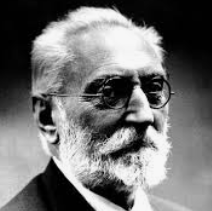
1 week 1 day ago
Conduct, practice, is the proof of doctrine, theory. "If any man will do His will - the will of Him that sent me," said Jesus, "he shall know of the doctrine, whether it be of God or whether I speak of myself" (John vii. 17); and there is a well known saying of Pascal: "Begin by taking holy water and you will end by becoming a believer." And pursuing a similar train of thought, Johann Jakob Moser, the pietist, was of the opinion that no atheist or naturalist had the right to regard the Christian religion as void of truth so long as he had not put it to the proof by keeping its precepts and commandments.
▼
Source
source
(Ritschl, Geschichte des Pietismus, book viii., 43)
2 weeks ago
Master, we saw one casting out devils in thy name, and he followeth not us: and we forbad him, because he followeth not us. But Jesus said, Forbid him not: for there is no man which shall do a miracle in my name, that can lightly speak evil of me. For he that is not against us is on our part.
▼
Source
source
Mark 9:38-40 (KJV)
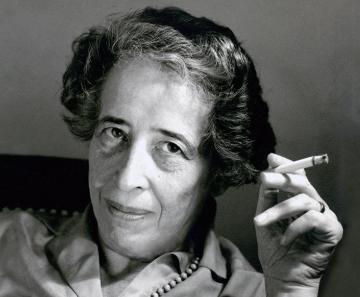
1 month 2 weeks ago
No one has the right to obey.
▼
Source
source
in a radio interview with Joachim Fest (9 November 1964)
1 day ago
It is in the gift for employing all the vicissitudes of life to one's own advantage and to that of one's craft that a large part of genius consists.
▼
Source
source
K 48
1 day ago
Every man has his moral backside which he refrains from showing unless he has to and keeps covered as long as possible with the trousers of decorum.
▼
Source
source
B 12 Variant translation: Everyone has a moral backside, which he does not show except in case of need and which he covers as long as possible with the breeches of respectability.
2 weeks 3 days ago
The only subversive mind is the one that questions the obligation to exist; all the others, the anarchist at the top of the list, compromise with the established order.
6 days ago
In formal logic, a contradiction is the signal of a defeat; but in the evolution of real knowledge it marks the first step in progress towards a victory.
▼
Source
source
Ch. 12: "Religion and Science", p. 260
1 week 1 day ago
To know something is to make this something that I know myself; but to avail myself of it, to dominate it, it has to remain distinct from myself.
1 week ago
I see myself immersed in the depths of human existence and standing in the face of the ineffable mystery of the world and of all that is. And in that situation, I am made poignantly and burningly aware that the world cannot be self-sufficient, that there is hidden in some still greater depth a mysterious, transcendent meaning. This meaning is called God. Men have not been able to find a loftier name, although they have abused it to the extent of making it almost unutterable. God can be denied only on the surface; but he cannot be denied where human experience reaches down beneath the surface of flat, vapid, commonplace existence.
▼
Source
source
As translated in In Love with Eternity : Philosophical Essays and Fragments (2005) by Richard Schain, p. 47
1 month 3 weeks ago
People who originally have no means but are ultimately able to earn a great deal, through whatever talents they may possess, almost always come to think that these are permanent capital and that what they gain through them is interest. Accordingly, they do not put aside part of their earnings to form a permanent capital, but spend their money as fast as they earn it. But they are then often reduced to poverty because their earnings decrease or come to an end after their talent, which was of a transitory nature, is exhausted, as happens, for example, in the case of almost all the fine arts; or because it could be brought to bear only under a particular set of circumstances that has ceased to exist.
▼
Source
source
E. Payne, trans. (1974) Vol. 1, p. 348
1 day ago
Sickness is mankind's greatest defect.
▼
Source
source
F 100
1 month 3 weeks ago
The practical consequence of such a[n individualistic] philosophy is the well-known democratic respect for the sacredness of individuality,-is, at any rate, the outward tolerance of whatever is not itself intolerant. These phrases are so familiar that they sound now rather dead in our ears. Once they had a passionate inner meaning. Such a passionate inner meaning they may easily acquire again if the pretension of our nation to inflict its own inner ideals and institutions vi et armis upon Orientals should meet with a resistance as obdurate as so far it has been gallant and spirited. Religiously and philosophically, our ancient national doctrine of live and let live may prove to have a far deeper meaning than our people now seem to imagine it to possess.
▼
Source
source
"Preface"
2 months 3 weeks ago
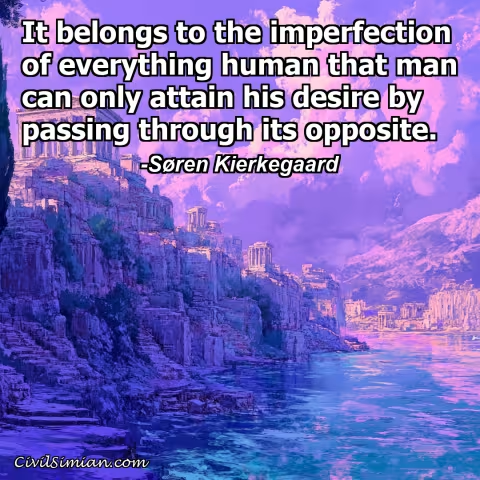
No one talks more passionately about his rights than he who in the depths of his soul doubts whether he has any. By enlisting passion on his side he wants to stifle his reason and its doubts: thus he will acquire a good conscience and with it success among his fellow men.
1 month 3 weeks ago
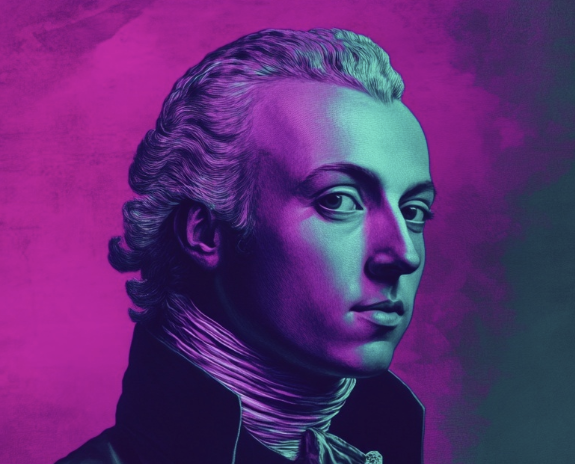
In man (as the only rational creature on earth) those natural capacities which are directed to the use of his reason are to be fully developed only in the race, not in the individual.
▼
Source
source
Second Thesis
1 month 1 week ago
O Fortune, cruellest of heavenly powers, why make such game of this poor life of ours?
▼
Source
source
Book II, satire viii, line 61 (trans. Conington)
1 week 1 day ago
It is a paralogism to say, that the good of the individual should give way to that of the public; this can never take place, except when the government of the community, or, in other words, the liberty of the subject is concerned; this does not affect such cases as relate to private property, because the public good consists in everyone's having his property, which was given him by the civil laws, invariably preserved.
▼
Source
source
Book XXVI, Chapter 15.
2 weeks ago
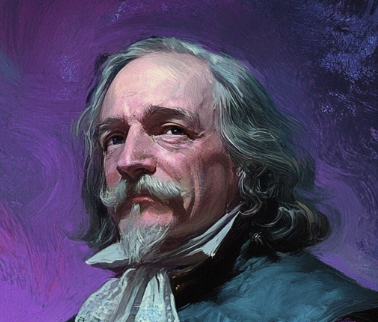
In the state of nature, Profit is the measure of Right.
▼
Source
source
De Cive
1 month 3 weeks ago
We are always getting ready to live, but never living.
▼
Source
source
April 12, 1834
1 week ago
No particular experiences are linked with any particular statements in the interior of the field, except indirectly through considerations of equilibrium affecting the field as a whole.
▼
Source
source
"Two Dogmas of Empiricism"
CivilSimian.com created by AxiomaticPanic, CivilSimian, Kalokagathia