

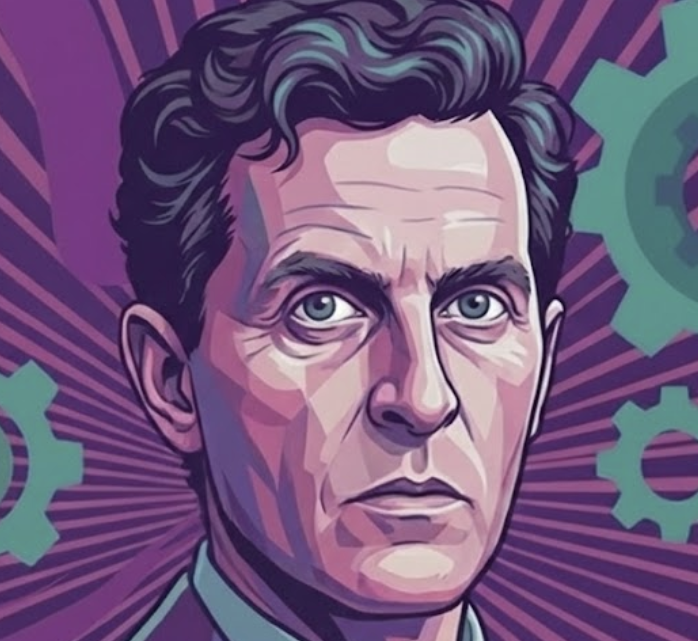
1 month 2 weeks ago
The aspects of things that are most important for us are hidden because of their simplicity and familiarity. (One is unable to notice something - because it is always before one's eyes.) The real foundations of his enquiry do not strike a man at all. Unless that fact has at some time struck him. - And this means: we fail to be struck by what, once seen, is most striking and most powerful.
▼
Source
source
§ 129

1 month 2 weeks ago
This year, or this month, or, more likely, this very day, we have failed to practise ourselves the kind of behaviour we expect from other people.
▼
Source
source
Book I, Chapter 1, "The Law of Human Nature"
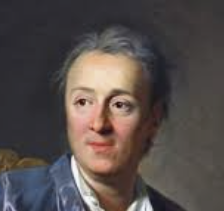
3 weeks 4 days ago
Power acquired by violence is only a usurpation, and lasts only as long as the force of him who commands prevails over that of those who obey.
▼
Source
source
Article on Political Authority, Vol. 1
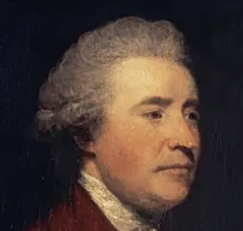
3 weeks 1 day ago
[France is] a Country where the people, along with their political servitude, have thrown off the Yoke of Laws and morals.
▼
Source
source
Letter to William Windham (27 September 1789), quoted in Alfred Cobban and Robert A. Smith (eds.), The Correspondence of Edmund Burke, Volume VI: July 1789-December 1791 (1967), p. 25
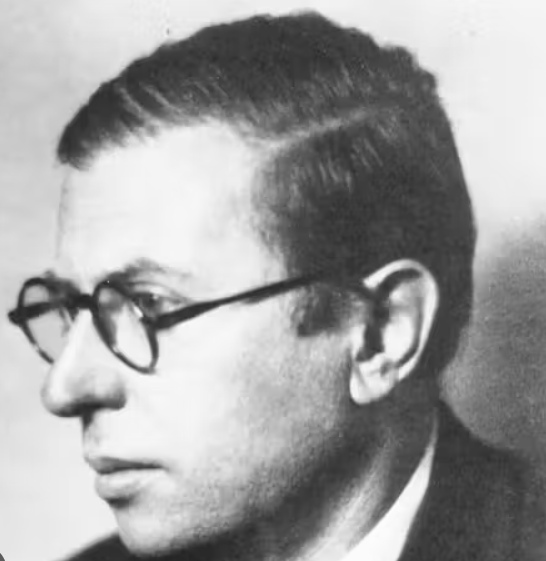
1 month 2 weeks ago
The strangest mores of the most of-the-way societies will, in spite of everything, be relatively comprehensible to the person who has a flesh-and-blood knowledge of man's needs, anxieties, and hopes. If, on the other hand, this experience is lacking, he will not even be able to understand the customs of those about him.
▼
Source
source
p. 139
1 month 4 weeks ago
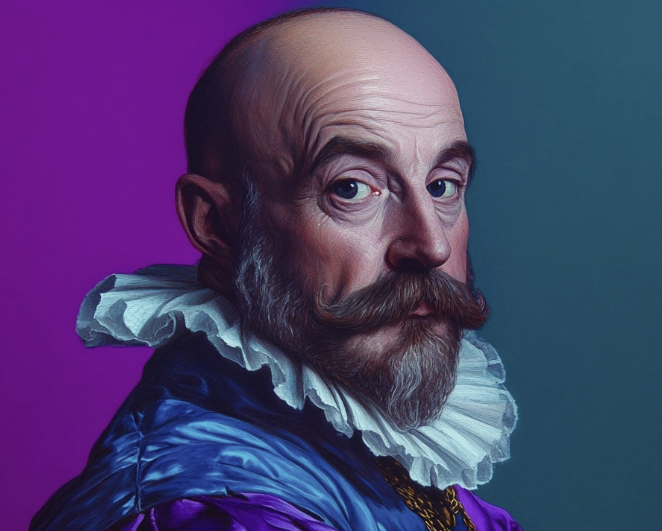
The art of dining well is no slight art, the pleasure not a slight pleasure.
3 weeks 5 days ago
Foreknowledge is power.
▼
Source
source
As quoted in A Dictionary of Scientific Quotations (1991) by Alan Lindsay Mackay
1 week 5 days ago
I do not accept any absolute formulas for living. No preconceived code can see ahead to everything that can happen in a man's life. As we live, we grow and our beliefs change. They must change. So I think we should live with this constant discovery. We should be open to this adventure in heightened awareness of living. We should stake our whole existence on our willingness to explore and experience.
▼
Source
source
As quoted in Martin Buber : An Intimate Portrait (1971), p. 56
2 months 2 weeks ago
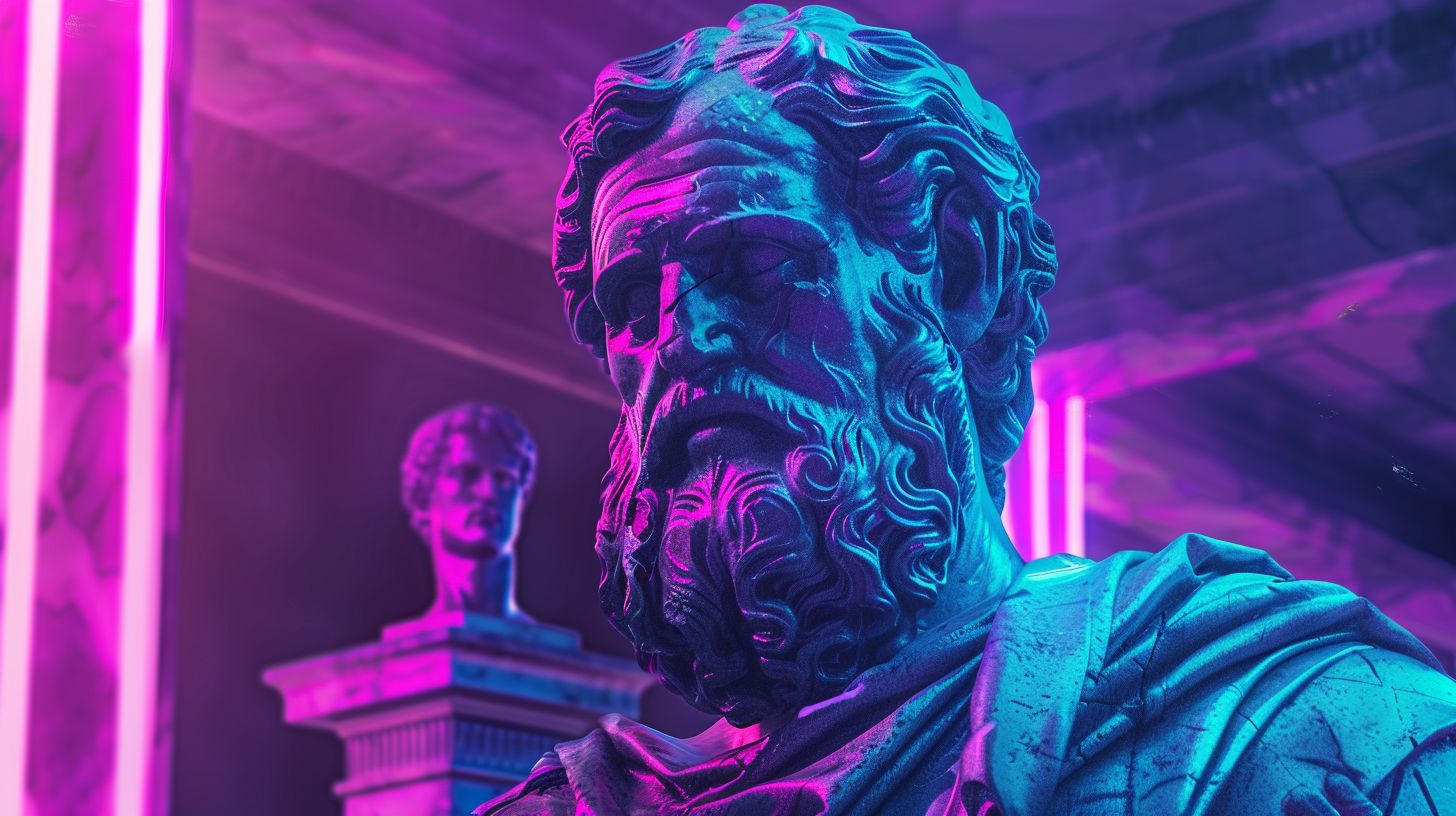
Zeus, the god of gods, who rules according to law, and is able to see into such things, perceiving that an honourable race was in a woeful plight, and wanting to inflict punishment on them, that they might be chastened and improve, collected all the gods into their most holy habitation, which, being placed in the centre of the world, beholds all created things.
2 weeks 3 days ago
Every thought derives from a thwarted sensation.
2 weeks 3 days ago
To claim you are more detached, more alien to everything than anyone, and to be merely a fanatic of indifference!
1 week 5 days ago
Strictly speaking, the mass, as a psychological fact, can be defined without waiting for individuals to appear in mass formation. In the presence of one individual we can decide whether he is "mass" or not. The mass is all that which sets no value on itself - good or ill - based on specific grounds, but which feels itself "just like everybody," and nevertheless is not concerned about it; is, in fact, quite happy to feel itself as one with everybody else.
▼
Source
source
Chap.I: The Coming Of The Masses
2 weeks 3 days ago
A minimum of unconsciousness is necessary if one wants to stay inside history. To act is one thing; to know one is acting is another. When lucidity invests the action, insinuates itself into it, action is undone, and with it, prejudice, whose function consists, precisely, in subordinating, in enslaving consciousness to action. The man who unmasks his fictions renounces his own resources and, in a sense, himself. Consequently, he will accept other fictions which will deny him, since they will not have cropped up from his own depths. No man concerned with his equilibrium may exceed a certain degree of lucidity and analysis.
1 month 3 weeks ago
One right-thinking man thinks like all other right-thinking men of his time-that is to say, in most cases, like some wrong-thinking man of another time.
▼
Source
source
"One and Many," p. 12
3 weeks 1 day ago
'No one but you and one 'jade' I have fallen in love with, to my ruin. But being in love doesn't mean loving. You may be in love with a woman and yet hate her.
1 month 2 weeks ago
I wanted for the moments in my life to follow each other and order themselves like those of a life remembered. It would be just as well to try to catch time by the tail.
1 month 3 weeks ago
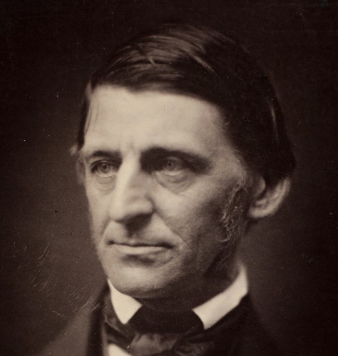
Can anybody remember when the times were not hard and money not scarce?
▼
Source
source
Works and Days
2 weeks 3 days ago
The skeptic is the least mysterious man in the world, and yet, starting from a certain moment, he no longer belongs to this world.
3 weeks 5 days ago
I am beginning to feel that I am growing old; soon, I shall have to eat mush like children. I shall no longer be able to speak, which will be a rather great advantage for others and but a small inconvenience for myself.... The time in which I count in years is gone; that in which I count in days is here.... I had thought that the fibers of the heart would grow callous with age, it's not at all the case. I am not sure that my sensitivity hasn't increased; everything moves me, affects me.... To fade out between a man feeling your pulse and another bothering your head; not to know where one comes from, why one came, where one is going ...
▼
Source
source
Letter to his sister Denise, as quoted in Diderot, Reason and Resonance (1982) by Élisabeth de Fontenay, pp. 270-271
2 months 1 week ago
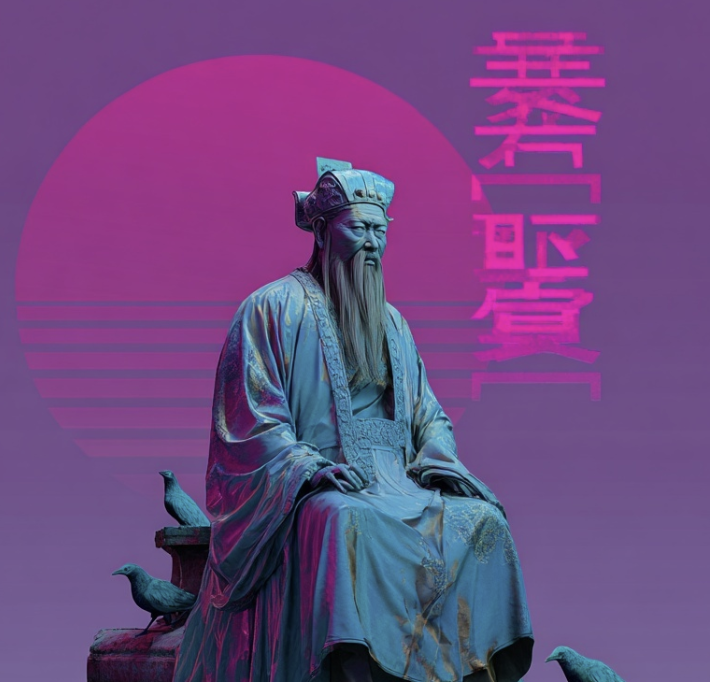
It is characteristic of the most entire sincerity to be able to foreknow. When a nation or family is about to flourish, there are sure to be happy omens; and when it is about to perish, there are sure to be unlucky omens.
1 week 1 day ago
One must give one power a ballast, so to speak, to put it in a position to resist another.
▼
Source
source
Book V, Chapter 14.
3 weeks 2 days ago
Uber drivers aren't contractors - they're employees misclassified to avoid benefits, protections, and taxes. Gig companies built empires on labor law evasion. Misclassification is wage theft and tax avoidance, perfectly legal because companies write laws.
1 week 6 days ago
Every great advance in science has issued from a new audacity of imagination.
▼
Source
source
The Quest for Certainty (1929), Ch. XI
2 weeks 3 days ago
Espousing the melancholy of ancient symbols, I would have freed myself.
1 month 3 weeks ago
All the interests of my reason, speculative as well as practical, combine in the three following questions: 1. What can I know? 2. What ought I to do? 3. What may I hope?
▼
Source
source
B 832-833
1 week 5 days ago
The complexity of the connection between the world of perception and the world of physics does not preclude that such a connection can be shown to exist at any time.
▼
Source
source
p. 133.
3 weeks 1 day ago
Circumstances (which with some gentlemen pass for nothing) give in reality to every political principle its distinguishing colour, and discriminating effect. The circumstances are what render every civil and political scheme beneficial or noxious to mankind.
2 months 1 week ago
If any one will piously and soberly consider the sermon which our Lord Jesus spoke on the mount, as we read it in the Gospel according to Matthew, I think that he will find in it, so far as regards the highest morals, a perfect standard of the Christian life: and this we do not rashly venture to promise, but gather it from the very words of the Lord Himself. For the sermon itself is brought to a close in such a way, that it is clear there are in it all the precepts which go to mould the life. He has sufficiently indicated, as I think, that these sayings which He uttered on the mount so perfectly guide the life of those who may be willing to live according to them, that they may justly be compared to one building upon a rock.
▼
Source
source
On the Sermon on the Mount, as translated by William Findlay (1888), Book I, Ch. 1

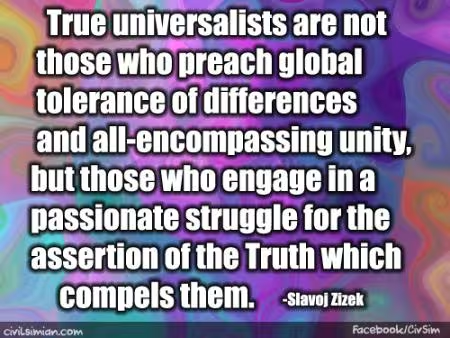
2 weeks 3 days ago
"What do you do from morning to night?" "I endure myself."
1 month 3 weeks ago
To love truth for truth's sake is the principal part of human perfection in this world, and the seed-plot of all other virtues.
▼
Source
source
Letter to Anthony Collins, 29 October 1703
2 months ago
If thou shalt aspire after the glorious acts of men, thy working shall be accompanied with compunction and strife, and thy remembrance followed with distaste and upbraidings; and justly doth it come to pass towards thee, O man, that since thou, which art God's work, doest him no reason in yielding him well-pleasing service, even thine own works also should reward thee with the like fruit of bitterness.
▼
Source
source
Of The Works Of God and Man
1 month 2 weeks ago
Philosophy unravels the knots in our thinking; hence its results must be simple, but its activity is as complicated as the knots that it unravels.
▼
Source
source
Ch. 9 : Philosophy, p. 183

1 month 3 weeks ago
The secret of being a bore is to tell everything.
▼
Source
source
"Sixième discours: sur la nature de l'homme," Sept Discours en Vers sur l'Homme, 1738
1 month 2 weeks ago
A scheme is unjust when the higher expectations, one or more of them, are excessive. If these expectations were decreased, the situation of the less favored would be improved.
▼
Source
source
Chapter II, Section 13, pg. 79
2 months 1 week ago
The way of the superior man may be found, in its simple elements, in the intercourse of common men and women; but in its utmost reaches, it shines brightly through Heaven and Earth.
3 weeks 2 days ago
Landlords don't produce value - they own things. They extract rent, generate no wealth, contribute nothing. Landlording is parasitism: controlling necessities and charging access fees. Housing should be human right, not profit center.
1 week 5 days ago
It is questionable whether there does not exist in man an obscure and blind will to make war; an impulse towards change, towards emergence from the familiarities of everyday life and from the stabilities of well-known conditions - something like a will to death as a will to annihilation and self-sacrifice, a vague enthusiasm for the upbuilding of a new world.
1 month 3 weeks ago
Hast thou named all the birds without a gun; Loved the wood-rose, and left it on its stalk.
▼
Source
source
Forbearance
2 weeks 3 days ago
Big industry, competition and generally the individualistic organization of production have become a fetter which it must and will shatter.
1 month 3 weeks ago
The sense of justice and injustice is not deriv'd from nature, but arises artificially... from education, and human conventions.
▼
Source
source
Part 2, 1.17
4 days ago
Obviously, Anarchism, or any other social theory, making man a conscious social unit, will act as a leaven for rebellion.

1 month 3 days ago
Neither will the horse be adjudged to be generous, that is sumptuously adorned, but the horse whose nature is illustrious; nor is the man worthy who possesses great wealth, but he whose soul is generous.
▼
Source
source
Pythagorean Ethical Sentences From Stobæus
1 month 4 weeks ago
This return of Republics back to their principles also results from the simple virtue of one man, without depending on any law that excites him to any execution: none the less, they are of such influence and example that good men desire to imitate him, and the wicked are ashamed to lead a life contrary to those examples.
▼
Source
source
Book 3, Ch. 1
6 days ago
The universities are schools of education, and schools of research. But the primary reason for their existence is not to be found either in the mere knowledge conveyed to the students or in the mere opportunities for research afforded to the members of the faculty. Both these functions could be performed at a cheaper rate, apart from these very expensive institutions. Books are cheap, and the system of apprenticeship is well understood. So far as the mere imparting of information is concerned, no university has had any justification for existence since the popularization of printing in the fifteenth century. Yet the chief impetus to the foundation of universities came after that date, and in more recent times has even increased. The justification for a university is that it preserves the connection between knowledge and the zest of life, by uniting the young and the old in the imaginative consideration of learning.
1 week ago
The thesis of the identity of concept and thing is in general the vital nerve of idealist thought, and indeed traditional thought in general. ... Negative dialectics as critique means above all criticism of precisely this claim to identity.
▼
Source
source
p. 20

2 months 3 weeks ago
In the Church which was founded at Corinth, St. Paul had special difficulties of the kind I have mentioned. In that flourishing commercial city, which through its shipping and situation, maintained a vital connexion between East and West, numerous crowds of people flocked together from all quarters, different in speech and in culture. As they mingled with the inhabitants, they produced, by contacts and contrasts, new and ever new differences. Even in the Church this differentiation endeavoured to make itself felt in sects and parties; and a kind of pagan wisdom made a special attempt to force itself forward as a teacher of truth. In his first letter to this church, from which the text I read is taken, St. Paul strongly combats this tendency.
2 months 6 days ago
Little is needed to ruin and upset everything, only a slight aberration from reason.
▼
Source
source
Book IV, ch. 3, 4.
1 month 3 weeks ago
Beauty is the mark God sets upon virtue.
▼
Source
source
Beauty
2 months 2 weeks ago
I shall have to test the theory of my father Parmenides, and contend forcibly that after a fashion not-being is and on the other hand in a sense being is not. For unless these statements are either disproved or accepted, no one who speaks about false words, or false opinion whether images or likenesses or imitations or appearances about the arts which have to do with them, can ever help being forced to contradict himself and make himself ridiculous.
CivilSimian.com created by AxiomaticPanic, CivilSimian, Kalokagathia