

1 week 6 days ago
To regiment artists, to make them servants of some particular cause does violence to the very springs of artistic creation. But it does more than that. It betrays the very cause of a better future it would serve, for in its subjugation of the individuality of the artist it annihilates the source of that which is genuinely new. Where the regimentation is successful, it would cause the future to be but a rearrangement of the past.
4 days ago
Why is it so hard to keep the mind concentrated, and to live up to our good resolutions? The problem is the basically mechanical nature of our left-brain consciousness. We have a kind of robot servant who does things for us: we learn to type or drive a car, painfully and consciously, then our robot takes over, and does it far more quickly and efficiently. Because man is the most complex creature on Earth, he is forced to rely on his robot far more than other animals. The result is that, whenever he gets tired, the robot takes over. For the modern city dweller, most of his everyday living is done by the robot. This is why it takes an emergency to concentrate the mind 'wonderfully', and why we forget so quickly.
▼
Source
source
p. 344
2 weeks 3 days ago
It is an understatement to say that in this society injustices abound: in truth, it is itself the quintessence of injustice.
1 month 3 weeks ago
"I don't want to! Why should I?" "Because more people will be happier if you do than if you don't." "So what? I don't care about other people." "You should." "But why?" "Because more people will be happier if you do than if you don't."
▼
Source
source
Dialogue between Russell and his daughter Katharine, as quoted in My Father - Bertrand Russell, 1975
3 weeks 1 day ago
When we speak of the commerce with our [American] colonies, fiction lags after truth, invention is unfruitful, and imagination cold and barren.

1 month 3 weeks ago
Men did not make the earth... It is the value of the improvements only, and not the earth itself, that is individual property... Every proprietor owes to the community a ground rent for the land which he holds.
▼
Source
source
Agrarian Justice

2 months 1 week ago
We should never take pleasure in causing pain to others, even to those who have wronged us, but rather strive to do good to all.
1 month 3 weeks ago
Under the ideal measure of values there lurks the hard cash.
▼
Source
source
Vol. I, Ch. 3, Section 1, pg. 116.
3 weeks ago
The administrators of the executive power may be either elective or not; and in the former case all or only some of them may be elective. They are elective in a proper democracy, that is to say, in a democracy which recognizes representation. If all the public officials are directly elected by the whole people, the democracy is a pure democracy; if only some, it is a mixed democracy. The public officials may also fill vacancies themselves; this is the case in a pure aristocracy. But if only some of the magistrates are thus replaced by the public officers, and if the others are again directly elected by the people, then the form of government is that of a democratic aristocracy. A permanent president (monarch) may also be elected to exercise the executive power during his lifetime. In all these cases, either all citizens of the commonwealth, or only some of them, are eligible to office. Eligibility may, therefore, be limited or unlimited.
1 month 3 weeks ago
No longer enslaved or made dependent by force of law, the great majority are so by force of poverty; they are still chained to a place, to an occupation, and to conformity with the will of an employer, and debarred, by the accident of birth both from the enjoyments, and from the mental and moral advantages, which others inherit without exertion and independently of desert. That this is an evil equal to almost any of those against which mankind have hitherto struggled, the poor are not wrong in believing.
▼
Source
source
John Stuart Mill, Chapters On Socialism, London, 1879, 'Introductory'
2 weeks 3 days ago
Thought is as much a lie as love or faith.
3 weeks 1 day ago
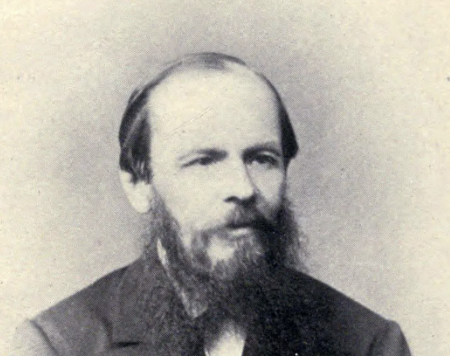
If you were to destroy in mankind the belief in immortality, not only love but every living force maintaining the life of the world would at once be dried up. Moreover, nothing then would be immoral, everything would be lawful, even cannibalism.
▼
Source
source
Book II, ch. 6 (trans. Constance Garnett) Pyotr Miusov, summarizing an argument made by Ivan at a social gathering

1 month 4 weeks ago
Heretics cannot themselves appear good unless they depict the Church as evil, false, and mendacious. They alone wish to be esteemed as the good, but the Church must be made to appear evil in every respect.
▼
Source
source
Dictata super Psalterium (Dictations on the Psalter). This is Luther's first major work from the years 1513 to 1515.
3 days ago
Man's biological weakness is the condition of human culture.
▼
Source
source
Ch. 2
1 month 3 weeks ago
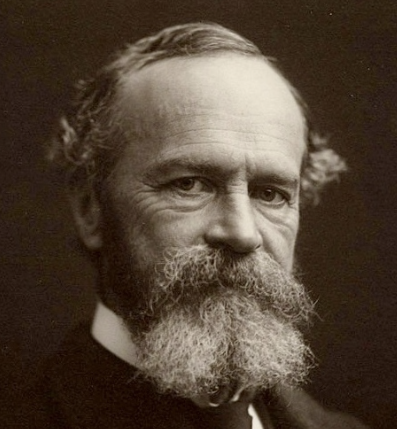
Is dogmatic or scholastic theology less doubted in point of fact for claiming, as it does, to be in point of right undoubtable? And if not, what command over truth would this kind of theology really lose if, instead of absolute certainty, she only claimed reasonable probability for her conclusions? If we claim only reasonable probability, it will be as much as men who love the truth can ever at any given moment hope to have within their grasp. Pretty surely it will be more than we could have had, if we were unconscious of our liability to err.
▼
Source
source
Lectures XIV and XV, "The Value of Saintliness"
6 days ago
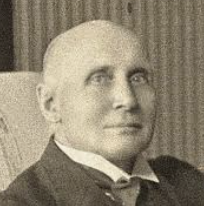
The oneness of the universe, and the oneness of each element of the universe, repeat themselves to the crack of doom in the creative advance from creature to creature, each creature including in itself the whole of history and exemplifying the self-identity of things and their mutual diversities.
▼
Source
source
Pt. III, ch. 1, sec. 7.


1 month 2 weeks ago
We are observing ourselves being observed by the painter, and made visible to his eyes by the same light that enables us to see him. And just as we are about to apprehend ourselves, transcribed by his hand as though in a mirror, we find that we can in fact apprehend nothing of that mirror but its lusterless back. The other side of a psyche.
▼
Source
source
Las Menias

1 month 2 weeks ago
But why,' (some ask), 'why, if you have a serious comment to make on the real life of men, must you do it by talking about a phantasmagoric never-never land of your own?' Because, I take it, one of the main things the author wants to say is that the real life of men is of that mythical and heroic quality. One can see the principle at work in his characterization. Much that in a realistic work would be done by 'character delineation' is here done simply by making the character an elf, a dwarf, or a hobbit. The imagined beings have their insides on the outside; they are visible souls. And Man as a whole, Man pitted against the universe, have we seen him at all till we see that he is like a hero in a fairy tale?
▼
Source
source
p. 89
1 month 3 weeks ago
It is evident that this, among many other of the purposes of my father's scheme of education, could not have been accomplished if he had not carefully kept me from having any great amount of intercourse with other boys. He was earnestly bent upon my escaping not only the ordinary corrupting influence which boys exercise over boys, but the contagion of vulgar modes of thought and feeling; and for this he was willing that I should pay the price of inferiority in the accomplishments which schoolboys in all countries chiefly cultivate. The deficiencies in my education were principally in the things which boys learn from being turned out to shift for themselves, and from being brought together in large numbers.
▼
Source
source
(p. 35)
1 month 2 weeks ago
The principles of justice are chosen behind a veil of ignorance.
▼
Source
source
Chapter I, Section 3, pg. 12

4 weeks ago
If it is not true, it is a good story.
▼
Source
source
as quoted in A Book of Quotations, Proverbs and Household Words (1907) edited by Sir William Gurney Benham
1 month 3 weeks ago
Some of your hurts you have cured, And the sharpest you still have survived, But what torments of grief you endured From evils which never arrived!
▼
Source
source
Borrowing From the French
1 month 3 weeks ago
There is much pleasure to be gained from useless knowledge.
▼
Source
source
Ch. 2: 'Useless' Knowledge

1 month 2 weeks ago
Freud's fanciful pseudo-explanations (precisely because they are brilliant) perform a disservice. (Now any ass has these pictures available to use in "explaining" symptoms of an illness).
▼
Source
source
p. 55e
1 month 2 weeks ago
Recalling all the erroneous things that doctors have been able to say about sex or madness does us a fat lot of good. I think that what is currently politically important is to determine the regime of verediction established at a given moment ... on the basis of which you can now recognize, for example, that doctors in the nineteenth century said so many stupid things about sex. ... It is not so much the history of the true or the history of the false as the history of verediction which has a political significance.
▼
Source
source
Lecture 2, January 17, 1979, p. 36
1 month 3 weeks ago
Though love repine, and reason chafe, There came a voice without reply, - "'T is man's perdition to be safe When for the truth he ought to die."
▼
Source
source
Sacrifice
2 months 2 weeks ago
The purpose of aphorisms is to keep fools who have memorised them from having nothing to say.

1 month 2 weeks ago
In situations of sparse resources along with degraded self-images and depoliticized sensibilities, one avenue for poor people is in existential rebellion and anarchic expression. The capacity to produce social chaos is the last resort of desperate people.
▼
Source
source
The Role of Law in Progressive Politics in Keeping Faith: Philosophy and Race in America

2 months 1 week ago
The superior man, even when he is not moving, has a feeling of reverence, and while he speaks not, he has the feeling of truthfulness.
1 week 1 day ago
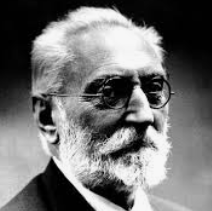
Not by way of reason, but only by way of love and suffering, do we come to the living God, the human God. Reason rather separates us from Him. We cannot first know Him in order that afterward we may love Him; we must begin by loving Him, longing for Him, hungering after Him, before knowing Him. The knowledge of God proceeds from the love of God, and this love has little or nothing of the rational in it. For God is indefinable. To seek to define Him is to seek to confine Him within the limits of our mind - that is to say, to kill Him. In so far as we attempt to define Him, there rises up before us - Nothingness.
3 days ago
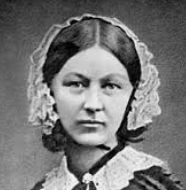
By mortifying vanity we do ourselves no good. It is the want of interest in our life which produces it; by filling up that want of interest in our life we can alone remedy it. And, did we even see this, how can we make the difference? How obtain the interest which society declares she does not want, and we cannot want?
1 month 3 weeks ago
Good bye, proud world! I'm going home; Thou art not my friend; I am not thine.
▼
Source
source
Good-bye, st. 1
1 month 3 weeks ago
If the single man plant himself indomitably on his instincts, and there abide, the huge world will come round to him. 6. Nature, Addresses and Lectures.
▼
Source
source
The American Scholar
1 month 3 weeks ago
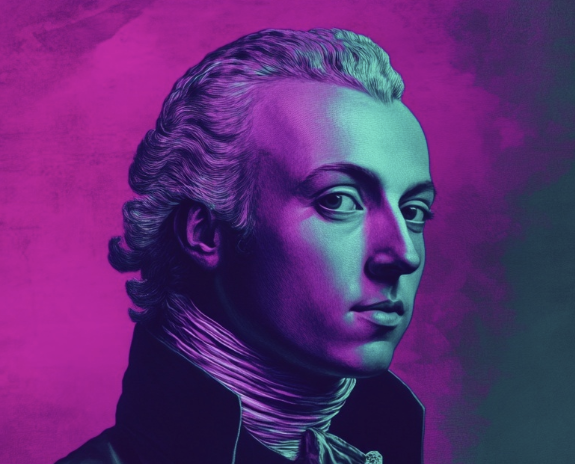
Religion should be .... successively freed from all statutes based on history, and one purely moral religion rule over all, in order that God might be all in all. The veil must fall. The leading-string of sacred tradition with all its appendices becomes by degrees useless, and at last a fetter ... The humiliating difference between laymen and clergymen must disappear, and equality spring from true liberty. All this, however, must not be expected from an exterior revolution, which acts violently, and depends upon fortune In the principle of pure moral religion, which is a sort of divine revelation constantly taking place in the soul of man, must be sought the ground for a passage to the new order of things, which will be accomplished by slow and successive reforms.
▼
Source
source
As quoted in German Thought, From The Seven Years' War To Goethe's Death : Six Lectures (1880) by Karl Hillebrand, p. 208
2 weeks 3 days ago
Imaginary pains are by far the most real we suffer, since we feel a constant need for them and invent them because there is no way of doing without them.
3 weeks ago
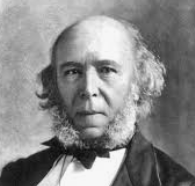
If there be an order in which the human race has mastered its various kinds of knowledge, there will arise in every child an aptitude to acquire these kinds of knowledge in the same order. So that even were the order intrinsically indifferent, it would facilitate education to lead the individual mind through the steps traversed by the general mind. But the order is not intrinsically indifferent; and hence the fundamental reason why education should be a repetition of civilization in little.
1 month 3 weeks ago
The world would be a happier place than it is if acquisitiveness were always stronger than rivalry. But in fact, a great many men will cheerfully face impoverishment if they can thereby secure complete ruin for their rivals. Hence the present level of taxation. Vanity is a motive of immense potency. Anyone who has much to do with children knows how they are constantly performing some antic, and saying "Look at me." "Look at me" is one of the most fundamental desires of the human heart. It can take innumerable forms, from buffoonery to the pursuit of posthumous fame.

5 days ago
Lying takes the form of mass media creating the myth that feminist movement has completely transformed society, so much so that the politics of patriarchal power have been inverted and that men, particularly white men, just like emasculated black men, have become the victims of dominating women. So, it goes, all men (especially black men) must pull together (as in the Clarence Thomas hearings) to support and reaffirm patriarchal domination. Add to this the widely held assumptions that blacks, other minorities, and white women are taking jobs from white men, and that people are poor and unemployed because they want to be, and it becomes most evident that part of our contemporary crisis is created by a lack of meaningful access to truth.
▼
Source
source
Teaching to Transgress: Education as the Practice of Freedom
1 week 5 days ago
It is the highest service to submit the evil impulse to God through the power of love.
▼
Source
source
p. 45
1 month 3 weeks ago
In every part of the universe we observe means adjusted with the nicest artifice to the ends which they are intended to produce; and in the mechanism of a plant, or animal body, admire how every thing is contrived for advancing the two great purposes of nature, the support of the individual, and the propagation of the species.
▼
Source
source
Section II, Chap. III.
2 months 1 week ago
It is impossible to live a pleasant life without living wisely and honorably and justly, and it is impossible to live wisely and honorably and justly without living pleasantly. Whenever any one of these is lacking, when, for instance, the man is not able to live wisely, though he lives honorably and justly, it is impossible for him to live a pleasant life.

2 months 1 week ago
Medicine considers the human body as to the means by which it is cured and by which it is driven away from health.

2 weeks ago
We are again confronted with one of the most vexing aspects of advanced industrial civilization: the rational character of its irrationality. Its productivity and efficiency, its capacity to increase and spread comforts, ... the extent to which this civilization transforms the object world into an extension of man's mind and body makes the very notion of alienation questionable. The people recognize themselves in their commodities; they find their soul in their automobile, hi-fi set, split-level home, kitchen equipment. The very mechanism which ties the individual to his society has changed, and social control is anchored in the new needs which it has produced.
▼
Source
source
p. 9
1 month 3 weeks ago
All religions promise a reward for excellences of the will or heart, but none for excellences of the head or understanding.
▼
Source
source
E. Payne, trans., vol. 2, p. 230
1 month 2 weeks ago
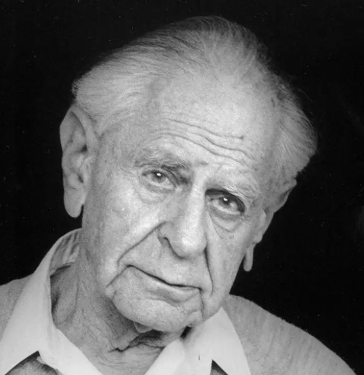
I do not believe in what is often called... 'exact terminology'... [or] in definitions... [they] do not... add to exactness... I especially dislike pretentious terminology and... pseudo-exactness concerned with it.
2 months 3 weeks ago
Rhetoric is the counterpart of Dialectic. Both alike are concerned with such things as come, more or less, within the general ken of all men and belong to no definite science. Accordingly, all men make use, more or less, of both; for to a certain extent all men attempt to discuss statements and to maintain them, to defend themselves and to attack others.
1 month 4 weeks ago
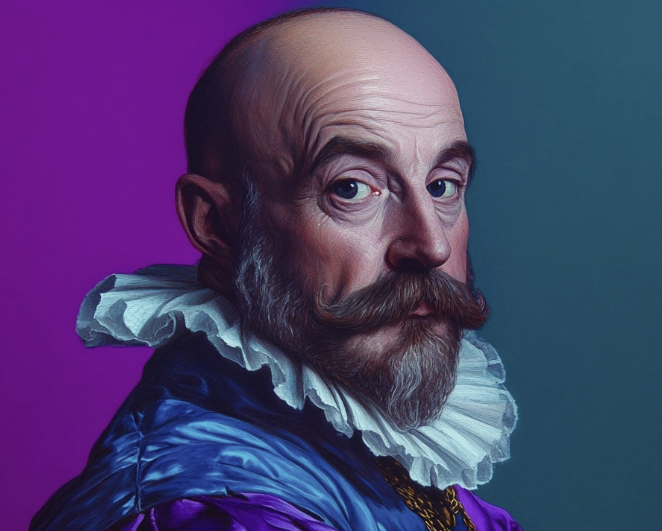
He who would teach men to die would teach them to live.
▼
Source
source
Ch. 20. Of the Force of Imagination (tr. Donald M. Frame)
1 month 2 weeks ago
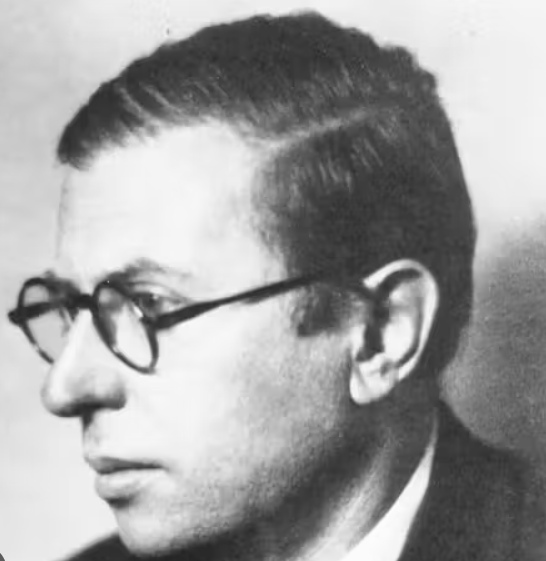
The consciousness of being betrayed is to the collective consciousness of a sacred group what a certain form of schizophrenia is to the individual...it is a form of madness.
▼
Source
source
p. 193
1 month 3 weeks ago
The soul active sees absolute truth; and utters truth, or creates.
▼
Source
source
par. 17
CivilSimian.com created by AxiomaticPanic, CivilSimian, Kalokagathia