


1 month 3 weeks ago
It is the highest impertinence and presumption, therefore, in kings and ministers, to pretend to watch over the economy of private people, and to restrain their expence, either by sumptuary laws, or by prohibiting the importation of foreign luxuries. They are themselves always, and without any exception, the greatest spendthrifts in the society. Let them look well after their own expence, and they may safely trust private people with theirs. If their own extravagance does not ruin the state, that of their subjects never will.
▼
Source
source
Chapter III, p. 381.
2 months 2 weeks ago
Parmenides: If anyone, with his mind fixed on all these objections and others like them, denies the existence of ideas of things, and does not assume an idea under which each individual thing is classed, he will be quite at a loss, since he denies that the idea of each thing is always the same, and in this way he will utterly destroy the power of carrying on discussion... Then what will become of philosophy? To what can you turn, if these things are unknown?
2 months 1 week ago
The man of virtue makes the difficulty to be overcome his first business, and success only a subsequent consideration.

1 week 6 days ago
Society ... can afford to grant more than before because its interests have become the innermost drives of its citizens.
▼
Source
source
p. 72

1 month 2 weeks ago
The man described for us, whom we are invited to free, is already in himself the effect of a subjection much more profound than himself. A 'soul' inhabits him and brings him to existence...the soul is the effect and instrument of political anatomy; the soul is the prison of the body.
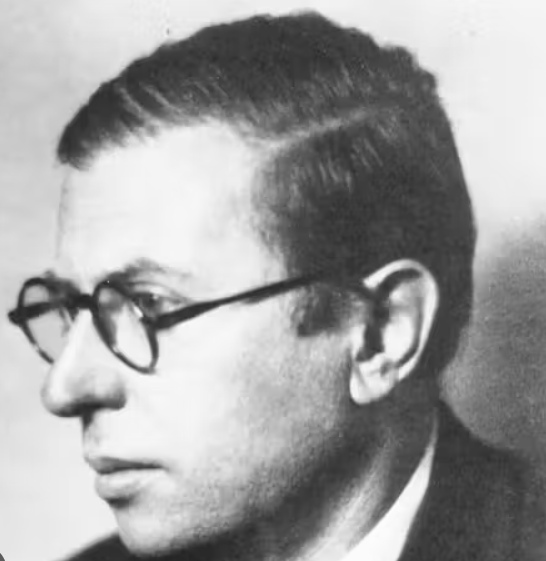
1 month 2 weeks ago
He was free, free in every way, free to behave like a fool or a machine, free to accept, free to refuse, free to equivocate; to marry, to give up the game, to drag this death weight about with him for years to come. He could do what he liked, no one had the right to advise him, there would be for him no Good or Evil unless he thought them into being.
▼
Source
source
L'âge de raison (The Age of Reason)

1 week 6 days ago
Did ye never read in the scriptures, The stone which the builders rejected, the same is become the head of the corner: this is the Lord's doing, and it is marvellous in our eyes? Therefore say I unto you, The kingdom of God shall be taken from you, and given to a nation bringing forth the fruits thereof. And whosoever shall fall on this stone shall be broken: but on whomsoever it shall fall, it will grind him to powder.
▼
Source
source
21:27-42 and 44 (KJV)
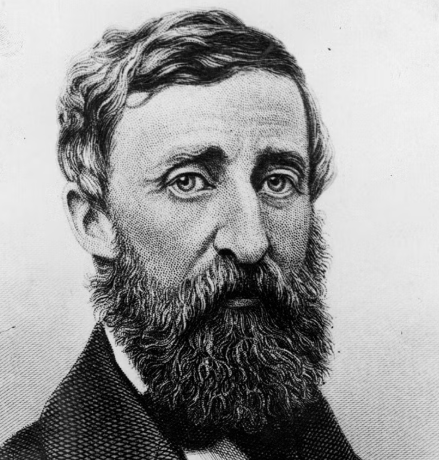
1 month 3 weeks ago
Disobedience is the true foundation of liberty. The obedient must be slaves.
▼
Source
source
1847
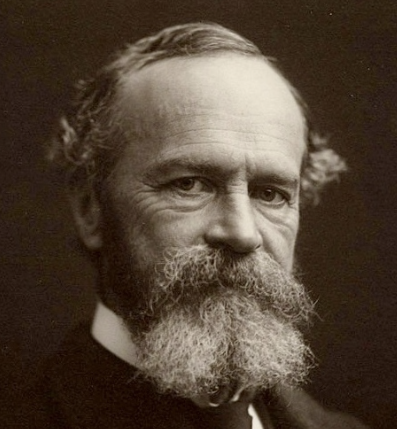
1 month 2 weeks ago
Freedom is only necessity understood.
▼
Source
source
The Dilemma of Determinism, 1884
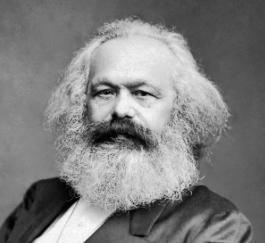
1 month 3 weeks ago
As a beast of toil an ox is fixed capital. If he is eaten, he no longer functions as an instrument of labour, nor as fixed capital either.
▼
Source
source
Vol. II, Ch. VIII, p. 163.

2 months 3 weeks ago
We obtain the concept, as we do the form, by overlooking what is individual and actual; whereas nature is acquainted with no forms and no concepts, and likewise with no species, but only with an X which remains inaccessible and undefinable for us.
6 days ago
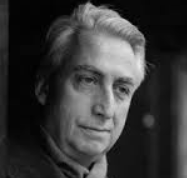
The bastard form of mass culture is humiliated repetition: content, ideological schema, the blurring of contradictions-these are repeated, but the superficial forms are varied: always new books, new programs, new films, news items, but always the same meaning.
▼
Source
source
Modern, in The Pleasure of the Text
1 month 1 week ago
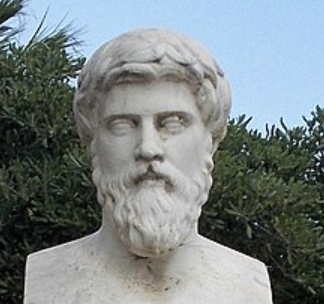
Once when Phocion had delivered an opinion which pleased the people,... he turned to his friend and said, "Have I not unawares spoken some mischievous thing or other?"
▼
Source
source
55 Phocion

3 weeks 1 day ago
Cities make sleeping outside illegal, destroying homeless encampments, arresting people for existing while poor. Criminalization doesn't solve homelessness - it disappears the homeless from view. Out of sight maintains property values and comfortable consciences. Punishing poverty is cheaper than housing people.
1 week 4 days ago
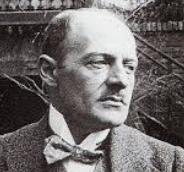
Ressentiment is always to some degree a determinant of the romantic type of mind. At least this is so when the romantic nostalgia for some past era (Hellas, the Middle Ages, etc.) is not primarily based on the values of that period, but on the wish to escape from the present. Then all praise of the "past" has the implied purpose of downgrading present-day reality.
▼
Source
source
L. Coser, trans. (1973), p. 68
1 week 4 days ago
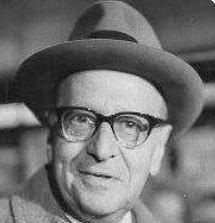
At present, when the prevailing forms of society have become hindrances to the free expression of human powers, it is precisely the abstract branches of science, mathematics and theoretical physics, which ... offer a less distorted form of knowledge than other branches of science which are interwoven with the pattern of daily life, and the practicality of which seemingly testifies to their realistic character.
▼
Source
source
p. 133.

4 days ago
Poems are magic ceremonies of language.
1 month 3 weeks ago
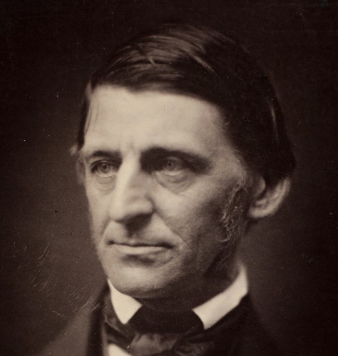
The law of the table is beauty, a respect to the common soul of the guests. Everything is unreasonable which is private to two or three, or any portion of the company. Tact never violates for a moment this law; never intrudes the orders of the house, the vices of the absent, or a tariff of expenses, or professional privacies; as we say, we never "talk shop" before company. Lovers abstain from caresses, and haters from insults, while they sit in one parlor with common friends.
▼
Source
source
Social Aims
5 days ago
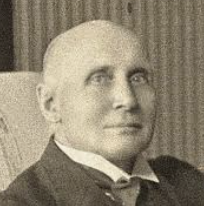
A culture is in its finest flower before it begins to analyze itself.
▼
Source
source
Ch. 22, August 17, 1941.
2 months 1 week ago
Sincerity is the end and beginning of things; without sincerity there would be nothing. On this account, the superior man regards the attainment of sincerity as the most excellent thing.
1 month 3 weeks ago
It is in vain to dream of a wildness distant from ourselves.
▼
Source
source
August 30, 1856
1 month 2 weeks ago
Truth lives, in fact, for the most part on a credit system. Our thoughts and beliefs 'pass,' so long as nothing challenges them, just as bank-notes pass so long as nobody refuses them.
▼
Source
source
Lecture VI, Pragmatism's Conception of Truth

1 month 3 weeks ago
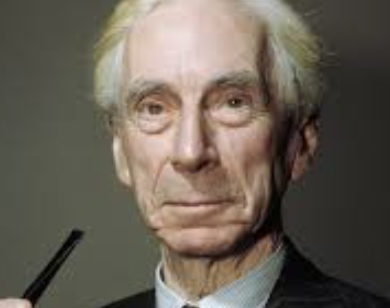
A truer image of the world, I think, is obtained by picturing things as entering into the stream of time from an eternal world outside, than from a view which regards time as the devouring tyrant of all that is.
▼
Source
source
Ch. 1: Mysticism and Logic
1 week 5 days ago
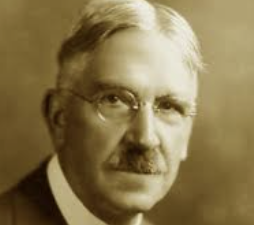
The determination of the mot juste, of the right incident in the right place, of exquisiteness of proportion, of the precise tone, hue, and shade that helps unify the whole while it defines a part, is accomplished by emotion. Not every emotion, however, can do this work, but only one informed by material that is grasped and gathered. Emotion is informed and carried forward when it is spent indirectly in search for material and in giving it order, not when it is directly expended.
▼
Source
source
p. 73
1 week 6 days ago
Do not be afraid. I am the First and the Last, and the living one, and I became dead, but look! I am living forever and ever, and I have the keys of death and of the Grave.
▼
Source
source
Revelation 1:17-18, NWT

1 week 6 days ago
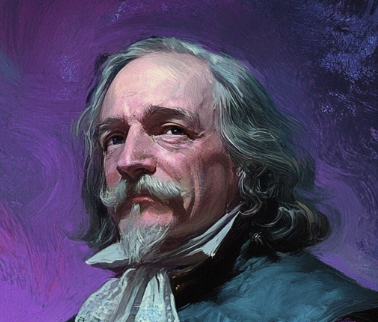
From the same it proceedeth,that men gives different names, to one and the same thing, from the difference of their own passions: As they that approve a private opinion, call it Opinion; but they that mislike it, Haeresie: and yet haeresie signifies no more than private opinion; but has only agreater tincture of choler.
▼
Source
source
The First Part, Chapter 11, p. 50

4 days ago
I began to practice 'meditation', sitting cross-legged for hours, staring straight in front of me. The result was a sudden and total transformation of my inner-being. There was a sense of freedom from my personality -- from the being called Colin Wilson who was born in Leicester in 1931. I felt that 'he' was a series of responses and reactions, of ambitions and frustrations. But after half an hour of staring straight in front of me, of concentrating my attention 'at the root of my eyebrows', I felt in control of his responses and frustrations. This control brought such a sense of exhilaration and satisfaction that I often sneaked away from other people to spend just five minutes sitting cross-legged; when I was working as a labourer on a building site, I would find a quiet spot and, while the others were having a smoke, would sit in a position that could quickly be changed to an ordinary sitting posture if someone came by . . .
▼
Source
source
p. 87
1 week 6 days ago
The revolution, Stahl declared, is the 'world-historic mark of our age.' It would found 'the entire State on the will of man instead of on the commandment and ordinance of God.'
▼
Source
source
p. 364
2 weeks 4 days ago
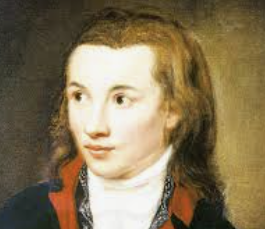
Blood will stream over Europe until the nations become aware of the frightful madness which drives them in circles. And then, struck by celestial music and made gentle, they approach their former altars all together, hear about the works of peace, and hold a great celebration of peace with fervent tears before the smoking altars.
▼
Source
source
As quoted in the Fourth Leaflet of the White Rose
1 month 3 weeks ago
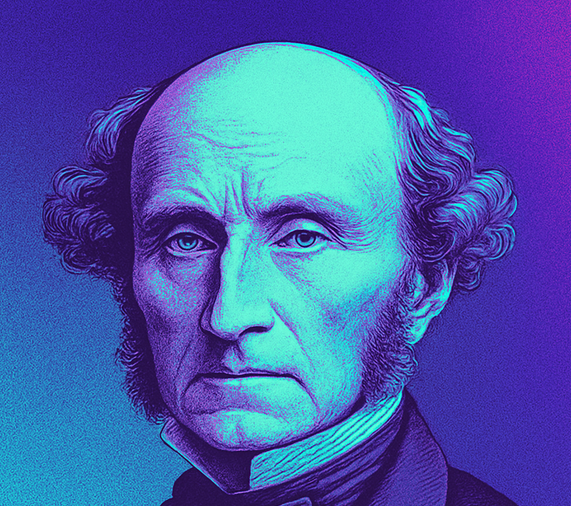
I had always heard it maintained by my father, and was myself convinced, that the object of education should be to form the strongest possible associations of the salutary class; associations of pleasure with all things beneficial to the great whole, and of pain with all things hurtful to it.
▼
Source
source
(p. 136)

1 month 4 weeks ago
A little of all things, but nothing of everything, after the French manner.
▼
Source
source
Chapter 26. Of the Education of Children
2 weeks 2 days ago
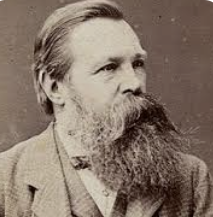
Democratic socialists are either proletarians who are not yet sufficiently clear about the conditions of the liberation of their class, or they are representatives of the petty bourgeoisie, a class which, prior to the achievement of democracy and the socialist measures to which it gives rise, has many interests in common with the proletariat. It follows that, in moments of action, the communists will have to come to an understanding with these democratic socialists, and in general to follow as far as possible a common policy with them - provided that these socialists do not enter into the service of the ruling bourgeoisie and attack the communists. It is clear that this form of co-operation in action does not exclude the discussion of differences.
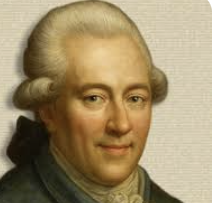
Just now
What is the good of drawing conclusions from experience? I don't deny we sometimes draw the right conclusions, but don't we just as often draw the wrong ones?
▼
Source
source
F 123

1 month 3 weeks ago
The thirst after happiness is never extinguished in the heart of man.
▼
Source
source
IX
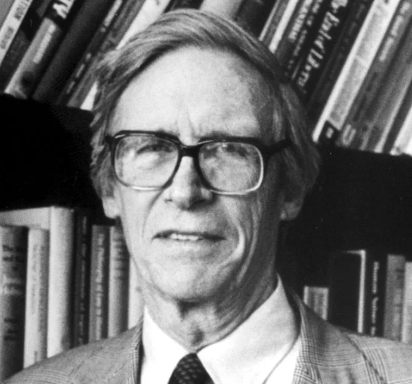
1 month 2 weeks ago
Intuitionism is not constructive, perfectionism is unacceptable.
▼
Source
source
Chapter I, Section 9, pg. 52
1 month 3 weeks ago
Apart from autograph hunters, I get... many letters from Hindus, beseeching me to adopt some form of mysticism, from young Americans, asking me where I think the line should be drawn in petting, and from Poles, urging me to admit that while all other nationalism may be bad that of Poland is wholly noble. I get letters from engineers who cannot understand Einstein, and from parsons who think that I cannot understand Genesis, from husbands whose wives have deserted them - not (they say) that that would matter, but the wives have taken the furniture with them, and what in these circumstances should an enlightened male do? ...I get letters (concerning whose genuineness I am suspicious) trying to get me to advocate abortion, and I get letters from young mothers asking my opinion of bottle-feeding.
▼
Source
source
Letter to Mr C. L. Aiken, March 19, 1930
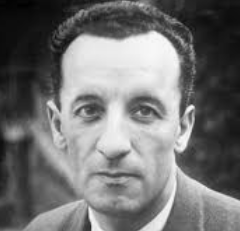
1 week 4 days ago
The world is nothing but 'world-as-meaning.'
▼
Source
source
p. xi
1 month 3 weeks ago
Every commodity is compelled to chose some other commodity for its equivalent.
▼
Source
source
Vol. I, Ch. 1, Section 3, pg. 65.
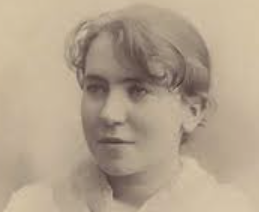
3 days ago
The supreme effort of the avant-guard is onward, ever onward.
▼
Source
source
Light and Shadows in the Life of an Avant-Guard
1 month 3 weeks ago
The most advanced nations are always those who navigate the most.
▼
Source
source
Civilization

2 weeks 3 days ago
I have never taken myself for a being. A non-citizen, a marginal type, a nothing who exists only by the excess, by the superabundance of his nothingness.

2 months 2 weeks ago
He kept the middle way, that's all: he was the type of man for whom one has an affection of the mild but steady order - which is the kind that wears best.
2 months 1 week ago
This is the ideal world, a perfect world of equality, fraternity, harmony, welfare, and justice.

1 month 2 weeks ago
But more correctly: The fact that I use the word "hand" and all the other words in my sentence without a second thought, indeed that I should stand before the abyss if I wanted so much as to try doubting their meanings - shows that absence of doubt belongs to the essence of the language-game, that the question "How do I know..." drags out the language-game, or else does away with it.

1 month 3 weeks ago
Whensoever therefore the legislative shall transgress this fundamental rule of society; and either by ambition, fear, folly or corruption, endeavour to grasp themselves, or put into the hands of any other, an absolute power over the lives, liberties, and estates of the people; by this breach of trust they forfeit the power the people had put into their hands for quite contrary ends, and it devolves to the people, who have a right to resume their original liberty, and, by the establishment of a new legislative, (such as they shall think fit) provide for their own safety and security, which is the end for which they are in society.
▼
Source
source
Second Treatise of Civil Government, Ch. XIX, sec. 222
1 month 2 weeks ago
Aim at being loved without being admired.
▼
Source
source
p. 38e
CivilSimian.com created by AxiomaticPanic, CivilSimian, Kalokagathia