


1 month 4 weeks ago
He who should teach men to die would at the same time teach them to live.
▼
Source
source
Ch. 18. That Men are not to judge of our Happiness till after Death, tr. Cotton, rev. W. Hazlitt, 1842

4 days ago
The fear of being alone, or of being unloved, had caused women of all races to passively accept sexism and sexist oppression.

2 months 6 days ago
Beauty is indeed a good gift of God; but that the good may not think it a great good, God dispenses it even to the wicked.
▼
Source
source
XV, 22

2 months 2 weeks ago
"This is the truth," we say. "You can discuss it as much as you want; we aren't interested. But in a few years there'll be the police who will show you we are right."

2 months 1 week ago
How great is the path proper to the Sage! Like overflowing water, it sends forth and nourishes all things, and rises up to the height of heaven. All-complete is its greatness! It embraces the three hundred rules of ceremony, and the three thousand rules of demeanor. It waits for the proper man, and then it is trodden. Hence it is said, "Only by perfect virtue can the perfect path, in all its courses, be made a fact."
1 month 2 weeks ago
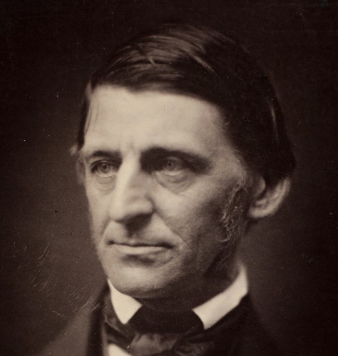
Go where he will, the wise man is at home, His hearth the earth, his hall the azure dome.
▼
Source
source
Wood-notes, st. 3
Just now
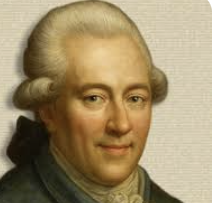
We can see nothing whatever of the soul unless it is visible in the expression of the countenance; one might call the faces at a large assembly of people a history of the human soul written in a kind of Chinese ideograms.
▼
Source
source
B 11
1 month 1 week ago
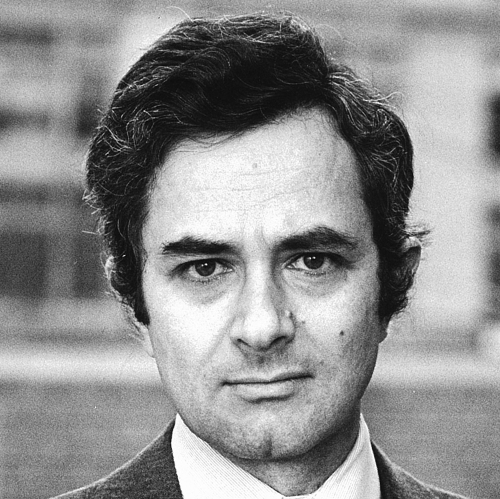
To look for a single general theory of how to decide the right thing to do is like looking for a single theory of how to decide what to believe.
▼
Source
source
"The Fragmentation of Value" (1977), p. 135.
2 months 1 week ago
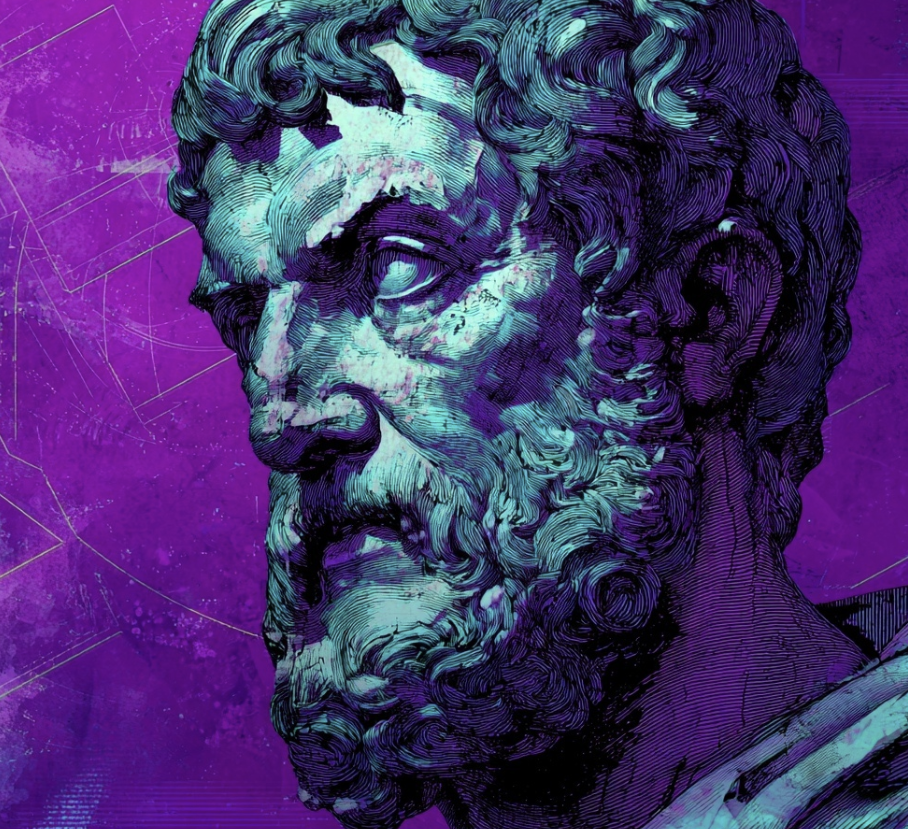
Since it is every man's interest to be happy through the whole of life, it is the wisdom of every one to employ philosophy in the search of felicity without delay; and there cannot be a greater folly, than to be always beginning to live.
1 month 3 weeks ago
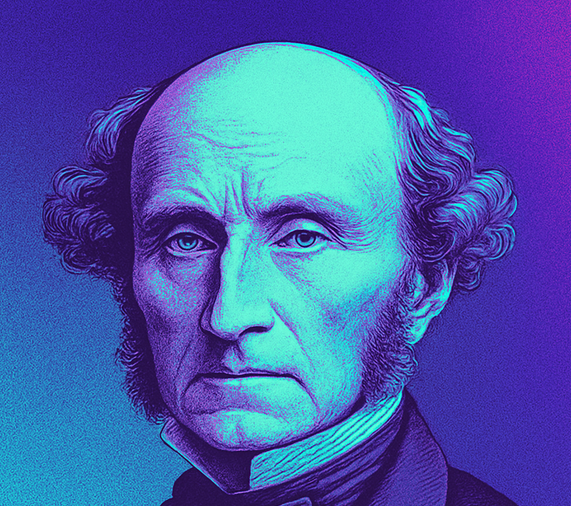
It is not to be supposed that she was, or that any one, at the age at which I first saw her, could be, all that she afterwards became. Least of all could this be true of her, with whom self-improvement, progress in the highest and in all senses, was a law of her nature; a necessity equally from the ardour with which she sought it, and from the spontaneous tendency of faculties which could not receive an impression or an experience without making it the source or the occasion of an accession of wisdom. Up to the time when I first saw her, her rich and powerful nature had chiefly unfolded itself according to the received type of feminine genius. To her outer circle she was a beauty and a wit, with an air of natural distinction, felt by all who approached her: to the inner, a woman of deep and strong feeling, of penetrating and intuitive intelligence, and of an eminently meditative and poetic nature.
▼
Source
source
(p. 185)
1 week ago
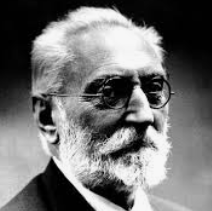
To believe in God is to yearn for His existence and, furthermore, it is to act as if He did exist.

1 month 2 weeks ago
You could send your soul after the good you had expected, instead of turning it to the good you had got. You could refuse the real good; you could make the real fruit taste insipid by thinking of the other.

2 months 5 days ago
If a person gave your body to any stranger he met on his way, you would certainly be angry. And do you feel no shame in handing over your own mind to be confused and mystified by anyone who happens to verbally attack you?
▼
Source
source
(28) [tr. Elizabeth Carter]


1 month 3 weeks ago
My father's moral inculcations were at all times mainly those of the "Socratici viri;" justice, temperance (to which he gave a very extended application), veracity, perseverance, readiness to encounter pain and especially labour; regard for the public good; estimation of persons according to their merits, and of things according to their intrinsic usefulness; a life of exertion in contradiction to one of self-indulgent sloth. These and other moralities he conveyed in brief sentences, uttered as occasion arose, of grave exhortation, or stern reprobation and contempt.But though direct moral teaching does much, indirect does more; and the effect my father produced on my character, did not depend solely on what he said or did with that direct object, but also, and still more, on what manner of man he was.
▼
Source
source
(p. 47)

1 week 6 days ago
You shall know the truth, and the truth shall set you free.
▼
Source
source
8:32

1 month 3 weeks ago
It is the natural effect of improvement, however, to diminish gradually the real price of almost all manufactures.
▼
Source
source
Chapter XI, Part III, (Conclusion..) p. 282.
1 month 2 weeks ago
But these young scholars who invade our hills, Bold as the engineer who fells the wood, And travelling often in the cut he makes, Love not the flower they pluck, and know it not, And all their botany is Latin names.
▼
Source
source
Blight, st. 2

2 months 1 week ago
The many are mean; only the few are noble.
1 week 6 days ago
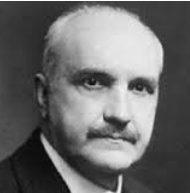
Progress, far from consisting in change, depends on retentiveness. When change is absolute there remains no being to improve and no direction is set for possible improvement: and when experience is not retained, as among savages, infancy is perpetual. Those who cannot remember the past are condemned to repeat it. This famous statement has produced many paraphrases and variants: Those who cannot learn from history are doomed to repeat it. Those who do not remember their past are condemned to repeat their mistakes. Those who do not read history are doomed to repeat it. Those who fail to learn from the mistakes of their predecessors are destined to repeat them. Those who do not know history's mistakes are doomed to repeat them.
▼
Source
source
There is a similar quote by Edmund Burke (in Revolution in France) that often leads to misattribution: "People will not look forward to posterity, who never look backward to their ancestors."
2 weeks 6 days ago
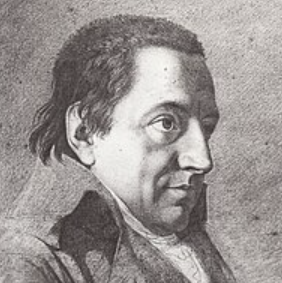
The new education must consist essentially in this, that it completely destroys freedom of will in the soil which it undertakes to cultivate, and produces on the contrary strict necessity in the decisions of the will, the opposite being impossible. Such a will can henceforth be relied on with confidence and certainty.
▼
Source
source
Addresses to the German Nation (1807), Second Address : "The General Nature of the New Education". Chicago and London, The Open Court Publishing Company, 1922, p. 20.

1 month 3 weeks ago
Two things fill the mind with ever-increasing wonder and awe, the more often and the more intensely the mind of thought is drawn to them: the starry heavens above me and the moral law within me.
▼
Source
source
Translated by Lewis White Beck Two things fill the heart with renewed and increasing awe and reverence the more often and the more steadily that they are meditated on: the starry skies above me and the moral law inside me.
1 month 2 weeks ago
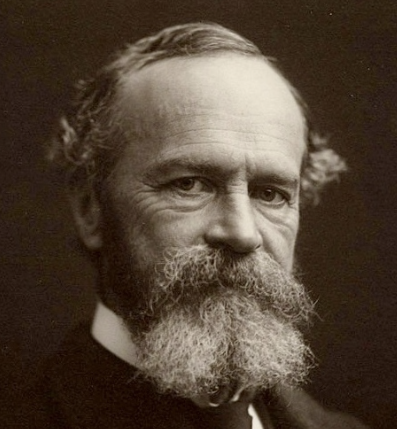
The trail of the human serpent is thus over everything.
▼
Source
source
Lecture II, What Pragmatism Means
1 week 4 days ago
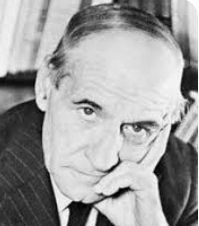
Hatred is a feeling which leads to the extinction of values.
▼
Source
source
Cited in the Oxford Dictionary of Quotations by Subject, ed. Susan Ratcliffe (2010), p. 223
6 days ago
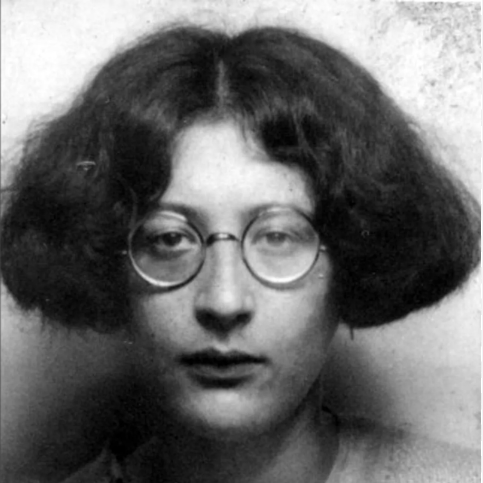
Conformity is an imitation of grace.
▼
Source
source
p. 146


2 months 3 weeks ago
The various languages placed side by side show that with words it is never a question of truth, never a question of adequate expression; otherwise, there would not be so many languages. The "thing in itself" (which is precisely what the pure truth, apart from any of its consequences, would be) is likewise something quite incomprehensible to the creator of language and something not in the least worth striving for. This creator only designates the relations of things to men, and for expressing these relations he lays hold of the boldest metaphors.' To begin with, a nerve stimulus is transferred into an image: first metaphor. The image, in turn, is imitated in a sound: second metaphor. And each time there is a complete overleaping of one sphere, right into the middle of an entirely new and different one.
1 month 2 weeks ago
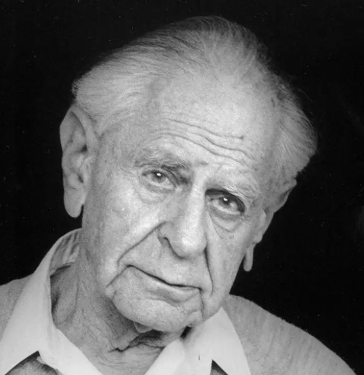
The belief in a political Utopia is especially dangerous. This is possibly connected with the fact that the search for a better world, like the investigation of our environment, is (if I am correct) one of the oldest and most important of all the instincts.
4 days ago
A dangerous form of psychological splitting had to have taken place, and it continues to take place, in the psyches of many African Americans who can on one hand oppose racism, and then on the other hand passively absorb ways of thinking about beauty that are rooted in white supremacist thought.
1 month 3 weeks ago
The Union was a measure from which infinite Good has been derived to this country.
▼
Source
source
Letter to William Strahan (4 April 1760), quoted in Adam Smith, The Correspondence of Adam Smith, eds. E. C. Mossner and I. S. Ross (1987), p. 68
1 month 2 weeks ago
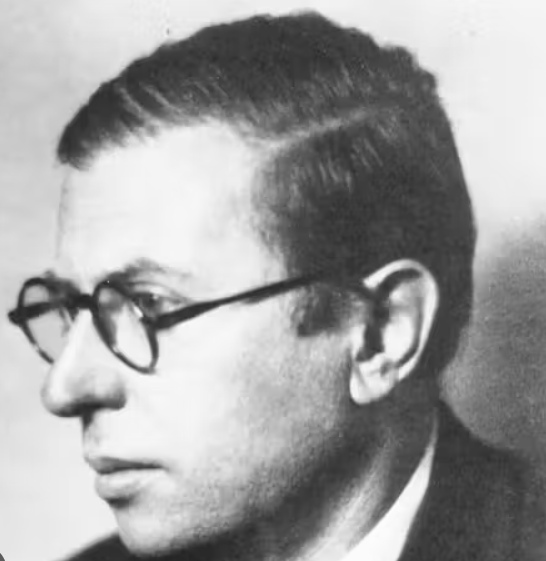
Karsky: I met your father last week. Are you still interested in hearing how he is doing?
Hugo: No.
Karsky: It is very probable that you will be responsible for his death.
Hugo: It is virtually certain that he is responsible for my life. We are even.
▼
Source
source
Act 4, sc. 4
1 month 3 weeks ago
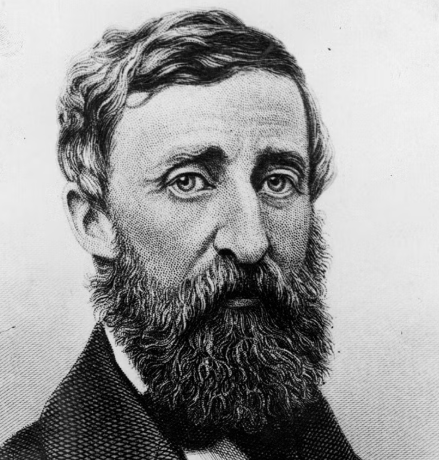
Most books belong to the house and streets only, and in the fields their leaves feel very thin.
1 month 4 weeks ago
All the opinions of the world agree in this, that pleasure is our end.
▼
Source
source
Ch. 20. Of the Force of Imagination, tr. Cotton, rev. W. Carew Hazlitt, 1877

2 months 4 days ago
Custom renders love attractive; for that which is struck by oft-repeated blows however lightly, yet after long course of time is overpowered and gives way. See you not too that drops of water falling on rocks after long course of time scoop a hole through these rocks?
▼
Source
source
Book IV, lines 1283-1287 (tr. Munro)
2 weeks 6 days ago
Of what I am, I know no more than that I am, but here no tie is necessary between subject and object. My own being is this tie, I am at once the subject knowing, and the object known of; and this reflection or return of the knowledge on itself is what I designate by the term I, if I have any determinate meaning.
▼
Source
source
Jane Sinnett, trans 1846 p. 50
1 month 2 weeks ago
The soul is subject to dollars.
▼
Source
source
par. 6
1 month 1 week ago
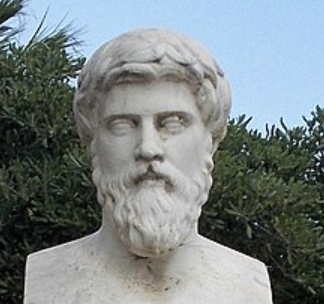
As Cæsar was at supper the discourse was of death,-which sort was the best. "That," said he, "which is unexpected."
▼
Source
source
Cæsar
1 month 2 weeks ago
It is easy to see that the existing generation are conspiring with a beneficence, which, in its working for coming generations, sacrifices the passing one, which infatuates the most selfish men to act against their private interest for the public welfare. We build railroads, we know not for what or for whom; but one thing is certain, that we who build will receive the very smallest share of benefit. Benefit will accrue; they are essential to the country, but that will be felt not until we are no longer countrymen. We do the like in all matters: - 'Man's heart the Almighty to the Future setBy secret and inviolable springs.'

2 weeks 2 days ago
What an incitation to hilarity, hearing the word goal while following a funeral procession!

1 month 3 weeks ago
Tis only from the selfishness and confin'd generosity of men, along with the scanty provision nature has made for his wants, that justice derives its origin.
▼
Source
source
Part 2, Section 2

2 months 3 days ago
What would you say of that man who was made king by the error of the people, if he had so far forgotten his natural condition as to imagine that this kingdom was due to him, that he deserved it, and that it belonged to him of right? You would marvel at his stupidity and folly. But is there less in the people of rank who live in so strange a forgetfulness of their natural condition?
2 weeks 4 days ago
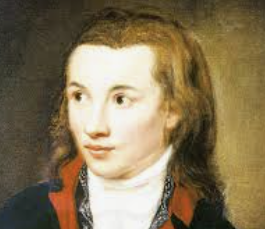
To romanticize the world is to make us aware of the magic, mystery and wonder of the world; it is to educate the senses to see the ordinary as extraordinary, the familiar as strange, the mundane as sacred, the finite as infinite.
▼
Source
source
As quoted in "Bildung in Early German Romanticism" by Frederick C. Beiser, in Philosophers on Education : Historical Perspectives (1998) by Amélie Rorty, p. 294

3 weeks 6 days ago
We find that everything that makes up difference and number is pure accident, pure show, pure constitution. Every production, of whatever kind, is an alteration, but the substance remains always the same, because it is only one, one divine immortal being.
1 month 2 weeks ago
For the Supernatural, entering a human soul, opens to it new possibilities both of good and evil. From that point the road branches: one way to sanctity, love, humility, the other to spiritual pride, self-righteousness, persecuting zeal. And no way back to the mere humdrum virtues and vices of the unawakened soul. If the Divine call does not make us better, it will make us very much worse. Of all bad men religious bad men are the worst. Of all created beings the wickedest is one who originally stood in the immediate presence of God.
▼
Source
source
Reflections on the Psalms (1958), p. 32

1 month 2 weeks ago
Kant's philosophy shifts for the first time the whole of modern thought and being (Desein) into the clarity and transparency of the foundation (Begrundung). This determines every attitude toward knowledge since then, as well as the bounds (Abgrenzungen) and appraisals of the sciences in the nineteenth century up to the present time. Therein Kant towers so far above all who precede and follow that even those who reject him or go beyond him still remain entirely dependent upon him.
▼
Source
source
p. 55-56
1 month 3 weeks ago
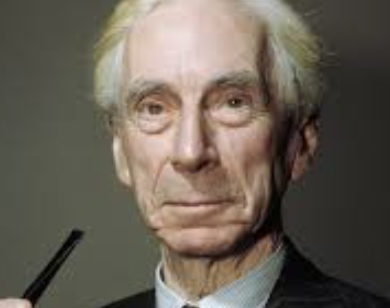
To choose one sock from each of infinitely many pairs of socks requires the Axiom of Choice, but for shoes the Axiom is not needed.
▼
Source
source
As quoted in Williams' Weighing the Odds: A Course in Probability and Statistics (2001), p. 498

1 month 2 weeks ago
The paradox of race in America is that our common destiny is more pronounced and imperiled precisely when our divisions are deeper.
▼
Source
source
(p4)

1 month 2 days ago
There are men and gods, and beings like Pythagoras.
▼
Source
source
Of himself, as quoted in A History of Western Philosophy (1945) by Bertrand Russell
1 month 3 weeks ago
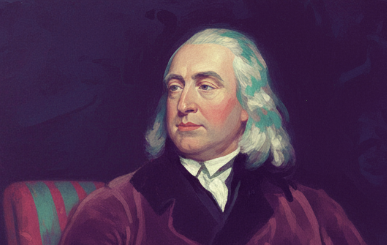
The principle of utility judges any action to be right by the tendency it appears to have to augment or diminish the happiness of the party whose interests are in question... if that party be the community the happiness of the community, if a particular individual, the happiness of that individual.
▼
Source
source
Introduction, 1789 edition
1 month 2 weeks ago
If a man own land, the land owns him.
▼
Source
source
Wealth
CivilSimian.com created by AxiomaticPanic, CivilSimian, Kalokagathia