

Being precedes identity. 
Existence precedes essence. 

Contingent identity subgroups are never more important than the deterministic universal evolution. 

"Precedence Culture" builds a culture around being, before choice, rather than identity particularity that is contingent and after choice. Identity particularity can't even exist without deterministic emergence. Respect life first.

0
0
1 month 3 weeks ago

Lead, follow, or get out of the way.

0
0
Source
source
George S. Patton: "Lead me, follow me, or get out of my way", as quoted in Pocket Patriot: Quotes from American Heroes (2005) edited by Kelly Nickell, p. 157
2 weeks 3 days ago

There is rarely a creative man who does not have to pay a high price for the divine spark of his greatest gifts...the human element is frequently bled for the benefit of the creative element and to such an extent that it even brings out the bad qualities, as for instance, ruthless, naive egoism (so-called "auto-eroticism"), vanity, all kinds of vices-and all this in order to bring to the human I at least some life-strength, since otherwise it would perish of sheer inanition.

0
0
1 month 2 weeks ago

I call this Divine humility because it is a poor thing to strike our colours to God when the ship is going down under us; a poor thing to come to Him as a last resort, to offer up "our own" when it is no longer worth keeping. If God were proud He would hardly have us on such terms: but He is not proud, He stoops to conquer, He will have us even though we have shown that we prefer everything else to Him, and come to Him because there is "nothing better" now to be had.

0
0
1 month 3 weeks ago

It appears then, that capitalist production comprises conditions independent of good or bad will, conditions which permit the working-class to enjoy that relative prosperity only momentarily, and at that always only as the harbinger of a coming crisis.

0
0
Source
source
Vol. II, Ch. XX, p. 415.
1 month 3 weeks ago

Our sadness is not sad, but our cheap joys.

0
0
Source
source
Pearls of Thought (1881) p. 231
1 month 2 weeks ago

Gentlemen, there is a sublime and friendly Destiny by which the human race is guided, - the race never dying, the individual never spared, - to results affecting masses and ages. Men are narrow and selfish, but the Genius or Destiny is not narrow, but beneficent. It is not discovered in their calculated and voluntary activity, but in what befalls, with or without their design. Only what is inevitable interests us, and it turns out that love and good are inevitable, and in the course of things. That Genius has infused itself into nature. It indicates itself by a small excess of good, a small balance in brute facts always favorable to the side of reason.

0
0
1 month 3 weeks ago

That the human mind has a certain order of possible progress, in which some things must precede others, an order which governments and public instructors can modify to some, but not to an unlimited extent: that all questions of political institutions are relative, not absolute, and that different stages of human progress not only will have, but ought to have, different institutions: That government is always either in the hands, or passing into the hands, of whatever is the strongest power in society, and that what this power is, does not depend on institutions, but institutions on it: That any general theory or philosophy of politics supposes a previous theory of human progress, and that this is the same thing with a philosophy of history.

0
0
Source
source
(p. 162)
2 months 2 weeks ago

He kept the middle way, that's all: he was the type of man for whom one has an affection of the mild but steady order - which is the kind that wears best.
0
0
1 month 3 weeks ago

Avarice, the spur of industry, is so obstinate a passion, and works its way through so many real dangers and difficulties, that it is not likely to be scared by an imaginary danger, which is so small, that it scarcely admits of calculation. Commerce, therefore, in my opinion, is apt to decay in absolute governments, not because it is there less secure, but because it is less honourable.

0
0
Source
source
Part I, Essay 12: Of Civil Liberty
1 month 2 weeks ago

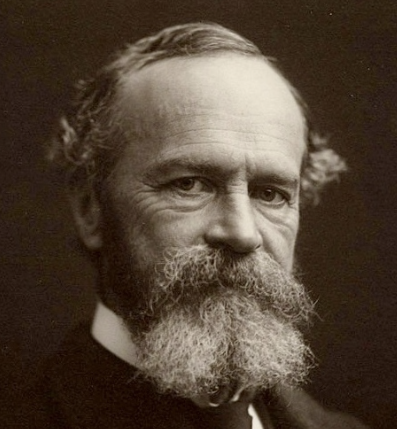
What I give is the morphology of the use of an expression. I show that it has kinds of uses of which you had not dreamed. In philosophy one feels forced to look at a concept in a certain way. What I do is suggest, or even invent, other ways of looking at it. I suggest possibilities of which you had not previously thought. You thought that there was one possibility, or only two at most. But I made you think of others. Furthermore, I made you see that it was absurd to expect the concept to conform to those narrow possibilities. Thus your mental cramp is relieved, and you are free to look around the field of use of the expression and to describe the different kinds of uses of it.

0
0
Source
source
Lectures of 1946 - 1947, as quoted in Ludwig Wittgenstein : A Memoir (1966) by Norman Malcolm, p. 43

What most clearly characterizes true freedom and its true employment is its misemployment.

0
0
Source
source
L 49
1 month 3 weeks ago

Unbelievers (so called) as well as of believers, there are many species, including almost every variety of moral type. But the best among them, as no one who has had opportunities of really knowing them will hesitate to affirm (believers rarely have that opportunity), are more genuinely religious, in the best sense of the word religion, than those who exclusively arrogate to themselves the title.

0
0
Source
source
(pp. 45-46)
3 days ago

What is generally regarded as success - acquisition of wealth, the capture of power or social prestige - I consider the most dismal failures. I hold when it is said of a man that he has arrived, it means that he is finished - his development has stopped at that point. I have always striven to remain in a state of flux and continued growth, and not to petrify in a niche of self-satisfaction. If I had my life to live over again, like anyone else, I should wish to alter minor details. But in any of my more important actions and attitudes I would repeat my life as I have lived it. Certainly I should work for Anarchism with the same devotion and confidence in its ultimate triumph.

0
0
3 weeks ago

The rich in all societies may be thrown into two classes. The first is of those who are powerful as well as rich, and conduct the operations of the vast political machine. The other is of those who employ their riches wholly in the acquisition of pleasure. As to the first sort, their continual care and anxiety, their toilsome days and sleepless nights, are next to proverbial. These circumstances are sufficient almost to level their condition to that of the unhappy majority; but there are other circumstances which place them in a far lower condition. Not only their understandings labour continually, which is the severest labour, but their hearts are torn by the worst, most troublesome, and insatiable of all passions, by avarice, by ambition, by fear and jealousy. No part of the mind has rest. Power gradually extirpates from the mind every humane and gentle virtue. Pity, benevolence, friendship, are things almost unknown in high stations.

0
0
2 weeks 6 days ago

This education, therefore, results at the very outset in knowledge which transcends all experience, which is abstract, absolute, and strictly universal, and which includes within itself beforehand all subsequently possible experience. On the other hand, the old education was concerned, as a rule, only with the actual qualities of things as they are and as they should be believed and rioted, without anyone being able to assign a reason for them. It aimed, therefore, at purely passive reception by means of the power of memory, which was completely at the service of things. It was, therefore, impossible to have any idea of the mind as an independent original principle of things themselves.

0
0
Source
source
General Nature of New Eduction p. 28

A philosophy without heart and a faith without intellect are abstractions from the true life of knowledge and faith. The man whom philosophy leaves cold, and the man whom real faith does not illuminate, may be assured that the fault lies in them, not in knowledge and faith. The former is still an alien to philosophy, the latter an alien to faith.

0
0
1 month 1 week ago

Fools learn wisdom through misfortune.

0
0
1 month 3 weeks ago

I am convinced that everything has come down to us from the banks of the Ganges, - astronomy, astrology, metempsychosis, etc.

0
0
Source
source
M. de Voltaire par M. Bailly et précédées de quelques lettres de M. de Voltaire a l'auteur, Paris 1777, quoted in E. F. Bryant, The Quest for the Origins of Vedic Culture (2001), Ch. 1
2 months 2 weeks ago

No matter how outrageous a lie may be, it will be accepted if stated loudly enough and often enough.

0
0

The thesis of the identity of concept and thing is in general the vital nerve of idealist thought, and indeed traditional thought in general. ... Negative dialectics as critique means above all criticism of precisely this claim to identity.

0
0
Source
source
p. 20
2 weeks 4 days ago

It is false that kings are entitled to the eminence they obtain. They possess no intrinsic superiority over their subjects. The line of distinction that is drawn is the offspring of pretense, an indirect means employed for effecting certain purposes, and not the language of truth. It tramples upon the genuine nature of things, and depends for its support upon this argument, 'that, were it not for impositions of a similar nature, mankind would be miserable.'

0
0
Source
source
Book V, Ch. 6, "Of Subjects"
3 weeks 4 days ago

It is almost never when a state of things is the most detestable that it is smashed, but when, beginning to improve, it permits men to breathe, to reflect, to communicate their thoughts with each other, and to gauge by what they already have the extent of their rights and their grievances. The weight, although less heavy, seems then all the more unbearable.

0
0
Source
source
Letter to Pierre Freslon, 23 September 1853 Selected Letters, p. 296 as cited in Toqueville's Road Map p. 103
1 month 1 week ago

Do you count your birthdays with gratitude?

0
0
Source
source
Book II, epistle ii, line 210
3 weeks 4 days ago

In the final, positive state, the mind has given over the vain search after Abolute notions, the origin and destination of the universe, and the cause of phenomenon, and applies itself to the tudy of their laws, - that is, their invariable relations of succession and resemblance. Reasoning and observation, duly combined, are the means of this knowledge. What is now understood when we speak of an explanation of the facts is simply the establishment of a connection between single phenomena and some general facts, the number of which continually diminishes with the progress of science.

0
0
Source
source
Vol I
6 days ago

A society like the Church, which claims to be Divine is perhaps more dangerous on account of the ersatz good which it contains then on account of the evil which sullies it. Something of the social labelled divine: an intoxicating mixture which carries with it every sort of license.

0
0
Source
source
Devil disguised. p. 122
1 month 3 weeks ago

Love is a severe critic. Hate can pardon more than love.

0
0
Source
source
Pearls of Thought (1881) p. 159
1 month 3 weeks ago

Every man would like to be God, if it were possible; some few find it difficult to admit the impossibility.

0
0
Source
source
Ch. 1: The Impulse to Power
1 month 2 weeks ago

It is not the same thing. You are perhaps not lying, but you are not telling the truth.

0
0
Source
source
Act 1
3 days ago

The chief impression left by a study of Crowley's life and works is that he wasted an immense amount of time and energy trying to shock everyone he came into contact with, and his dislike of orthodoxy turned him into an unconsciously comic figure, like Don Quixote.

0
0
Source
source
pp. 153-154
1 month 2 weeks ago

So that is what hell is. I would never have believed it. You remember: the fire and brimstone, the torture. Ah! the farce. There is no need for torture: Hell is other people.

0
0
Source
source
Garcin, Act 1, sc. 5
2 weeks 2 days ago

What I know at sixty, I knew as well at twenty. Forty years of a long, a superfluous, labor of verification.

0
0

Passion, intellect, moral activity - these three have never been satisfied in a woman. In this cold and oppressive conventional atmosphere, they cannot be satisfied. To say more on this subject would be to enter into the whole history of society, of the present state of civilisation.

0
0
2 months 2 weeks ago

"In the light, the earth remains our first and our last love. Our brothers are breathing under the same sky as we; justice is a living thing. Now is born that strange joy which helps one live and die, and which we shall never again postpone to a later time."

0
0
2 weeks 3 days ago

Every step closer to my soul excites the scornful laughter of my devils, those cowardly ear-whisperers and poison-mixers. It was easy for them to laugh, since I had to do strange things.

0
0
Source
source
P. 234
2 months 3 days ago

All men are almost led to believe not of proof, but by attraction. This way is base, ignoble, and irrelevant; every one therefore disavows it. Each one professes to believe and even to love nothing but what he knows to be worthy of belief and love.

0
0
3 weeks ago

Flattery corrupts both the receiver and the giver.

0
0
2 months 5 days ago

To the rational being only the irrational is unendurable, but the rational is endurable.

0
0
Source
source
Variant translation: To a reasonable creature, that alone is insupportable which is unreasonable; but everything reasonable may be supported. Book I, ch. 2,1.
1 month 2 weeks ago

Critics who treat adult as a term of approval, instead of as a merely descriptive term, cannot be adult themselves. To be concerned about being grown up, to admire the grown up because it is grown up, to blush at the suspicion of being childish; these things are the marks of childhood and adolescence. And in childhood and adolescence they are, in moderation, healthy symptoms. Young things ought to want to grow. But to carry on into middle life or even into early manhood this concern about being adult is a mark of really arrested development. When I was ten, I read fairy tales in secret and would have been ashamed if I had been found doing so. Now that I am fifty I read them openly. When I became a man I put away childish things, including the fear of childishness and the desire to be very grown up.

0
0
Source
source
"On Three Ways of Writing for Children" (1952) - in Of Other Worlds: Essays and Stories (1967), p. 25
1 month 2 days ago

Wind indeed increases fire, but custom love.

0
0
Source
source
Pythagorean Ethical Sentences From Stobæus
1 week 6 days ago

The intellectual is called on the carpet. ... Don't you conceal something? You talk a language which is suspect. You don't talk like the rest of us, like the man in the street, but rather like a foreigner who does not belong here. We have to cut you down to size, expose your tricks, purge you.

0
0
Source
source
p. 192
2 weeks 2 days ago

Big industry, and the limitless expansion of production which it makes possible, bring within the range of feasibility a social order in which so much is produced that every member of society will be in a position to exercise and develop all his powers and faculties in complete freedom. It thus appears that the very qualities of big industry which, in our present-day society, produce misery and crises are those which, in a different form of society, will abolish this misery and these catastrophic depressions.We see with the greatest clarity: (i) That all these evils are from now on to be ascribed solely to a social order which no longer corresponds to the requirements of the real situation; and (ii) That it is possible, through a new social order, to do away with these evils altogether.

0
0

Instead of gambling on the eternal impossibility of the revolution and on the fascist return of a war-machine in general, why not think that a new type of revolution is in the course of becoming possible, and that all kinds of mutating, living machines conduct wars, are combined and trace out a plane of consistence which undermines the plane of organization of the World and the States?

0
0
Source
source
from Dialogues with Claire Parnet, p. 147 [emphasis in original].
1 month 3 weeks ago

New truth is often uncomfortable, especially to the holders of power; nevertheless, amid the long record of cruelty and bigotry, it is the most important achievement of our intelligent but wayward species.

0
0
Source
source
Religion and Science (1935), Ch. X: Conclusion
1 month 2 weeks ago

"If a nation expects to be ignorant and free," said Jefferson, "it expects what never was and never will be."

0
0
Source
source
Chapter 4 (p. 34)
3 weeks 6 days ago

Abstract terms (however useful they may be in argument) should be discarded in meditation, and the mind should be fixed on the particular and the concrete, that is, on the things themselves.

0
0
Source
source
Paragraph 4
1 month 2 weeks ago

The total possible consciousness may be split into parts which co-exist but mutually ignore each other.

0
0
Source
source
Ch. 8

It is at work everywhere, functioning smoothly at times, at other times in fits and starts. It breathes, it heats, it eats. It shits and fucks. What a mistake to have ever said the id. Everywhere it is machines - real ones, not figurative ones: machines driving other machines, machines being driven by other machines, with all the necessary couplings and connections. from Anti-oedipus: capitalism and schizophrenia,

0
0
Source
source
p. 1
1 month 3 weeks ago

An atheist, like a Christian, holds that we can know whether or not there is a God. The Christian holds that we can know there is a God; the atheist, that we can know there is not. The Agnostic suspends judgment, saying that there are not sufficient grounds either for affirmation or for denial. At the same time, an Agnostic may hold that the existence of God, though not impossible, is very improbable; he may even hold it so improbable that it is not worth considering in practice. In that case, he is not far removed from atheism. His attitude may be that which a careful philosopher would have towards the gods of ancient Greece. If I were asked to prove that Zeus and Poseidon and Hera and the rest of the Olympians do not exist, I should be at a loss to find conclusive arguments. An Agnostic may think the Christian God as improbable as the Olympians; in that case, he is, for practical purposes, at one with the atheists.

0
0
Source
source
What is an Agnostic?, 1953

CivilSimian.com created by AxiomaticPanic, CivilSimian, Kalokagathia